
I like to spend some time in my studio making pottery ornaments before the holidays arrive.
It feels good to have a few handmade pieces to hang on the tree each season.
I have come up with several projects that use simple forms and glazes.
Most of them can be done in a few steps without needing special equipment.
These are the ones I return to when I want something quick and reliable.
Lidded Mug with Ornament Knob
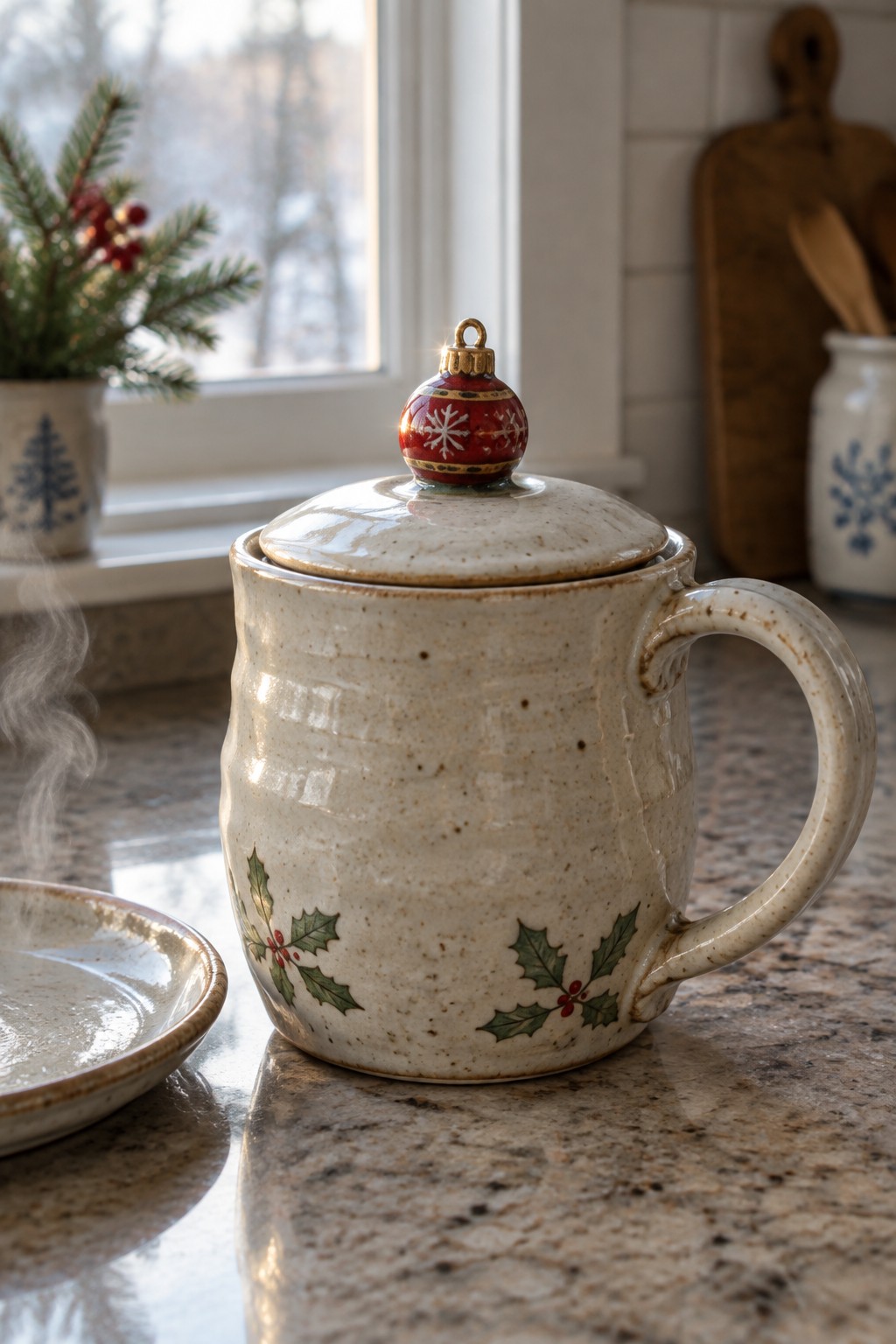
A lidded ceramic mug keeps drinks warmer longer while adding a holiday detail through the lid itself. The project uses a finished Christmas ornament as the knob, attached to a simple domed lid that fits the mug opening. Painted holly clusters wrap around the lower half of the body in a loose repeat, and the speckled glaze provides a neutral background that keeps the ornament as the main focal point. This approach turns a standard kitchen mug into a seasonal item without requiring complex sculpting or extra parts.
What makes this idea useful is how the ornament does the heavy lifting for the theme. You can start with any straight-sided mug form and make a lid that accepts a small screw or wire loop to hold the ornament. The same holly painting works on jars or small serving bowls if you want a matching set. For gifts, the ornament can be removed after the season so the mug stays usable year-round.
Snowflake Stamped Dish as Ornament Holder
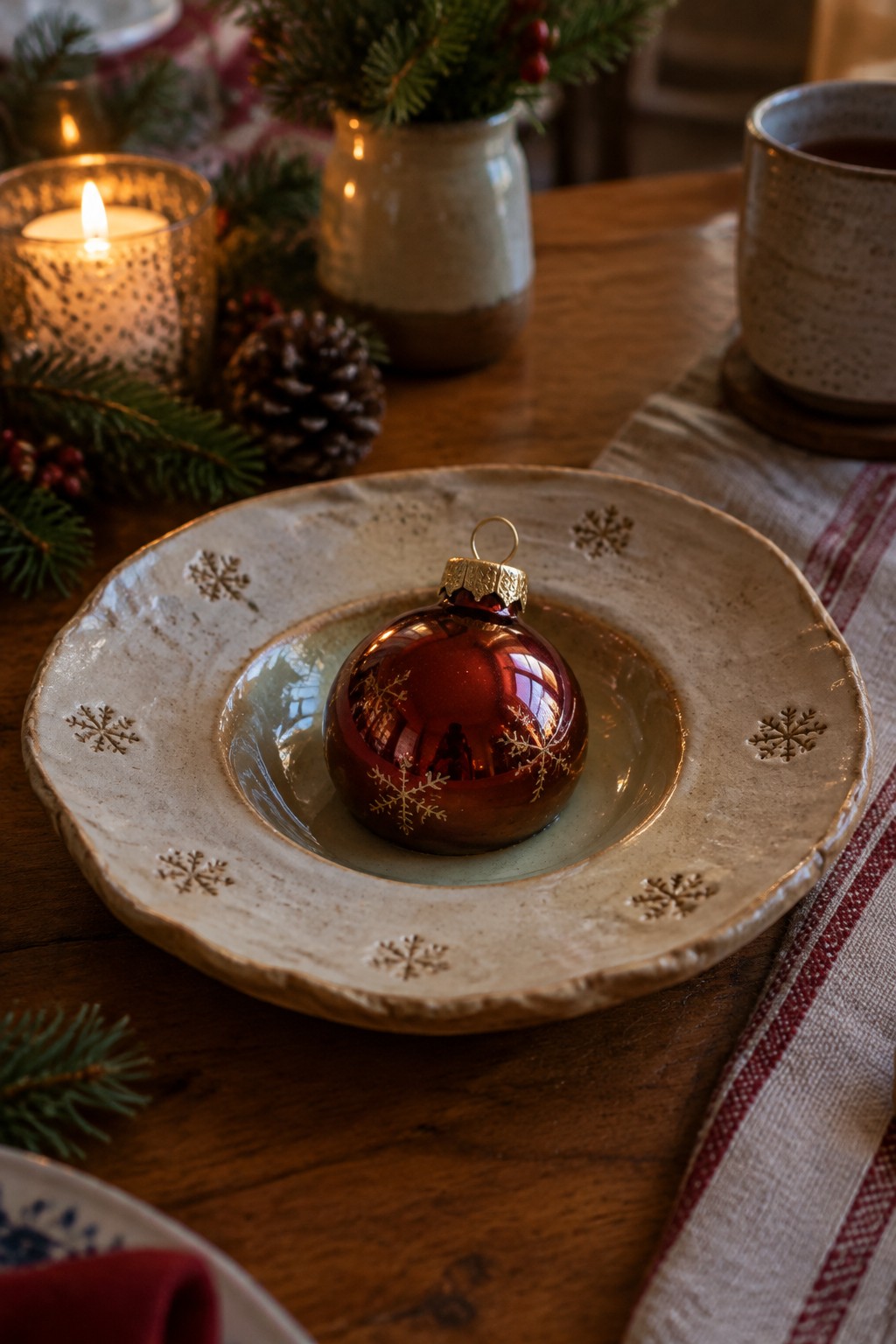
A shallow handmade ceramic dish with snowflake stamps around the rim serves as a display base for a single Christmas ornament. The plate uses an irregular, hand-formed edge and a muted speckled glaze so the glossy ornament becomes the main focal point in the center. This turns a simple plate shape into holiday decor by treating the ornament as the functional object rather than food or small items. The stamped motifs repeat the snowflake pattern already on the ornament without competing with it.
What makes this idea useful is how the same dish works as a repeating element down a table runner or across place settings. You could make a smaller version to hold just one ornament per person or skip the stamps entirely and let a colored glaze do the work instead. The low profile keeps the ornament stable while still showing off its full shape. For a different season the same plate could hold a small pillar candle or a few sprigs of greenery without any changes to the form.
Ceramic Hook Plaque for Hanging Ornaments
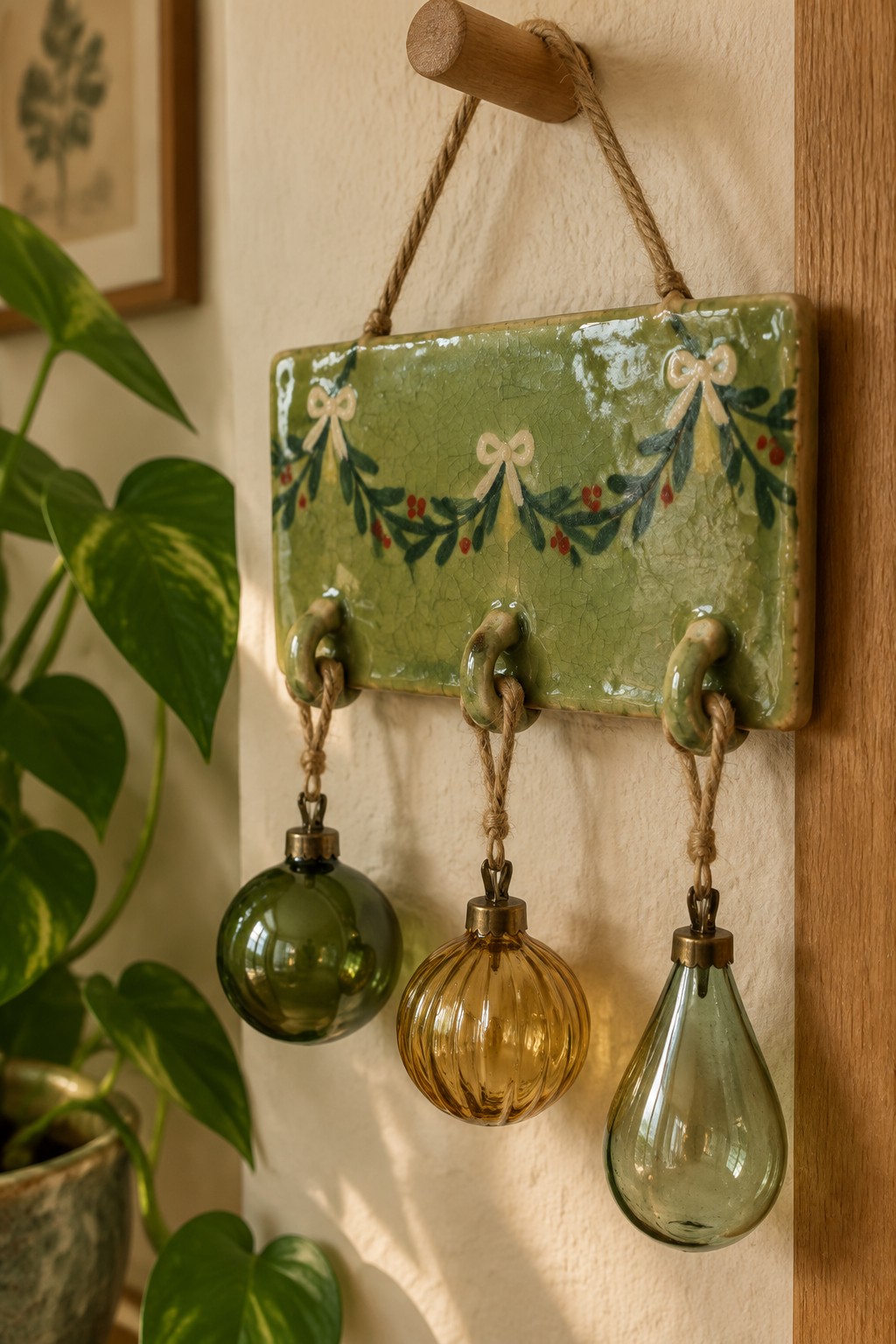
A rectangular ceramic plaque with three molded hooks functions as a wall-mounted holder specifically for Christmas ornaments. The piece uses a green crackle glaze across the surface and includes a painted holly garland with bows along the upper section. The hooks are integrated into the clay form rather than added later, keeping the whole object as one fired piece. This setup creates a compact way to display ornaments without needing a full tree or shelf.
What makes this idea useful is how the horizontal shape and even hook spacing let you hang three to five ornaments in a straight line. You can adapt the painted border to match whatever colors appear in your own ornament collection or swap the green glaze for a neutral tone if you want it to blend into the wall. A piece like this works especially well in a hallway or beside a mantel where space is tight. For a simpler version, shorten the plaque and reduce it to two hooks so it becomes easier to make as a quick gift.
Notched Rim Planter for Holiday Ornaments

A low ceramic bowl with a cutout notch along the rim creates a secure spot for a small glass ornament while still functioning as a standard planter. The textured speckled surface and two-tone glaze keep the focus on the plant without competing with the added decoration. The notch sits at just the right height and depth to hold the ornament upright so it stays visible from the side. This approach fits the planter category with a simple modification that turns it into a seasonal display piece.
What makes this idea useful is the way the notch adds function without changing the overall form much. You can adjust the size and placement of the cutout to match different ornament shapes or add two notches for a pair of decorations. On a shelf or windowsill the low profile keeps the plant and ornament balanced together. For a gift version try a smaller diameter pot or a solid glaze color that lets the ornament stand out more clearly.
Ceramic Tray with Hooks for Hanging Ornaments
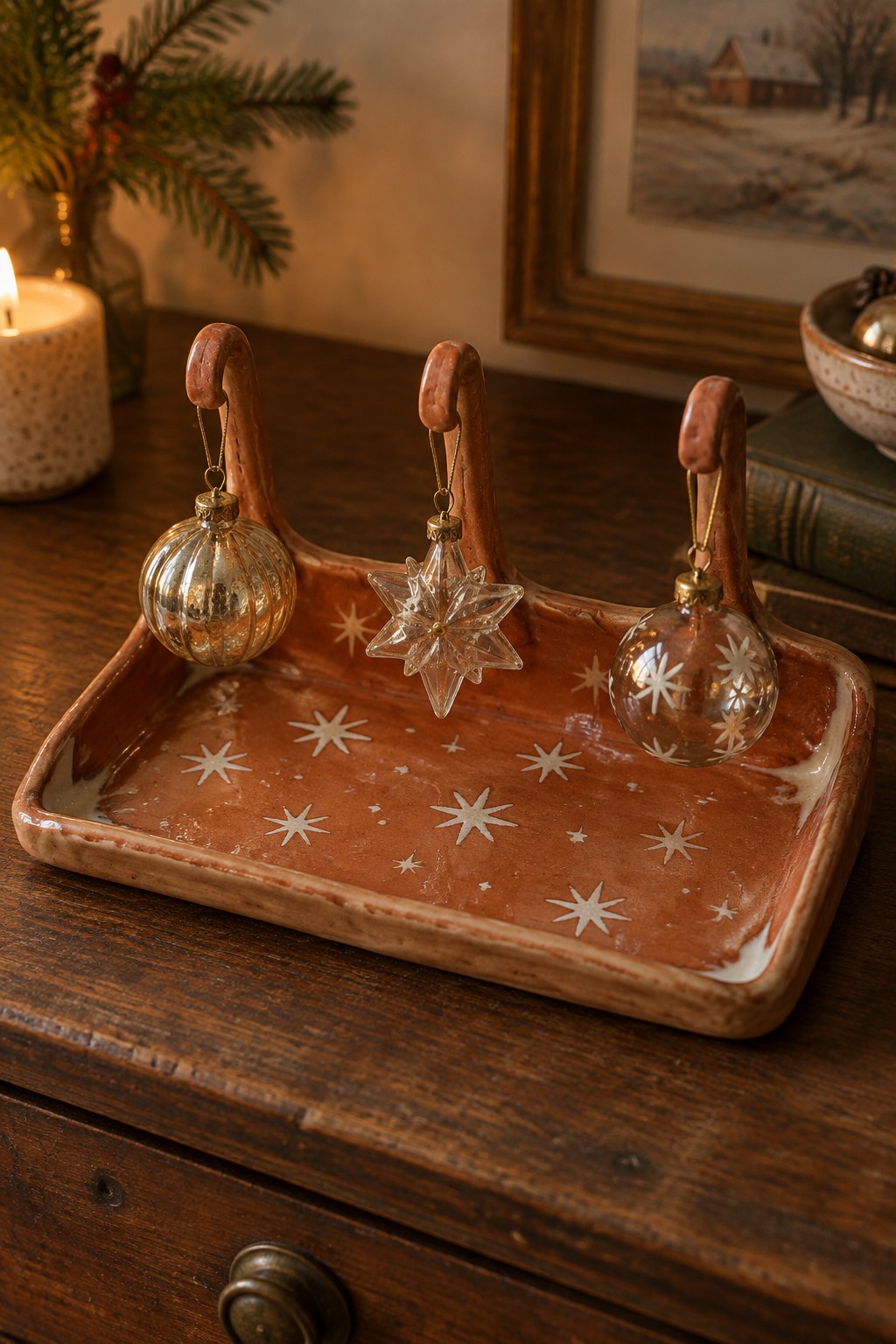
A handmade ceramic tray with three curved hooks along the back edge serves as a simple holder for displaying small Christmas ornaments. The tray uses a terracotta glaze with white star stamps repeated across the surface, and the hooks are shaped from the same clay body so ornaments can hang directly above the base. This keeps glass pieces contained and visible without needing separate stands or hooks on a wall.
What makes this idea useful is that the tray doubles as both display and catch-all for any loose hooks or broken pieces. The stamped stars can be swapped for other basic motifs or skipped entirely if you want a plain surface. You could make a longer version with more hooks for a mantel or shrink it to two hooks for a desk or shelf. The same hook-and-tray shape also works for holding lightweight jewelry or small tools when the holidays end.
Ornament Ring Dish

A small ceramic dish shaped like a Christmas ornament serves as a compact ring holder. The form has a rounded bowl area with a pinched top edge and a simple loop at one end, covered in a glossy deep red glaze that highlights the irregular handmade edges. This approach takes a standard ring dish and gives it a clear holiday shape without adding extra parts or pieces.
The small scale makes it easy to place on a bedside table or dresser for daily jewelry storage. You could adapt the same outline into a larger version for holding keys or small desk items, or leave off the loop to create a plain tray shape that still reads as seasonal. For a gift, this kind of piece works well because it combines a useful function with a recognizable holiday form that does not require much space to store after the season ends.
Three-Well Ceramic Tray for Ornaments and Tealights
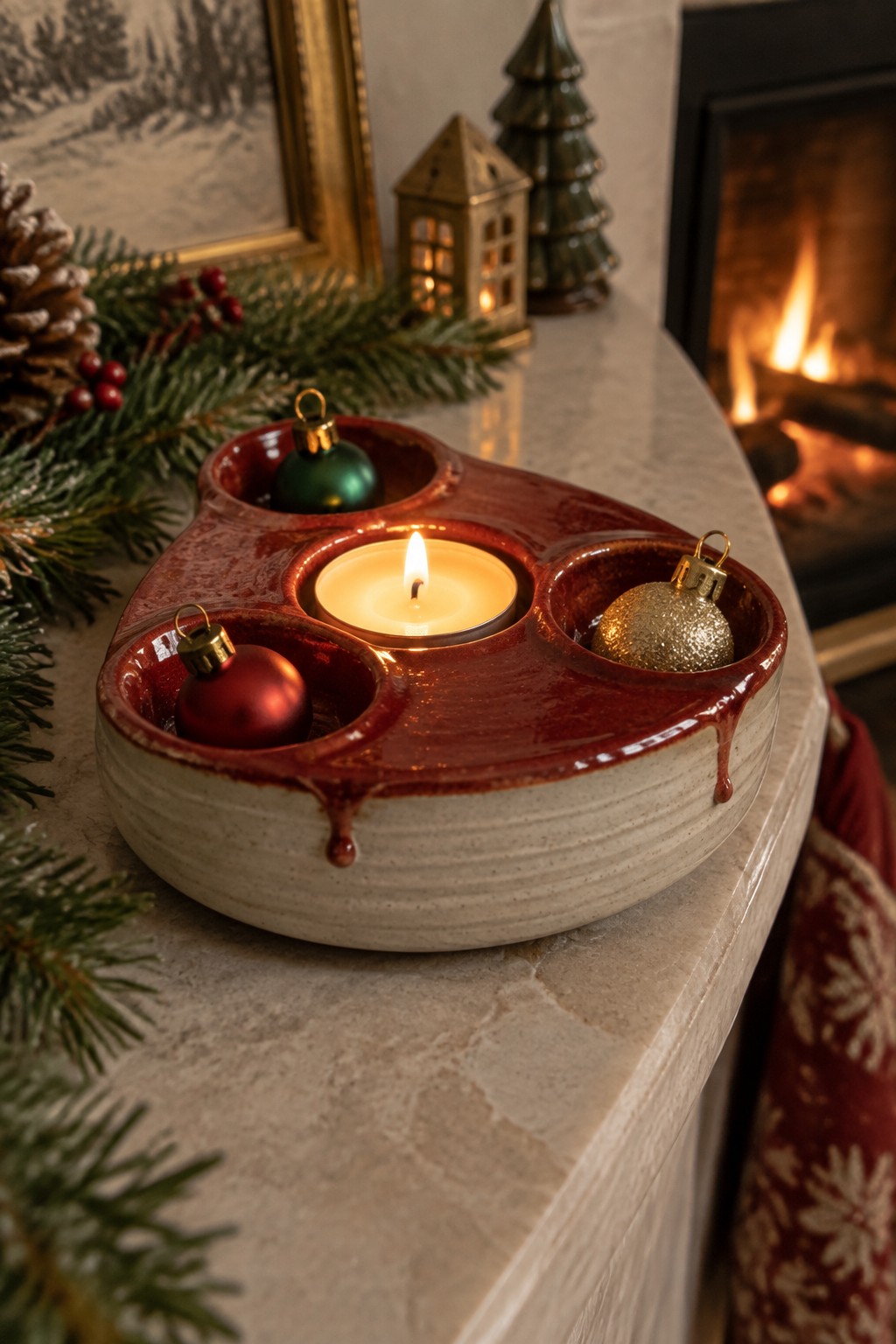
A handmade ceramic tray with three recessed wells gives you a compact way to group small Christmas ornaments and a tealight in one piece. The red glaze is applied thick along the rim so it drips down the lighter clay body, outlining each compartment without extra decoration. One well is sized for a standard tealight while the other two hold standard baubles upright. This creates a simple holder that keeps loose ornaments from rolling around while the candle adds light.
The shape does a lot of the work here because the three wells naturally separate the items and prevent crowding. You could make the same tray in a single solid color or change the well sizes to fit larger ornaments or votives. In a living room or entryway this kind of piece works as a quick mantel accent that can be restyled each season. For a gift the idea is practical since the recipient can swap in their own ornaments without needing hooks or stands.
Ceramic Reindeer Ornament Holder
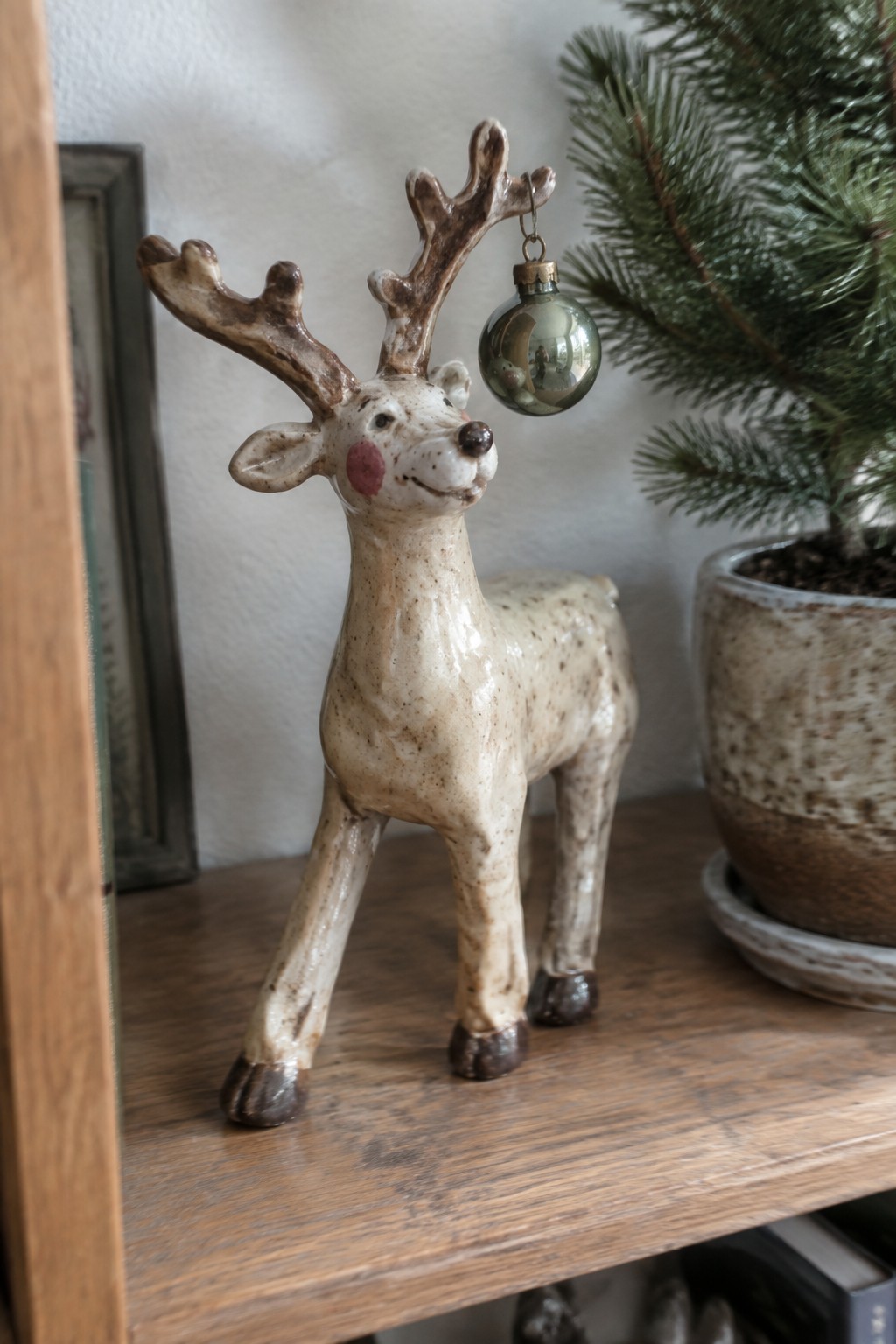
A ceramic reindeer figurine serves as a holiday decor object by using its sculpted antlers to hold a small glass ornament on a wire loop. The form includes basic painted details such as brown hooves, antler tips, and a pink cheek that keep the surface simple while still giving the piece clear shape and color. This turns a standard animal figurine into a functional holder that displays one ornament at a time.
What makes this idea useful is how the antler shape already provides a built-in hook without extra parts. The small scale works well on a mantel or narrow shelf and can be adapted by shortening the body into a wall-mounted version or lengthening the antlers to hold multiple small ornaments. For a gift, the same base form could be made without the ornament so the recipient adds their own.
Ceramic Pitcher with Handle Ornament Loop
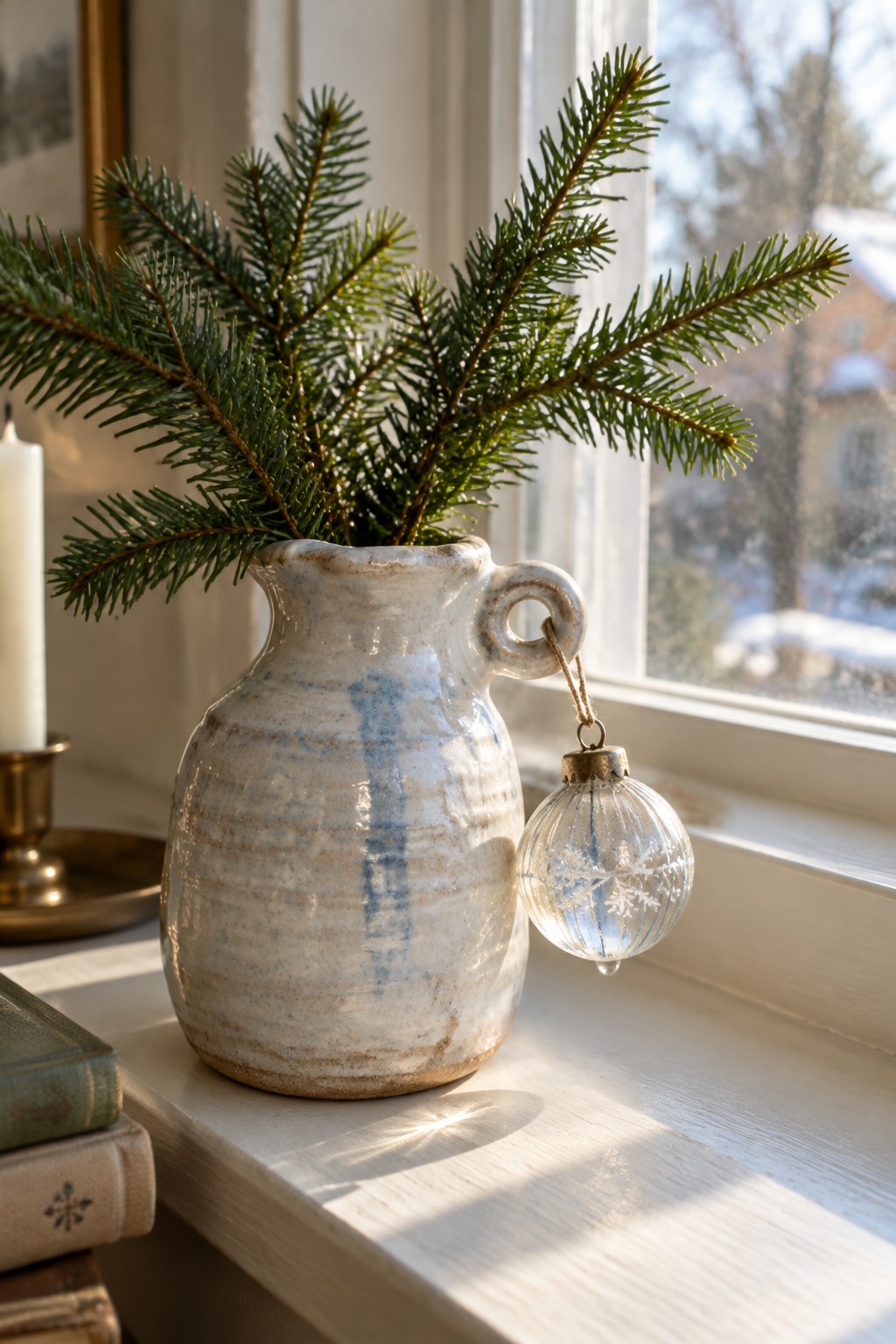
A handmade ceramic pitcher makes a practical holiday vase when the handle includes a small loop for hanging an ornament. The loop turns the vessel into a self-contained display piece that holds fresh greenery while keeping one ornament visible and secure. Rustic glazes with soft streaks or speckles help the branches and ornament stand out without competing. This approach fits the decor object category and keeps the project focused on one functional form.
What makes this idea useful is how the handle loop lets you change ornaments without new hardware or drilling. The pitcher shape works on a mantel, windowsill, or table and then serves as a regular vase after the season. You can scale the size down for smaller spaces or widen the opening if you want room for more branches. For gifts, the same form gives a ready base that needs only greenery and one ornament to finish.
Bow Spoon Rest with Ornament Center

A bow-shaped ceramic spoon rest makes a simple holiday project by forming two wide ribbon loops and a long tail from clay, then nesting a small glass Christmas ornament at the knot. The glossy green glaze with visible brush strokes gives the surface movement while keeping the focus on the bow form itself. This turns a basic kitchen tool into a seasonal piece that still functions as a place to rest spoons or hold small items during cooking.
The shape does a lot of the work here because the long tail and curved loops create a stable, shallow well without needing extra supports. You could swap the ornament for a different color or size, or skip the bauble entirely and just keep the bow form for year-round use. A piece like this works especially well as a quick gift since it stays small, uses one ornament you already have, and stands out in photos without requiring complex carving or multiple pieces.
Star and Moon Ceramic Ornaments with Gold Accents

These ceramic ornaments are made from flat slabs cut into circles and teardrops, then glazed in soft green, white, pink, and blue. Each one carries a central gold star or crescent moon with smaller surrounding stars and dots painted on top. The drilled holes and simple twine loops let them hang directly from a tree or rod. The design relies on the contrast between the colored glaze and the metallic gold rather than any raised clay details.
The flat shape makes it easy to test different glaze colors and motif placements without wasting much clay. You can scale the same cutouts down for package ties or up for larger wall hangings. Because the painting is done after the base glaze, you can swap in new colors each season while keeping the same templates. A set like this works especially well for gifts since the ornaments pack flat and survive shipping better than fragile figurines.
Ornament Footed Ceramic Tray

A shallow ceramic tray gains height and a holiday twist when three small Christmas ornaments are attached as feet. The tray itself stays simple with a neutral speckled glaze, letting the metallic ornaments supply the seasonal detail and visual contrast. This turns an ordinary dish into a low stand that keeps the surface off the table while adding a clear Christmas reference.
The small scale makes this easy to adapt by swapping in different ornament colors or sizes to match your existing decorations. It works well as a place to drop jewelry, hold small candles, or set out holiday treats without taking up much space. You could rework the same idea into a larger version for a soap dish in the bathroom or a riser for a small plant. For a gift, something like this stands out on a table because the ornament feet give it an unexpected lift that most plain trays lack.
Ceramic Salt Cellar with Lid
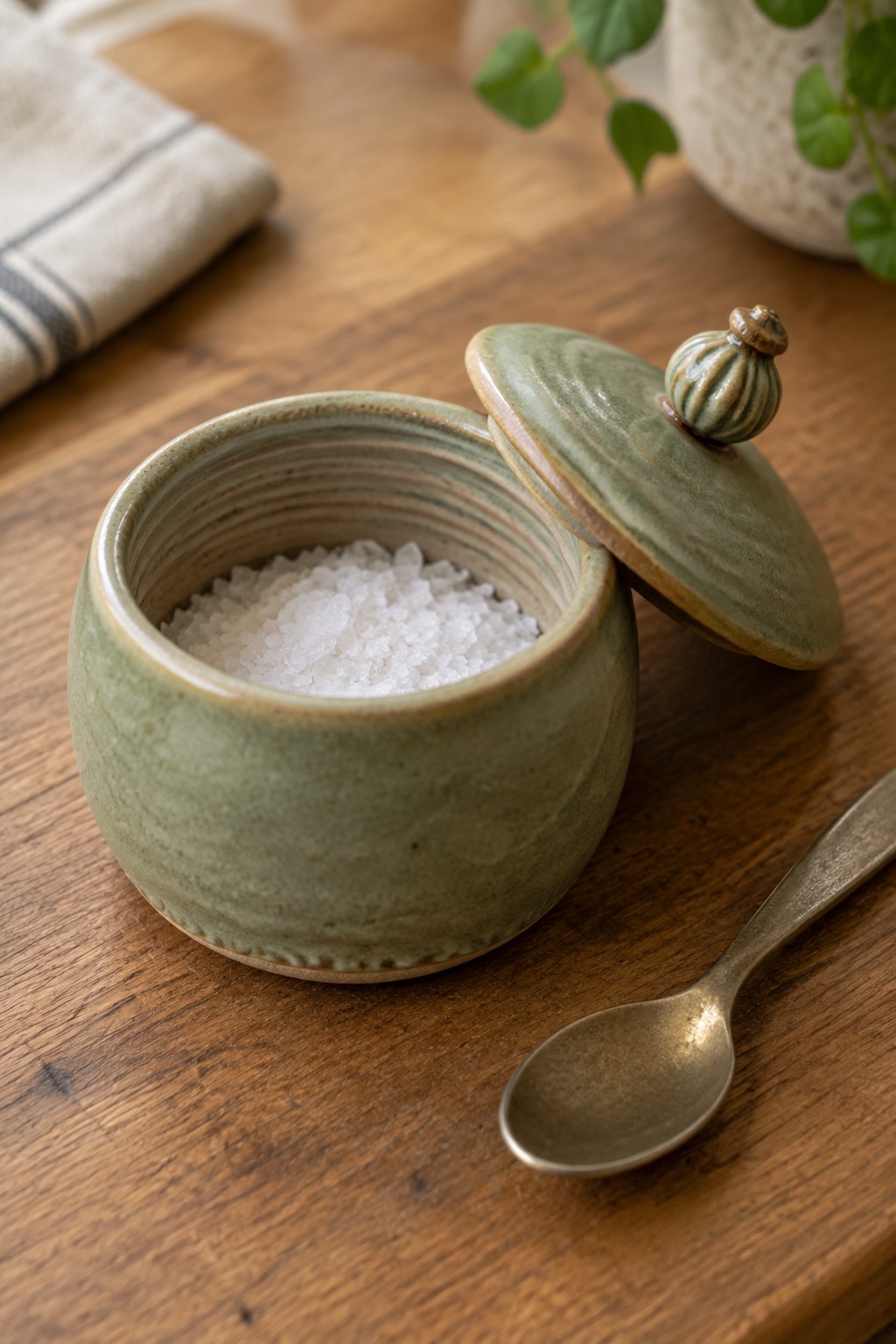
A small wheel-thrown ceramic jar with a fitted lid works well as a salt cellar for keeping coarse salt or seasonings within reach on the counter. The rounded form and knob-topped lid keep the piece simple to open and close, while the earthy green glaze highlights the handmade ridges left from throwing. This type of kitchen item stays functional without needing extra decoration.
What makes this idea useful is the compact size that fits on a countertop or open shelf without taking up much space. The same shape could be made slightly taller for spice blends or finished in a different glaze color to match holiday dishes. For a gift, pair it with a small spoon and a batch of flavored salt so the recipient can start using it right away.
Ceramic Jar with Ornament Recess in the Lid
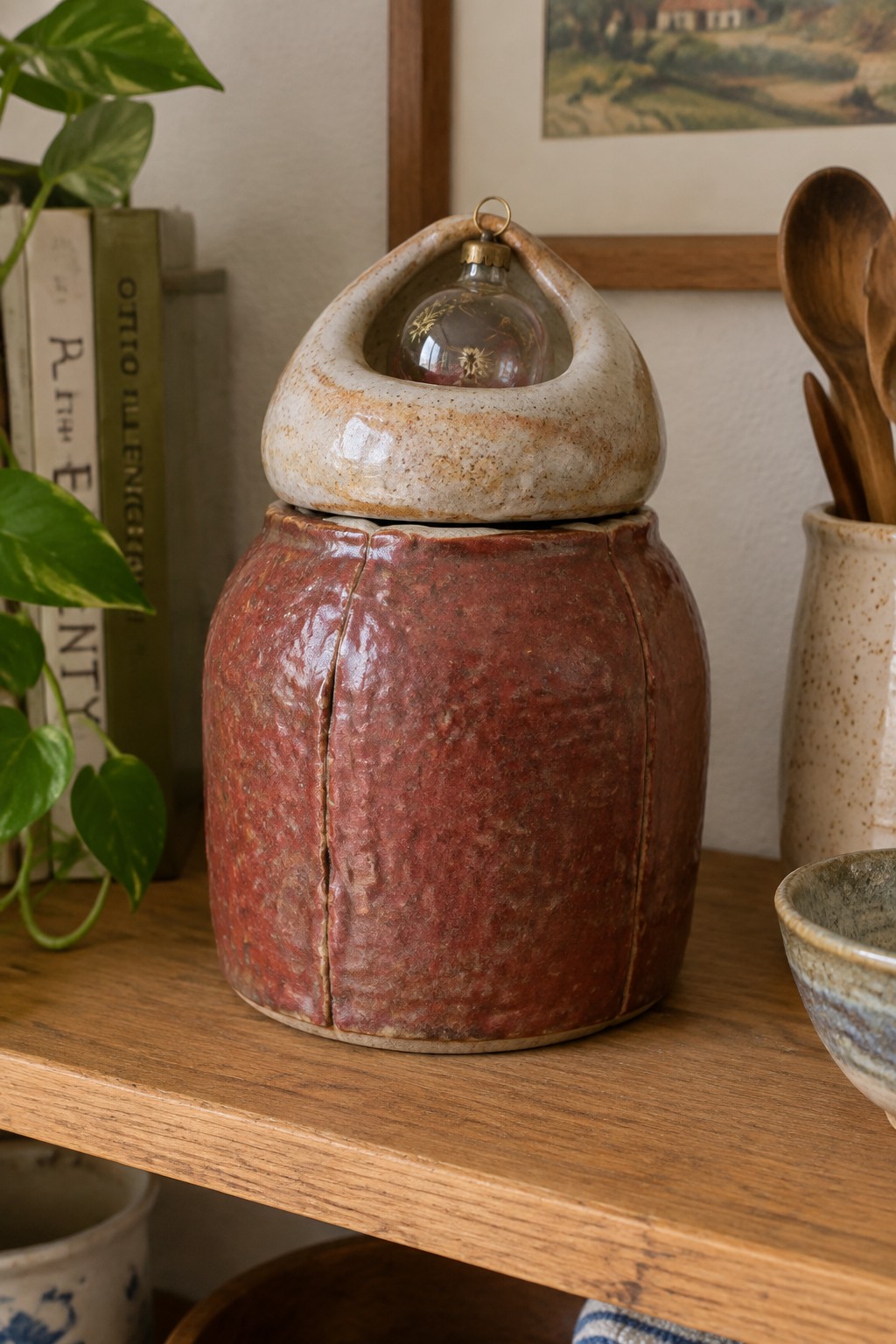
A lidded ceramic jar can be adapted for the holidays by shaping the lid with a recessed area sized to hold a small glass ornament. The body uses a deep red glaze with visible texture while the lid stays lighter and matte, letting the ornament stay the main visual point. This turns an ordinary storage jar into a piece that displays one ornament without needing a separate stand or hook.
The shape does a lot of the work here because the recess can be resized to fit different ornament diameters during the making process. You could apply the same lid treatment to a smaller cylinder for a desk or stretch the jar taller for pantry use. The idea also translates to a tray or shallow bowl if you want a flatter display surface instead. For a gift, the finished piece gives someone both a container and a built-in spot for an ornament they already own.
Ceramic Christmas Ornament Hooks on a Wall Rack
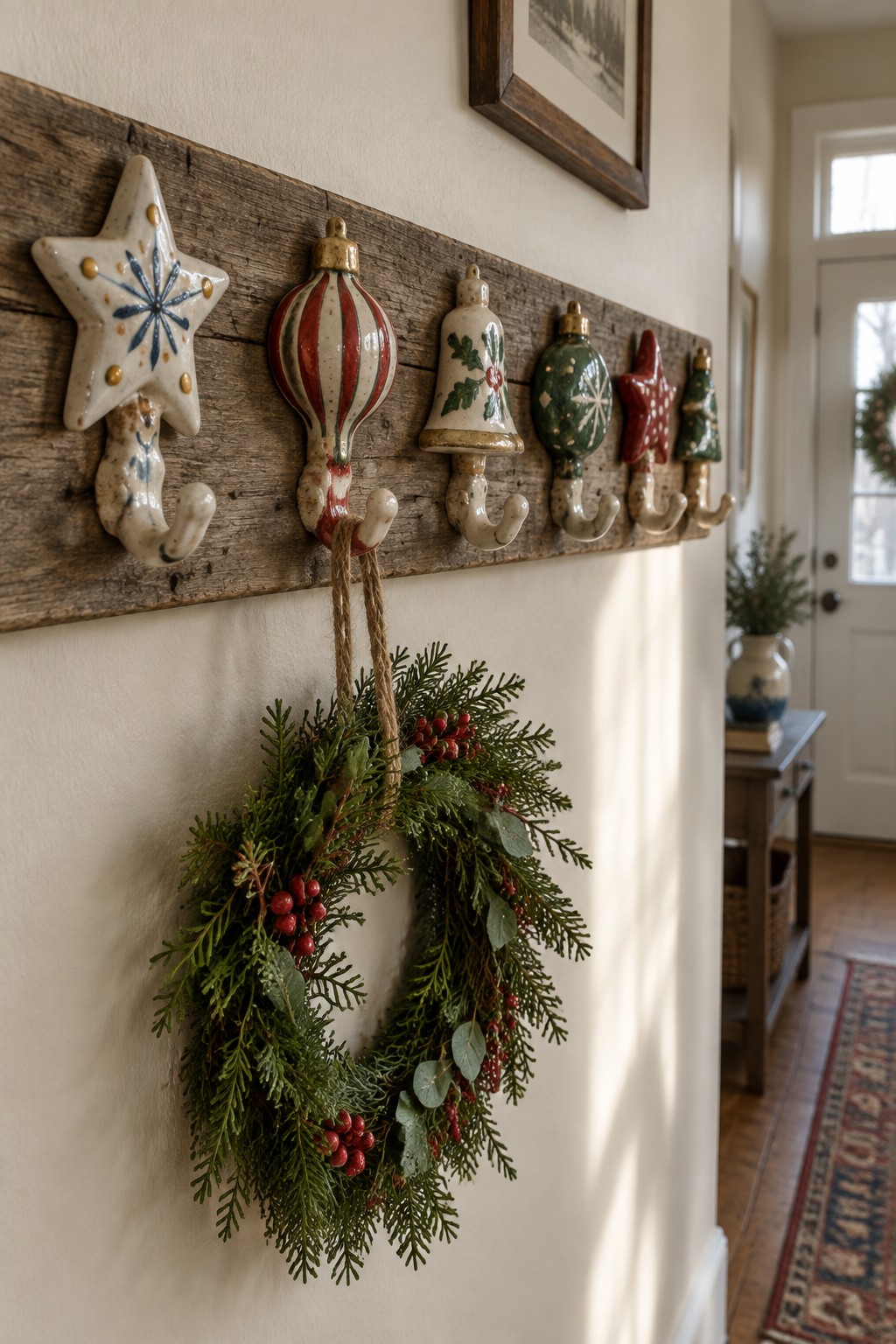
Ceramic hooks formed as Christmas ornaments turn a basic wall rack into seasonal storage. Each hook is shaped like a different ornament such as a star, bell, striped bauble, or tree, then painted with colored glazes before firing. The pieces mount onto a wooden board that can be hung anywhere a row of hooks is needed. This approach keeps the functional hook shape while adding clear holiday motifs through the sculpted forms and surface color.
What makes this idea useful is that the ornament shapes already provide the visual interest, so you do not need extra carving or complex glazing. A shorter version with three hooks works well above a bench or near a door for coats and bags during the season. You could also make single hooks on small wood scraps to sell or gift as individual wreath or stocking holders. The painted details stand out best on light clay with a few strong colors rather than many layers.
Ceramic Ornament Napkin Rings
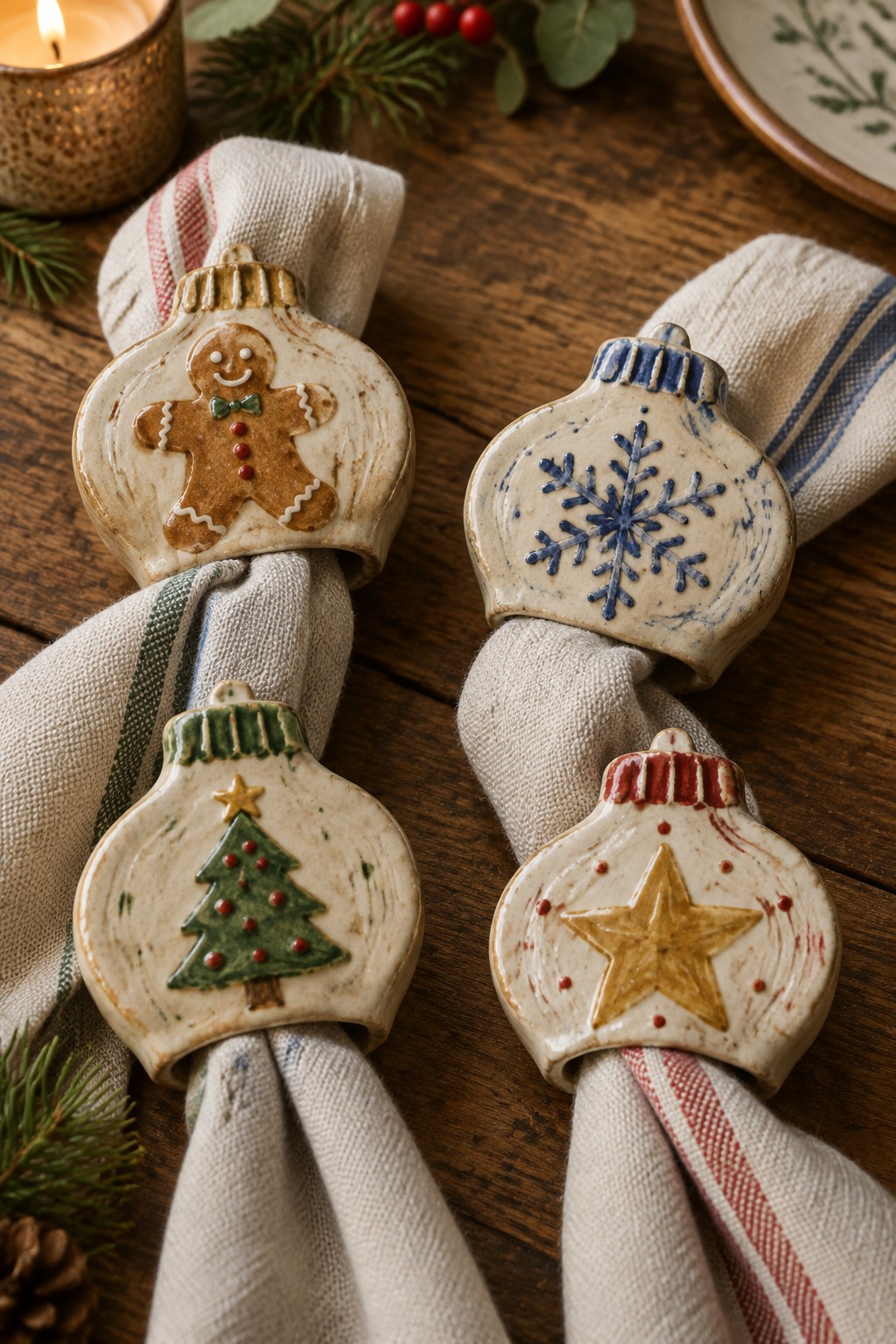
These napkin rings are made by shaping clay into the rounded bulb form of a Christmas ornament, then adding a small cap detail at the top. Each ring is finished with a cream glaze and a different painted motif such as a gingerbread figure, snowflake, tree, or star. The opening is sized to slide over a folded cloth napkin, turning the ornament shape into a functional table accessory rather than just wall decor.
What makes this idea useful is that the ornament form already suggests a finished project, so you can focus on surface decoration instead of building a new shape from scratch. The same bulb body can be adapted with different holiday symbols or simplified to solid colors if you want quicker results. Sets of four or six work well for gifting because they are compact, easy to pack, and add a clear holiday detail to any table setting without taking up much storage space.
Ceramic Bead Garland Ornaments
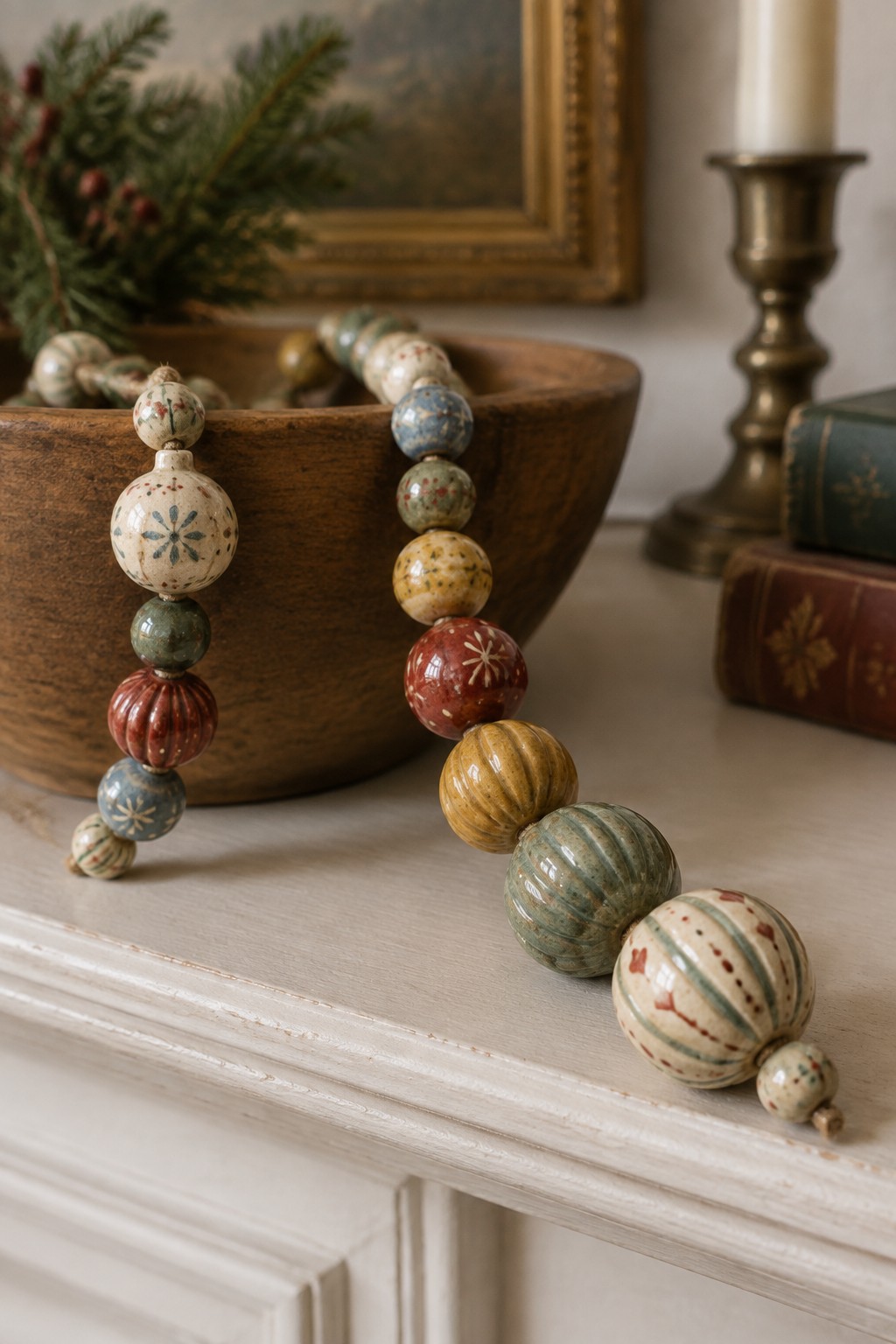
A strand of individually formed ceramic beads creates a flexible holiday garland when each bead receives its own shape and painted pattern. The beads range from smooth rounds to ribbed or fluted forms, finished with simple underglaze motifs like stars, stripes, and dots in muted reds, greens, and ochres. This project fits the decor object category and works because the varied sizes and surface textures keep the strand interesting when hung or draped without extra construction.
What makes this idea useful is how quickly the finished beads can be strung on cord and moved between a mantel, bowl, or tree. You can adapt the same bead shapes into smaller individual ornaments or cluster a few larger ones on a gift tag. The painted details photograph cleanly against wood or neutral surfaces, which helps the project perform well when shared as a repeatable idea.
Ceramic Candle Wreath with Ornament Clusters
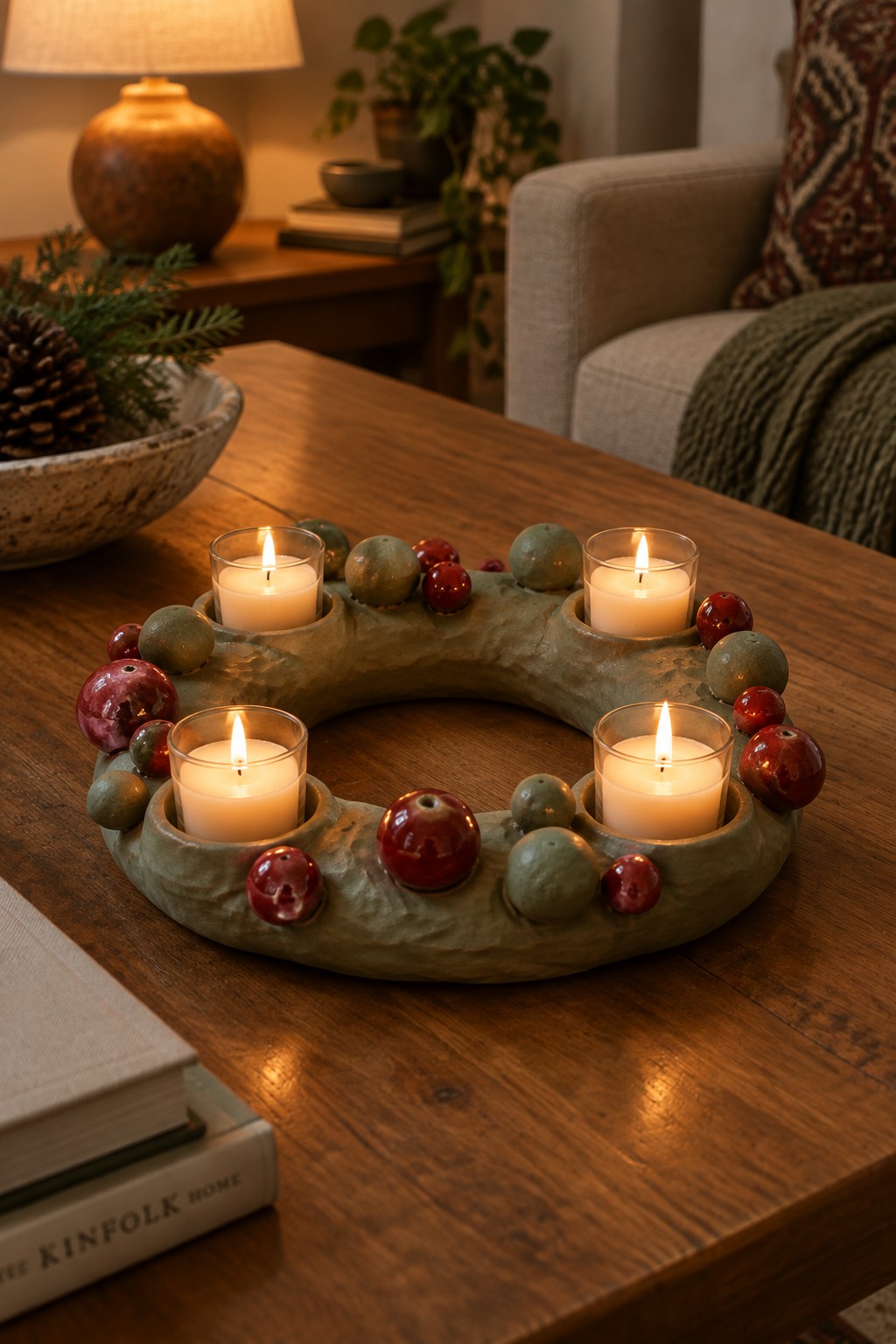
This project is a handbuilt clay ring that holds four or five tea lights in recessed wells spaced evenly around the circle. Small sculpted spheres in glossy red and matte green are attached directly to the surface, clustering around the candle openings to create a wreath effect. The thick, uneven walls and visible tool marks give the piece a solid, low-fired look that reads as pottery rather than cast resin. The simple round form keeps the focus on the added ornament details instead of complicated carving.
What makes this idea useful is how easily the same ring shape can be scaled down for two candles or widened for a larger table. You can swap the berry clusters for stars, bells, or plain dots depending on the holiday, and the neutral green glaze works with both rustic and modern settings. For gifts, a smaller version fits nicely on a mantel or side table without taking up much space. The built-in candle wells also keep wax contained, which makes cleanup simpler than using a flat tray.
Ceramic Tree Stand for Hanging Ornaments
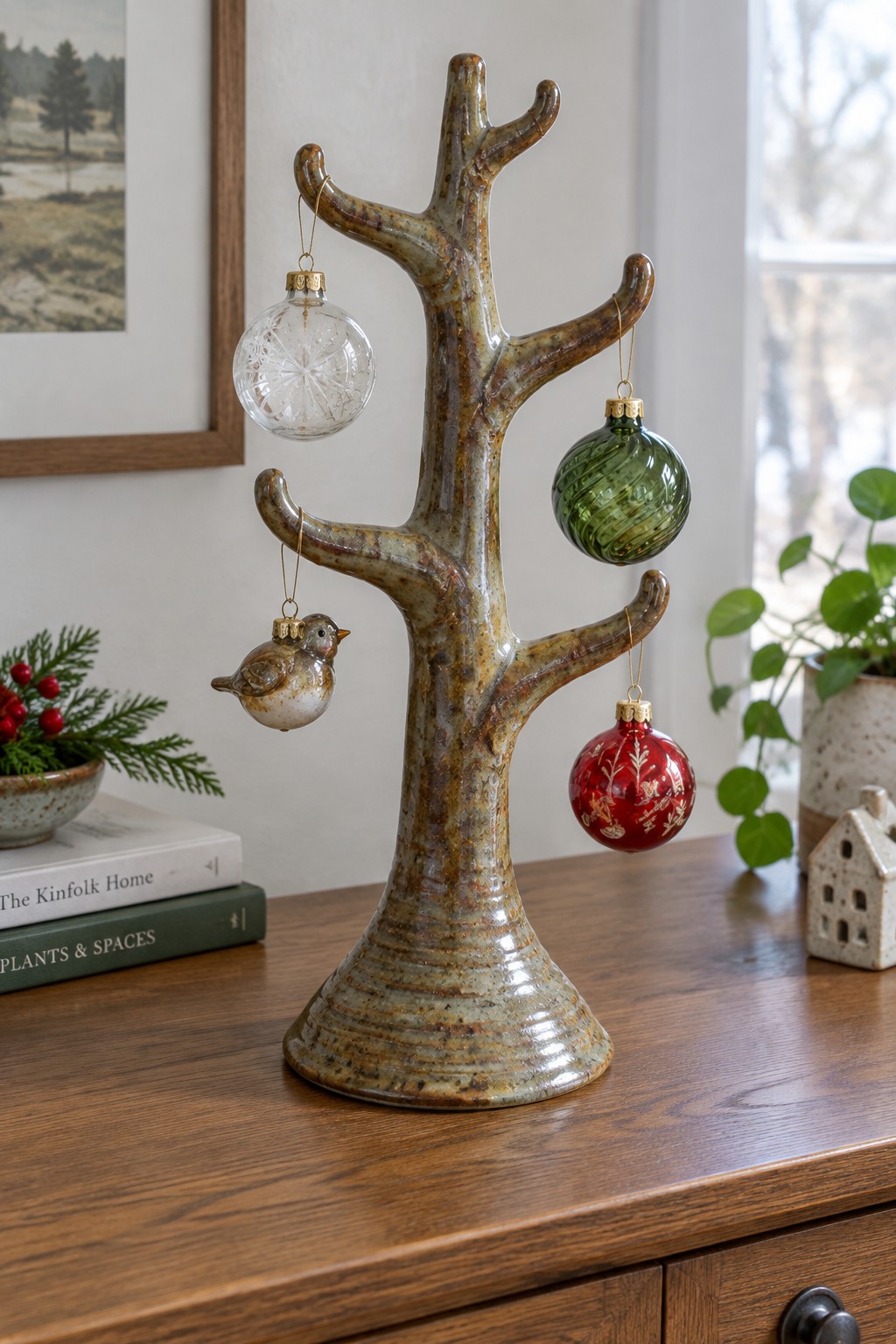
A ceramic tree form works as a dedicated holder for small holiday ornaments. The branches include built-in loops that let you hang baubles and a small bird figure without extra hooks or wire. The mottled glaze in neutral tones keeps attention on the ornaments while the tapered base keeps the whole piece stable on a flat surface.
This kind of stand fits on a mantel, entry table, or bookshelf where you want to show off a handful of special ornaments. You can change the number and placement of branches to match the size of your collection or shorten the trunk for a lower profile version. The same shape could be reworked into a jewelry tree or a small plant stake by adjusting the loop sizes and base width.
Lidded Ceramic Box for Storing Small Ornaments
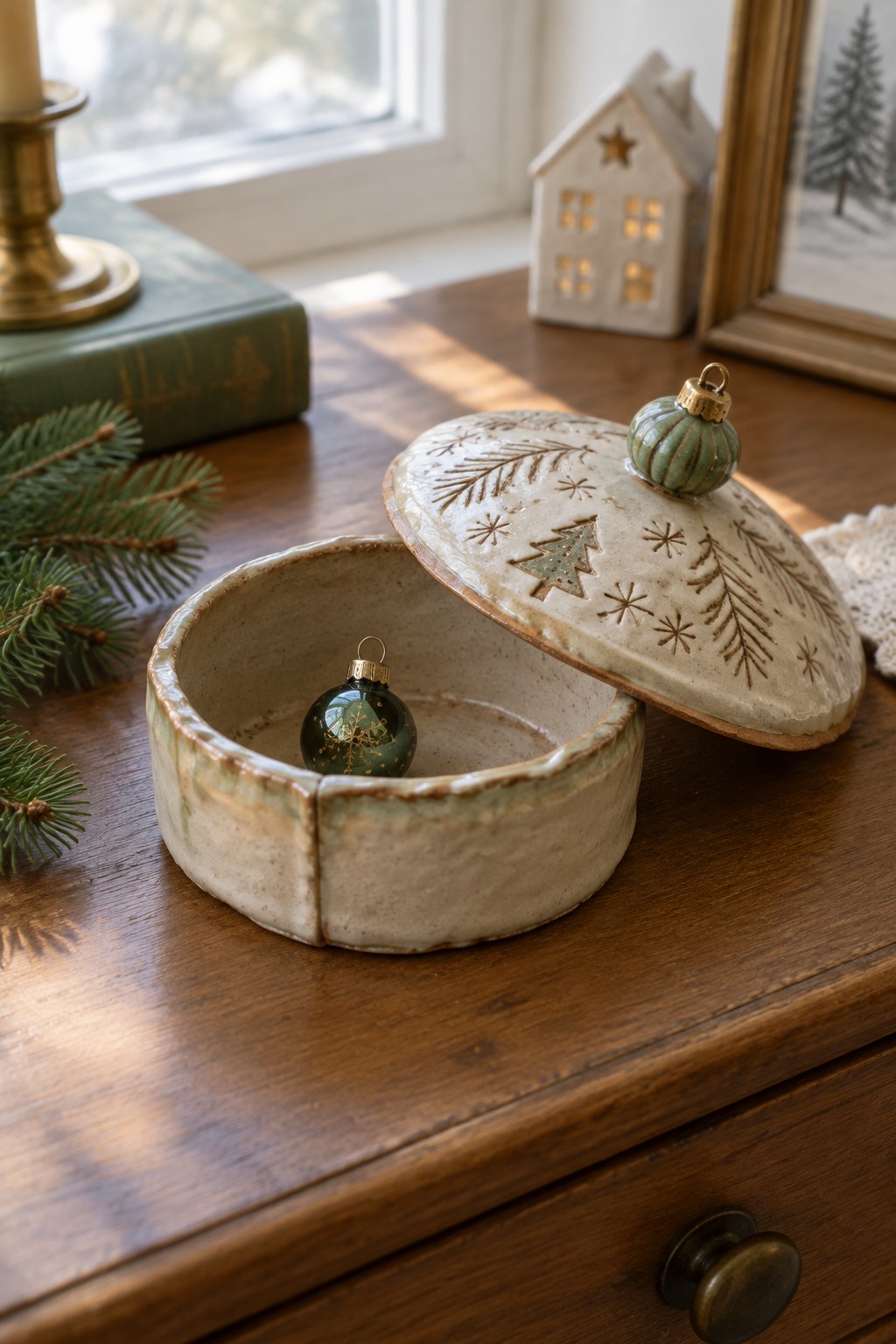
A low, round ceramic box with a fitted lid gives you a dedicated spot to keep a handful of small Christmas ornaments together. The lid features etched lines of pine branches, snowflakes, and a simple tree, while a miniature clay ornament attached to the top acts as the knob. The body stays unglazed on the interior and carries a soft matte finish outside that keeps attention on the carved patterns.
The small scale works well on a shelf or nightstand where larger containers would feel out of place. You can repeat the etched motif on a matching tray or shorten the same lid design for a set of smaller ring dishes. For a gift, this box offers a practical way to present one or two special ornaments without needing extra wrapping.
Frequently Asked Questions
What kind of clay is recommended for making Christmas ornaments that will last for years? Use a mid-range stoneware clay that fires to cone 6. This type provides strength and allows for beautiful glaze results without being too fragile.
How can beginners get started with these pottery projects if they have no experience? Start with simple hand-building techniques like slab rolling and cutting shapes with cookie cutters. Many of the projects use these methods and do not require a wheel.
What safety precautions should I take when glazing and firing the ornaments? Always work in a well-ventilated area when applying glazes. Follow the kiln manufacturer’s instructions for firing schedules to avoid accidents.
How do I add a hanging loop to my pottery ornaments? Before the clay dries, poke a small hole near the top with a straw or tool. After firing, thread a ribbon or wire through the hole.
Can I make these projects without a kiln using air-dry clay? Yes, many of the designs can be adapted for air-dry clay, though they may not be as durable or waterproof as fired pottery. Seal them with a clear acrylic spray for better longevity.

Pottery Path is my cozy corner of the internet where I share clay ideas, pottery inspiration, and simple projects you can recreate at home. I love exploring everything from air dry clay to handbuilt pottery to cute minis that brighten your day. My goal is to make clay crafting feel easy, fun, and welcoming for anyone who wants to try it.
You will find beginner friendly tutorials, creative pottery painting ideas, and lots of warm inspiration for slow and happy crafting. If you enjoy hands on creativity, this space will feel like home.