
I started pottery with hand building because it felt less intimidating than learning to use a wheel right away.
Most of my early pieces were simple shapes made from slabs or coils I could form on the kitchen table.
A few of those first projects actually held up after firing and I still use them around the house.
If you are just beginning I put together some ideas that stayed within what a beginner can manage with basic tools.
These projects focus on small useful items rather than anything too complicated.
Polka Dot Painted Mug
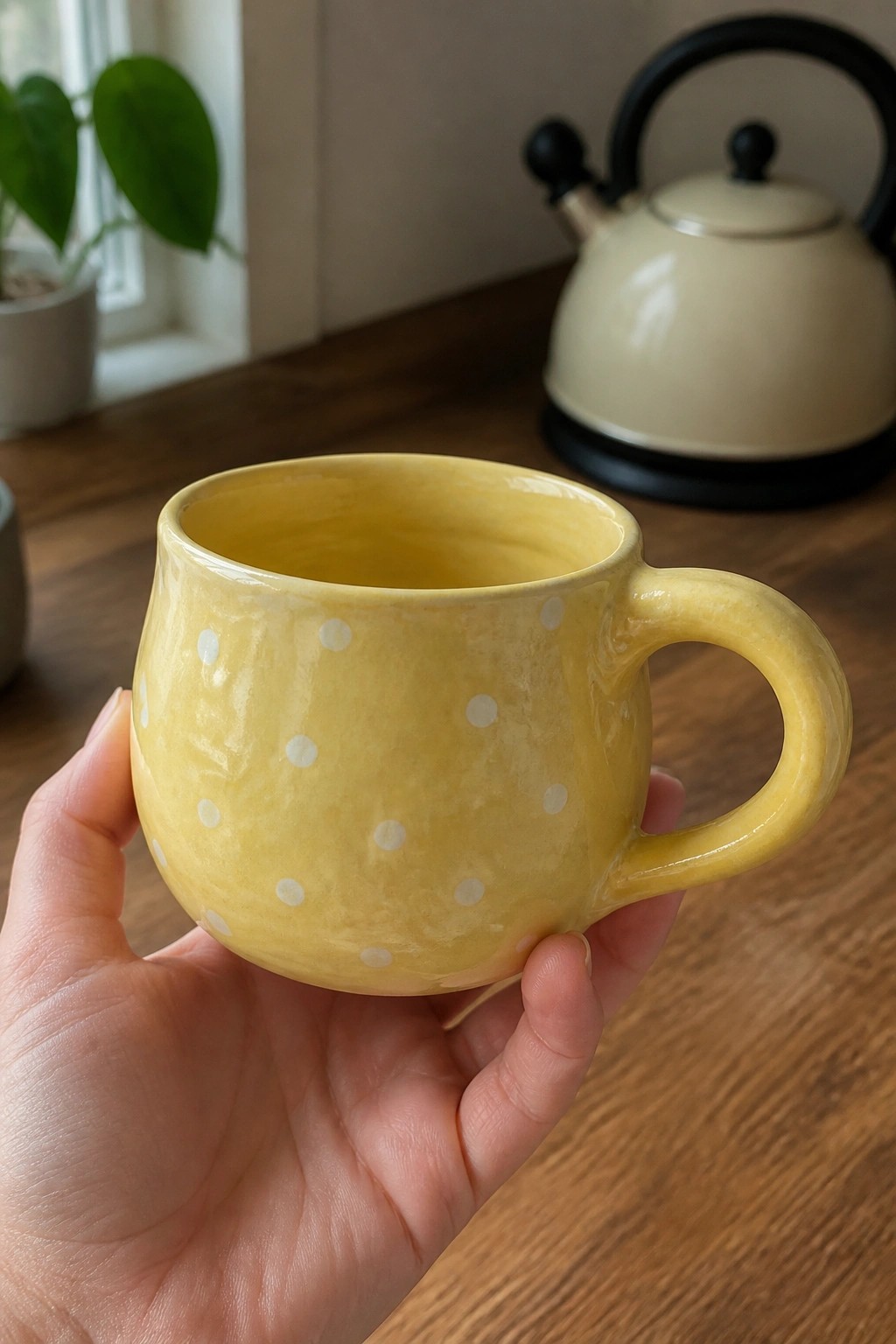
A handmade ceramic mug finished in a bright yellow glaze and decorated with scattered white dots creates a simple but clear pattern across the rounded form. The dots sit evenly enough to feel intentional while the glossy surface helps the white stand out against the yellow. This project falls into the painted motif category and serves as an everyday kitchen item.
What makes this idea useful is how little extra skill the dots require once the base glaze is on. The shape works well for coffee or tea and can be adapted by swapping the yellow for another solid color or placing dots on a smaller bowl. For a gift, the same pattern translates easily to a matching set of two or three mugs.
Strawberry Shaped Small Bowl
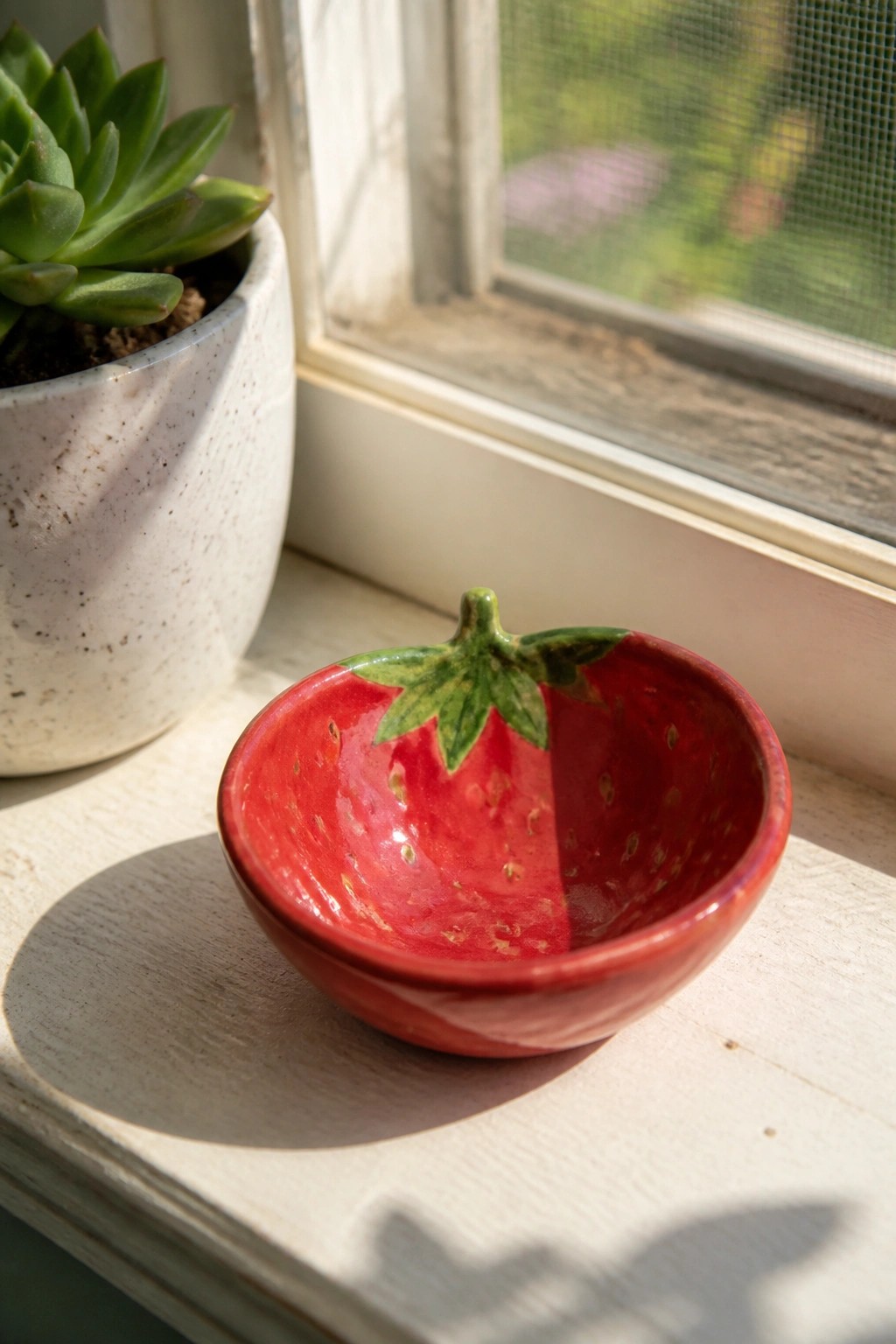
A strawberry shaped bowl is a straightforward hand building project that starts with a simple rounded form pinched or draped into shape. The red glaze with scattered light speckles creates the fruit surface while the attached green leaf detail on the rim gives it a clear identity without extra pieces. This type of project falls into the category of small decorative bowls that can hold jewelry, loose items, or single servings.
The small scale makes it simple to complete in one or two sessions and easy to store while drying. You could repeat the same basic shape with different fruit details like a lemon or tomato to build a set for a kitchen counter or desk. For a gift, something like this works because the sculpted leaf and bright color give it a finished look without needing complex carving or multiple glazes.
Leaf Border Rectangular Tray
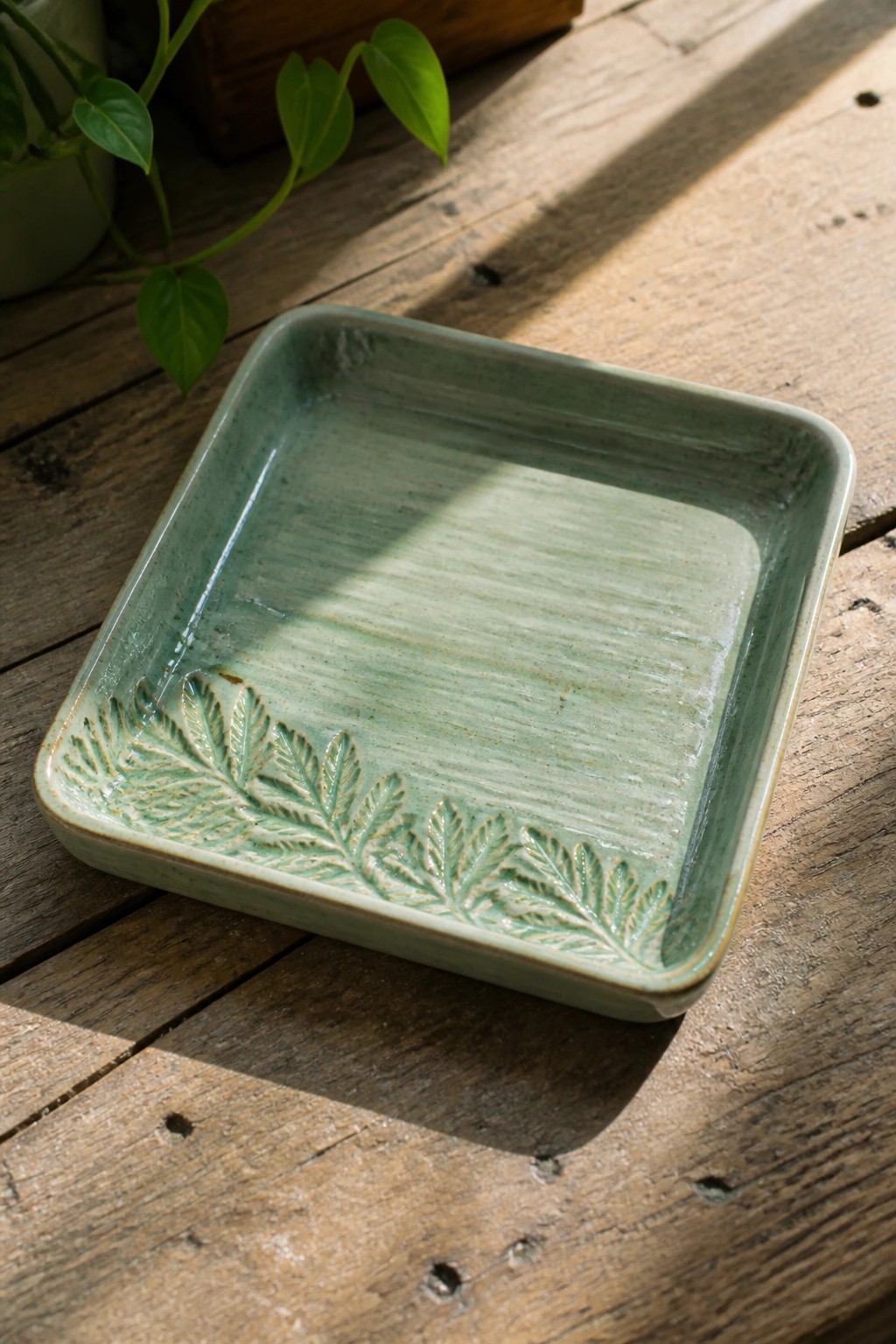
A hand-built rectangular ceramic tray makes a simple catch-all dish for small items. The design uses a row of pressed fern leaves along one inner edge to add raised texture against the otherwise smooth surface. A soft green glaze with light horizontal streaks keeps the focus on the sculpted detail while giving the piece an earthy finish. This approach fits the tray category and works for anyone trying basic hand-building with added surface texture.
The rectangular shape gives you a stable base that works on a nightstand or desk for jewelry or keys. You can adapt the fern border by using different leaf stamps or running the motif along two sides instead of one. Scaling the same idea down creates a smaller soap dish or ring holder without changing the technique much. The single-color glaze and relief detail make the project easy to photograph for sharing.
Cat Face Planter for Small Succulents
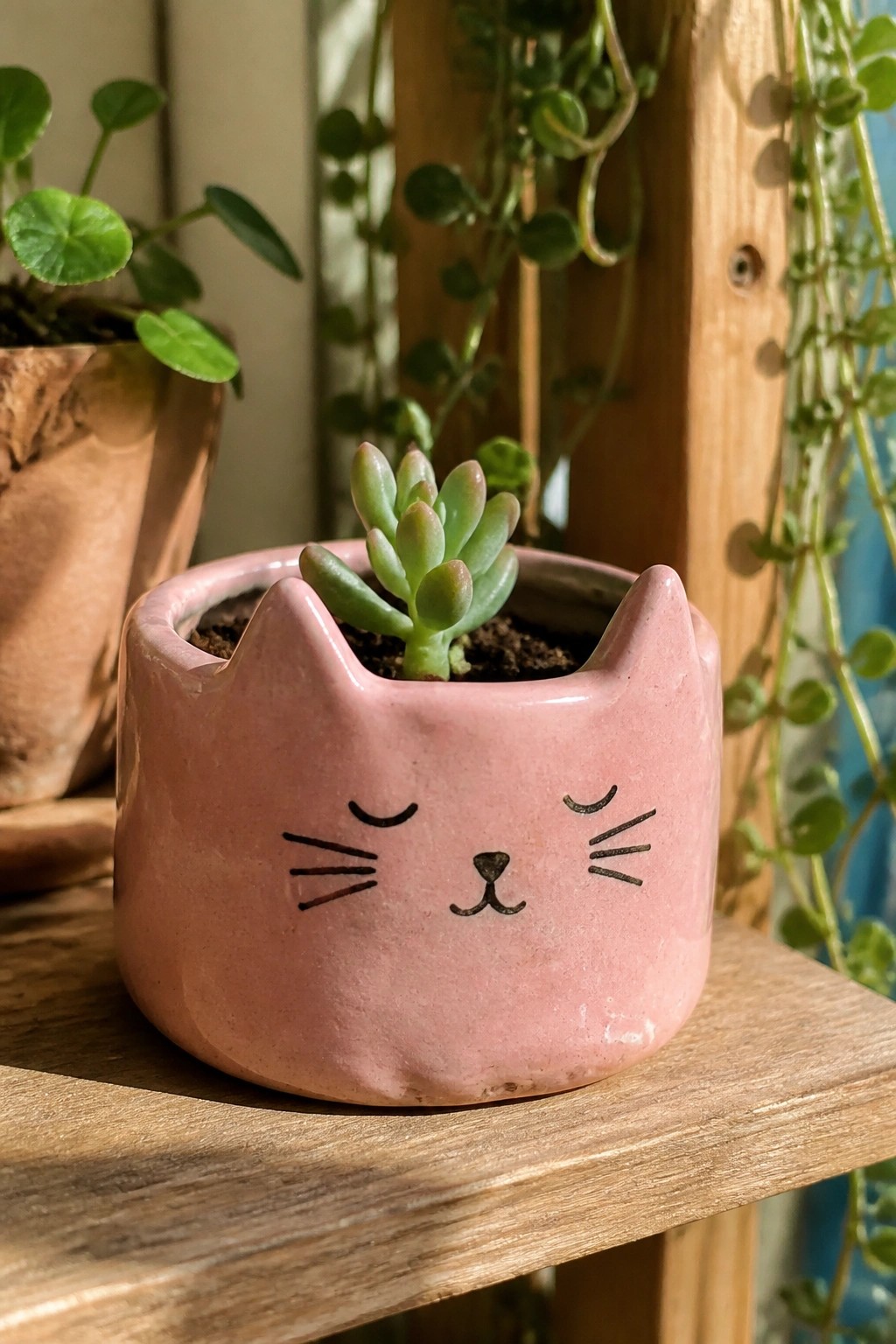
A small clay planter shaped with upright ears along the rim creates a simple cat face when black lines are painted on the front for eyes, nose, and whiskers. The glossy pink glaze covers the outside while the inside stays unglazed to hold soil. This approach turns a basic pinch or coil pot into a recognizable animal form without needing complex sculpting. The result is a compact planter suited for one small succulent or cutting.
What makes this idea useful is the small scale that fits on a shelf or desk without crowding other items. You could repeat the same painted face on a plain cylinder or bowl shape if ear sculpting feels tricky. For a gift, something like this works well paired with a rooted plant cutting. The painted motif also photographs clearly, which helps the finished piece stand out when shared as inspiration.
Leaf-Shaped Ceramic Spoon Rest

A leaf-shaped ceramic dish serves as a spoon rest or small kitchen tray. The design uses a simple leaf outline with raised edges and vein lines that hold a contrasting glaze color to define the pattern. This creates a functional piece that keeps utensils off surfaces during cooking while fitting the hand-building approach of shaping flat clay slabs.
What makes this idea useful is how the elongated form sits flat beside the stove without taking much counter space. You could adapt it by choosing different leaf shapes or making a smaller version for a jewelry dish. In a kitchen, this kind of piece keeps things practical and easy to wipe clean after use.
Scalloped Ring Dish with Crackle Glaze
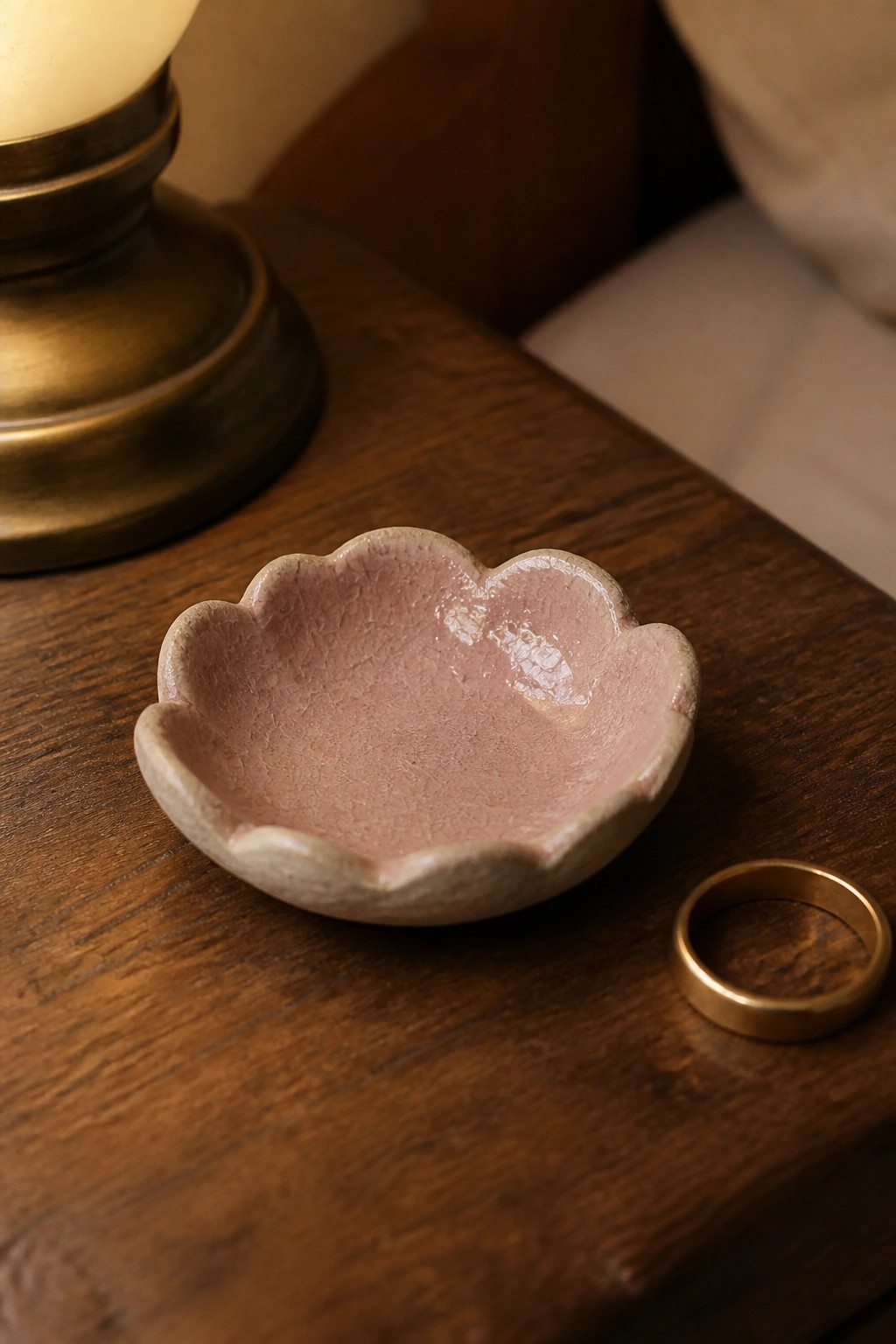
A hand-built ring dish with a scalloped petal rim gives you a compact holder for jewelry or small items. The shallow bowl shape and soft pink crackle glaze create a textured surface that shows off the handmade form without needing extra decoration. This type of project fits the ring dish category and stays small enough to finish in one or two sessions.
The small scale makes this easy to adapt by swapping the glaze color or adjusting how deep the petals curve. It works well on a nightstand for rings or in a bathroom for earrings and works as a quick gift because the shape is recognizable but still simple to personalize. You could repeat the same rim technique on a slightly larger tray to hold keys or loose change instead.
Mushroom Tealight Holder
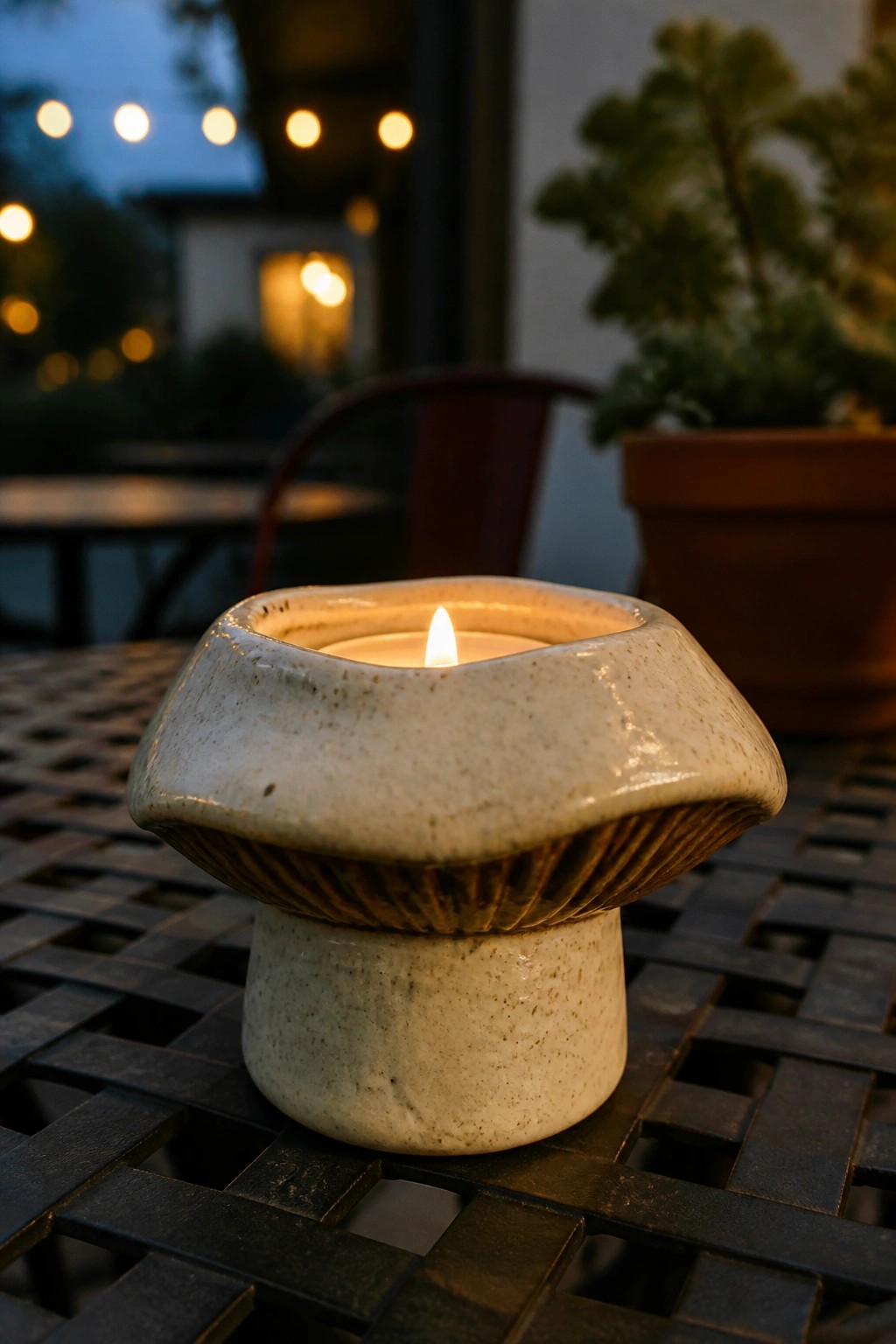
A mushroom-shaped candle holder built from two simple forms gives beginners a clear hand-building project. The top section is pinched or slabbed into a wide, shallow bowl to hold a tealight, while the stem is rolled into a short cylinder that lifts the piece off the surface. Scoring lines on the underside of the cap add a quick texture that reads as gills, and a light speckled glaze keeps the surface finish simple while still showing the clay body.
What makes this idea useful is that the basic shape works at different sizes without extra tools. You can shorten the stem for a lower profile or widen the cap if you want to fit a slightly larger candle. The same construction can be adapted into a tiny planter or a ring dish by leaving the top open and skipping the candle well. In a small space, this form takes up little room on a shelf or desk while still reading as intentional decor.
Sun Motif Hanging Plaque
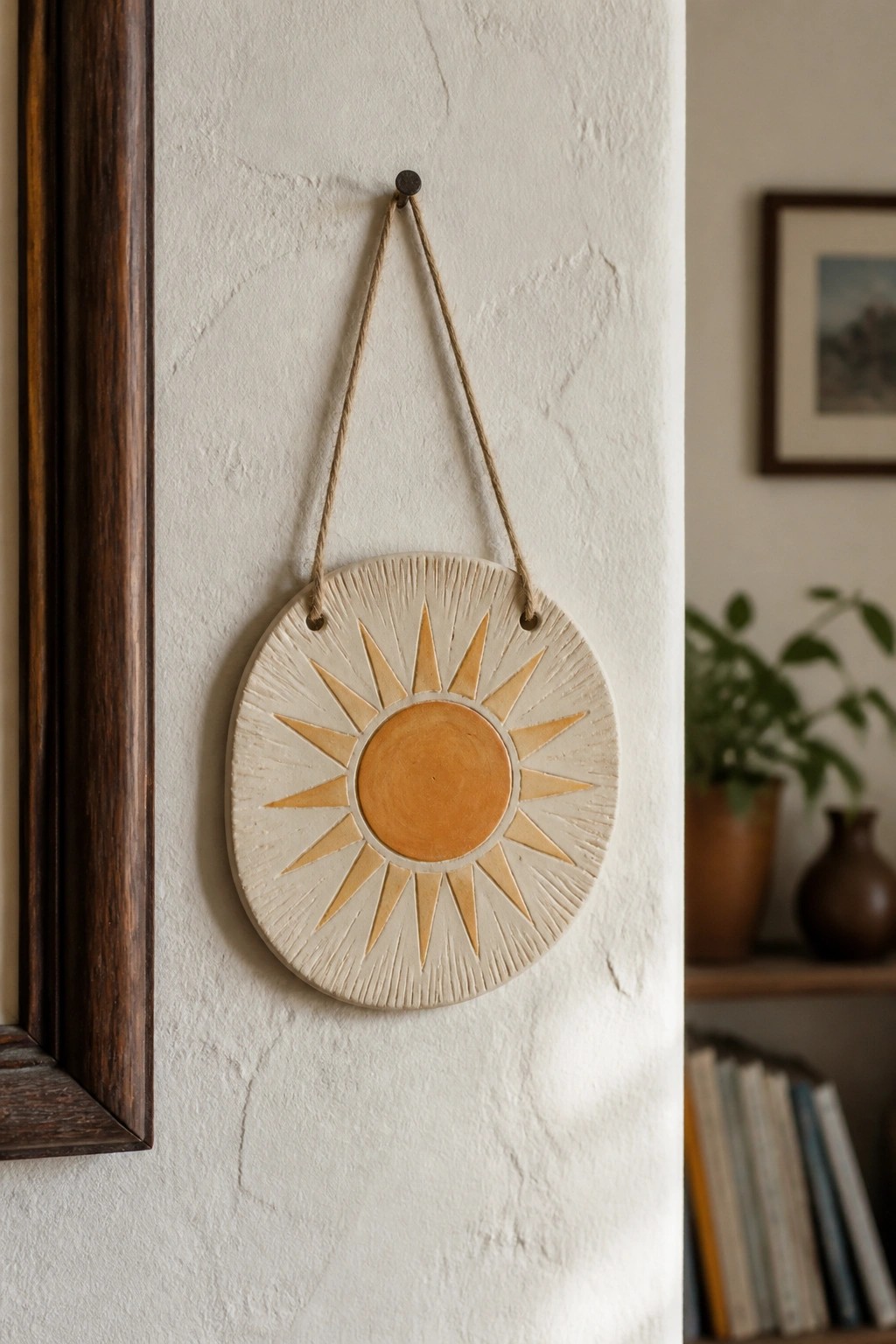
A flat round clay plaque with a carved and painted sun works as a simple wall decoration. The center circle receives a solid warm tone while the pointed rays are incised and filled with a lighter wash against the off-white clay body. Two small holes drilled near the rim let the piece hang from cord or wire. This approach fits the decor object category for hand-building since it requires only rolling, cutting, and basic surface carving.
What makes this idea useful is the flat disc shape that needs little shelf space yet still reads clearly on a wall. You can change the motif to a crescent, star, or abstract lines while keeping the same size and hanging method. The painted rays give enough visual detail without extra sculpting, so the same base can be adapted into a small trivet or a set of matching tiles. For a gift, something like this slips into a box easily and suits an entryway or plant shelf.
Oval Ceramic Soap Dish with Drainage Ridges

A handmade oval soap dish works well as a bathroom item because the raised ridges across the base keep the bar elevated and let water drain off instead of pooling underneath. The shallow tray shape contains drips while the speckled light green glaze adds subtle texture without competing with other counter items. This design fits the category of simple functional pottery that solves a common daily problem in a compact form.
What makes this idea useful is how the ridges turn a basic tray into something more practical for daily use. You could adapt the same oval form with fewer or wider bars, or switch the glaze to a matte white or terracotta tone for a different look. The small scale makes it easy to fit on crowded sinks or tuck into a shower shelf, and the shape could be lengthened into a longer version for holding multiple bars or a sponge. For a gift, something like this stands out because it is both decorative and actually used every day.
Smiley Face Ceramic Toothbrush Holder
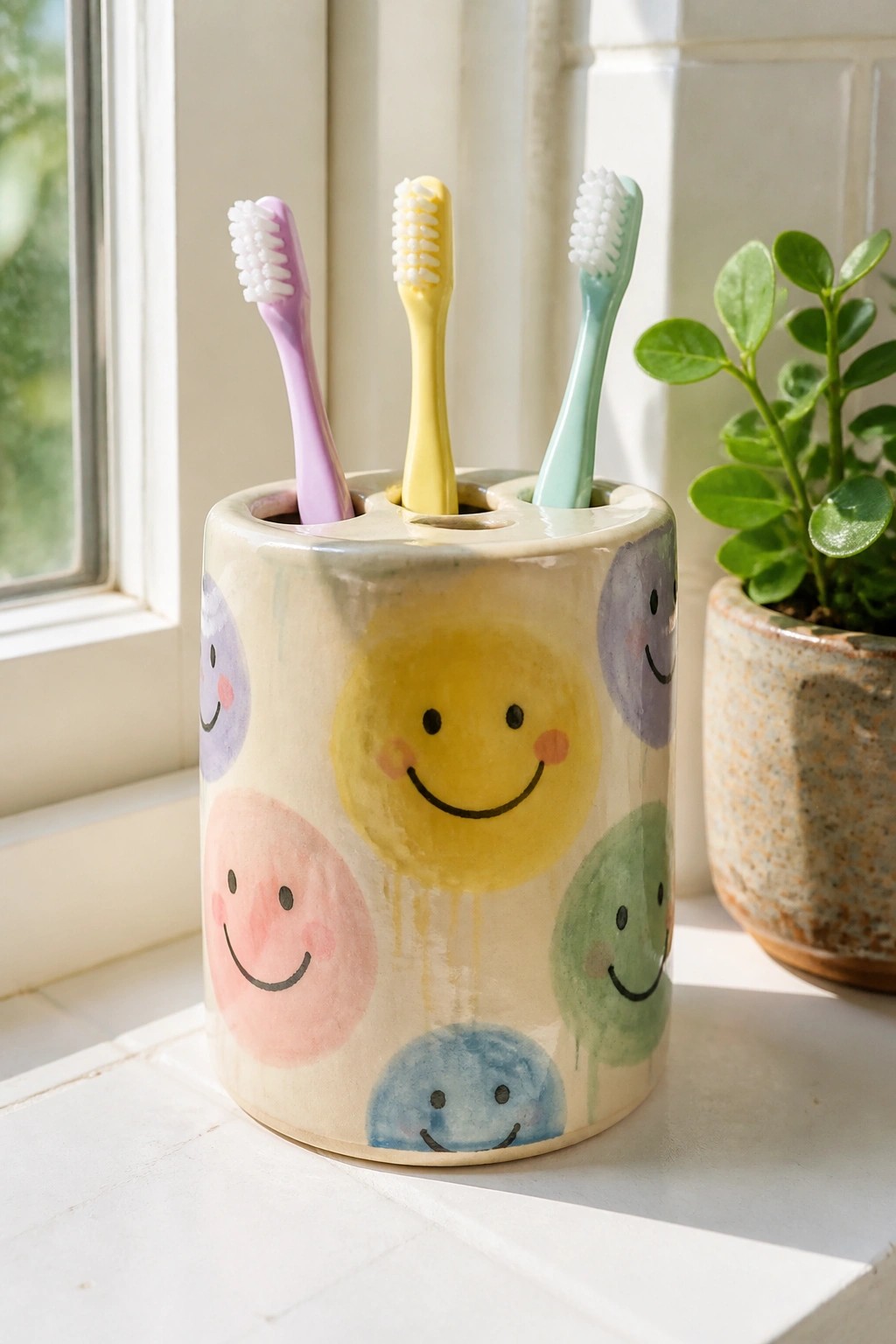
A hand-built ceramic toothbrush holder works well as a bathroom item when the goal is simple storage for multiple brushes. The cylindrical form with drilled openings keeps the brushes upright and separated. Soft watercolor-style circles in pastel tones, each containing a basic smiley face, create visual interest through repetition and color variation without requiring complex carving or sculpting.
What makes this idea useful is how the painted motif can be swapped for other simple shapes like stars or hearts while keeping the same form. The small scale makes it easy to place on a narrow ledge or shelf. This would be easy to turn into a desk pencil cup by changing the hole layout or into a small kitchen utensil holder by widening the openings.
Connected Salt and Pepper Cellar
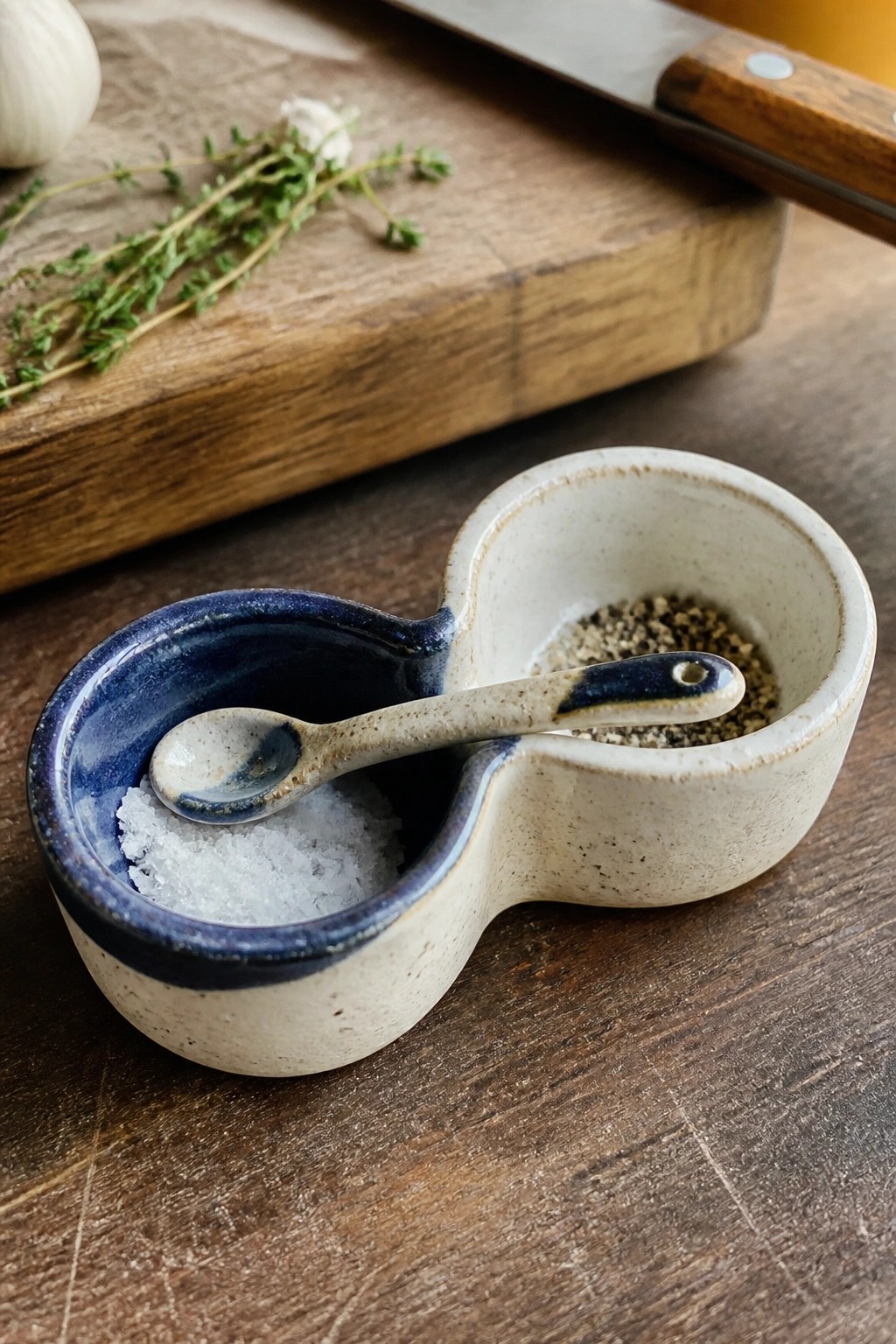
A small double-bowl dish formed from clay makes a practical salt and pepper cellar for everyday kitchen use. One compartment receives a dark blue glaze while the other stays in its natural speckled finish, and a short handmade spoon spans the narrow connection between them. The joined shape keeps both seasonings in one piece so they stay together on the counter or table.
What makes this idea useful is the way the two sections share a single base without extra hardware or trays. You can swap the glaze on one side for a different color or leave both sides unglazed to match your existing dishes. The compact size works well next to a stove or on a dining table, and the same connected form could be widened slightly to hold oil and vinegar or narrowed for spice blends.
Petal Shaped Ring Dish
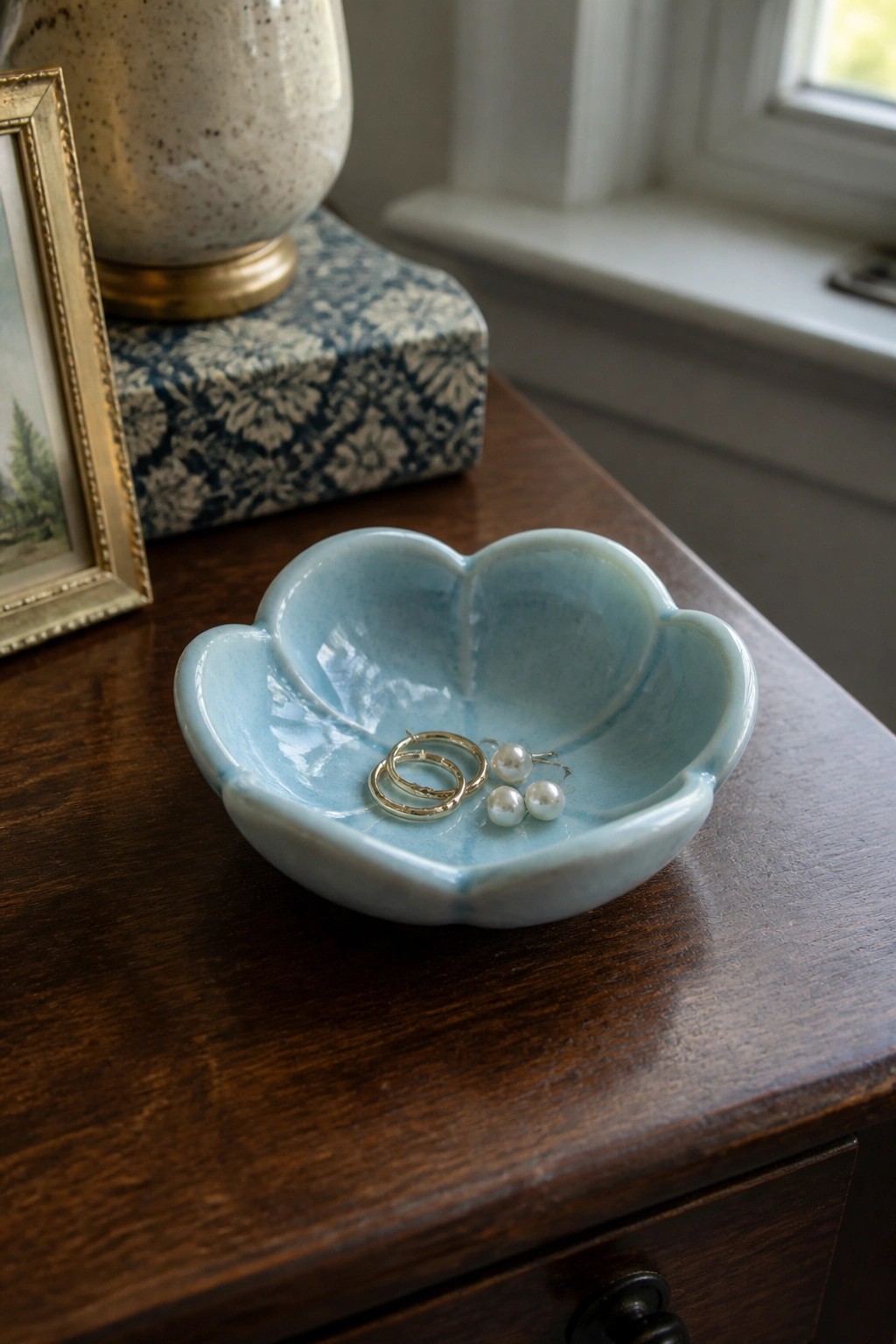
A small ceramic dish formed with six rounded lobes creates a shallow bowl that works as a ring dish or earring holder. The soft blue glaze covers the interior and edges while the low profile keeps the piece compact. This shape keeps small items contained without needing a lid or deep walls.
The lobed rim stops jewelry from rolling off while the open form makes pieces easy to grab. You can rework the same idea with fewer lobes for a simpler look or scale it slightly larger to hold keys near a door. The small size means it forms quickly from a slab and fits on a nightstand or bathroom counter without crowding other objects.
Yarn Bowl with Built-In Notch
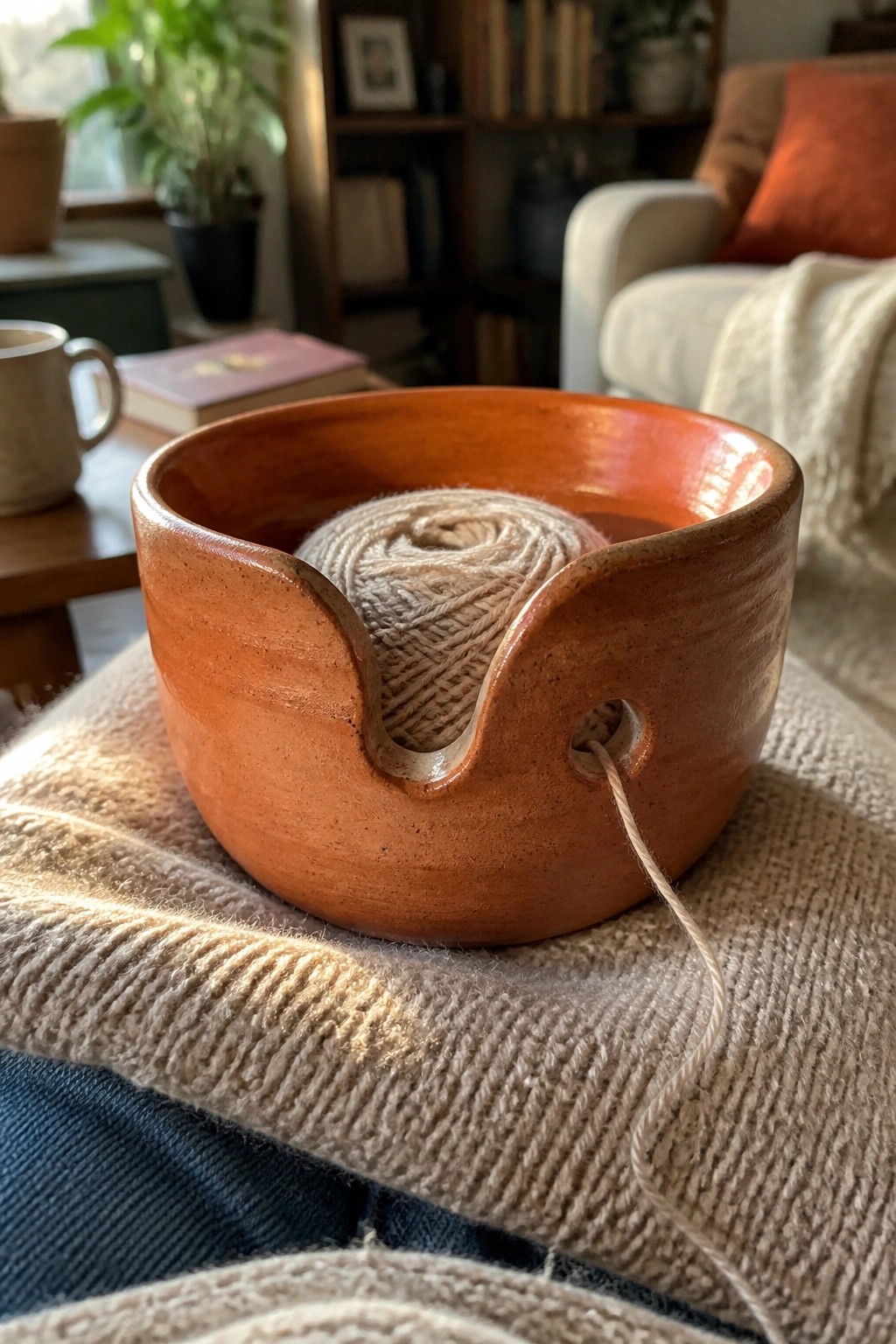
A yarn bowl is a straightforward hand-building project that starts with a simple rounded bowl form and adds a wide notch cut into one side plus a small drilled hole nearby. The notch cradles the yarn ball while the hole guides the strand outward, keeping it from rolling away or knotting during use. The warm orange-red glaze and slightly textured surface give the piece enough weight to stay put on a lap or table without extra stabilization.
What makes this idea useful is how the notch and hole turn an ordinary bowl into a dedicated tool that works on a couch, in a knitting bag, or on a craft table. The same basic shape can be made smaller for embroidery thread or widened for chunky yarns. You could also skip the hole and just use the notch if you want a quicker build. For gifts, this form stands out on Pinterest because it shows a clear function rather than just decoration.
Hand-Built Fox Figurine
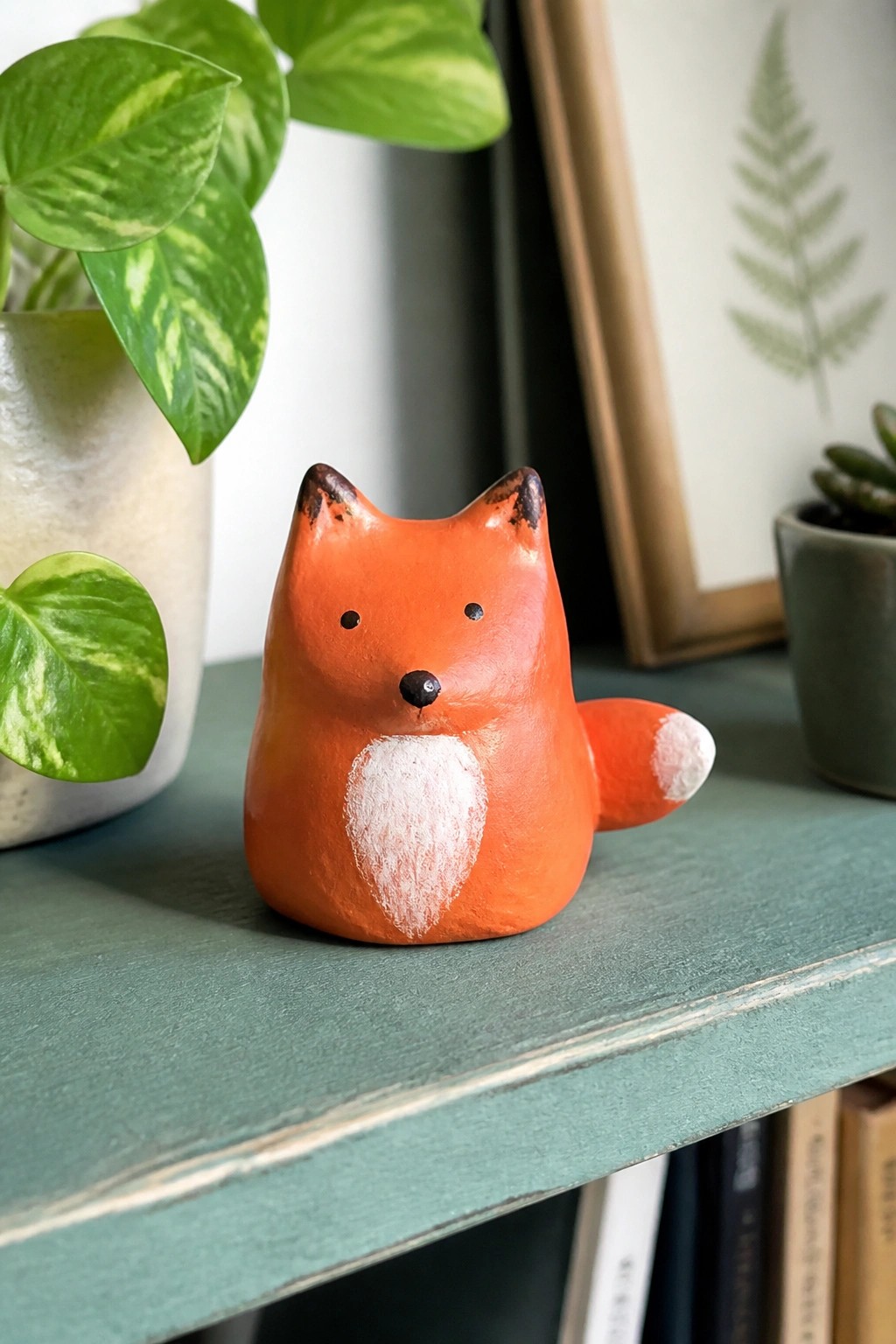
A fox figurine makes a straightforward hand-building project using a basic rounded body, pinched ears, and a short tail. Form the shape from one piece of clay so it stands steadily, then add a white slip or underglaze patch on the chest before the first firing. After bisque firing, apply an orange base color with black details on the ears and nose for clear contrast.
What makes this idea useful is the small scale, which uses little clay and fits easily on a desk or shelf. Change the ear and tail shape to create other animals like rabbits or bears without starting from scratch. The painted chest patch keeps the surface simple while still giving the piece a finished look that photographs well for sharing.
Star Cutout Essential Oil Burner

A small round ceramic bowl makes a practical essential oil burner when you leave the top open for water and oils and cut simple star shapes through the walls. The cutouts let light from a tea light or small candle inside shine outward while the clay itself holds the heat. Hand-building this shape is straightforward since you only need to form a basic bowl then punch or cut the stars before the clay dries. A matte glaze in a single muted color keeps attention on the light pattern instead of competing details.
What makes this idea useful is how the same bowl shape works on a nightstand or desk without taking much space. You can change the cutouts to moons, leaves, or simple dots to match different rooms or seasons. The design also adapts easily into a small candle holder if you skip the oil and water step. For a gift this stays low-pressure because the form is forgiving and the cutout step adds interest without extra tools.
Stamped Vegetable Utensil Holder
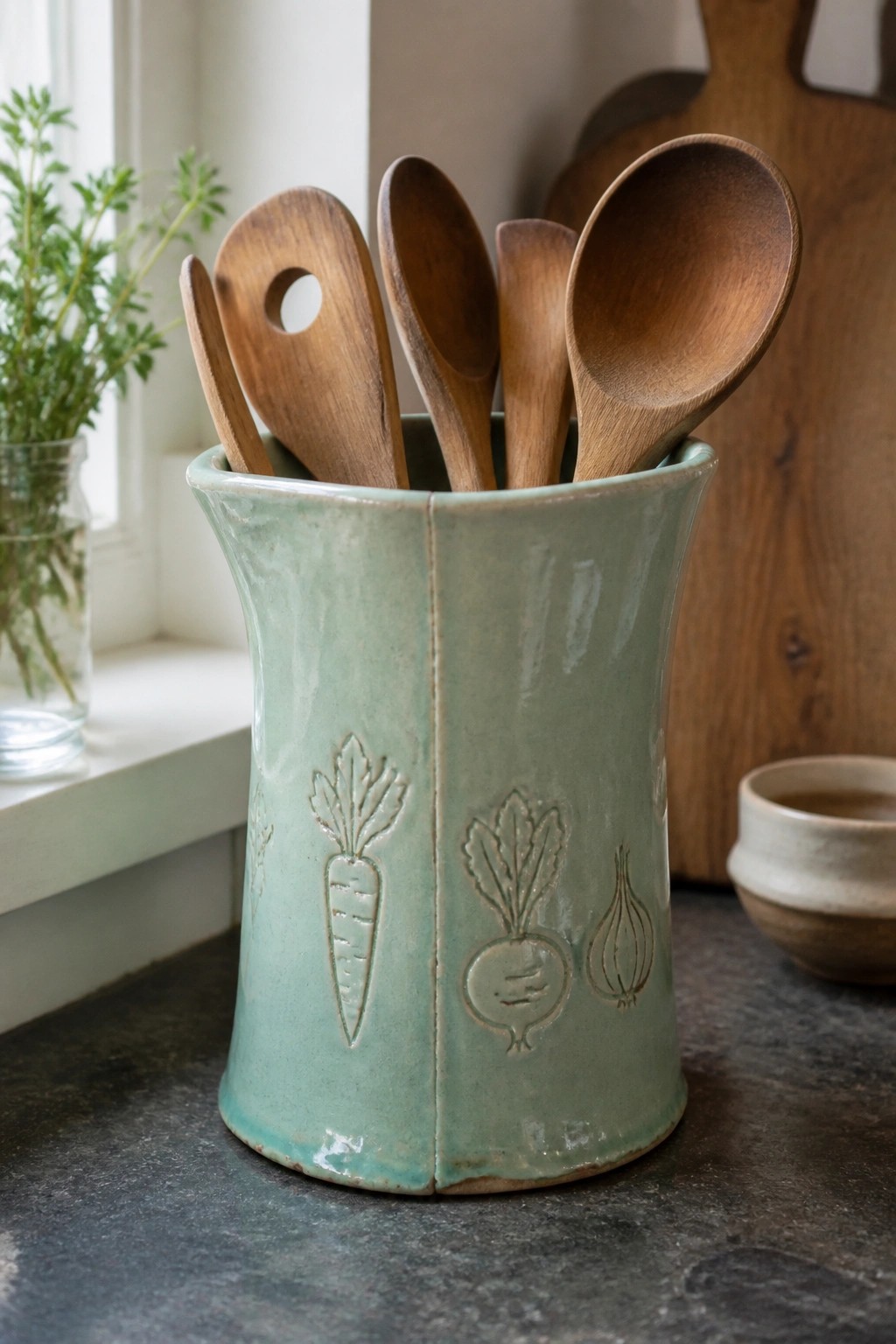
A hand-built ceramic utensil holder uses simple vegetable stamps pressed into the clay to create raised designs before glazing. This piece features a light green glaze that makes the carrot, beet, and onion motifs stand out on the curved surface. The form stays wide at the top and narrows slightly at the base to keep wooden spoons and spatulas from tipping. It serves as a practical kitchen item for storing tools near the stove or prep area.
What makes this idea useful is how the stamping method adds clear detail without complex carving. You can swap the vegetables for other simple shapes like leaves or geometric patterns to match different kitchen styles. The size works on a countertop or open shelf where you need easy reach for everyday tools. For a gift, the same idea could be made shorter to hold only a few utensils or widened into a small vase for dried herbs.
Nested Ceramic Measuring Spoons
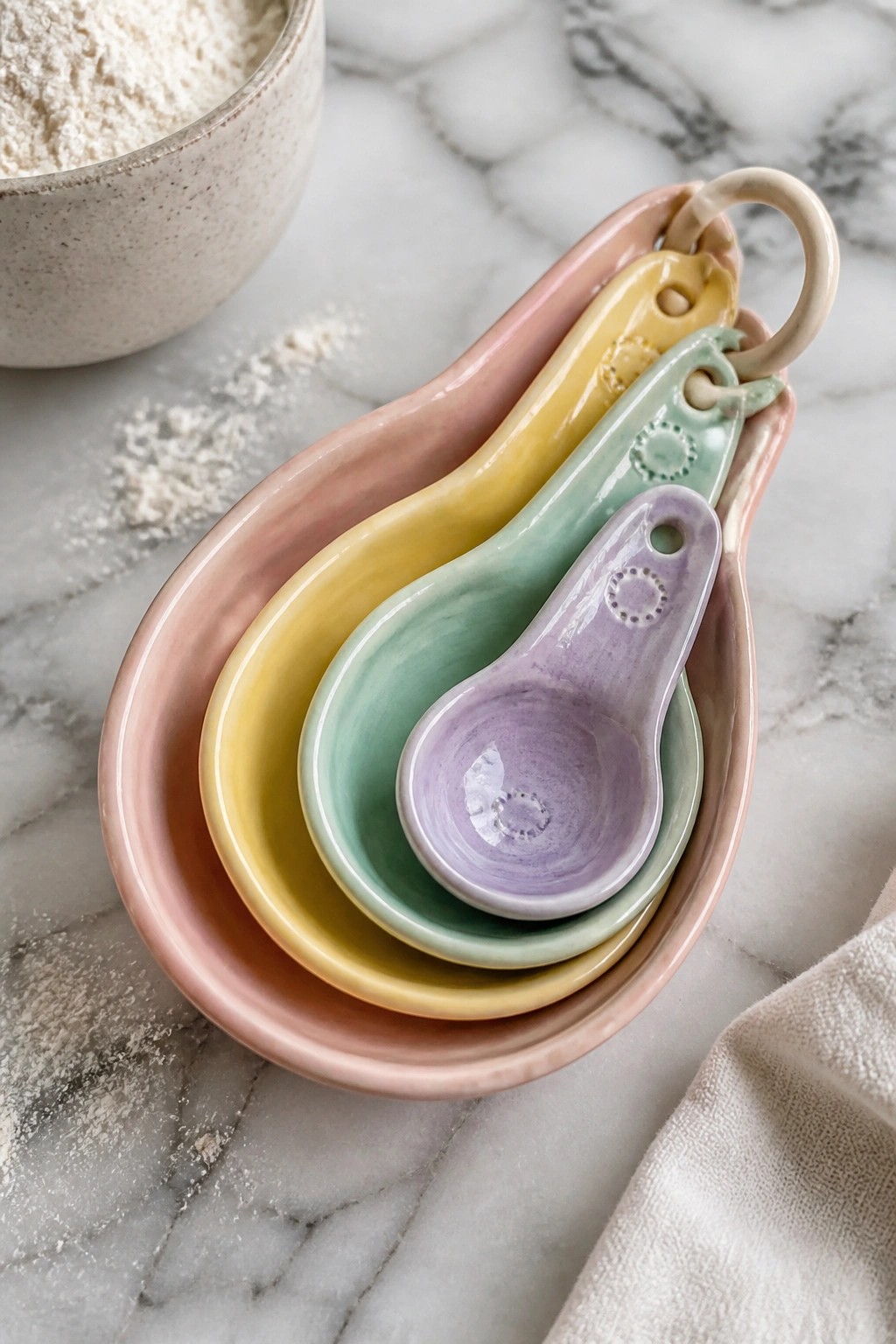
Handmade ceramic measuring spoons can be formed as a nesting set that hangs from a single ring. Each spoon is made in a different size and finished with its own glaze color so the pieces stay easy to tell apart. The oval bowl shape and short handles with small stamped marks keep the set compact and simple. This kitchen item works because the nesting design lets the spoons store together without extra hardware.
What makes this idea useful is how the spoons stay organized in one small bundle. You could swap the pastel colors for brighter tones or make just three sizes if you want a quicker project. In a kitchen, this kind of piece keeps measuring tools within reach while taking up little drawer space. The same nesting shape could be adapted into small scoops for spices or loose tea.
Kitchen Sponge Holder with Drainage
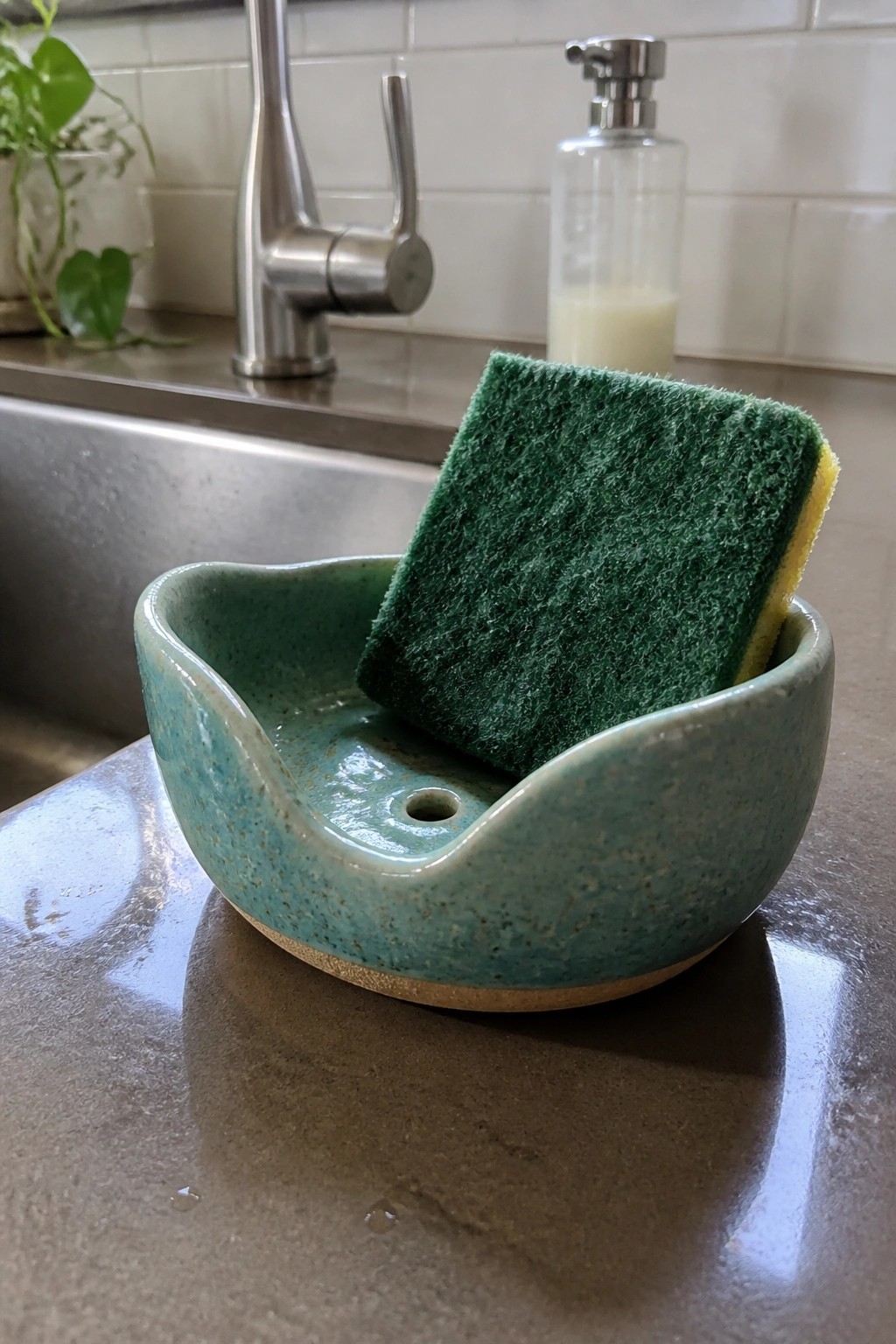
A hand-built sponge holder makes a practical kitchen item by propping a dish sponge upright so it dries faster. Form a small slab or pinched bowl with one raised side and cut a simple hole in the base to let water drain away. The speckled turquoise glaze keeps the surface easy to wipe clean while giving the holder a straightforward look that suits daily sink use.
What makes this idea useful is how the raised edge and drainage hole solve a common problem without extra parts. You can scale the dish wider for larger sponges or shorten the rim if you want it to sit flatter on the counter. In a kitchen this shape stays out of the way yet keeps the sponge accessible, and the same form adapts easily into a soap rest or small scrub pad tray.
Frequently Asked Questions
What basic tools and materials do I need to try the hand-building ideas in the article?
Start with a few pounds of air-dry or kiln-fired clay, a rolling pin or slab roller for flat pieces, a set of basic sculpting tools like ribs and loops, a sponge, and a wire cutter. Many beginners also keep a spray bottle handy to keep clay moist during building. These items let you tackle pinching, coiling, and slab methods without a big investment.
How can I stop my hand-built pieces from cracking as they dry?
Keep the clay at an even thickness throughout each project and cover finished work loosely with plastic for the first day or two so moisture leaves slowly. Turn pieces regularly and avoid direct sunlight or heat sources. Scoring and slipping joints well before attaching parts also reduces stress points that lead to cracks.
Which hand-building technique works best when I am just starting out with the creative ideas listed?
Pinching is often the easiest entry point because it needs almost no tools and helps you learn how clay feels and moves. Once you feel comfortable shaping a simple bowl or sphere, move on to coiling for taller forms or slabs for boxes and tiles. The article ideas build naturally from these three core methods.
How do I finish and fire my pottery if I do not have access to a kiln?
Air-dry clay projects can be left to harden and then sealed with acrylic paints or varnishes for decorative use. For functional ware that needs to hold water, look for local community studios, schools, or pottery co-ops that offer firing services by the piece. Some clay suppliers also run small kiln programs for beginners.
What are good ways to add color and texture to the projects without complicated equipment?
Press found objects like leaves, lace, or stamps into the clay while it is soft to create patterns. Once pieces are leather-hard, you can carve designs or apply underglaze with brushes before firing. Simple household items such as toothbrushes for speckling or sponges for color washes give quick, attractive results on most of the 18 ideas.

Pottery Path is my cozy corner of the internet where I share clay ideas, pottery inspiration, and simple projects you can recreate at home. I love exploring everything from air dry clay to handbuilt pottery to cute minis that brighten your day. My goal is to make clay crafting feel easy, fun, and welcoming for anyone who wants to try it.
You will find beginner friendly tutorials, creative pottery painting ideas, and lots of warm inspiration for slow and happy crafting. If you enjoy hands on creativity, this space will feel like home.