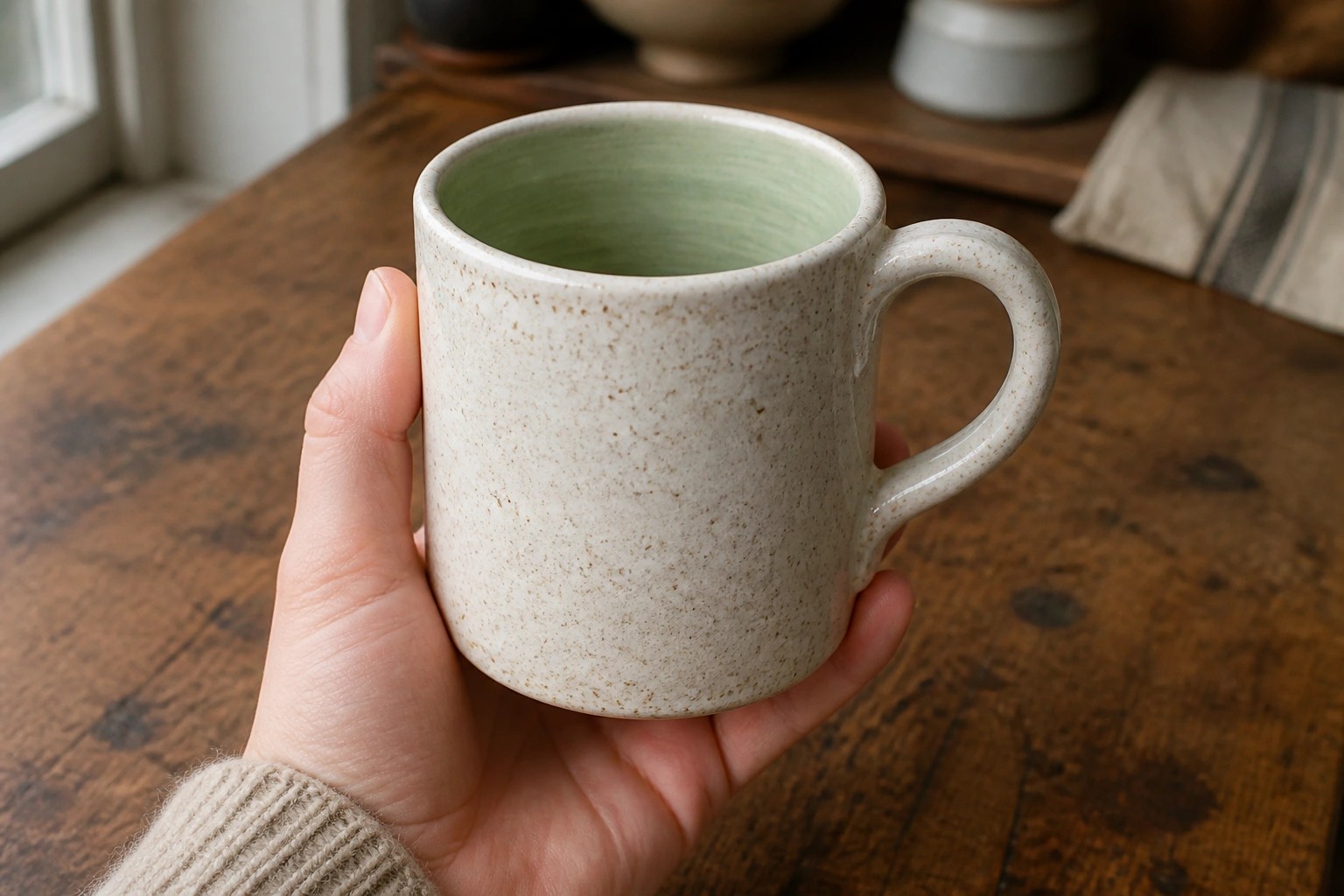
I’ve been playing around with stoneware clay in my studio for a few months now and it seems like a solid choice for anyone just getting started.
It fires up strong and works fine for everyday pieces without needing special skills right away.
Lately I’ve been thinking about the basic shapes that feel the most useful like simple bowls or mugs.
Here are 15 ideas that stick to those classic forms and keep things straightforward.
They come from what I’ve tried and what seems to turn out well for new potters.
Speckled Stoneware Mug
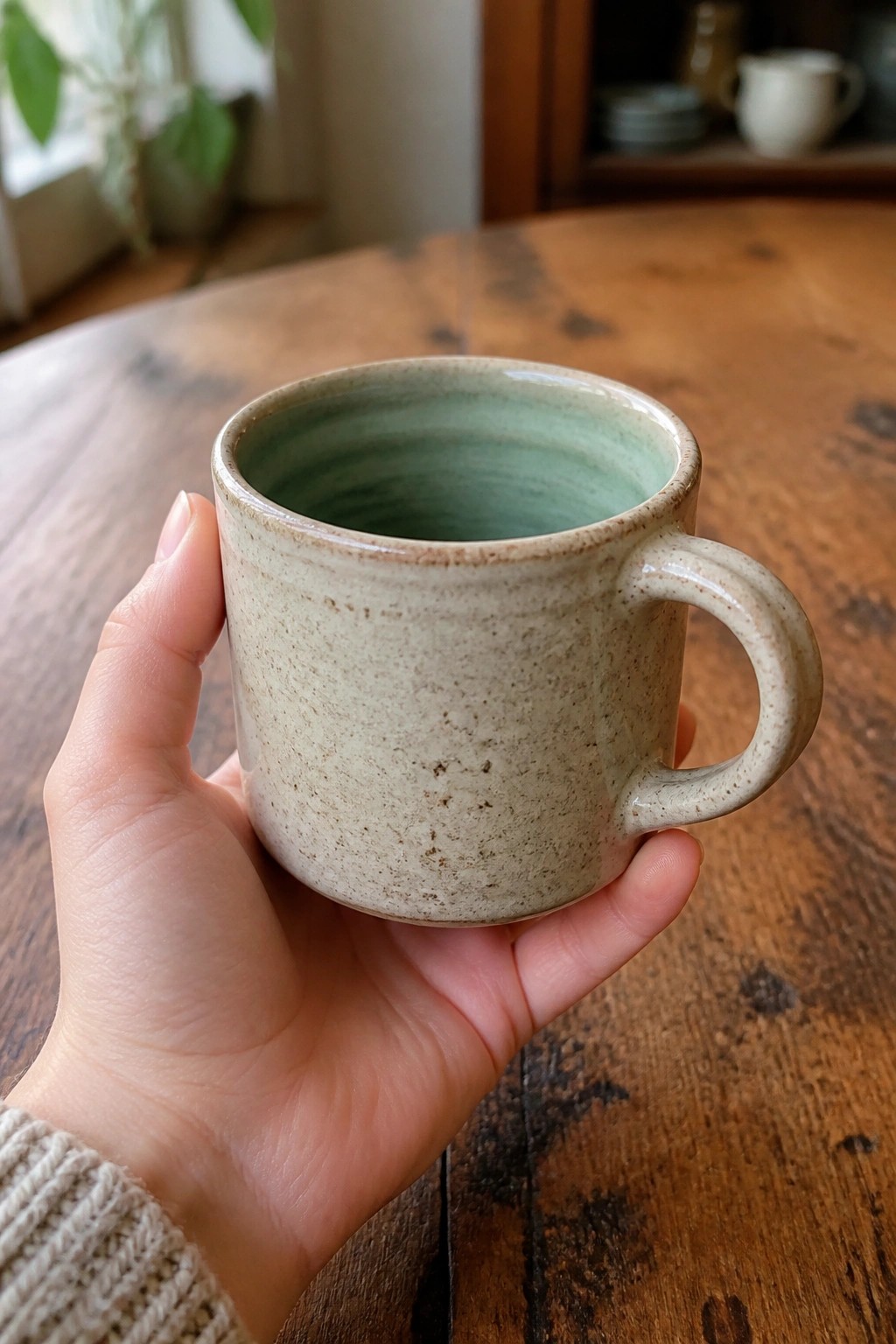
A stoneware mug gives beginners a direct way to practice throwing a cylinder and attaching a handle while staying within a classic form. The speckled clay shows through a matte surface on the outside, while the interior uses a single solid glaze color for contrast. This keeps the design minimal and lets the clay texture and glaze interaction do the work instead of added carving or painting.
What makes this idea useful is how the same basic shape scales easily for different drink sizes without changing the overall look. The interior color can be swapped for any other glaze to shift the mood or match existing dishes. In a kitchen this kind of mug works for everyday use or as a simple gift set, and the same cylinder technique can be adapted later into a small bowl or planter by adjusting the height and rim.
Stoneware Bowl with Brushed Blue Interior Glaze

A wide, shallow stoneware bowl gives beginners a simple form to practice wheel throwing or slab building while testing a single interior glaze. The blue brushed finish covers the inside surface and stops at the rim, leaving the speckled clay body exposed on the outside. This approach keeps the project focused on shape and basic glazing rather than complex carving or multiple colors.
What makes this idea useful is the open profile that works as a salad bowl, fruit bowl, or mixing vessel without extra steps. The two-tone look can be adapted by swapping the blue for another food-safe glaze or by narrowing the rim on a second version. In a kitchen this shape stays practical for daily use and scales easily to smaller sizes for side dishes or dessert bowls.
Stoneware Bud Vase for Single Branches
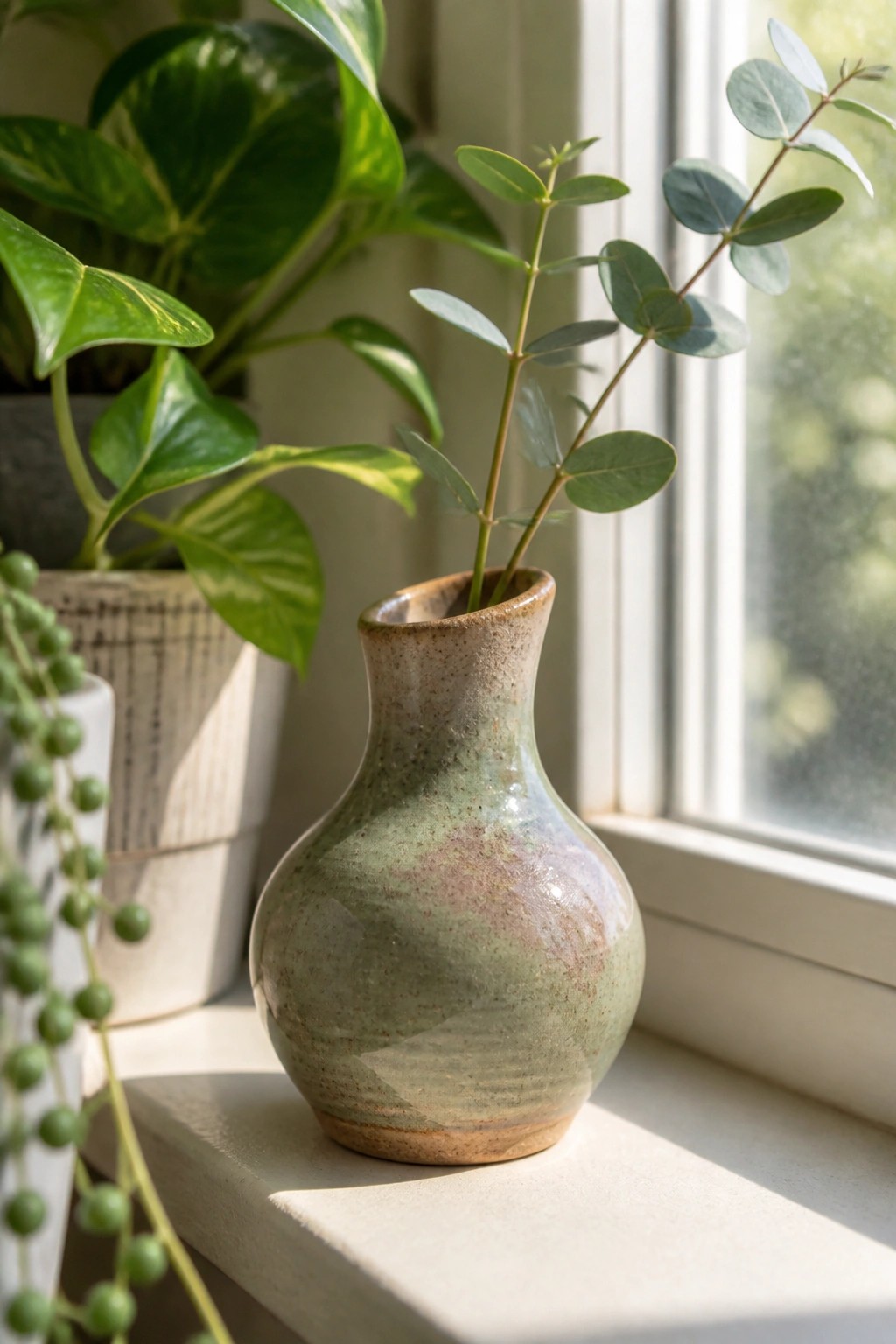
A small stoneware vase with a rounded body that tapers into a short neck holds one or two stems without overwhelming them. The speckled glaze in muted green with soft brown and pink tones gives the surface some variation while keeping the overall look simple. This shape follows a basic vessel form that lets beginners focus on even walls and a stable base.
What makes this idea useful is how the compact size fits on a narrow shelf or windowsill where larger pots would crowd the space. The same proportions work for a taller version or a wider opening if you want to hold more stems. You could also swap the glaze for a matte finish or add a simple foot ring to change the profile without starting over. For plant styling this vase keeps the attention on the greenery rather than competing with it.
Square Stoneware Planter
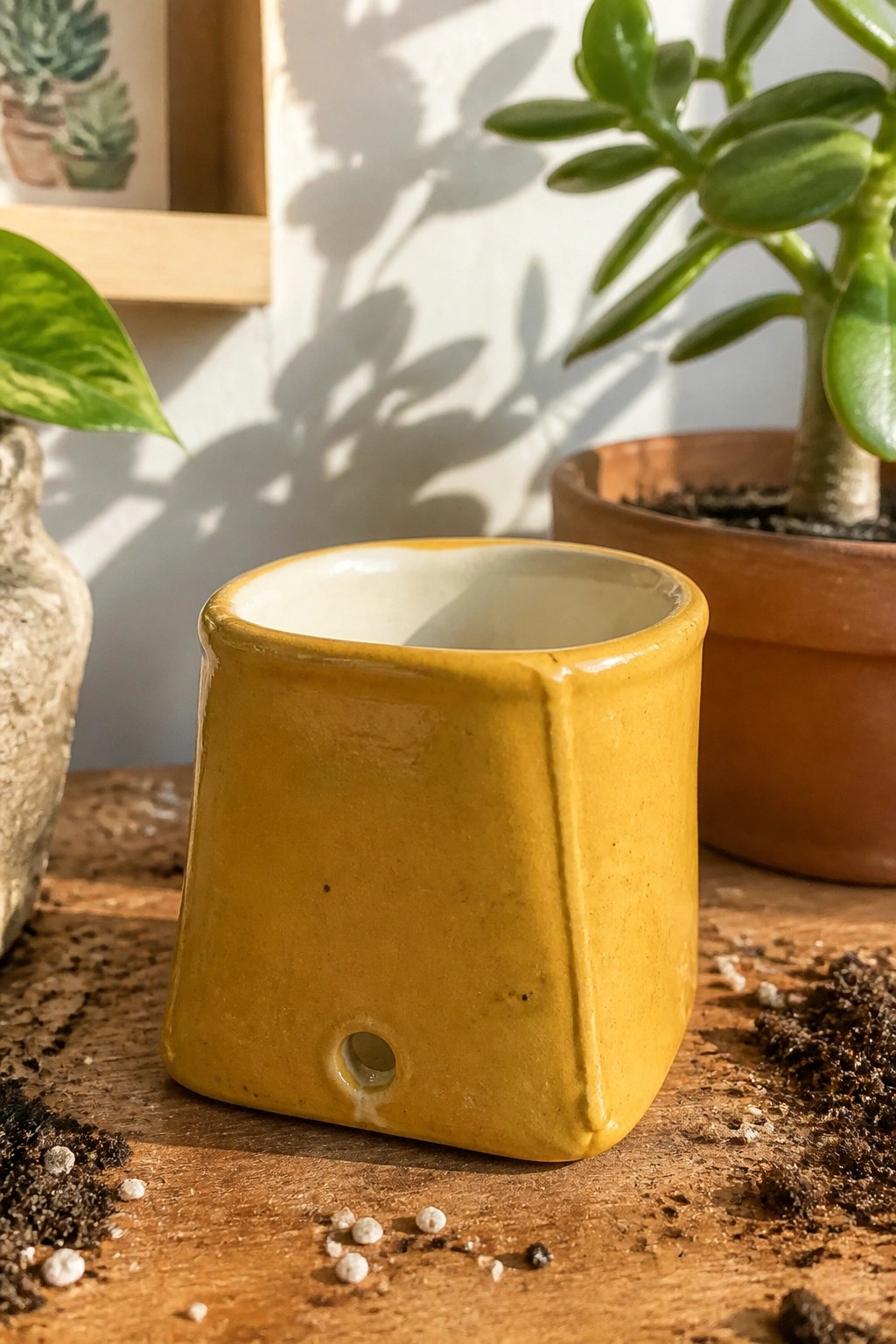
A small square planter built from stoneware gives beginners a simple form to practice slab or wheel work while still producing something functional. The straight sides and low profile keep the piece stable, and the drainage hole near the base prevents water from pooling. A glossy yellow glaze on the outside with a white interior lining creates contrast that makes the shape stand out without extra decoration. This type of project falls into the planter category and works at a scale that fits on shelves or windowsills.
What makes this idea useful is the square shape, which lines up neatly in rows or corners where round pots would leave wasted space. You can scale the same form up or down depending on the plant size or switch the glaze color to match existing kitchenware or garden pots. For a gift, something like this needs only a small plant added to finish it. The compact size also makes it easy to test new glaze combinations without using much clay or kiln space.
Striped Spoon Rest Tray

A long oval ceramic tray makes a practical spoon rest for kitchen counters. Horizontal blue stripes cross the surface while a simple lemon motif sits near one end. The narrow shape keeps the piece compact so it fits beside a sink or stove without crowding the workspace. Speckled clay shows through a clear glaze that highlights the handmade surface.
What makes this idea useful is how the elongated form holds spoons or brushes without tipping. You could replace the lemon with any small motif or skip it for a plain striped version. The same tray shape works for holding soap in a bathroom or keys by the door. Scale the length down a bit if you want to turn it into a smaller ring dish instead.
Speckled Stoneware Cup and Saucer

A small cup and saucer set gives beginners a straightforward way to practice wheel throwing or hand building a functional drinking vessel along with its matching base. The idea uses a two-tone glaze layout where the lower half of the cup receives a speckled neutral finish and the upper section gets a soft pink tone that stops short of the rim. This keeps the form simple while still producing a complete piece ready for everyday use with coffee or tea.
What makes this idea useful is that the compact size works well on a kitchen counter or desk without crowding the space. You can adapt the same color split to make a set of four or switch the pink for a solid matte black if you want a different look. For a gift, something like this pairs easily with loose tea or a small jar of honey.
Gradient Blue Shallow Plate with Organic Rim

A shallow plate with an irregular wavy rim makes a straightforward project that emphasizes simple wheel work and basic glazing. The glaze moves from a saturated blue in the center outward to a lighter clay tone, letting the form show through without extra carving or texture. This style fits the classic plate or small platter category and keeps the focus on shape and color transition rather than added detail.
What makes this idea useful is how the same rim and fade can be scaled up for a dinner plate or down for a small serving dish. The blue-to-neutral shift works with many kitchen color schemes and can be swapped for other glaze pairs like green to cream or brown to gray. A piece like this sits well on a table as a bread plate or used in the kitchen for holding utensils. The wavy edge can also be tried on a low bowl to change the function while keeping the same glaze approach.
Heart-Shaped Ring Dish
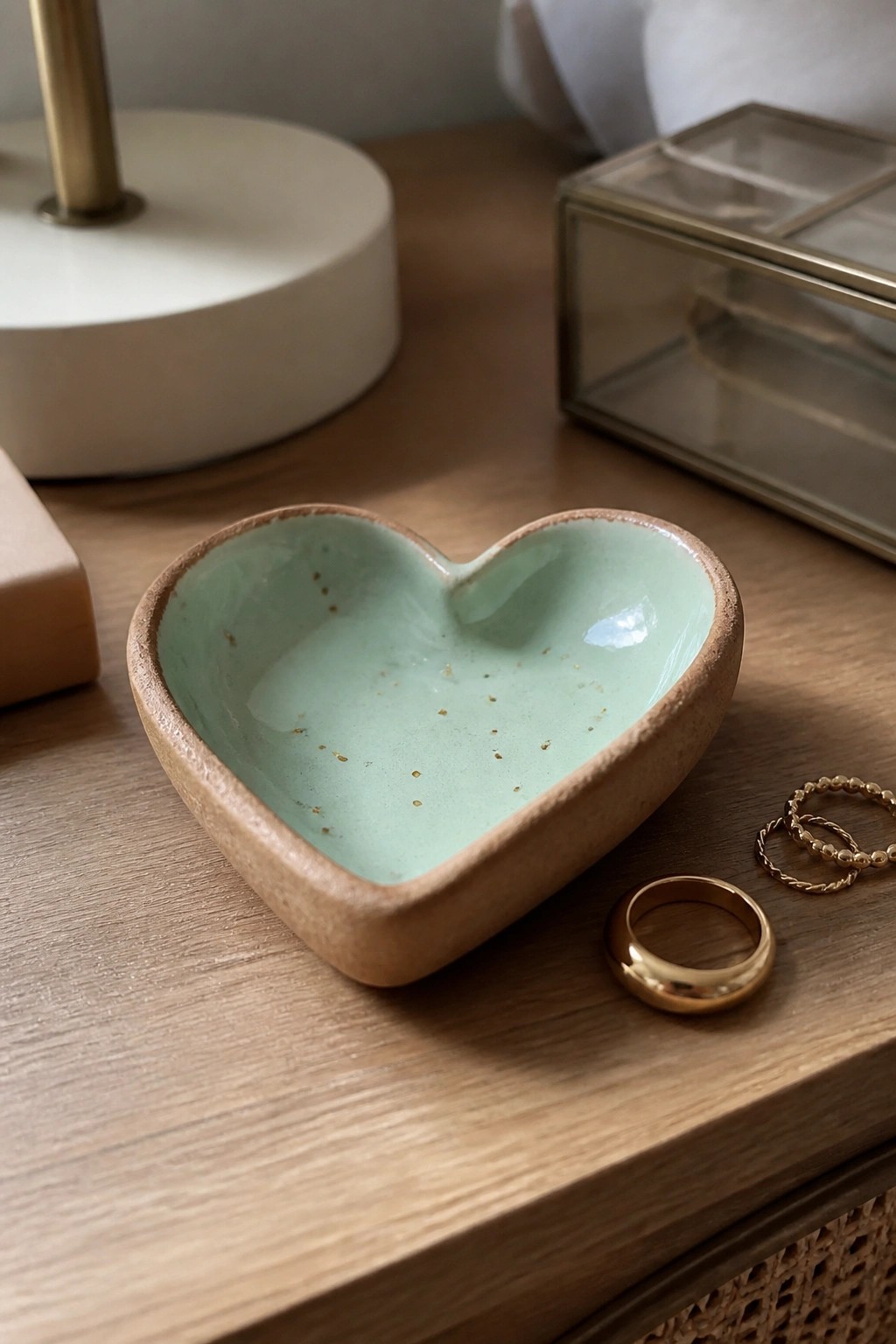
A heart-shaped ring dish works as a small, shallow bowl meant for holding rings or other tiny items on a flat surface. The rounded heart form keeps the edges soft and the interior wide enough for easy access while the raw clay rim contrasts with the glossy interior glaze. Gold speckles in the light green glaze add subtle texture without overpowering the simple shape.
What makes this idea useful is how the compact size fits on a dresser, nightstand, or bathroom counter without taking up much space. You can adapt the same outline for a slightly deeper version that holds earrings or keys, or swap the speckled glaze for a solid color to match different rooms. The form also scales down easily for a smaller version that still feels balanced.
Footed Tea Light Holder

A small footed bowl serves as a tea light candle holder. The compact rounded shape contains the flame safely while the three short legs raise the piece slightly above the table surface. A mottled glaze blending blue, green, and brown tones creates visual interest across the exterior without added carving or patterns. This approach fits the stoneware category of basic holders that function as both candle pieces and tabletop decor.
What makes this idea useful is how the same form adapts to different glaze colors or a slightly wider rim for a votive candle. The feet keep the holder from sitting flat and collecting wax drips, which makes cleanup simpler. Try making two or three in one batch so they can be grouped on a shelf or mantel. The small size also works as a quick project when you want to test new glazes without committing to a larger piece.
Stoneware Creamer and Sugar Bowl Set
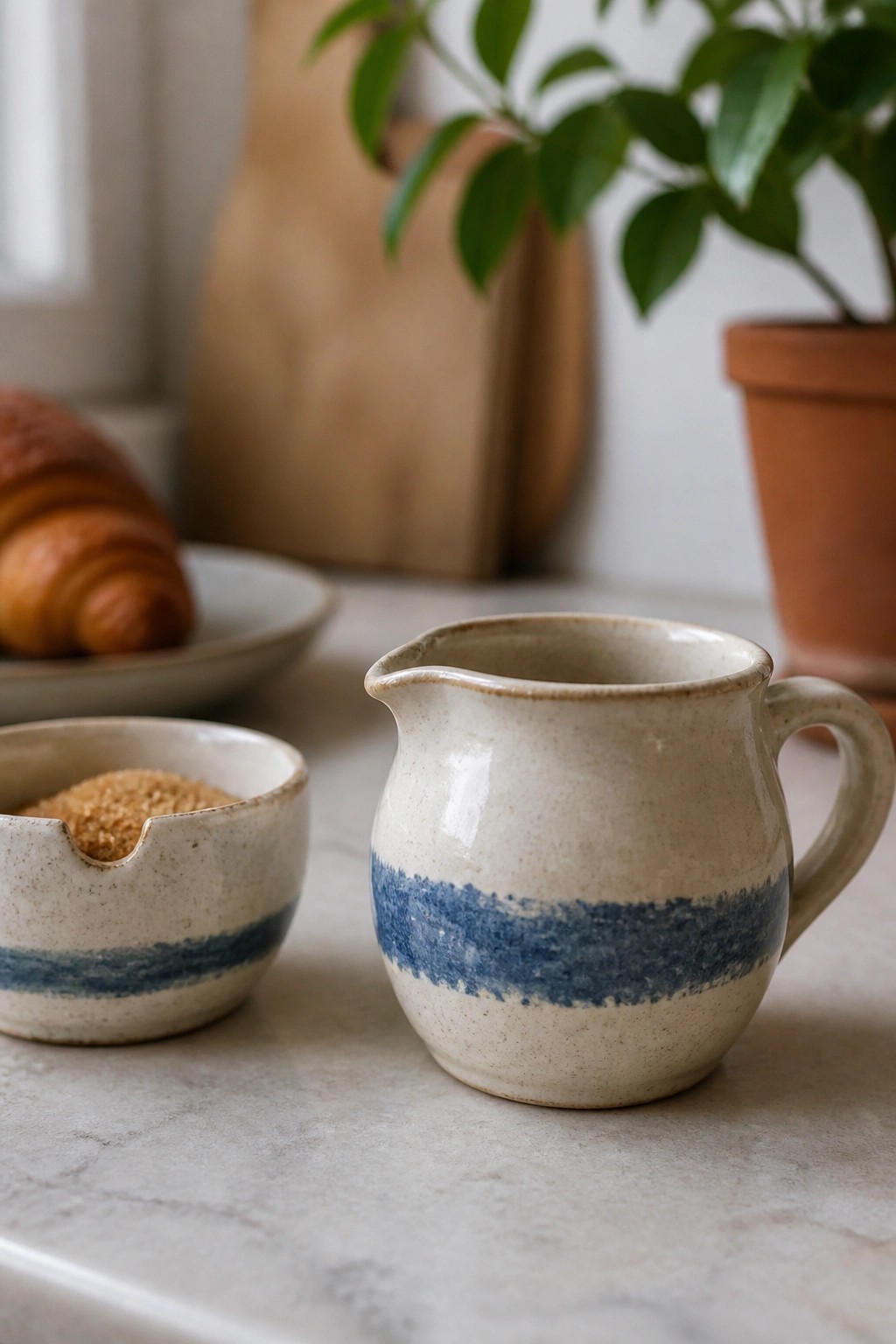
A small stoneware creamer and matching sugar bowl give beginners a straightforward way to practice classic tableware shapes. Both pieces use a light speckled clay with a single blue band wrapped around the middle for decoration. The creamer includes a simple spout and handle while the sugar bowl has a notched rim that makes spoon access easy. This approach keeps the forms basic and the glazing minimal so the focus stays on even walls and clean rims.
What makes this idea useful is how well the compact size works on a small wheel or with slab building. You can repeat the same blue band on other kitchen pieces like a butter dish or small jug to build a matching set. The shape adapts easily if you want to make one piece larger for milk or remove the notch for a plain bowl. In a kitchen this kind of pair stays practical for daily use and shows up clearly in photos without needing extra styling.
Stoneware Salt Cellar and Lidded Jar
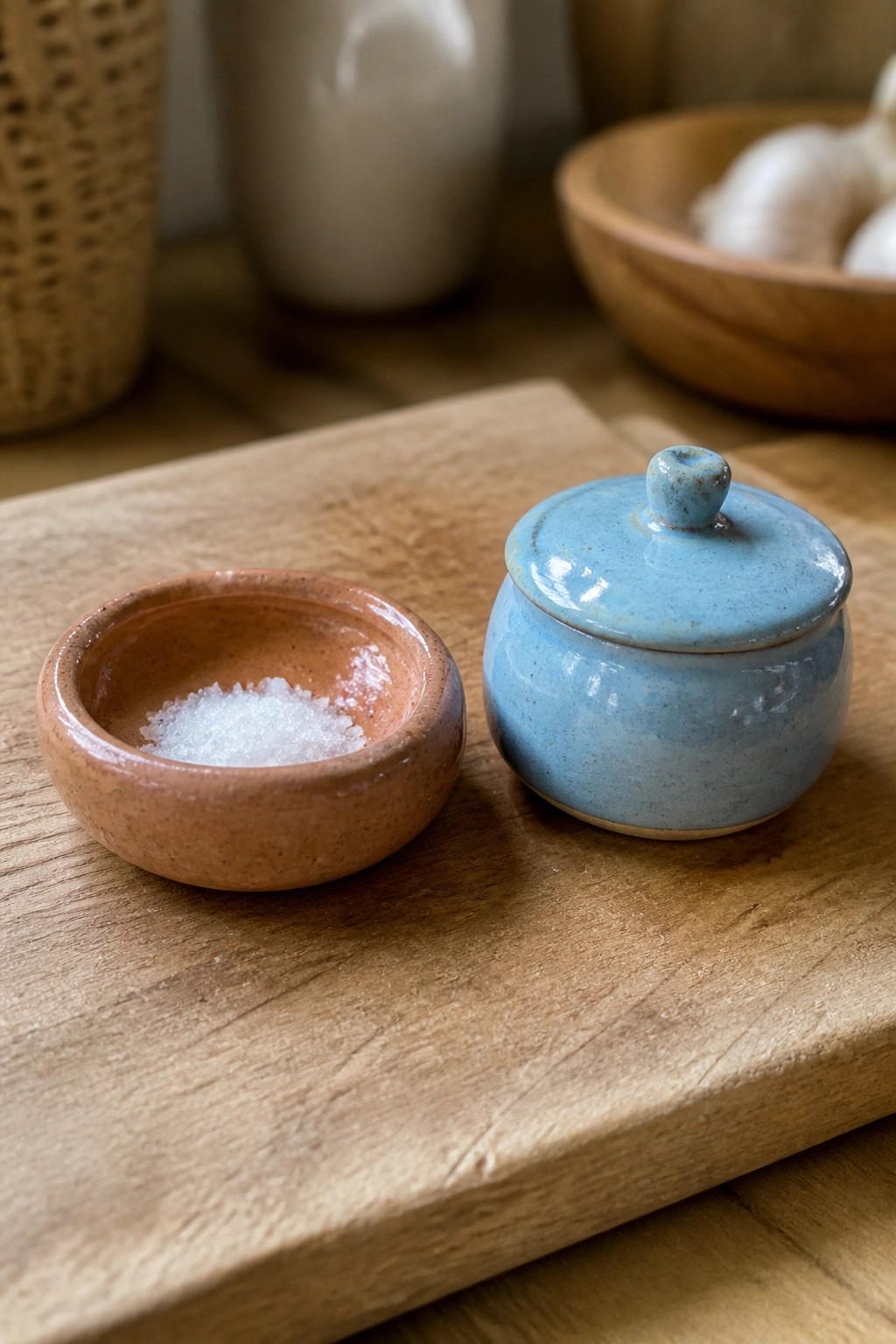
A small open salt cellar paired with a lidded jar creates a compact kitchen set for daily seasonings. The bowl shape keeps salt or spices easy to pinch while the covered jar protects contents from air or moisture. The unglazed terracotta surface on one piece and the simple blue glaze on the other keep the focus on the clean rounded forms and the contrast between them.
What makes this idea useful is how the small scale lets you make a functional pair without using much clay or shelf space. You could adapt the same shapes into two matching lidded jars or swap the blue glaze for a different color to match your kitchen. In a kitchen this kind of set keeps salt and small spices within reach on the counter and works just as well as a gift when packed with a small scoop. The basic forms translate easily to hand building if you are not ready to throw on the wheel.
Stoneware Ring Dish with Spiral Interior
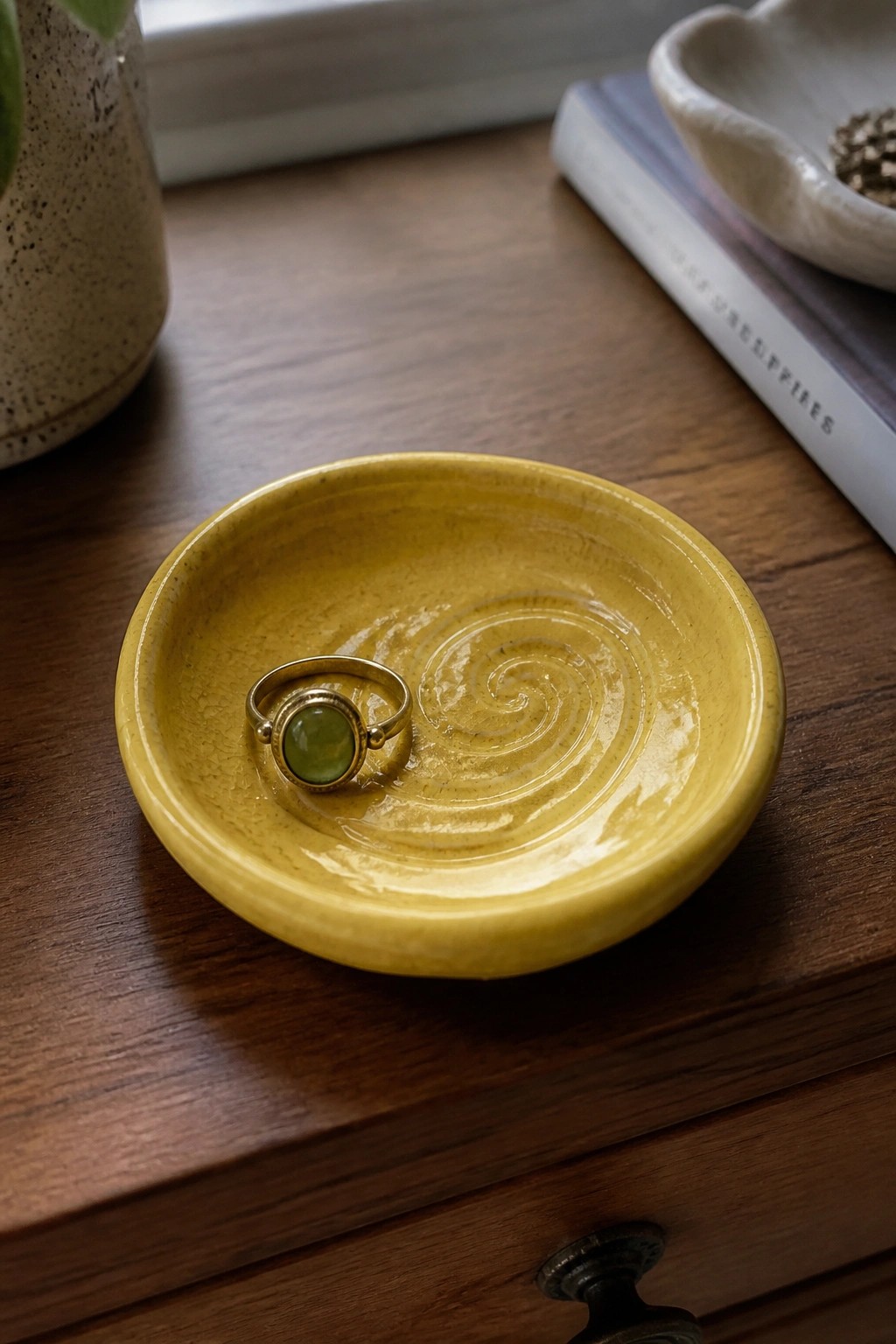
A small stoneware ring dish is a simple thrown or hand-built form with a shallow well and slightly raised rim. The yellow glaze pools in the carved or pressed spiral, creating a glossy contrast against the matte clay while keeping the surface practical for holding rings. This approach fits the ring dish category well because the compact size and centered pattern keep the focus on function without extra decoration.
The shape does a lot of the work here because the low profile and wide opening make the dish easy to place on a dresser or nightstand. You can adapt the idea by using a different glaze color or skipping the spiral for a plain interior if you want faster results. For a gift, something like this takes little clay and still feels finished once glazed. The same basic form can be scaled up slightly to hold earrings or keys without changing the overall process.
Stoneware Soap Dish with Drainage Ridges
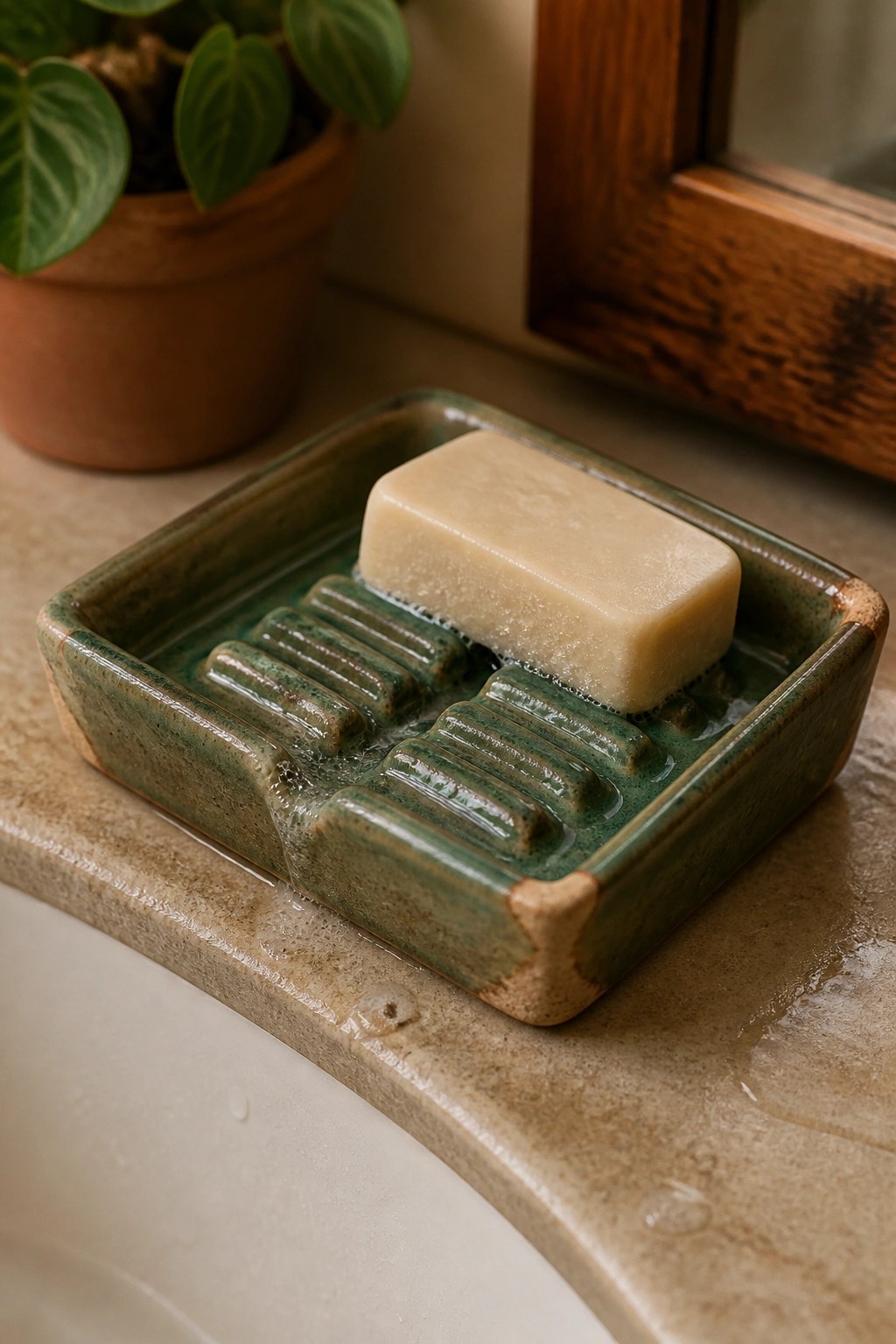
A rectangular stoneware soap dish includes a flat area for the bar and a section of parallel ridges that lift the soap above pooled water. The green glaze covers the entire surface and creates a slight variation in tone along the edges and grooves. This layout lets water run off quickly so the soap stays drier and lasts longer. It works as a basic bathroom item that solves a common daily problem with a straightforward handmade shape.
What makes this idea useful is how the ridged section can be widened or narrowed to match different bar sizes. The compact form sits well on a sink ledge or inside a shower without taking much room. You could drop the ridges and use the same tray shape for holding rings or small grooming tools instead. For a gift, the simple drainage detail gives the piece a clear purpose that stands out in a basic bathroom setup.
Small Ceramic Bird Figurine
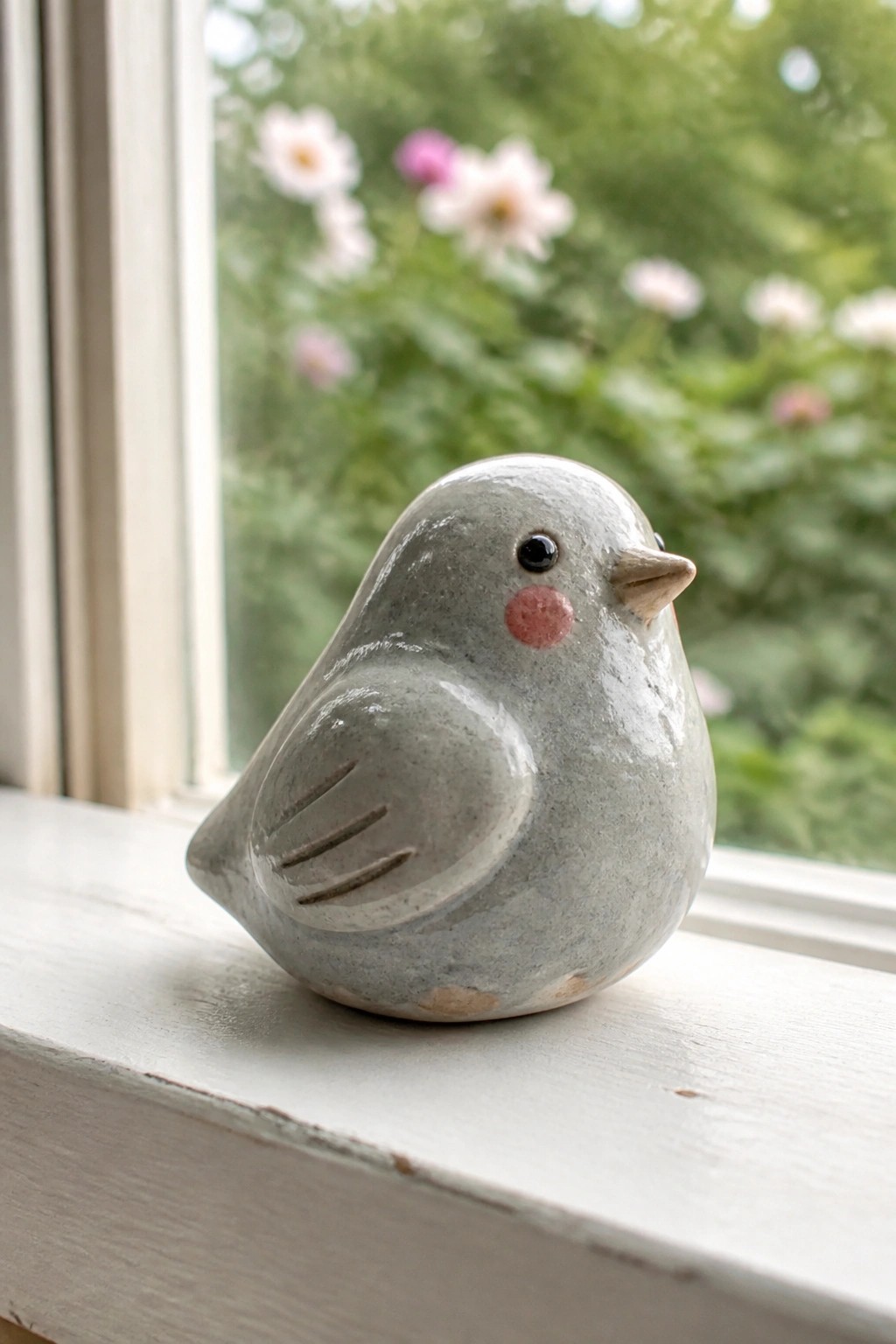
A small bird figurine is a direct clay project that starts with a compact rounded body. Form the shape by hand, add a few carved lines for the wing, and finish with a soft gray glaze plus a single pink dot on the cheek. The simple sculpted details and matte surface keep the piece clean and easy to read from a distance. This approach works as a decor object that needs no function beyond sitting in place.
The small scale makes this easy to adapt by swapping the beak angle or trying different glaze colors on the same body. It sits well on a windowsill, shelf, or desk without taking much space. You could turn the same rounded form into other small animals or stretch it into a slightly larger version for a paperweight. The minimal carving and single accent color also translate quickly if you want to make several at once.
Stoneware Utensil Crock with Accent Band
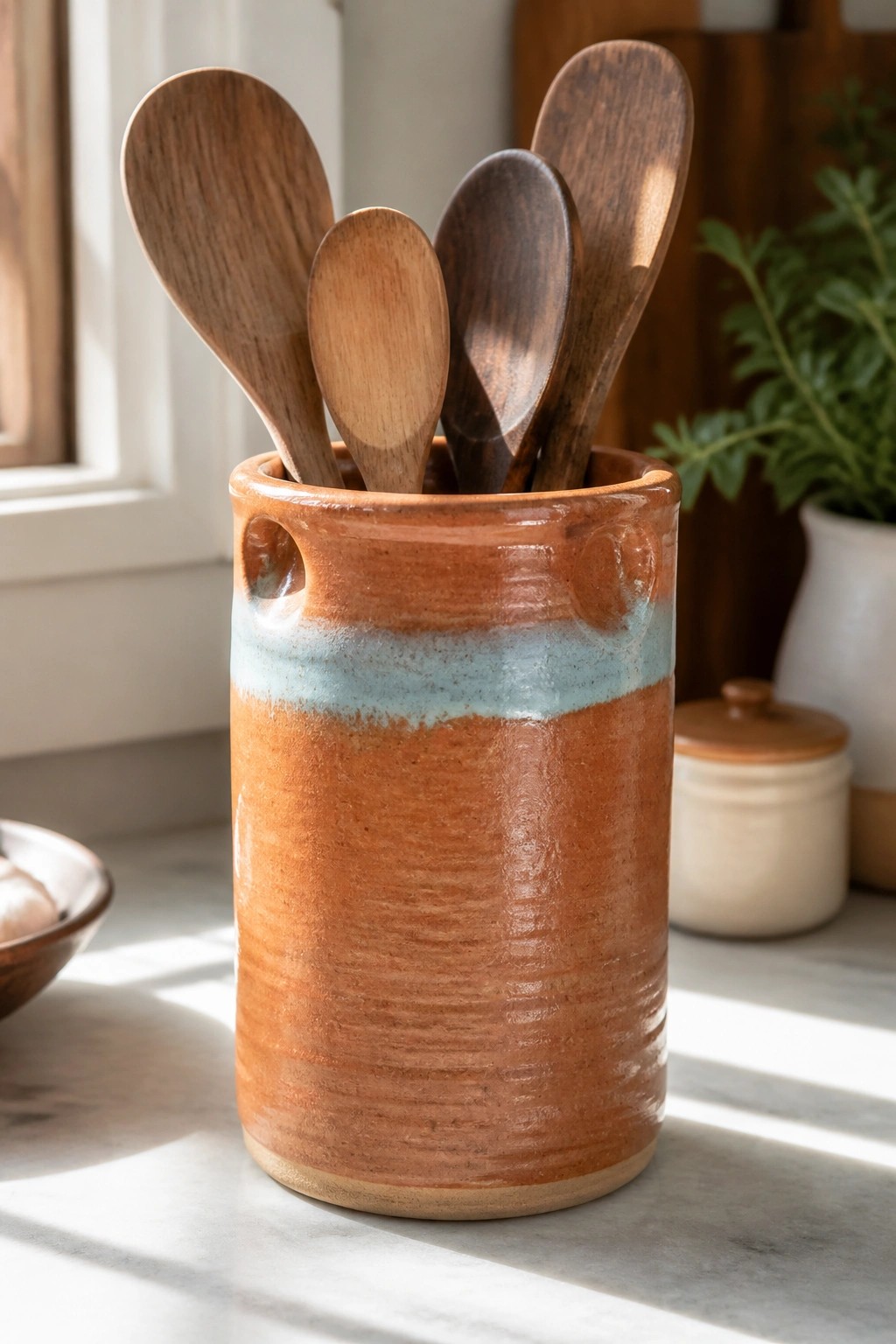
A cylindrical stoneware crock serves as a kitchen utensil holder with a straight body and slightly rounded base. The surface shows an orange-brown glaze on the lower section and a lighter blue band across the middle, plus two small looped details on one side. This combination keeps wooden spoons upright and visible while the simple shape and limited color palette keep the form clean. The textured finish comes from the clay itself rather than added decoration.
What makes this idea useful is how the tall cylinder organizes tools without taking much counter space. The blue band breaks up the form and can be widened or narrowed depending on the glaze you have on hand. In a kitchen this kind of holder works next to a cutting board or stove and can be scaled down into a smaller version for brushes or pencils. The same shape also adapts easily into a planter by leaving the loops off and adjusting the height.
Frequently Asked Questions
What is stoneware clay and why does it work well for beginners making classic forms?
Stoneware clay is a durable, high firing material that becomes strong and nonporous after baking at high temperatures. It resists chipping better than earthenware and handles everyday use in items like bowls or mugs. Beginners benefit from its forgiving texture during shaping and its ability to hold fine details in classic forms without excessive warping.
Which classic forms from the list should a complete beginner try first?
Start with simple open shapes such as plates, shallow bowls, or basic cylinders. These require less precise control than taller vases or teapots and let you practice centering and even wall thickness. Once comfortable, move to forms with handles or lids to build skills gradually.
Do I need a pottery wheel to complete the 15 ideas or can hand building work?
Many of the ideas adapt to hand building techniques like slab rolling or coil construction for items such as trays and planters. A wheel helps with symmetrical round forms like mugs but is not required for every project. Beginners often begin with hand building to learn proportions before investing in wheel time at a studio.
How do I prevent cracking when drying and firing stoneware pieces?
Dry pieces slowly under plastic wrap for several days to equalize moisture, then move them to open air gradually. Avoid thin sections next to thick ones and score and slip joints well. During firing, follow the kiln schedule recommended for your clay body to release steam evenly and reduce stress on the forms.
What glazes pair best with stoneware for functional classic ware?
Food safe glazes that mature at cone 6 or higher work reliably on stoneware. Test combinations on sample tiles first because stoneware can produce rich color variations. Apply even coats and leave bare feet on the base to prevent sticking during the final firing.

Pottery Path is my cozy corner of the internet where I share clay ideas, pottery inspiration, and simple projects you can recreate at home. I love exploring everything from air dry clay to handbuilt pottery to cute minis that brighten your day. My goal is to make clay crafting feel easy, fun, and welcoming for anyone who wants to try it.
You will find beginner friendly tutorials, creative pottery painting ideas, and lots of warm inspiration for slow and happy crafting. If you enjoy hands on creativity, this space will feel like home.