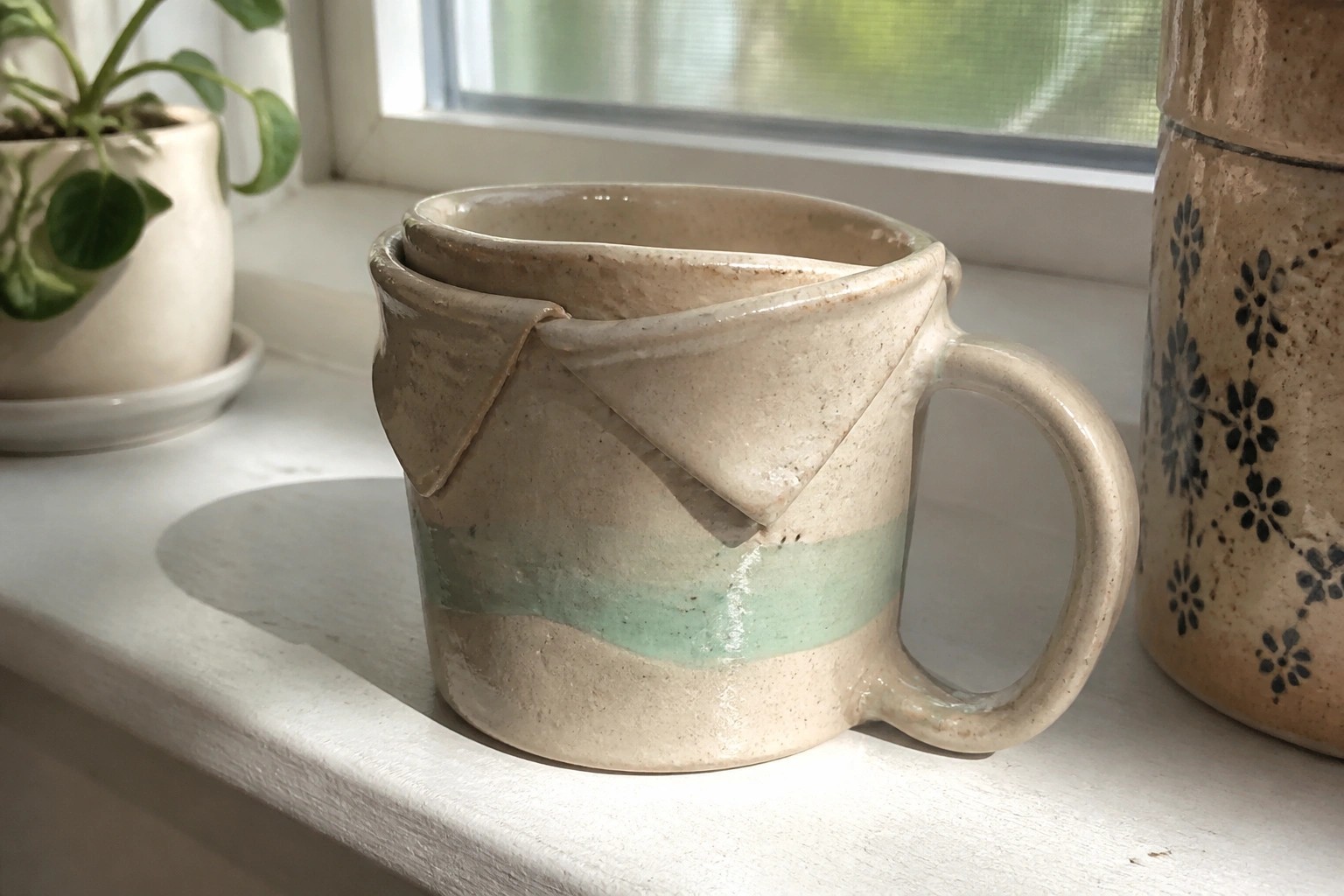
I started experimenting with folded slab pottery a while back because it feels straightforward and doesn’t require much equipment.
These forms can turn into all sorts of useful pieces around the house.
Here are 21 ideas I came up with that use this method as a starting point.
Some are based on projects I have done myself and others are simple twists on the technique.
They might give you a few things to try in your own studio space.
Folded Slab Mug with Striped Glaze Band
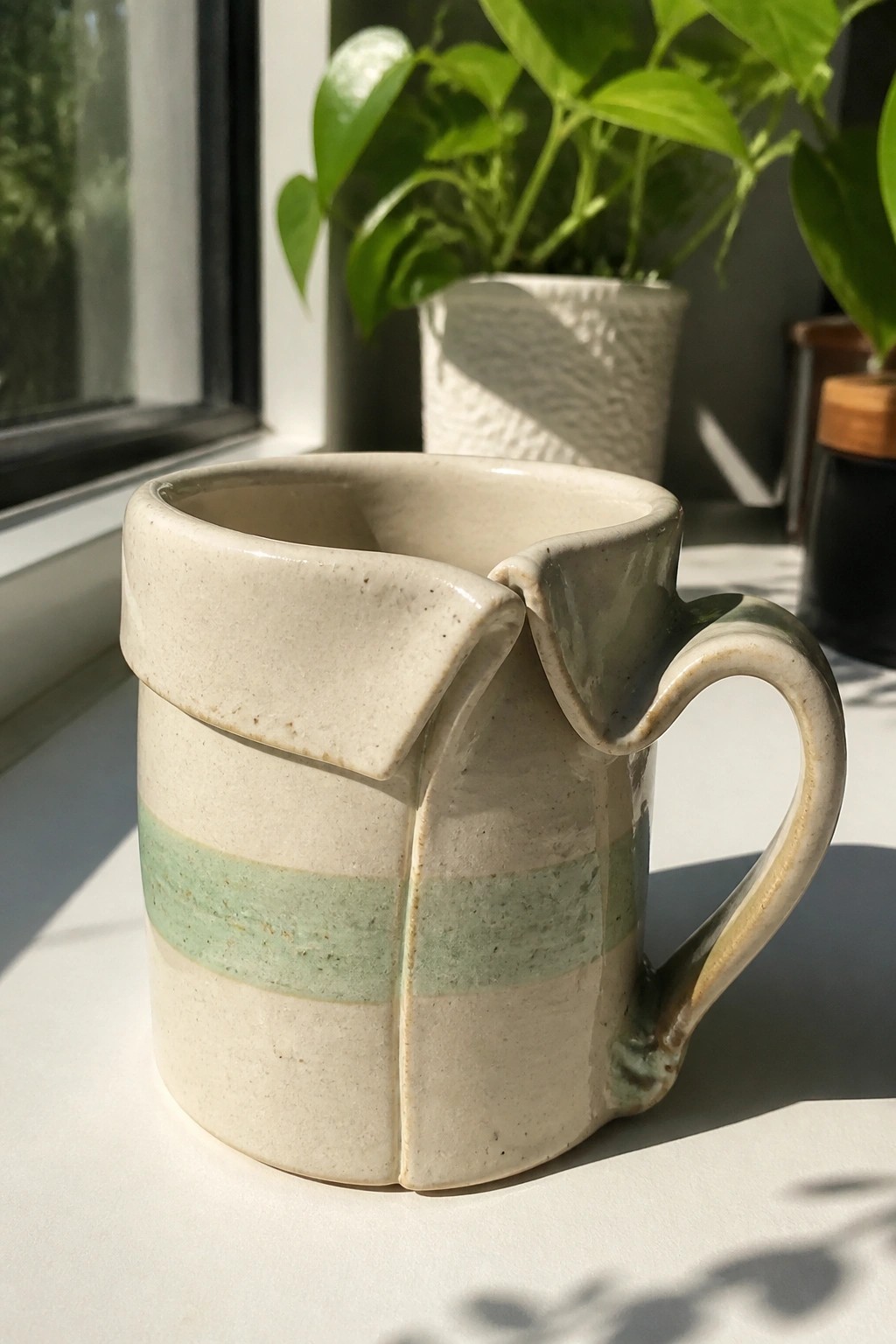
A handbuilt mug made from slabs uses a folded clay section at the rim to form both a pouring edge and added visual texture. The fold lifts and overlaps the clay to create an organic lip without needing a separate spout. Two soft green glaze bands wrap the off-white body, breaking up the cylinder while keeping the surface simple.
The folded rim adds function and interest without extra parts, so the same technique works for different sizes like a small creamer or a larger drinking cup. You can change the stripe width or swap the green for another color to match other pieces in a set. This shape sits well on a kitchen counter or table and adapts easily if you want to skip the handle for a handle-free version.
Folded Slab Planter with Scalloped Base

A small planter built from a single slab of clay uses a diagonal fold to create an angled, faceted form that avoids the usual round pot shape. The seam runs across the front, and the base is trimmed with a repeating scalloped edge that gives the piece a finished look without extra attachments. Glazed in a soft matte green that darkens near the foot, the planter suits small succulents or similar low-water plants.
What makes this idea useful is how the fold itself supplies most of the visual interest, so you can keep the rest of the surface plain. The compact size works well on a desk or windowsill where space is limited, and the same slab method can be adjusted to make a slightly taller version for a different plant. You could skip the scalloped detail for a faster build or change the glaze to a single solid color if you want it to blend with existing pottery.
Folded Slab Bowl with Angular Sides and Drip Glaze
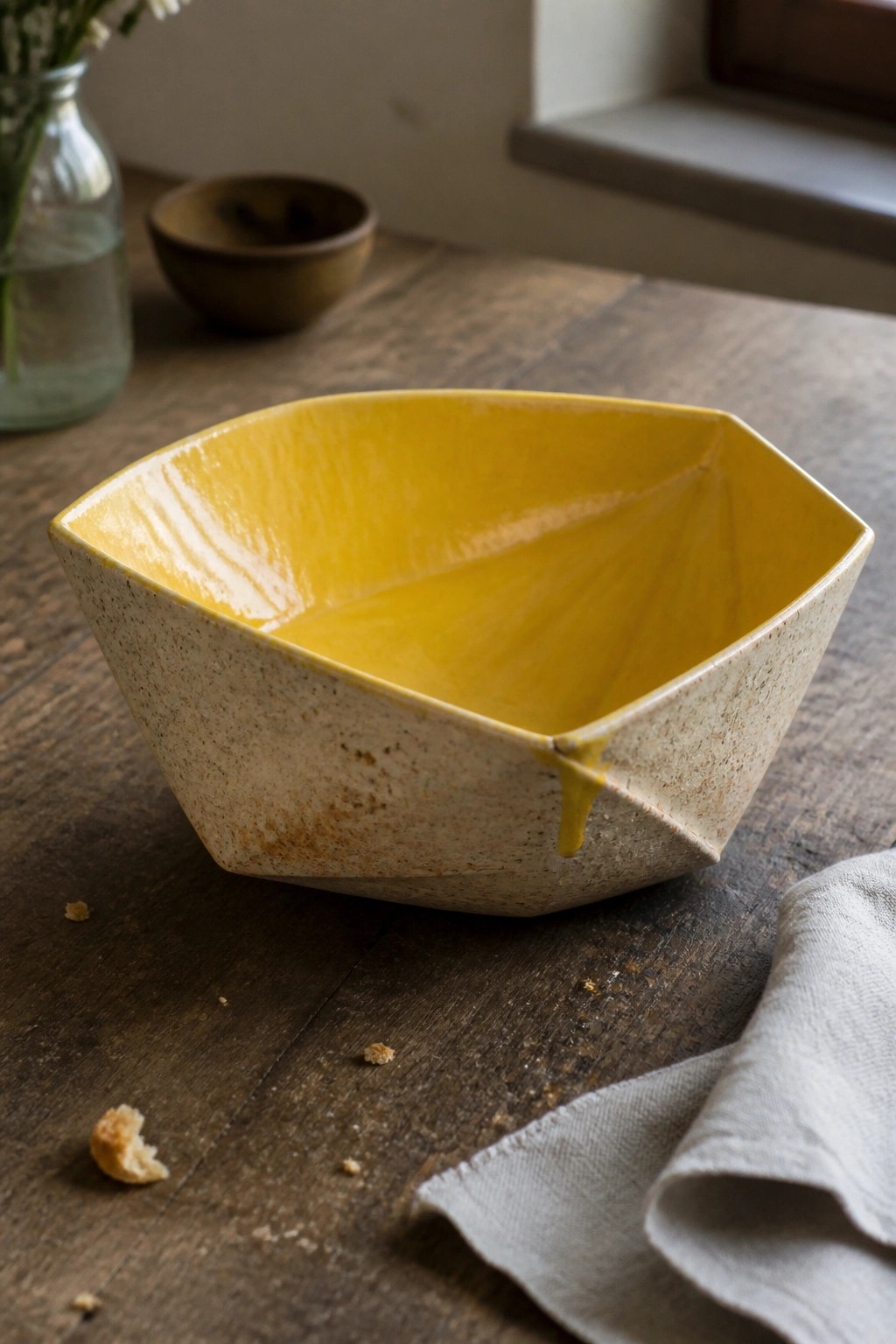
A folded slab bowl starts as a flat sheet of clay that gets creased and lifted into irregular sides before the seams are joined. This version creates a wide, open form with sharp corners and flat planes that catch light across the bright yellow interior glaze. The speckled exterior stays unglazed so the texture of the clay remains visible, and one folded edge lets a small drip of glaze run down the outside. The shape fits the bowl category but leans more sculptural than everyday tableware.
What makes this idea useful is how the folds give the bowl stable sides without needing a separate base or rim. You could scale the same pattern down for a small desk tray or swap the yellow for a neutral glaze if you want it to blend into a kitchen setup. The angular profile also photographs cleanly for sharing, which helps it stand out when people look for handbuilt bowl variations.
Folded Slab Pocket Wall Caddy
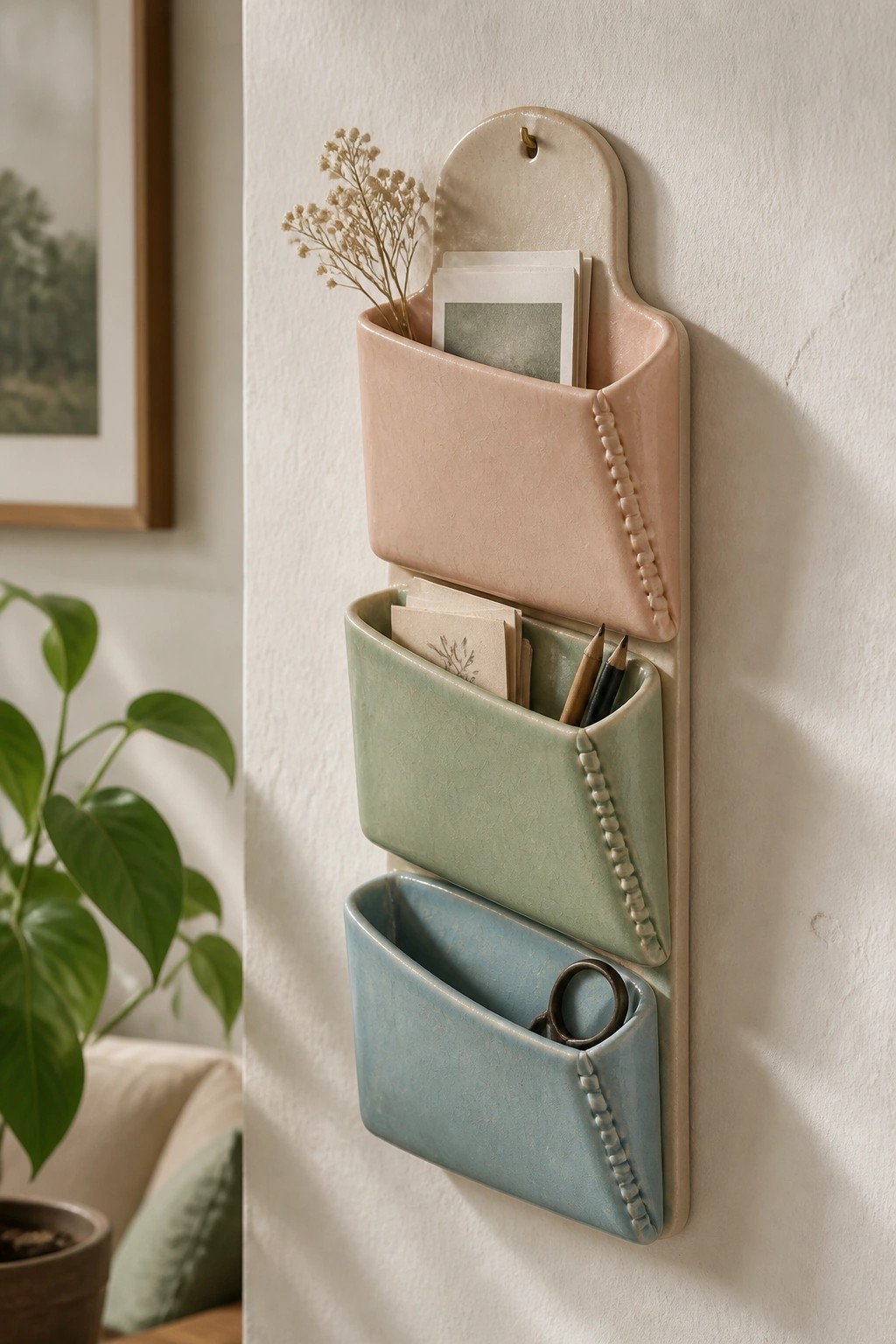
A vertical wall organizer built from folded clay slabs creates three separate pockets for small items like cards, pencils, or scissors. Each pocket is formed by folding a slab into a pouch shape and joining it to a flat back panel that includes a simple hanging hole at the top. Soft matte glazes in blush, sage, and blue keep the piece light while the side seams add a subtle stitched detail that reinforces the folded form.
What makes this idea useful is how the narrow vertical layout fits tight wall spaces in an entryway or above a desk. You can easily change the pocket heights, add more tiers, or switch the glaze colors to match different rooms without altering the basic construction. The same folded slab method scales down to a two-pocket version for a bathroom or widens into a single large mail holder for a kitchen.
Folded Slab Tray with Rim Accents
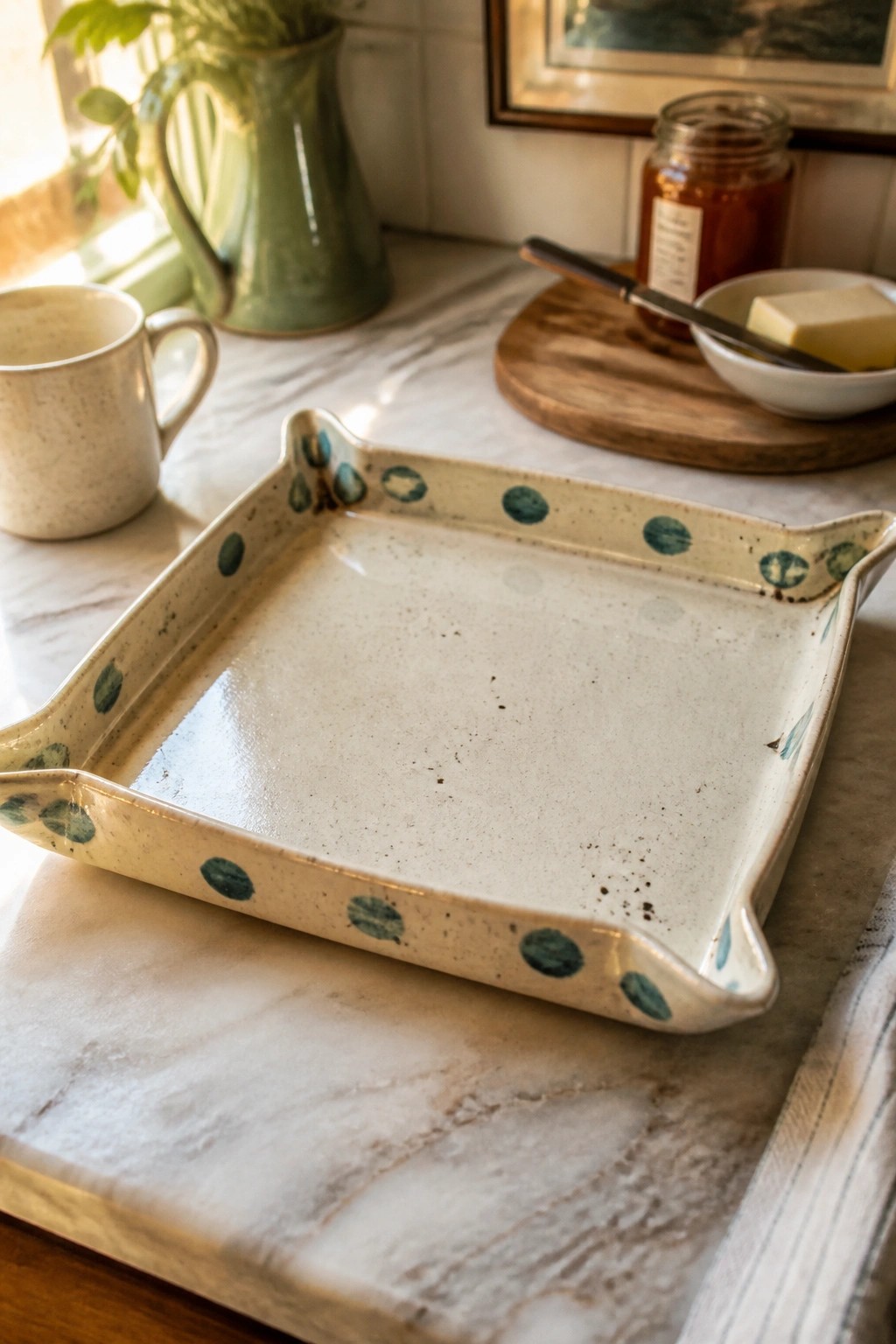
A rectangular tray built from one slab of clay works well when the edges are folded up to form low sides and open corners. The speckled off-white surface keeps the focus on the form while the repeated blue circles along the rim give it a clear but simple pattern. This style fits kitchen use as a serving piece for butter, jam, or small baked goods.
What makes this idea useful is how the folded edges create a stable tray without needing extra construction steps. The rim pattern can be swapped for lines, stamps, or a different color to match existing dishes. In a kitchen this size works for daily use or as a quick gift project, and the same slab approach scales easily to a longer version for bread or cheese.
Folded Slab Spoon Rest
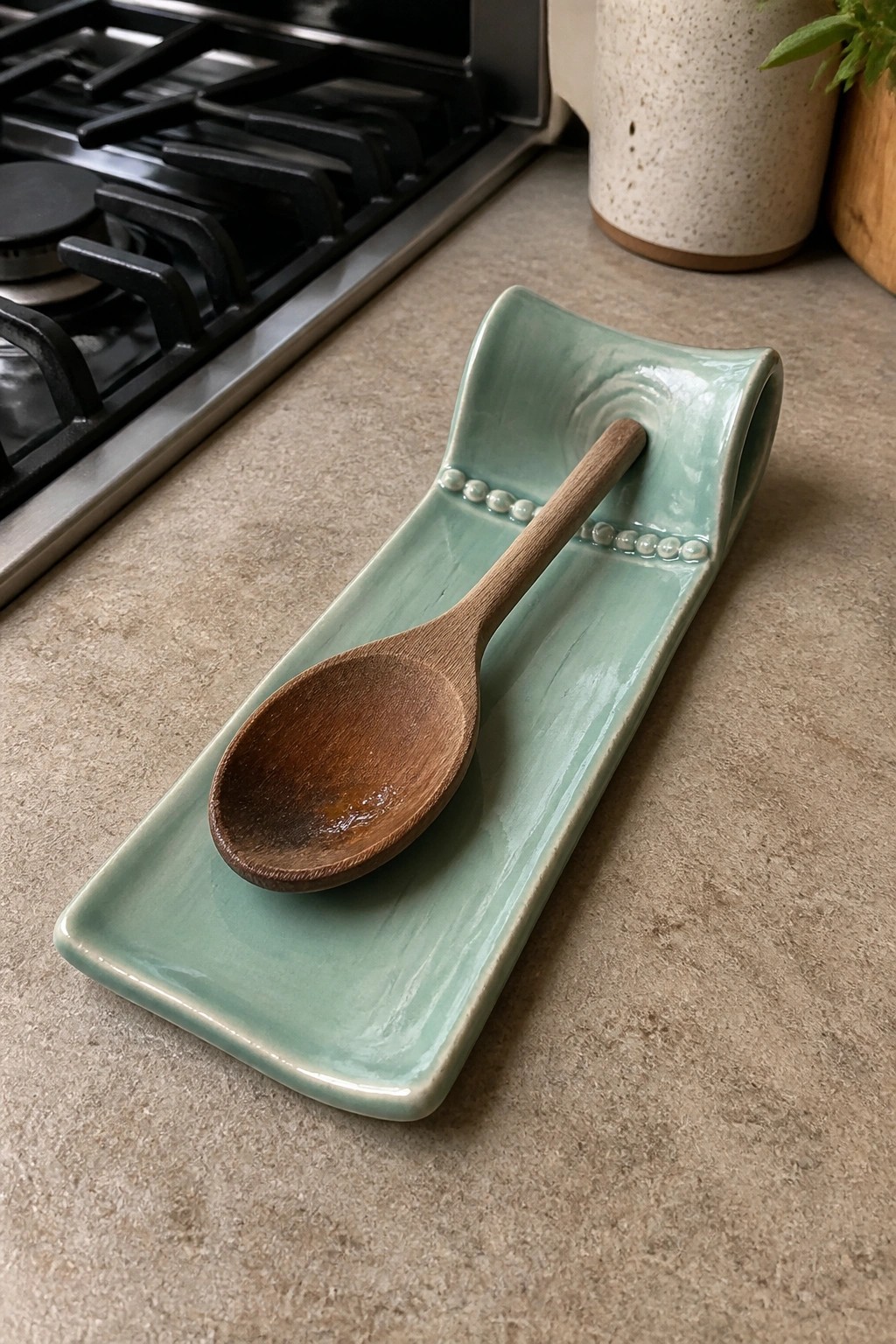
A folded slab spoon rest uses a long rectangular base with one end lifted and curved to create a stable support. The opening in the raised section lets the spoon handle slide through while the bowl rests flat on the tray. A row of small clay dots along the edge adds a simple repeating detail that breaks up the smooth surface. The soft green glaze covers the entire form and leaves a practical, easy-clean finish for kitchen use.
The shape does a lot of the work here by keeping the spoon from rolling or dripping onto the counter. This kind of piece works especially well on a stovetop or prep area where you reach for utensils often. You could rework the same fold into a shorter version for smaller spoons or change the dots to a stamped pattern for a different look. In a kitchen, this stands out on Pinterest because it combines a clear function with a clean handbuilt form.
Folded Slab Ring Dish
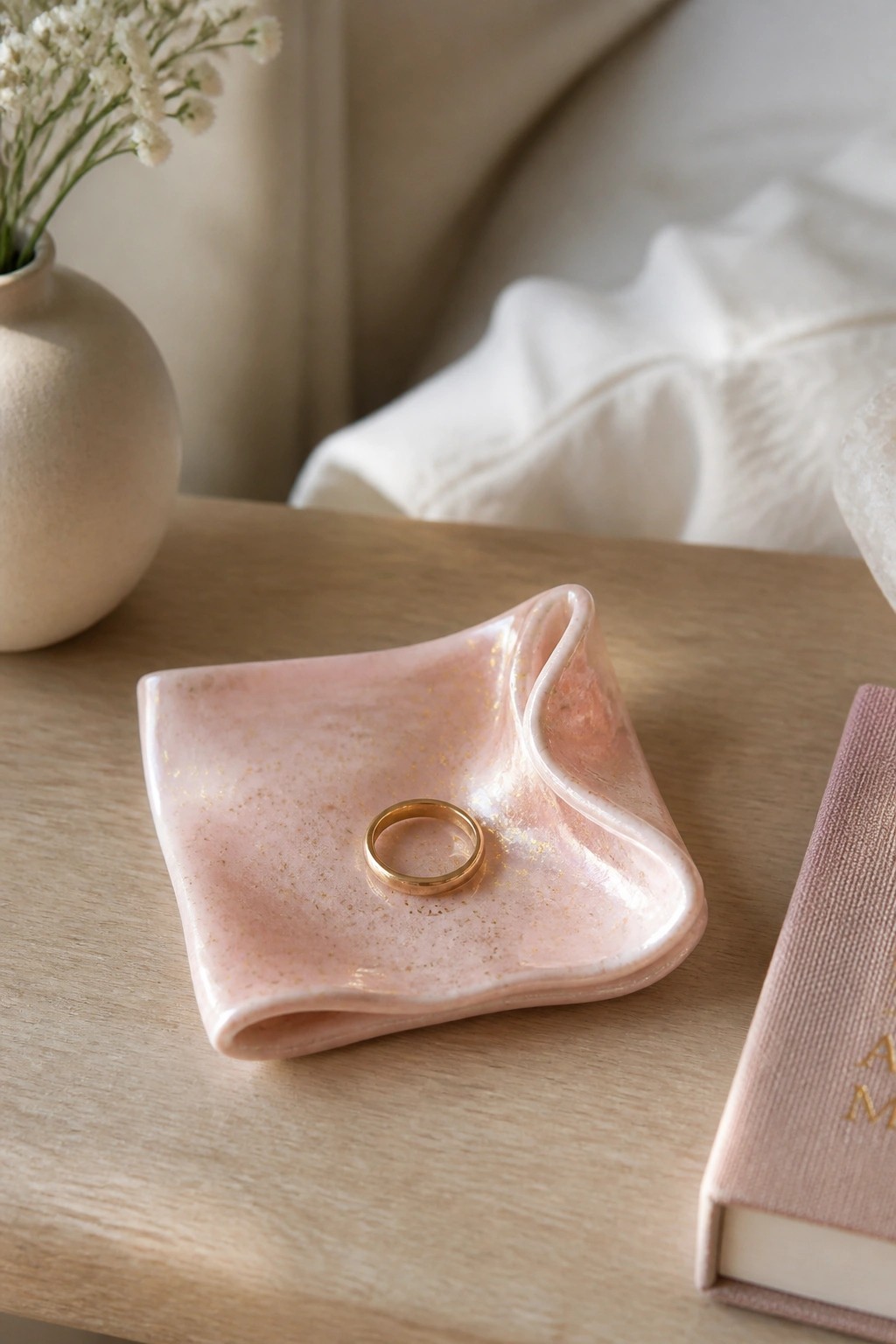
A folded slab ring dish starts with a flat piece of clay that gets shaped so the edges lift and overlap into a shallow, irregular tray. The soft pink glaze with scattered gold flecks keeps the surface light while letting the folded form do the visual work. This approach fits the ring dish category perfectly because the low profile and curved walls hold small jewelry without taking up much space.
The shape does a lot of the work here since the natural folds create walls that keep items from sliding off. A piece like this works especially well as a nightstand or vanity tray where you need something compact and stable. You could simplify the idea by using a single-color glaze or rework the same slab method into a larger version for holding soap or loose change.
Overlapped Slab Tea Light Holder
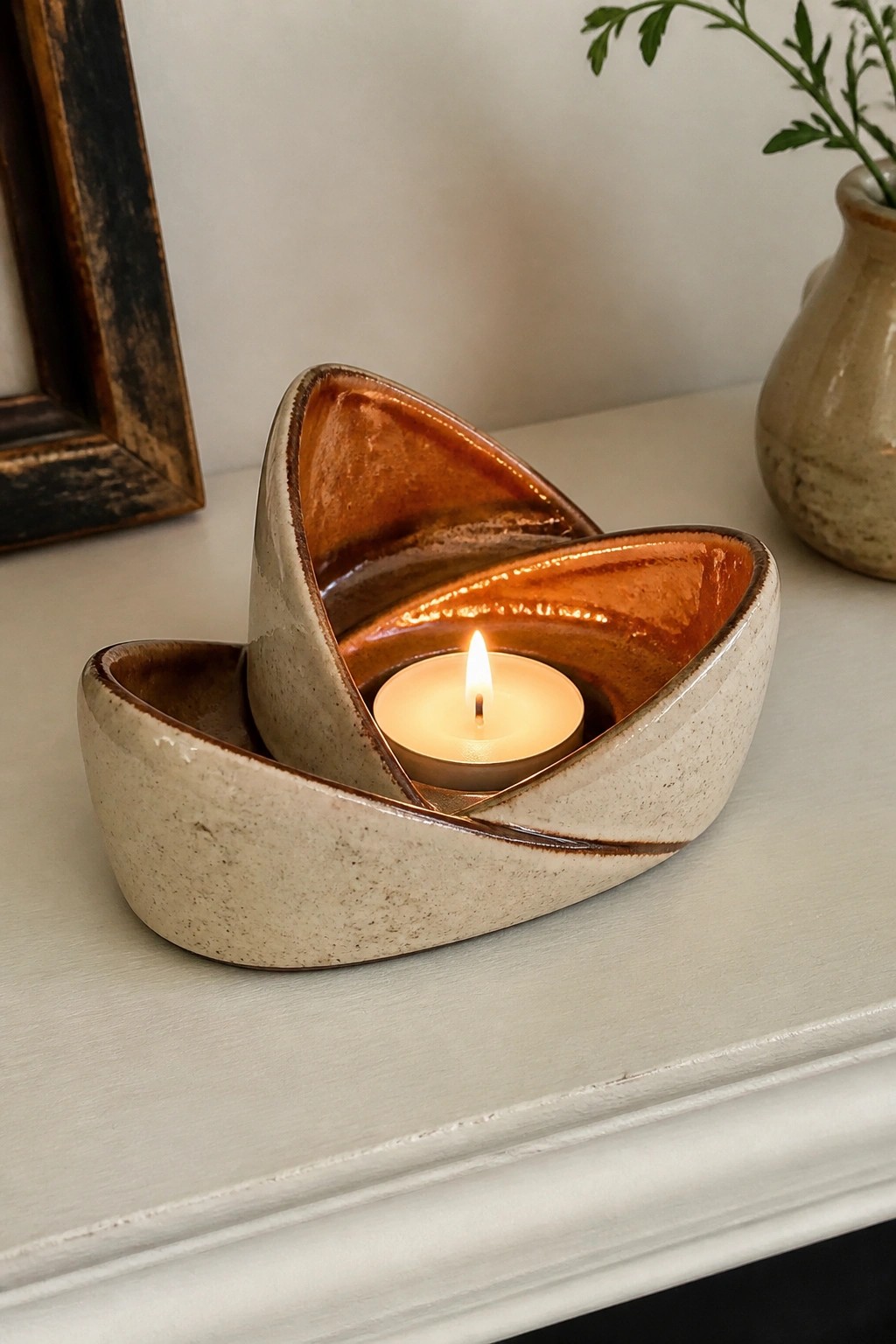
A handbuilt candle holder formed from two curved slabs layered and folded together creates a low, stable base with a central dip for a tea light. The exterior uses a matte speckled glaze while the interior gets a glossy brown finish that catches light and emphasizes the depth between the slabs. This approach belongs to the candle piece category where the folded slab method itself supplies both the structure and the visual interest.
What makes this idea useful is how the overlapping slabs automatically create a protected spot for the flame while keeping the overall footprint small. The same layering technique could be adjusted into a shallow tray or a soap dish by flattening the curves slightly and changing the interior glaze color. A piece like this works especially well on a mantel or side table because the form stays interesting even without a candle. You could simplify it further by using just one slab folded once if you want a quicker version for testing the shape.
Tall Folded Slab Vase with Accent Seam
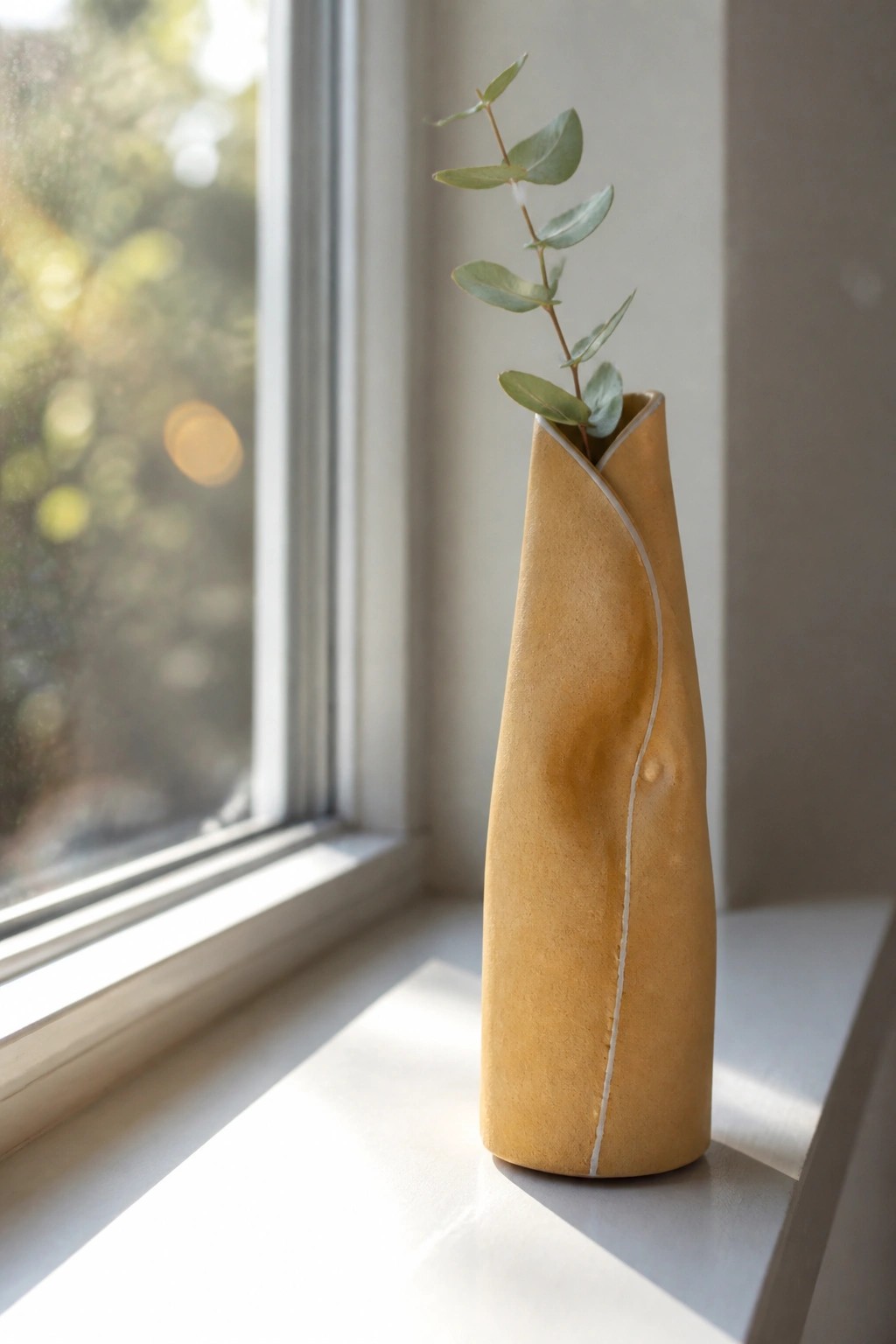
A vase built from one folded slab of clay produces a tall, tapered form that narrows naturally at the top. The overlapping edge creates a curved seam that runs the full height and is traced with a narrow white line for contrast. The matte ochre surface stays plain so the shape and seam stay the focus. This method gives you a sculptural vessel that holds a few stems without extra trimming or handles.
The shape does a lot of the work here by turning a flat slab into a stable, narrow container in one fold. You can shorten the same pattern for a desk bud vase or widen the base if you want room for more flowers. The white line is simple to add with underglaze before the final firing and makes the piece easier to photograph for reference or sharing. Scale the height down and the idea works just as well for a small bathroom holder or a gift that pairs with dried stems.
Divided Slab Seasoning Cellar

A small divided ceramic dish serves as a kitchen seasoning server with two connected compartments. One side holds salt while the other keeps spices, and the joined form comes from handbuilding two rounded sections together along a central seam. Contrasting blue and coral glazes keep the compartments distinct, and the speckled clay surface adds a simple texture that fits the everyday function. This type of project lands in the kitchen item category and stays compact enough for regular counter use.
What makes this idea useful is the way the divided shape organizes two ingredients without needing separate containers. You could rework the same joined layout into a double dip tray or a small jewelry holder by adjusting the scale and glaze choices. In a kitchen the piece keeps salt and spices handy during cooking and avoids the look of plastic shakers on the counter. The form would also adapt easily into a two-part nut server or a desk organizer for paper clips and rubber bands.
Folded Slab Soap Dish
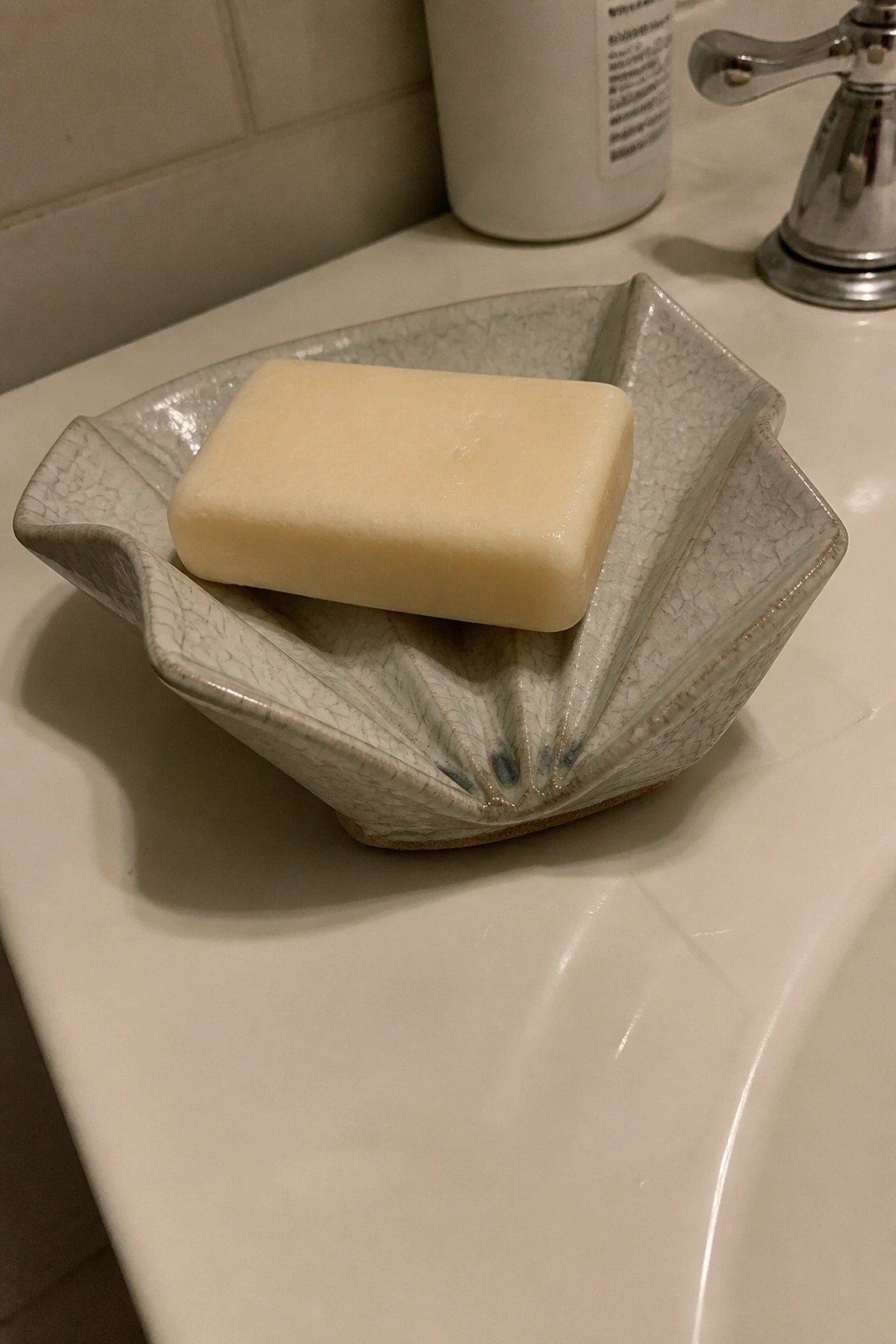
A folded slab soap dish uses a single sheet of clay pinched and shaped into a shallow, fan-like tray that supports a bar of soap. The radiating pleats create ridges that lift the soap off the base, helping water drain away from the bar. The crackle glaze on the surface adds a subtle texture that keeps the piece from looking flat while still reading as a simple bathroom item.
What makes this idea useful is how the folded edges do the work of both holding the soap and adding visual structure without extra parts. You can adapt the same pleat pattern to make a longer tray for toothbrushes or a smaller version for jewelry by adjusting the slab width before folding. The neutral glaze color fits most bathroom counters, but swapping it for a matte solid tone would let the shape stand out more on its own. This form also photographs cleanly for Pinterest because the pleats create clear lines that read well in small thumbnails.
Folded Slab Toothbrush Holder with Multiple Compartments
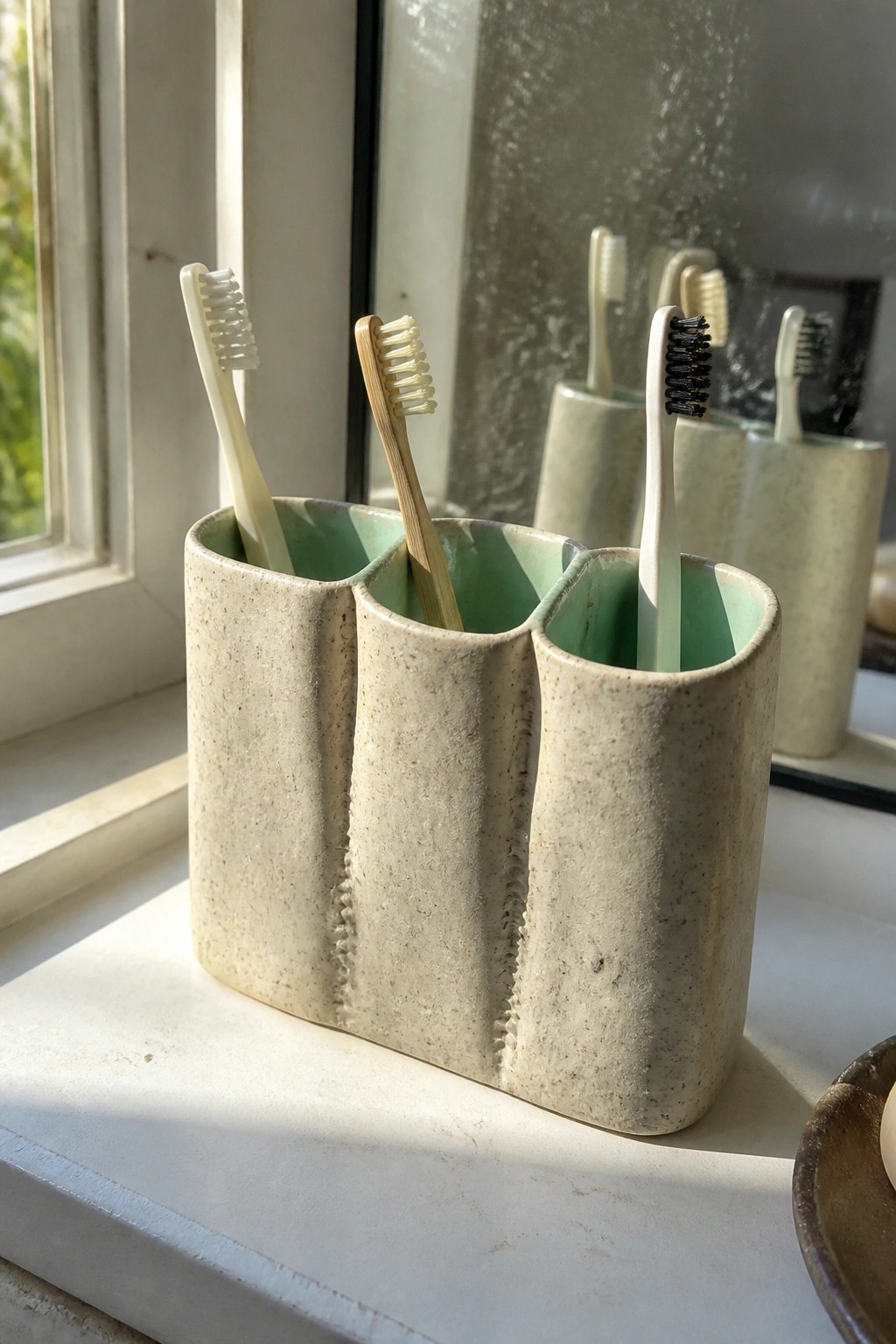
A three-section holder made from folded clay slabs creates separate upright spaces for toothbrushes or similar items. The slabs are shaped and joined to form a long rectangular block with natural divisions that keep contents from touching. A speckled matte surface on the outside pairs with a simple green glaze inside each compartment to emphasize the handbuilt folds.
What makes this idea useful is how the folded construction automatically produces stable, divided storage without extra pieces. The compact size works on a bathroom ledge or windowsill where space is limited. You could scale the same method down for a two-slot version to hold makeup brushes or shorten the length for a single-row desk organizer. The visible seams from the slabs also give a clear way to add texture or color contrast in future versions.
Folded Slab Bird Figurine

A small bird figurine built from folded clay slabs gives a compact decor piece with overlapping layers that form the wing. The body comes from a rounded slab pinched into a simple bird shape, while a separate slab is folded over the back and scored along the edge to create the layered wing detail. A pinched cone beak and small incised eye finish the form, and the turquoise glaze with rust-colored edges highlights the creases made during construction.
What makes this idea useful is how the folded slab adds visible structure without extra carving. This shape works well as a shelf sitter or small gift that takes up little space. You could repeat the same wing fold on other simple animal forms or adjust the glaze color to fit different palettes. The small scale makes it easy to produce several versions in one session for testing different slab thicknesses.
Yarn Bowl with Folded Rim and Yarn Guide

A yarn bowl built from a folded slab keeps a ball of yarn contained while feeding the strand through a controlled opening. The slab is formed into a low, wide bowl with the upper edge pinched and folded at regular intervals to create a scalloped rim. One section of that rim is extended and rolled into a tight spiral that acts as the yarn guide. The speckled clay and two-tone glaze keep the surface simple so the folded form stays visible.
What makes this idea useful is that the same slab folding method can be adjusted to change the depth or rim width depending on the size of yarn ball you want to hold. The curled notch can be made tighter or wider to suit different yarn thicknesses without adding separate parts. This shape sits flat on a table or lap and works just as well for embroidery thread or thin cord if you scale the opening down. You can rework the basic folds into a tray or shallow dish by flattening the base and leaving the rim detail intact.
Angular Lidded Trinket Box from Folded Slabs
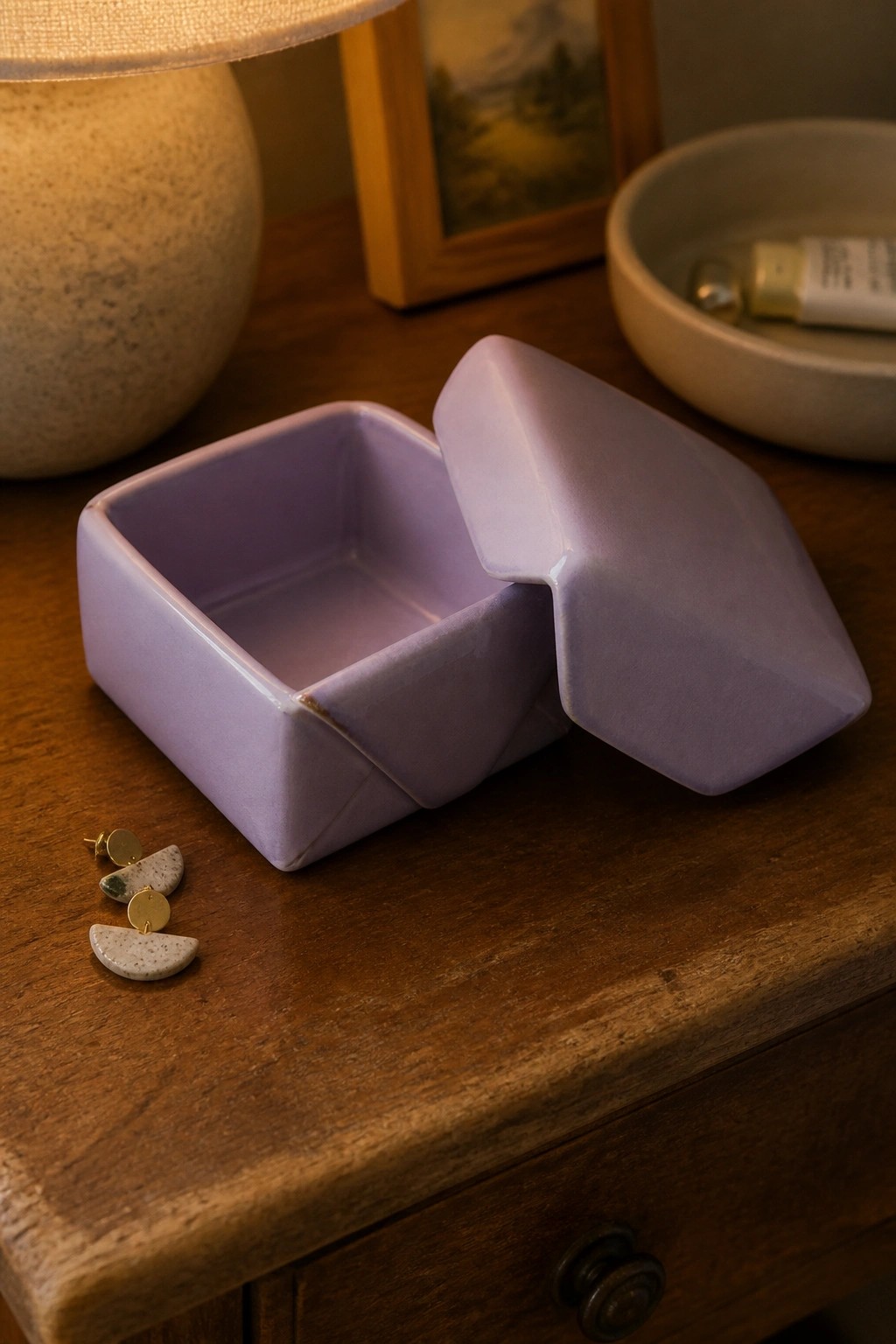
A small square box formed from folded slabs creates sharp edges and flat planes that give it a crisp, geometric profile. The separate lid mirrors the same technique with triangular facets that slope upward, allowing it to sit neatly on the base when closed. A single solid glaze keeps attention on the joined seams and the way the slabs were angled during building.
What makes this idea useful is how the folded form turns a basic box into something that feels more structured without extra decoration. The compact size fits on a nightstand or desk for jewelry or small keepsakes, and the same slab-folding approach can be adjusted to make a shallower tray or a taller container. You could simplify the lid to fewer planes if you want a quicker build or change the glaze to a matte finish for a different surface look.
Folded Slab Utensil Holder with Vertical Stripe
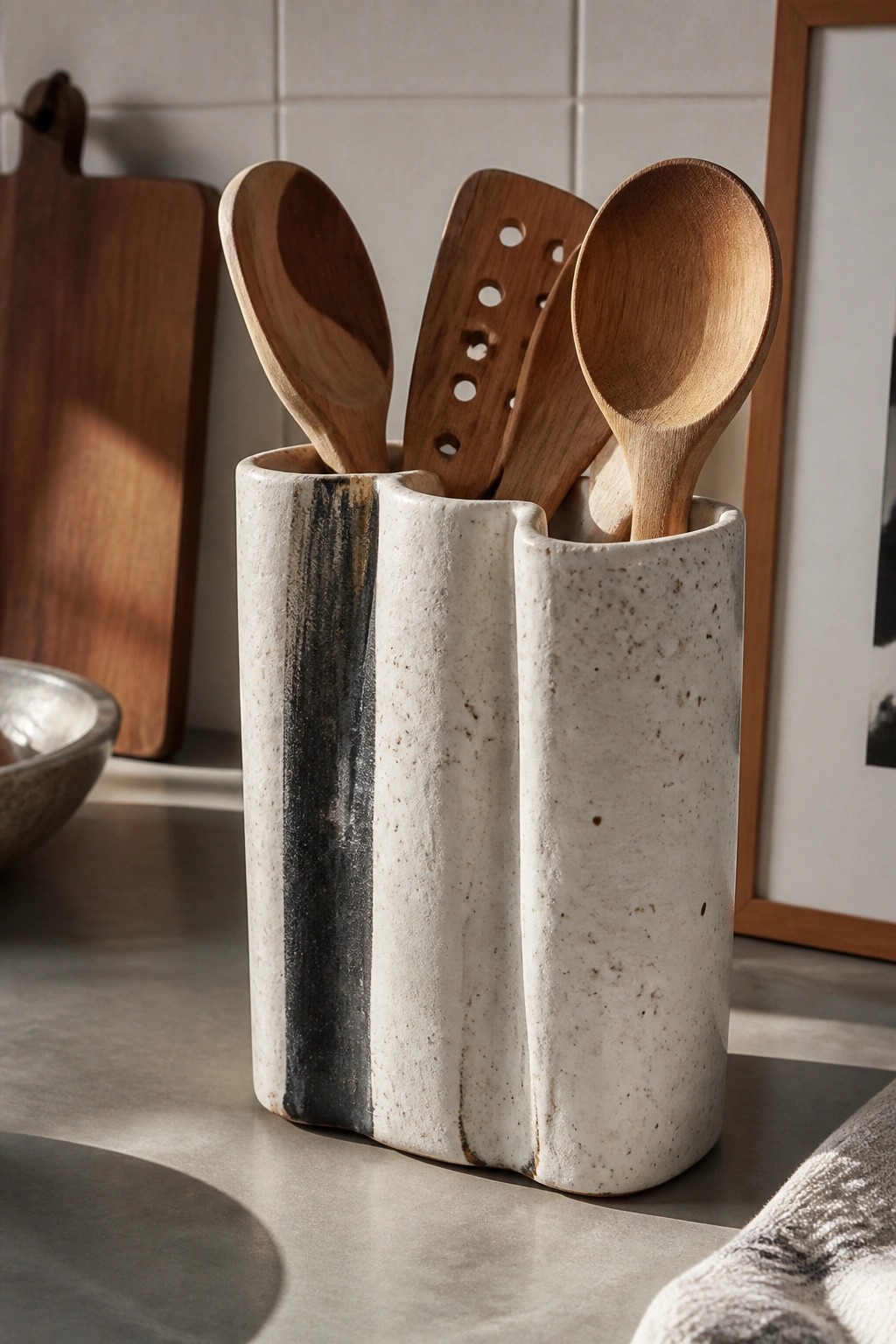
A slab-built utensil holder made by folding and pinching clay creates several open sections that keep spoons and spatulas separated. The vertical folds produce an irregular, gathered shape while a single dark stripe runs down one side against the speckled white surface. This keeps the piece functional for kitchen storage while giving it a distinct handbuilt look.
The compact footprint fits easily on a countertop next to a stove or prep area. You could rework the same folded construction into a smaller version for paintbrushes or desk tools by reducing the height and number of pinches. Adding more stripes or switching the accent color lets you match different kitchen palettes without changing the core form.
Folded Slab Incense Tray
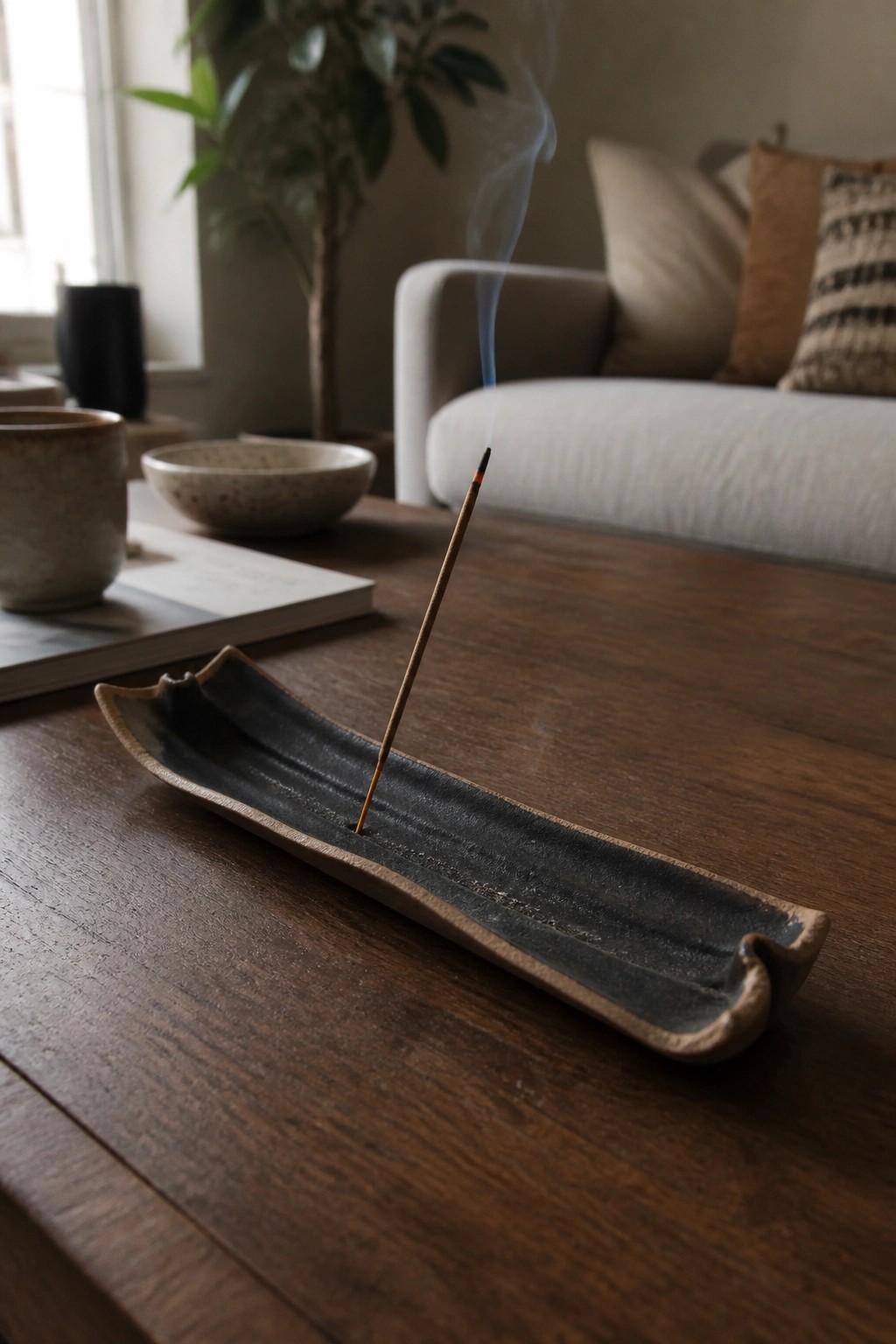
A narrow tray built from a single slab of clay makes a practical incense holder. The slab is folded along the sides to create a shallow trough, with one end pinched into an irregular wave and a small hole added to keep the stick upright. The dark matte glaze on the interior contrasts with the raw clay rim, helping the form stay simple while still directing ash into the channel.
What makes this idea useful is how the folded edges give the tray enough height to contain ash without needing extra walls. You could shorten the length for a compact desk version or stretch it longer to hold multiple sticks. The same slab method works for making a matching set in different widths, and the narrow shape fits easily on shelves or side tables where bigger pieces would crowd the space.
Folded Slab Napkin Holder

A folded slab napkin holder uses two clay slabs joined along the bottom to create an open frame that keeps a stack of paper napkins upright. The rounded corners and low profile give the form stability while the exterior glaze provides a smooth, wipeable surface. Small dotted texture along the rim adds subtle detail without complicating the build. This fits the kitchen item category and works as a simple handbuilt project that stays flat when not in use.
What makes this idea useful is how the same basic folded shape can be adjusted in height or width to fit dinner napkins, cocktail napkins, or even small notepads. Change the glaze color to match existing dishes or leave the clay matte for a different look. In a kitchen, this kind of piece keeps the table tidy and takes up less space than a box-style holder. For a gift, the form can be reworked into a letter holder by making the sides taller.
Folded Slab Creamer for Daily Use
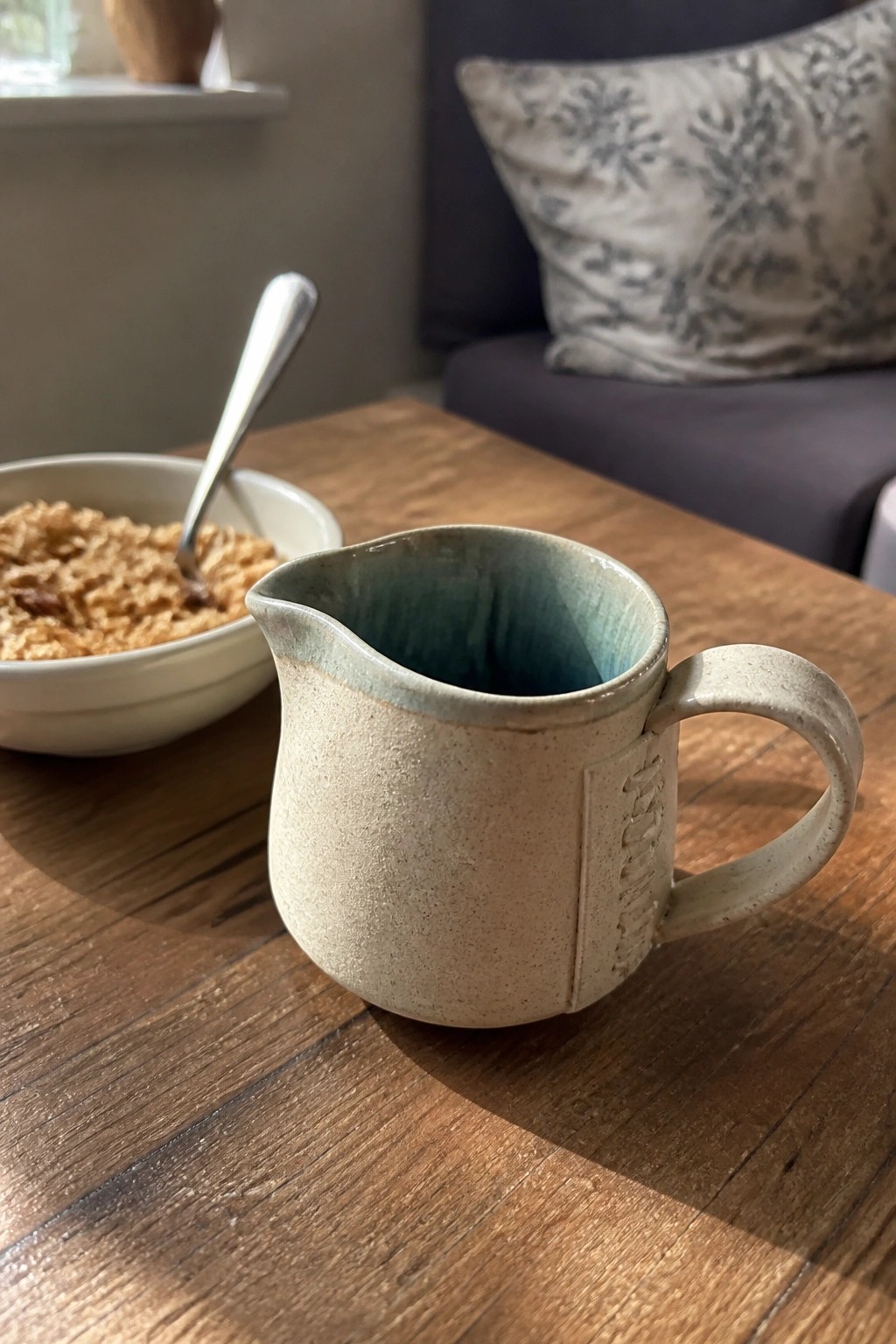
A small creamer built from folded slabs produces a compact pitcher that holds just enough milk or cream for one or two servings. The flat sides and angled seams come from scoring and joining simple clay rectangles, with the spout formed by pinching one corner of the top rim. The matte speckled exterior keeps the piece casual while the blue-green glaze on the inside makes it easy to wipe clean and shows the liquid level at a glance.
The shape does a lot of the work here because the slab method lets you build several identical forms in one session without a wheel. This kind of piece fits well on a kitchen counter or breakfast table and can be scaled up slightly for a small gravy boat or down for a matcha pourer. Swap the handle for a pulled one or add a simple foot ring to change the look while keeping the same construction steps.
Hanging Rectangular Slab Mobile
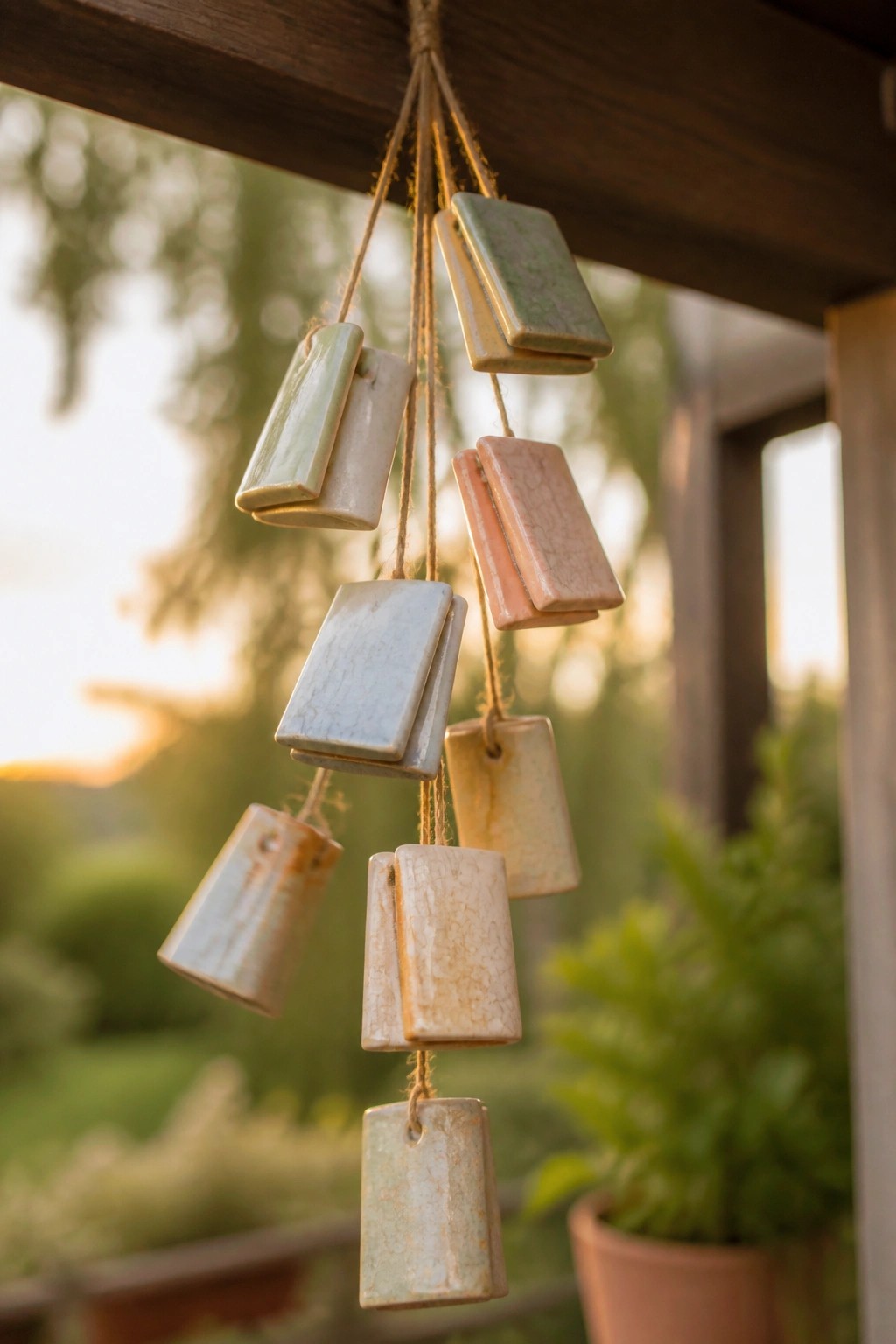
Rectangular slabs built from flat clay sheets and strung on twine form a hanging mobile. Pairs of slabs are stacked or overlapped at slight angles, each drilled with a small hole near the top edge before firing. Glazes in soft greens, creams, and pinks with visible crackle create contrast across the set while keeping the overall shape simple and repetitive.
What makes this idea useful is the way the repeated slab shape lets you focus on glaze testing rather than building complex forms. A piece like this works especially well as porch or window decor where gentle movement shows off the different surface finishes. You could shorten the strings and hang just three or four slabs as a compact version for a kitchen wall, or swap the earthy palette for brighter colors to match a specific room. The basic construction also translates easily to individual ornaments or a longer garland-style piece.
Folded Slab Wall Tiles with Soft Glaze Blocks
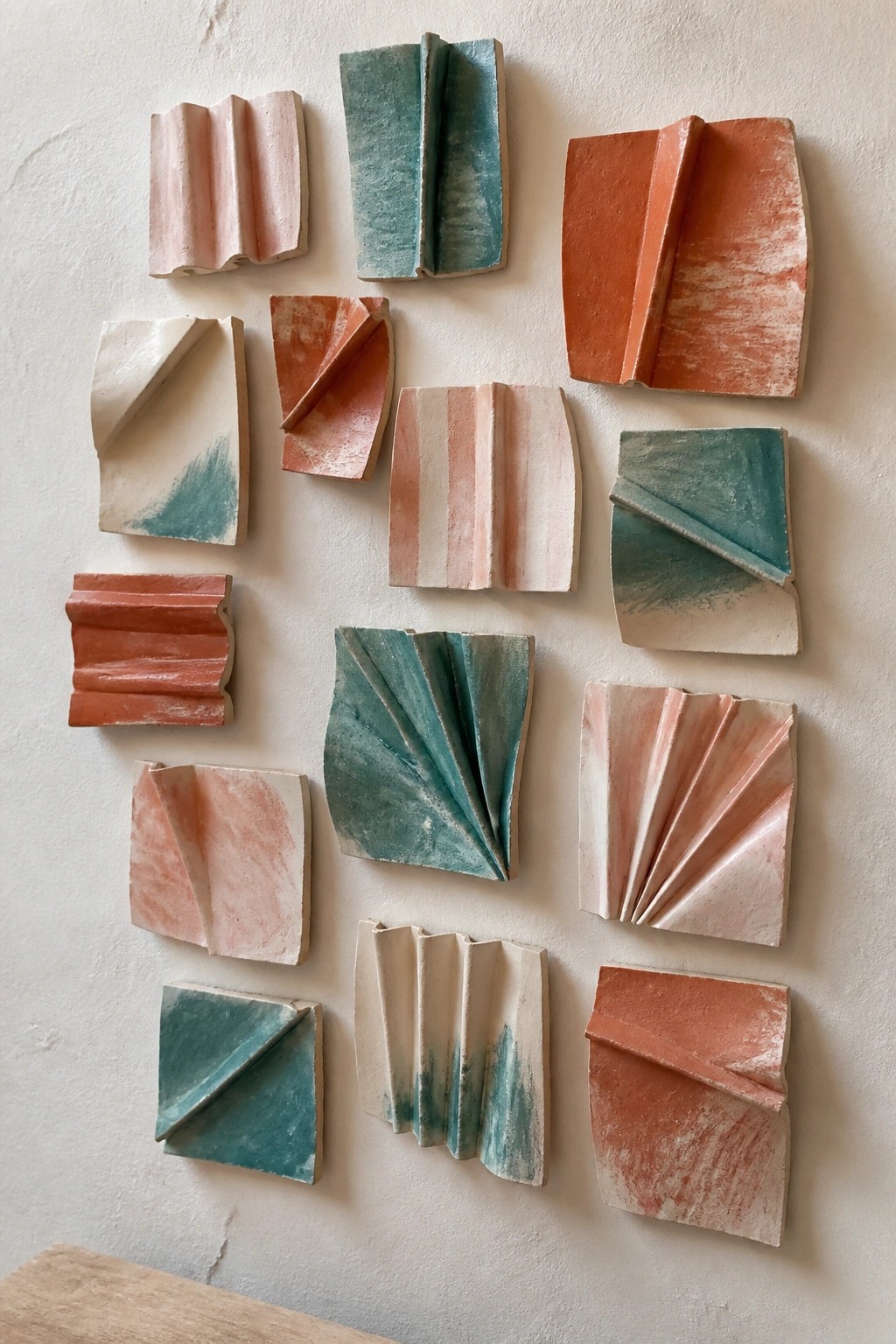
These handbuilt pieces start as flat clay slabs that are folded, creased, and shaped into angular, dimensional forms before firing. The resulting objects serve as small decorative wall tiles, with each one treated to a single color or simple stripe of glaze in peach, teal, or cream. The folds create shadows and highlight the texture of the clay, while leaving some edges raw so the form itself stays visible. This category works well for abstract decor objects that rely on repetition and subtle color shifts rather than functional use.
What makes this idea useful is how the same folding method can be repeated with minor changes in angle or depth to build a larger wall arrangement without needing complex molds. You can keep the palette limited to two or three tones so the group reads as one installation, or swap in new colors for each batch to match a room. The small size makes it simple to experiment with different slab thicknesses or add a hanging hole on the back before the final firing. For a gift or a quick project, these tiles adapt easily into a set of six or eight that can be arranged in any pattern on the wall.
Frequently Asked Questions
Q: What type of clay is best suited for creating folded slab pottery forms? A: Stoneware or porcelain clays with good plasticity work well because they allow clean folds without tearing. Choose a clay body that has some grog for strength during handling and drying. Test small samples first to see how your chosen clay responds to folding and drying in your studio conditions.
Q: How thick should clay slabs be when starting folded slab projects? A: Aim for slabs between 1/4 inch and 3/8 inch thick. Thinner slabs fold more easily but risk cracking, while thicker ones provide stability for larger forms. Use a slab roller or rolling pins with guides to maintain even thickness, and keep the clay at a leather-hard stage before folding to reduce distortion.
Q: What steps help prevent cracking when folding and drying slab forms? A: Work with clay that is firm but still pliable, and cover pieces loosely with plastic while they dry slowly over several days. Score and slip any joins thoroughly, then support folds with foam or fabric props during the initial drying phase. Avoid direct airflow or sunlight, which can cause uneven shrinkage.
Q: How can beginners adapt the creative ideas into simple starter projects? A: Begin with basic shapes like folded trays or small bowls using one or two folds. Practice on paper templates first to plan your designs, then move to clay once comfortable. Focus on one idea at a time, such as a folded vase with added texture, and keep initial pieces under 8 inches to manage handling and firing.
Q: What finishing options work well on folded slab pottery after bisque firing? A: Apply underglazes or slips before the bisque for color that highlights fold lines and textures. Follow with food-safe glazes in the glaze fire, or experiment with matte and glossy combinations to emphasize the form. Test all combinations on sample tiles to ensure compatibility with your clay and kiln schedule.

Pottery Path is my cozy corner of the internet where I share clay ideas, pottery inspiration, and simple projects you can recreate at home. I love exploring everything from air dry clay to handbuilt pottery to cute minis that brighten your day. My goal is to make clay crafting feel easy, fun, and welcoming for anyone who wants to try it.
You will find beginner friendly tutorials, creative pottery painting ideas, and lots of warm inspiration for slow and happy crafting. If you enjoy hands on creativity, this space will feel like home.