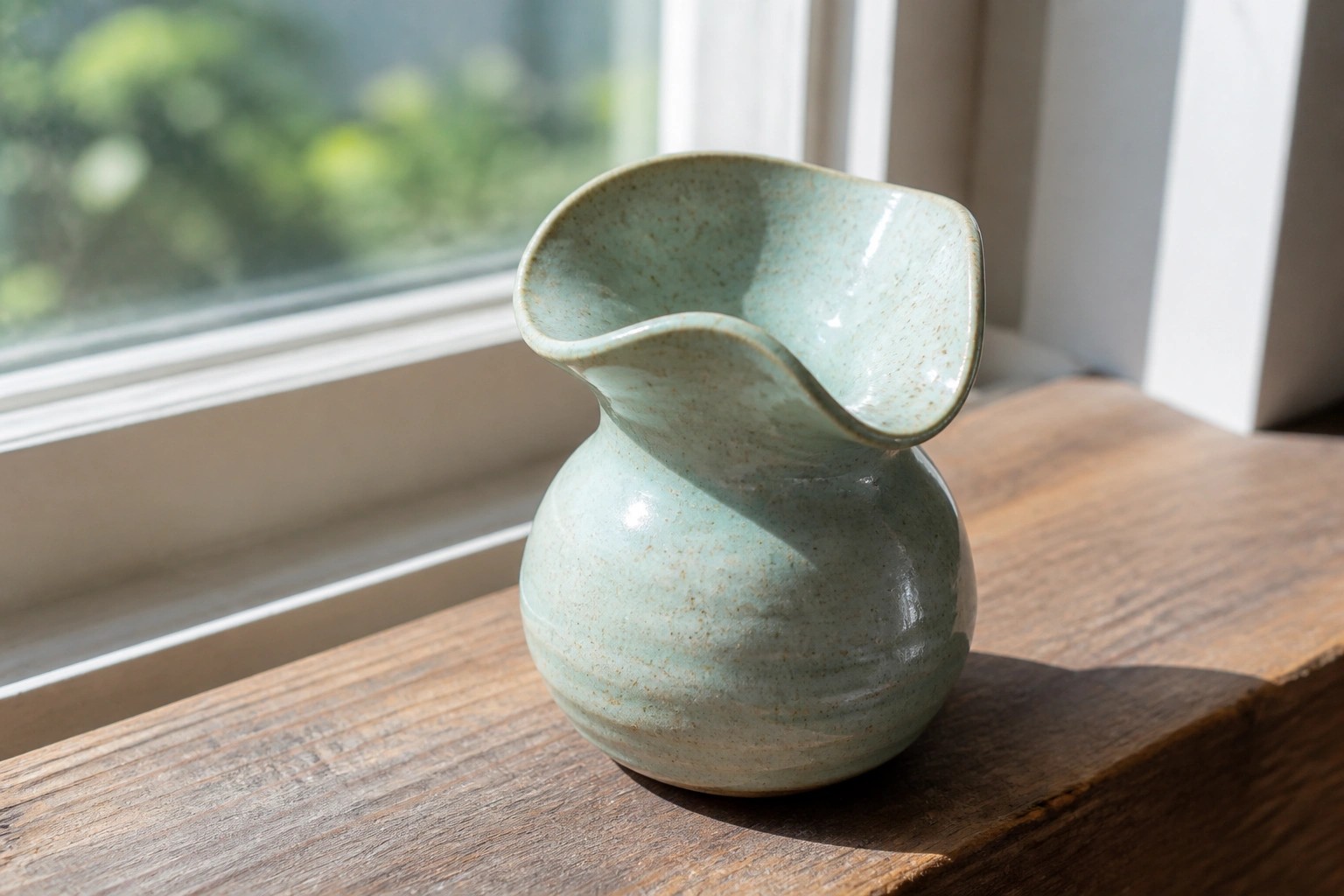
I started making ruffle vases after noticing how the edges can soften and shift during the forming process.
The organic feel comes from working with the clay rather than against it.
Over the past year I tried out different ways to create those flowing shapes and kept the ones that felt straightforward.
Some rely on hand pinching while others use basic wheel techniques.
They end up looking at home on a shelf without needing much decoration.
Wheel-Thrown Vase with Organic Ruffled Rim
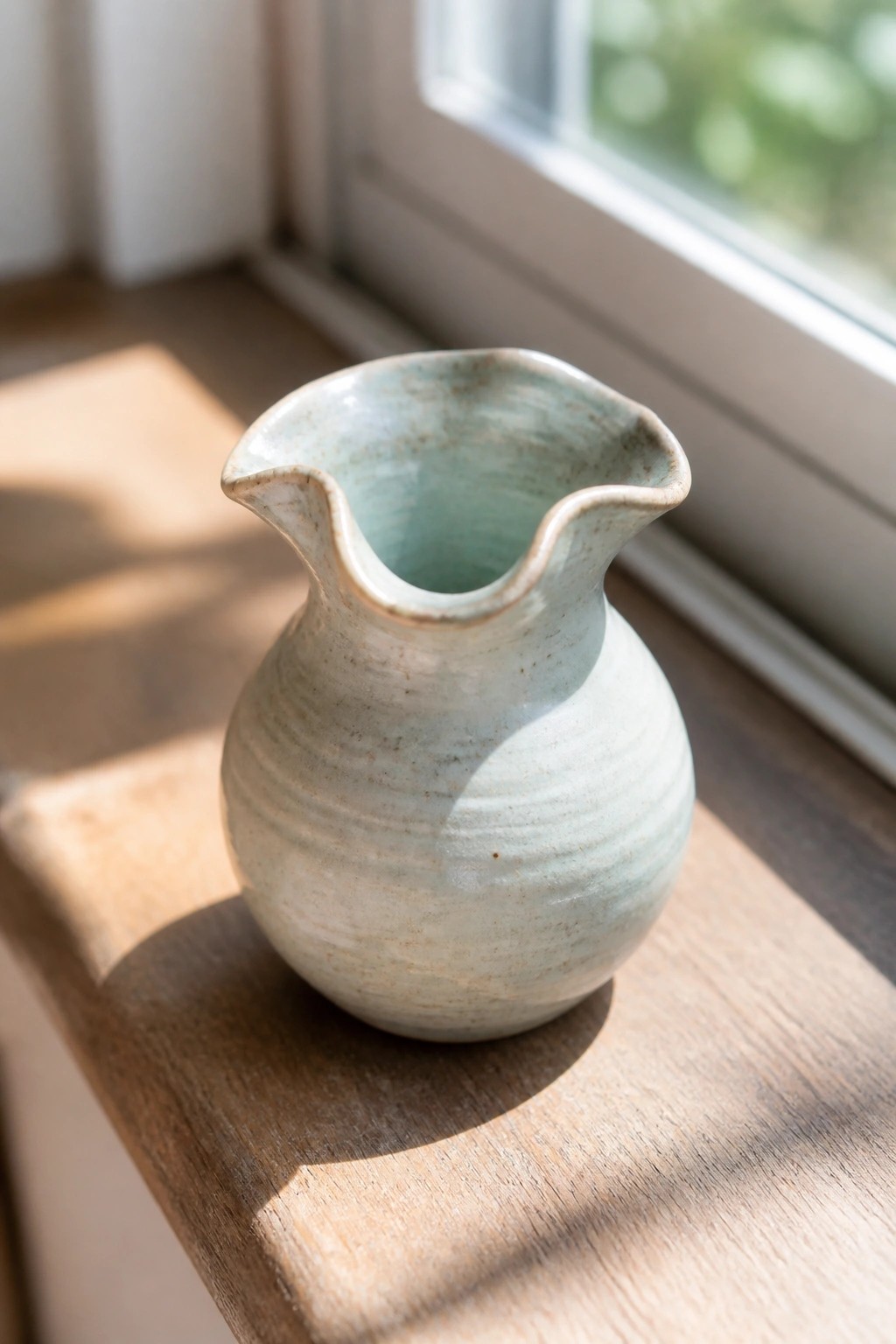
A wheel-thrown ceramic vase with a wide, uneven ruffled rim creates flowing edges that give the piece a relaxed, natural shape. The soft blue-green glaze sits thin on the high spots and pools lightly in the grooves, emphasizing the throwing lines and the hand-shaped lip. This style fits the ruffle vase category well because the rim becomes the main design feature rather than added decoration or surface pattern.
The small scale lets the vase sit comfortably on a narrow shelf or windowsill while still holding a few stems. You can rework the same rim technique on a taller form or try a matte white glaze to shift the look without changing the shape. A piece like this stands out on Pinterest when the ruffle is kept loose and the glaze stays simple, making it easy to adapt for different color palettes or room styles.
Ruffled Rim Vase with Streaked Teal Glaze
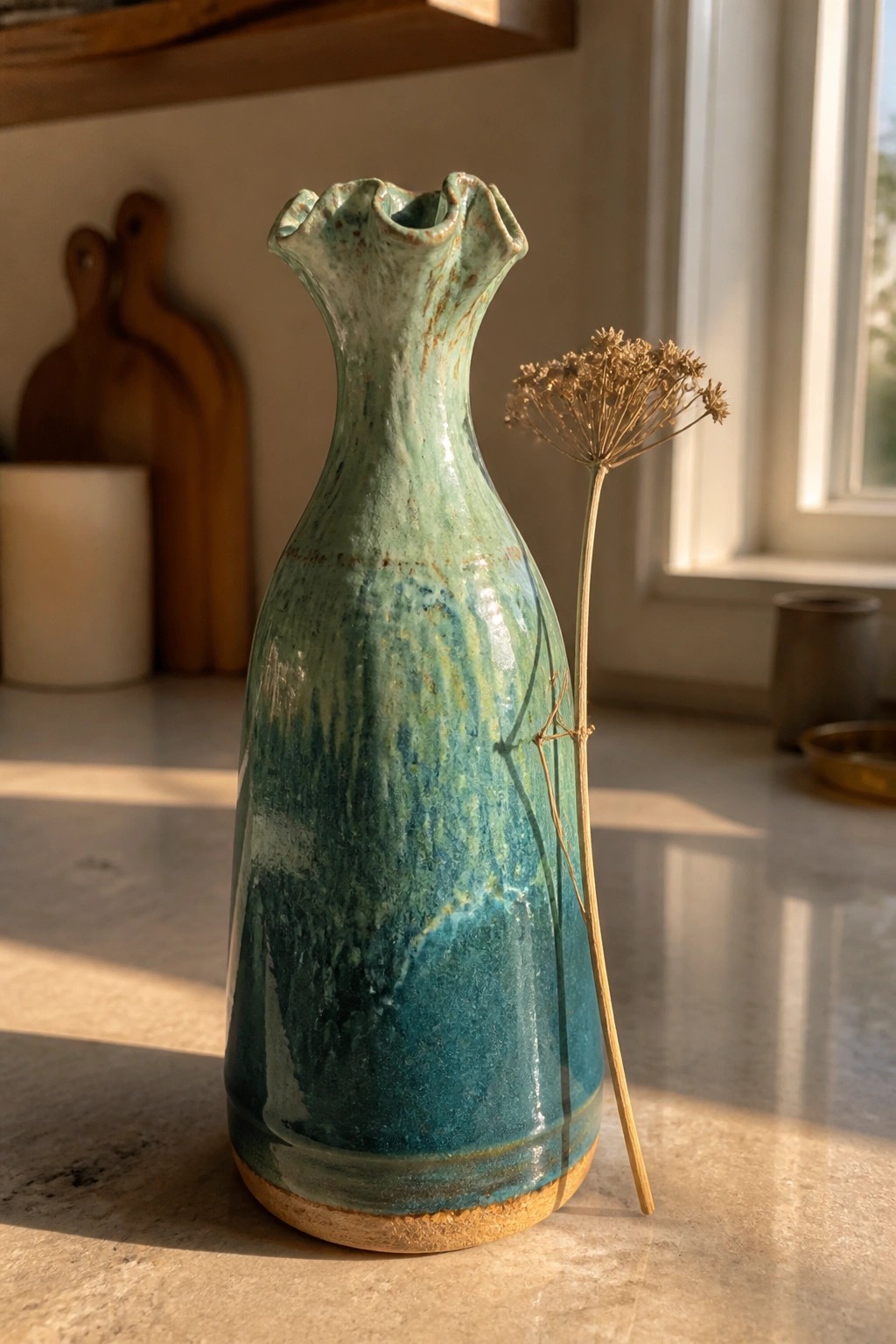
A tall ceramic vase with a hand-pinched ruffled rim gives a direct way to build an organic edge without added tools. The form narrows at the neck then widens slightly at the base, letting the glaze flow downward in layers of teal, blue, and green that pool and break naturally. This vase idea works because the irregular rim creates visual movement while the rest of the surface stays simple.
The shape does a lot of the work here because it holds a single dried stem or a few fresh stems without needing extra support. You can adapt the same rim treatment to a shorter bottle form or change the glaze to warmer tones for a different look. In a kitchen or entryway, the height keeps it from getting lost on a counter. The idea also translates easily to a smaller version for a desk or bathroom shelf.
Soft Pink Ruffle Vase with Organic Wavy Rim
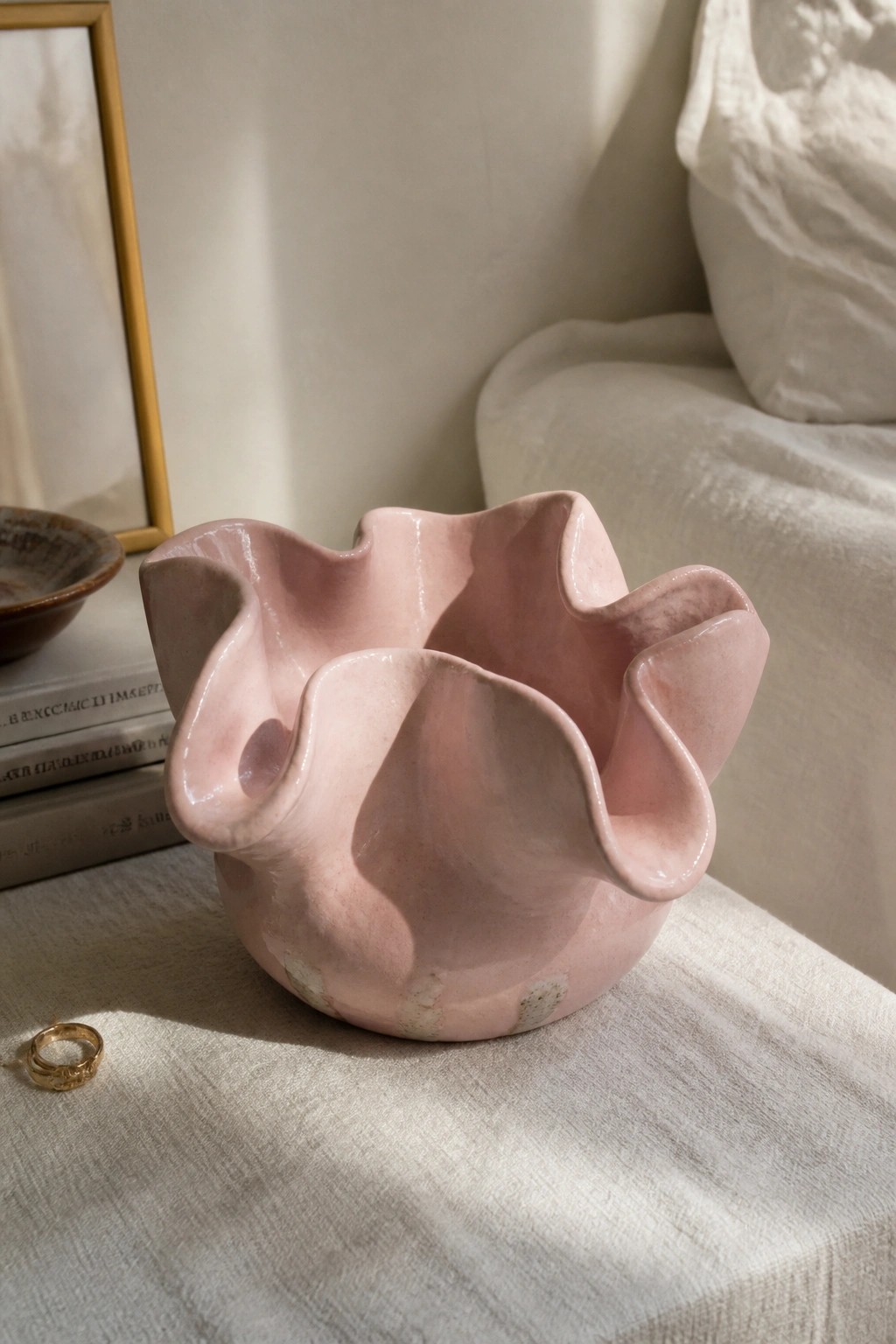
A small handbuilt ceramic vase shaped with an exaggerated ruffled rim creates a flowing edge that moves in and out around the opening. The soft pink glaze covers most of the surface while allowing some of the clay body to show through near the base, giving it a slightly textured, uneven finish. This design falls into the category of decorative vases meant to stand alone rather than hold large arrangements. The irregular rim turns a basic vessel into a sculptural piece that draws attention through its shape alone.
What makes this idea useful is how the ruffle does most of the visual work without needing extra surface decoration. You could adapt the same rim technique to a wider bowl form or a shorter tumbler shape for different uses around the house. The small scale makes it simple to try on a pottery wheel or with slab building if you want to test the edge style first. In a neutral room, this kind of piece stands out on a shelf or side table because the wavy edge breaks up straight lines from other objects.
Ruffled Rim Pitcher with Organic Flares
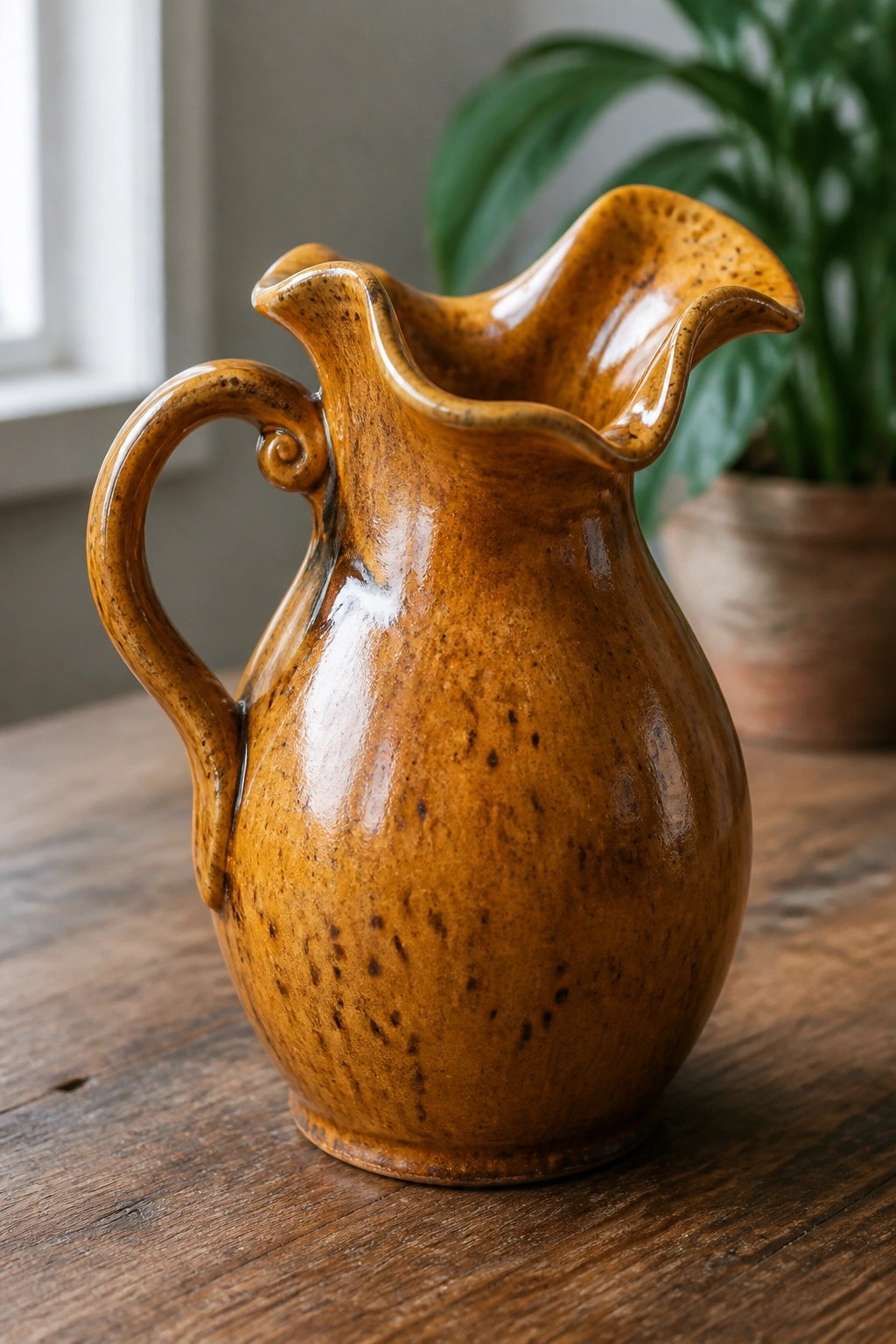
A ceramic pitcher with a wide, irregular rim shows how a simple vessel can become a ruffle vase by focusing on the top edge. The body stays rounded and functional while the clay is pulled and folded outward in uneven waves that create movement. The glossy brown glaze with dark speckles pools slightly along the folds and accentuates the handmade rim without any added carving or colorwork.
This shape works especially well as a vase for branches or tall stems on a sideboard or kitchen counter. You can adapt the same rim by pinching it more or less dramatically depending on the size of the piece you throw. The idea also transfers easily to a smaller jug or a wide bowl if you want the flowing edge on a different form. The contrast between the smooth body and the active rim is what makes the design hold attention in a collection of vases.
Hanging Ceramic Planter with Organic Ruffled Rim
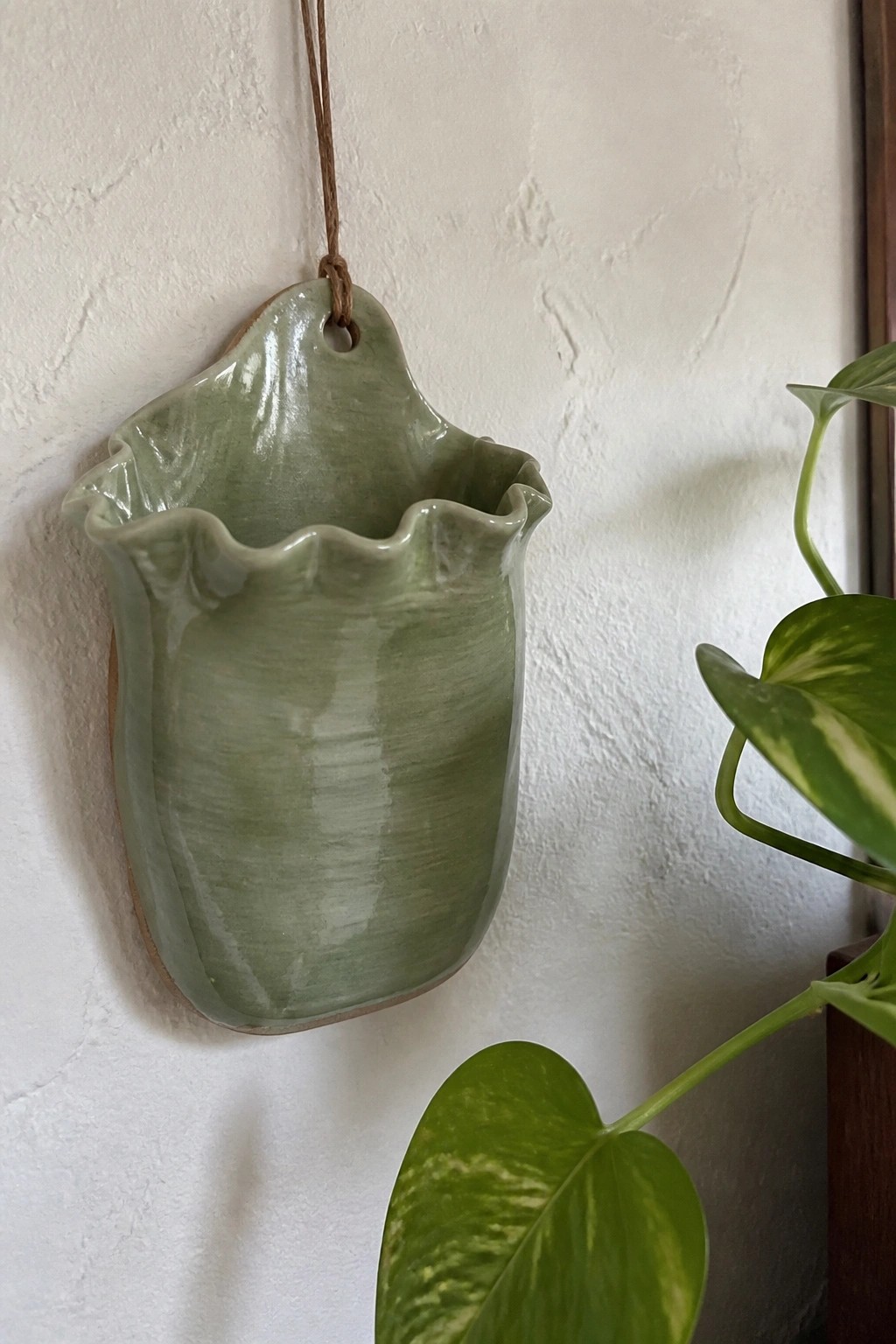
A hanging clay vessel with a wide, irregular ruffled rim works well as a small wall planter for trailing plants. The form is pinched or slab-built so the top edge flares outward in soft waves, and a simple hole near the rim lets it hang from cord or wire. The light green glaze sits thinly enough to show the hand-formed surface while still giving the piece a finished look. This approach fits the hanging planter category and keeps the focus on the flowing edge rather than added decoration.
What makes this idea useful is how the ruffled rim gives visual interest without extra carving or handles. The same edge treatment could be applied to a taller cylinder or a wider shallow bowl if you want a different scale. In a small apartment, this shape keeps plants off surfaces while still letting you see the leaves clearly. You could rework the basic hanging form into a set of three different sizes for a grouped display.
Petal-Style Ruffles on a Two-Tone Bulbous Vase
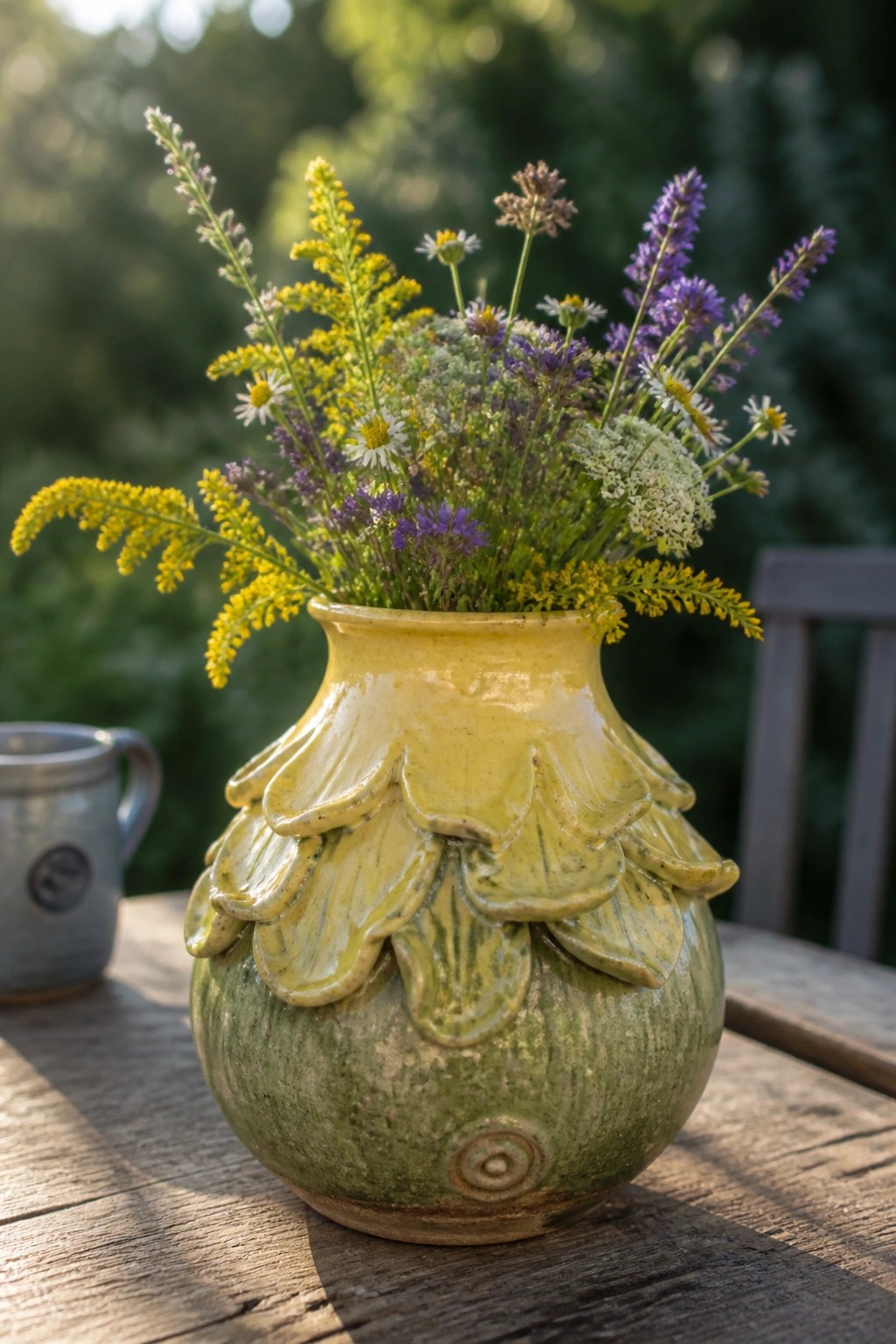
A handmade ceramic vase with a rounded body and a neck built from stacked clay ruffles creates an organic edge that mimics layered flower petals. The ruffles are formed by overlapping slabs that curve outward, giving the rim width and texture without added carving. A green glaze on the lower half shifts to yellow across the ruffles, letting the sculpted details stand out through the color change and surface variation. This fits the flowing organic edge category by making the rim itself the main design element rather than relying on painted patterns or smooth lines.
The shape does a lot of the work here by supporting loose, tall-stemmed flowers without needing a frog or extra supports. You could adapt the same ruffle method to a narrower neck on a smaller vase or apply it to a low bowl form for a different use. For a gift, something like this works well paired with fresh cuttings from a garden. The two-tone glaze approach also lets you test color combinations on just the edge section before committing to a full piece.
Trio of Small Ruffle Vases on a Matching Tray
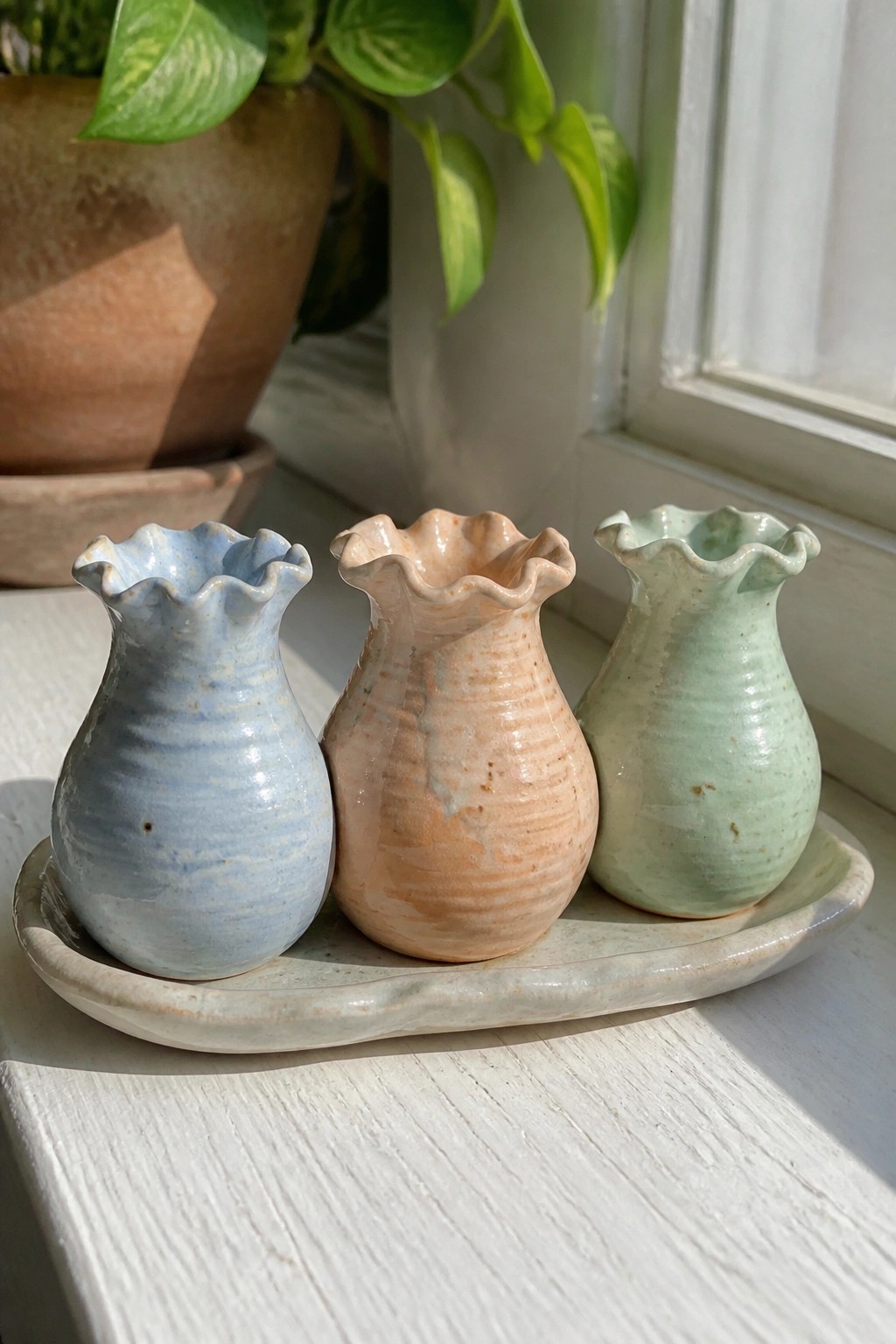
These are three compact ceramic vases with irregular wavy rims set together on a shallow oval tray. Each vase has a rounded body that tapers toward the base, and the rims are pinched and folded by hand to create soft, uneven edges. The glazes are applied in three separate tones—blue, warm peach, and green—with visible horizontal throwing lines left under the surface for extra texture. The combination turns a basic vase shape into a ready-made grouping that highlights the ruffle detail without extra props.
What makes this idea useful is how the tray keeps the three pieces stable and visually connected for a windowsill or shelf spot. You could scale the same ruffle edge onto one larger vase or shorten the bodies into bud vases for single stems. The small size lets you test several glaze colors in one firing and still end up with a finished set. For a gift, repeat the tray format with two vases instead of three to keep the project quick while keeping the focus on the organic rims.
Asymmetric Ruffle Rim on a Tall Tapered Vase
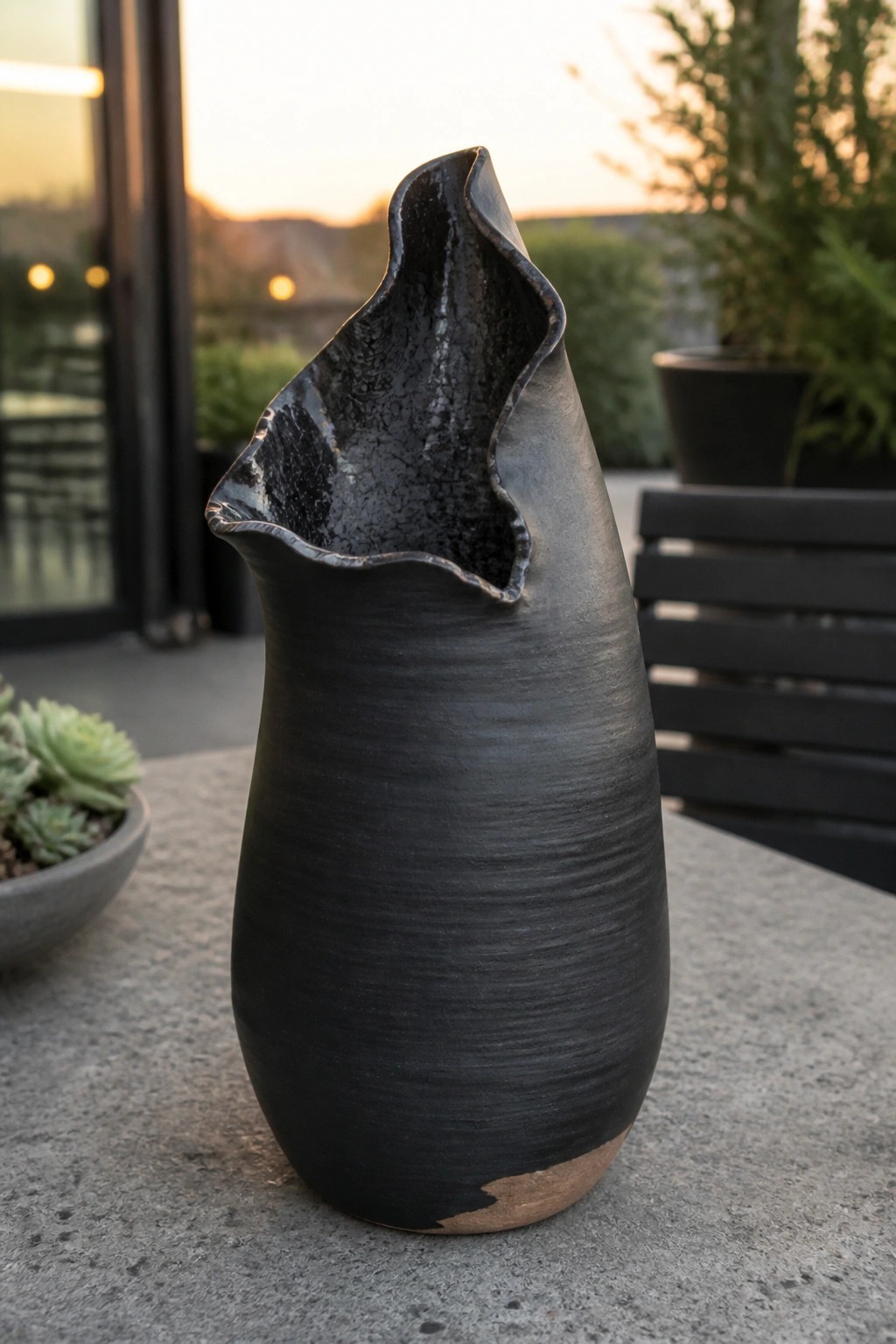
A tall ceramic vase with an exaggerated asymmetric ruffle forms the main visual feature through its wide, irregular opening that folds and flares in multiple directions. The dark crackled glaze covers the upper portion while the body tapers cleanly to a narrow base with an unglazed foot. Horizontal wheel marks add subtle texture across the surface without competing with the rim. This approach belongs to the ruffle vase category by making the organic edge the central design choice rather than surface pattern or added detail.
What makes this idea useful is the way the ruffle draws attention even when the rest of the form stays simple. The tall tapered shape works well on a console table or sideboard where the rim can be viewed from multiple angles. You could adapt the same rim treatment to a shorter, wider body for a different proportion or repeat the dark glaze on a set of smaller versions to create a grouping. For a gift this kind of piece stands out because the ruffle gives it presence without needing extra decoration.
Compact Ruffle Vase with Soft Wavy Rim
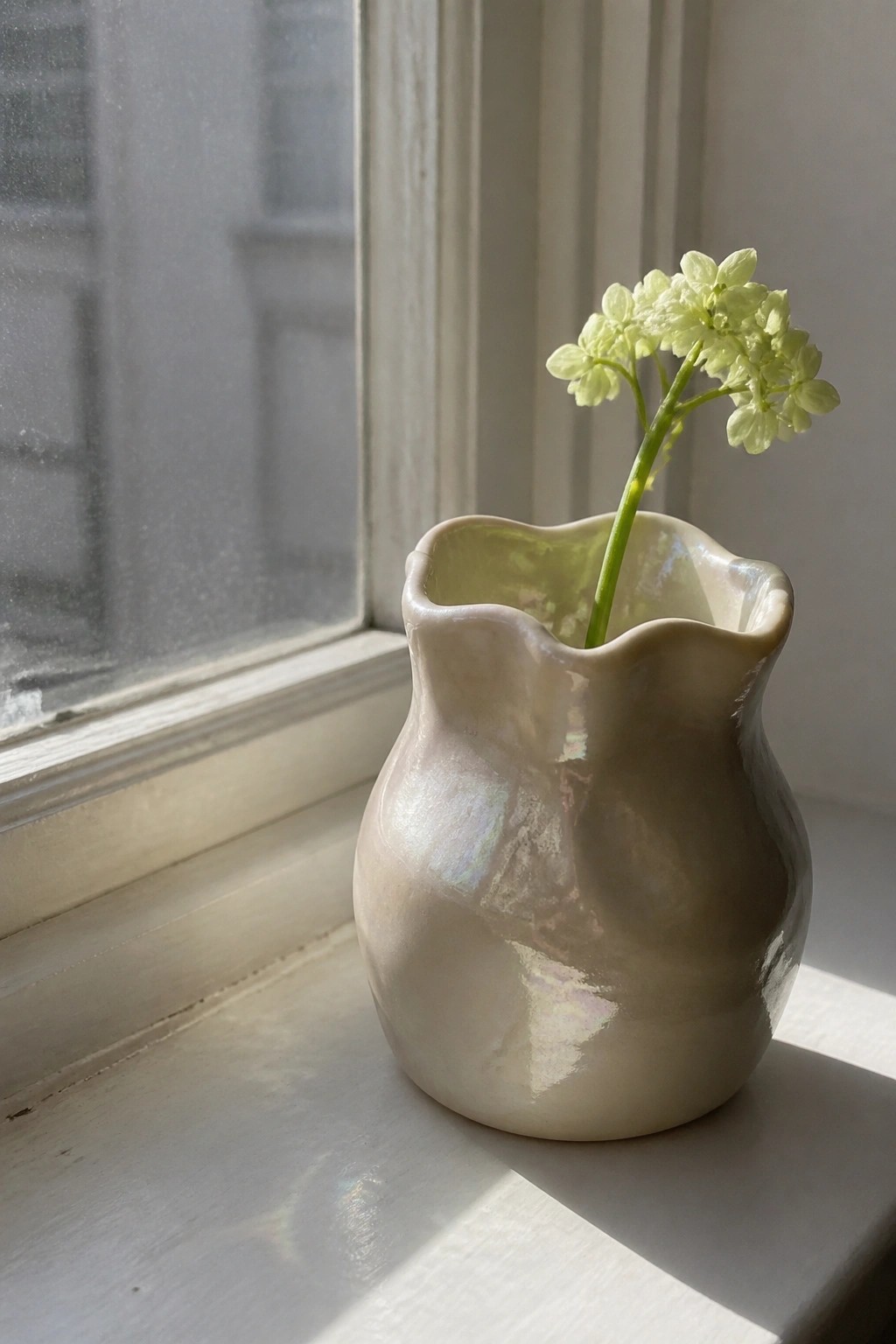
A small ceramic vase formed with a wide, undulating rim creates a flowing organic edge that feels natural rather than cut. The glossy pale glaze catches light across the rounded body and gives the surface a subtle sheen without added decoration. This shape works as a simple holder for a single stem or small bunch, keeping the focus on the rim detail.
What makes this idea useful is how the ruffled edge adds interest on its own while the compact size keeps it easy to place on a narrow ledge or shelf. The same rim style could be scaled up for a larger table vase or repeated on a set of bud vases in different glaze tones. For a quick change, try the same form in a matte clay body or a deeper color to shift the look. The flowing edge photographs well from multiple angles, which helps when sharing the finished piece.
Twin Spout Vase with Striped Ruffle Collar
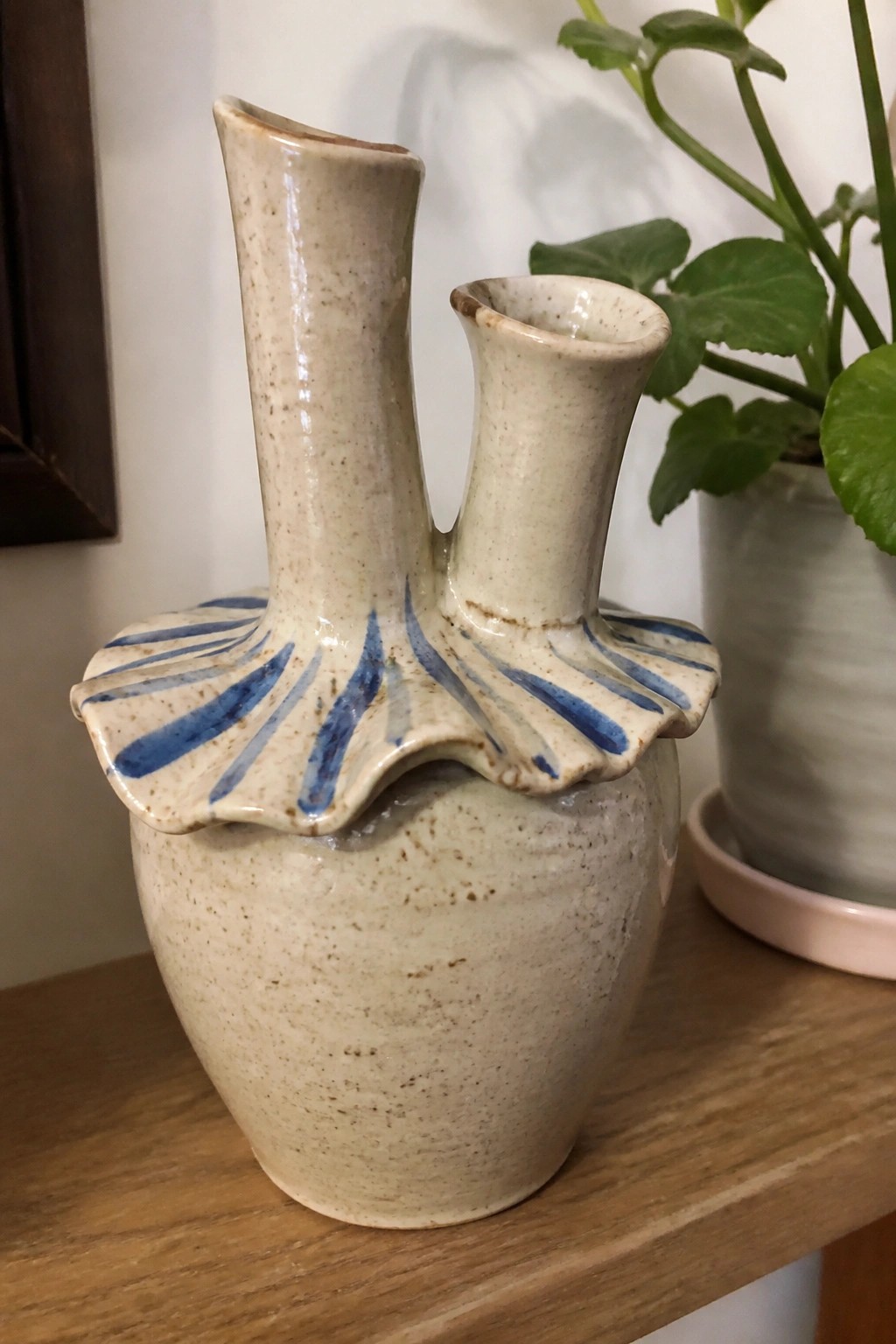
A double-necked vase uses two tapered spouts that rise from one rounded body. The sculpted ruffle sits at the shoulder and carries repeated blue brushstrokes that follow the folds. This layout keeps the necks clean while the collar supplies the main visual interest. The speckled surface lets the painted stripes read clearly without extra color layers.
What makes this idea useful is how the ruffle adds height and width without changing the overall footprint. The same collar shape could be scaled down for a single-spout bud vase or added to a small jug. In a room the two spouts let you arrange stems in different directions at once. The painted detail also photographs well, which helps the piece stand out if you share it online.
Pedestal Ruffle Bowl with Reactive Glaze Folds
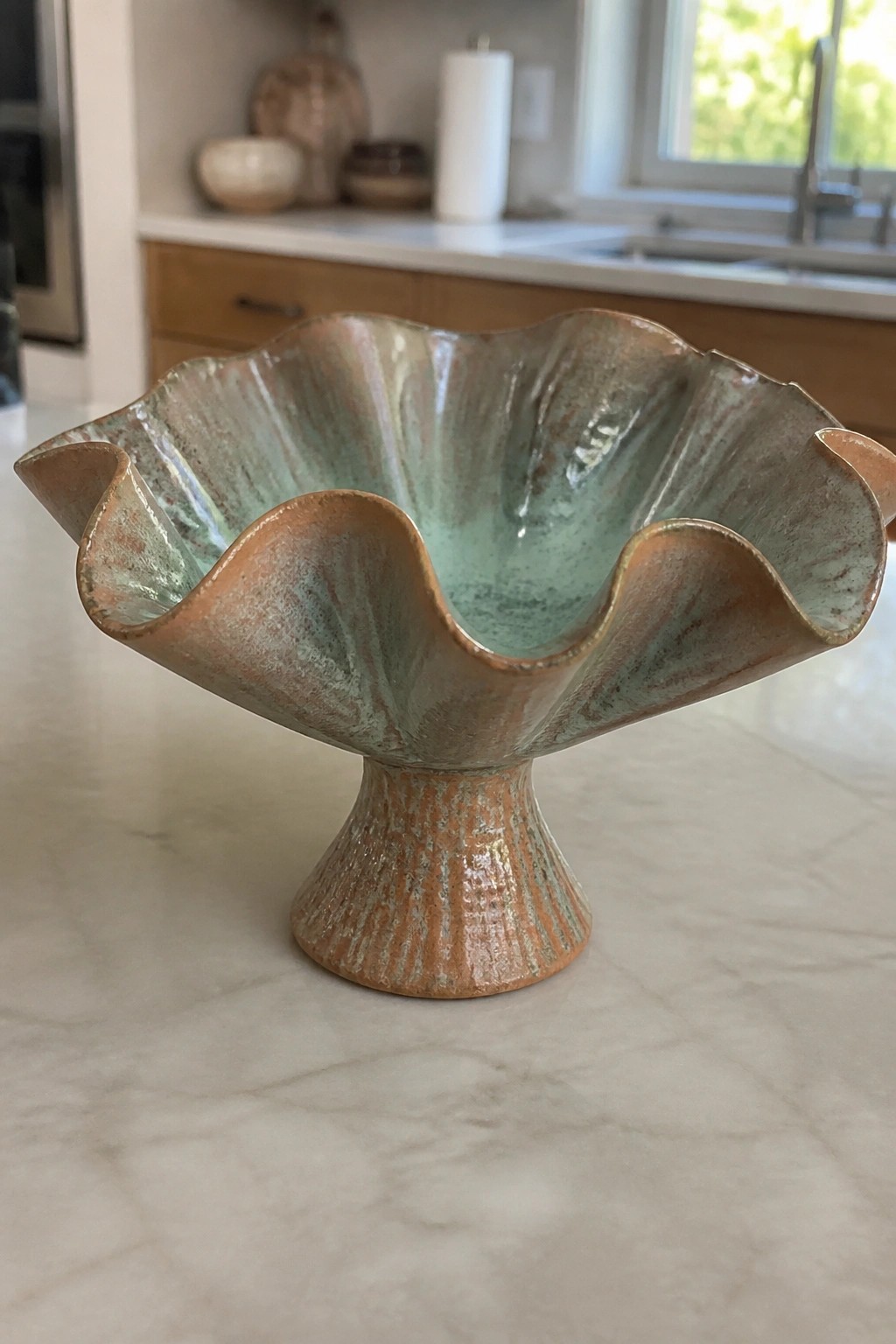
A footed ceramic bowl uses a wide, irregular ruffle rim on a narrow conical base to create an open, sculptural form. The rim folds create natural ridges where glaze pools, producing a shift from copper orange at the edges to turquoise green inside the bowl. This idea centers on letting the rim shape and glaze movement carry the design rather than added surface patterns.
The shape works especially well as a low fruit bowl or catch-all on a kitchen counter. You could scale the same ruffle edge down for a smaller ring dish or stretch the base taller for a more upright vase. The reactive glaze effect highlights the folds without extra carving, so the idea stays straightforward to test in different sizes or color combinations.
Tall Bottle Vase with Cascading Clay Ruffle
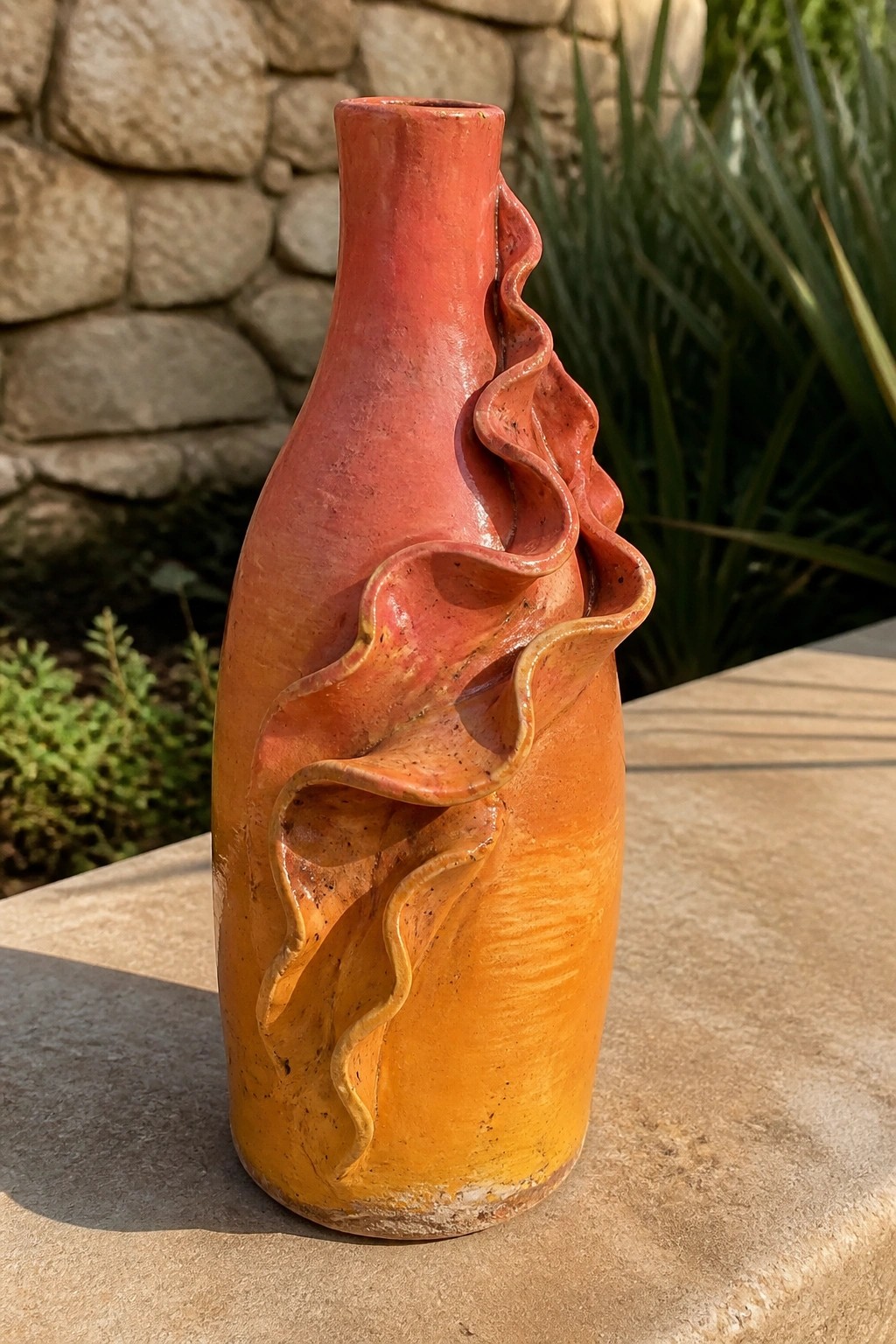
A tall ceramic bottle vase carries a single ruffle made from extra clay slabs that are attached along one side and pinched into soft waves. The ruffle runs from just below the narrow neck down toward the base, creating a flowing edge that stands out against the smooth body. A gradient glaze moves from red at the top through orange to a lighter tone near the bottom, which helps the sculpted detail catch light and shadow.
What makes this idea useful is that the ruffle is concentrated on one side, so the rest of the form stays simple and easy to throw or hand-build. You could shorten the overall height to make a desk vase or repeat the same ruffle on a wider cylinder for a planter. The gradient keeps the focus on the edge, which means the piece works as a single accent on a shelf or table without needing extra decoration. For a variation, try the same ruffle on a low bowl or a set of three smaller bottles.
Carved Leaf Ruffle Vase with Speckled Body
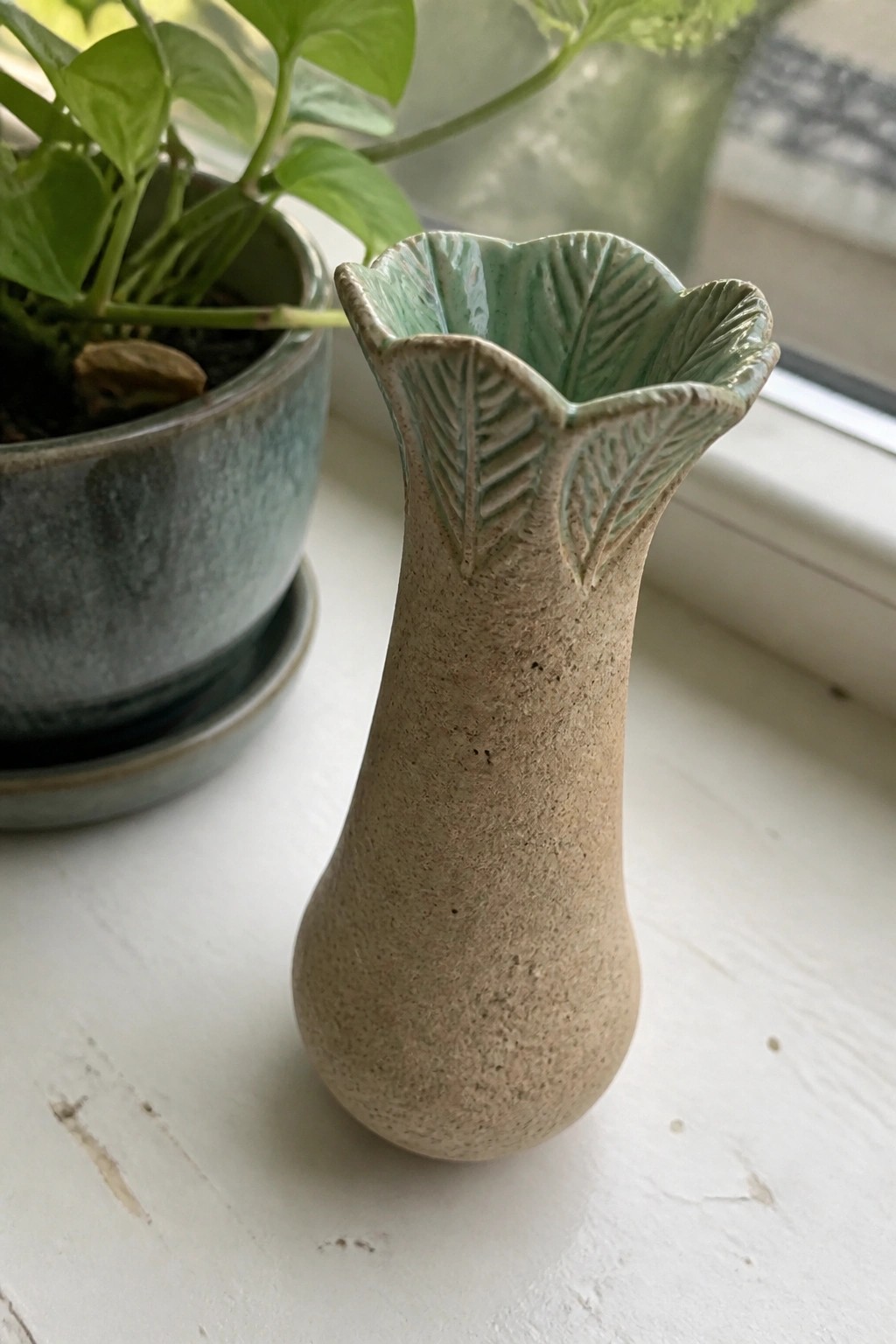
A small ceramic vase with a flared ruffle rim uses carved leaf impressions to create flowing organic edges. The light green glaze is applied only along the top section to emphasize the foliage details while the rest of the tapered body stays in its natural speckled clay finish. This limited glaze approach keeps the focus on the sculpted rim and gives the piece a clean contrast between textured detail and plain surface.
What makes this idea useful is the way the leaf carving adds interest with basic tools and minimal glaze. The narrow neck and wider base make it practical for holding a few stems or a single flower on a desk or windowsill. You could repeat the same rim treatment on a shorter tumbler shape or switch the leaf style to ferns for a different look. The small scale also means it uses little clay and fits easily into plant styling photos.
Ruffle Edged Vase with Streaky Blue Glaze
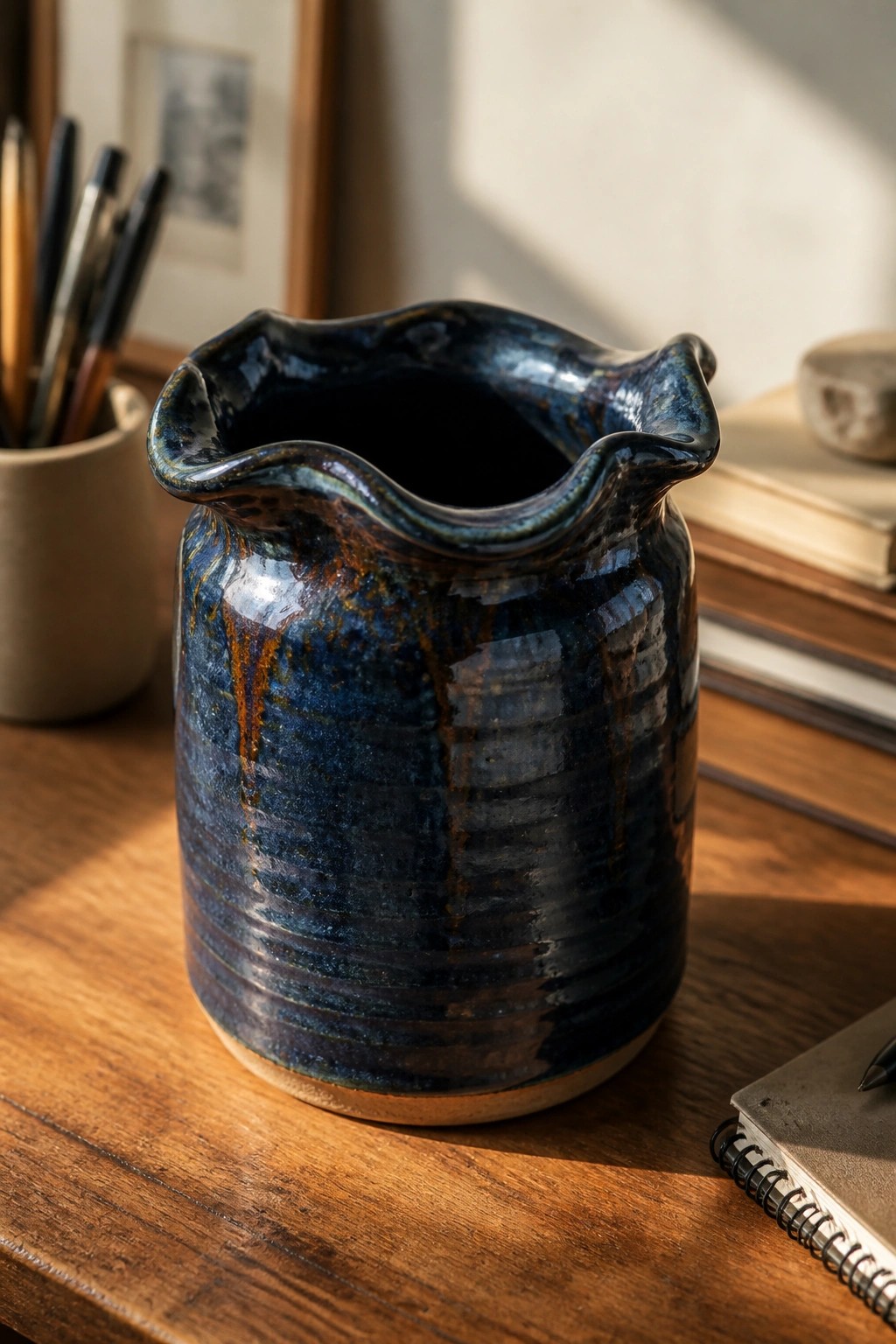
A wheel thrown cylinder forms the base of this vase idea, with the top rim pinched and folded outward to create a wide, flowing ruffle. The dark blue glaze with brown drips is applied unevenly so it pools along the ridges and runs down the sides, making the wavy edge the main focal point. This approach keeps the form simple while letting the sculpted rim do the visual work. It fits the category of a decorative vase meant for display rather than heavy daily use.
What makes this idea useful is how the ruffle can be made tighter or more exaggerated by changing how much the clay is manipulated before drying. A piece like this works especially well as a single stem holder on a desk or shelf where the rim shape adds interest without needing flowers. The small scale makes this easy to adapt into a taller version or a set with matching glazes in different tones. The painted detail helps this stand out on Pinterest because the contrast between the smooth body and irregular edge reads clearly in photos.
Ruffled Bowls with Soft Wavy Edges
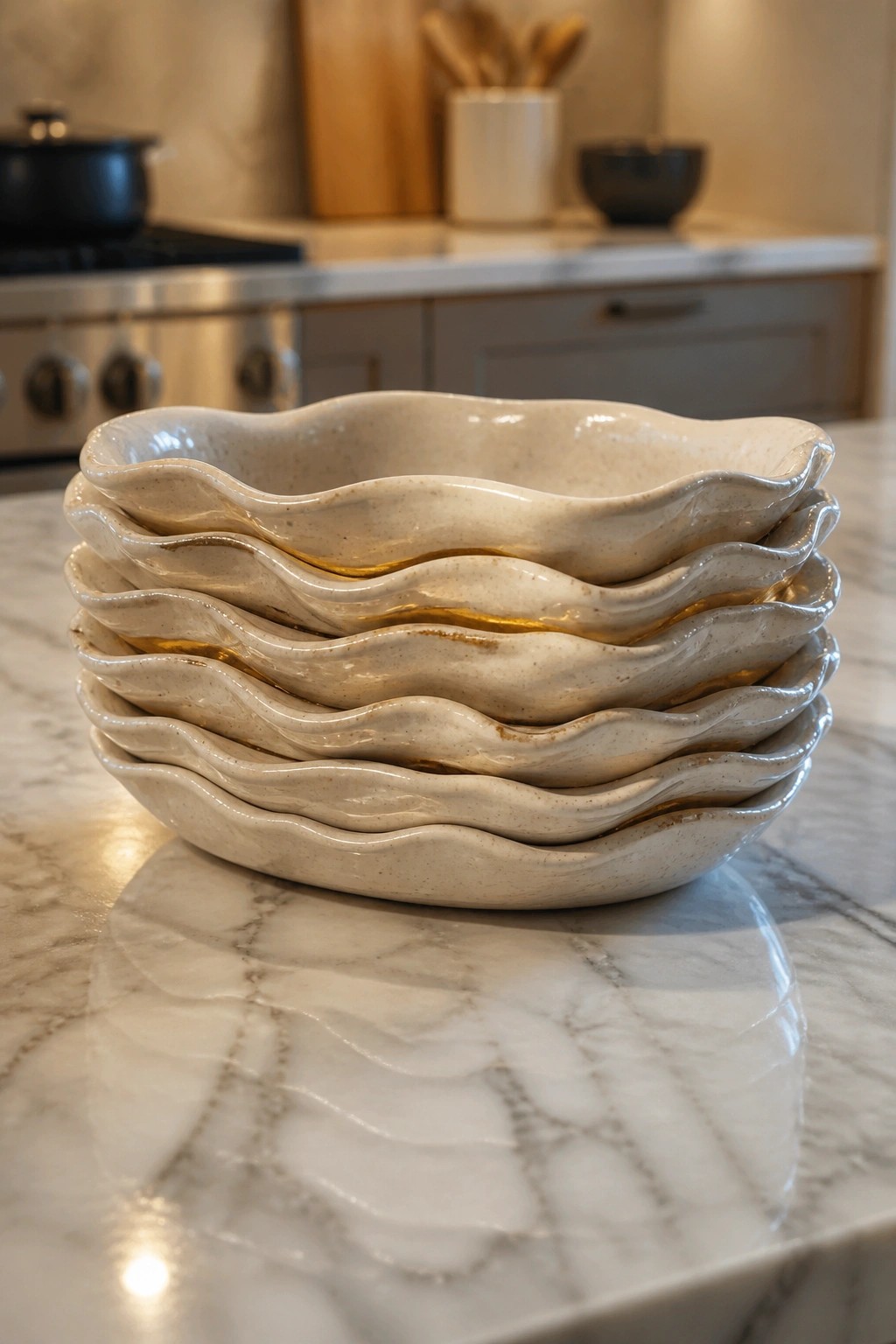
These ceramic bowls use a wide, undulating rim that rises and dips in an irregular pattern around the entire form. The speckled off-white glaze covers the surface evenly while thin gold accents follow the curves on the inner edges. The shape works as a straightforward kitchen bowl that still reads as sculptural because the rim does the main visual work.
What makes this idea useful is how the wavy edge adds variation without extra carving or painting. You could scale the same rim treatment down for smaller prep bowls or up for a large salad server to create a matching set. In a kitchen, the form holds up well for daily use since the curves make each piece easy to grip when stacking or passing around the table. The same edge style could transfer directly to a shallow tray or a low planter if you want to test the shape in another object first.
Organic Ruffle Vase in Varied Blue Glaze
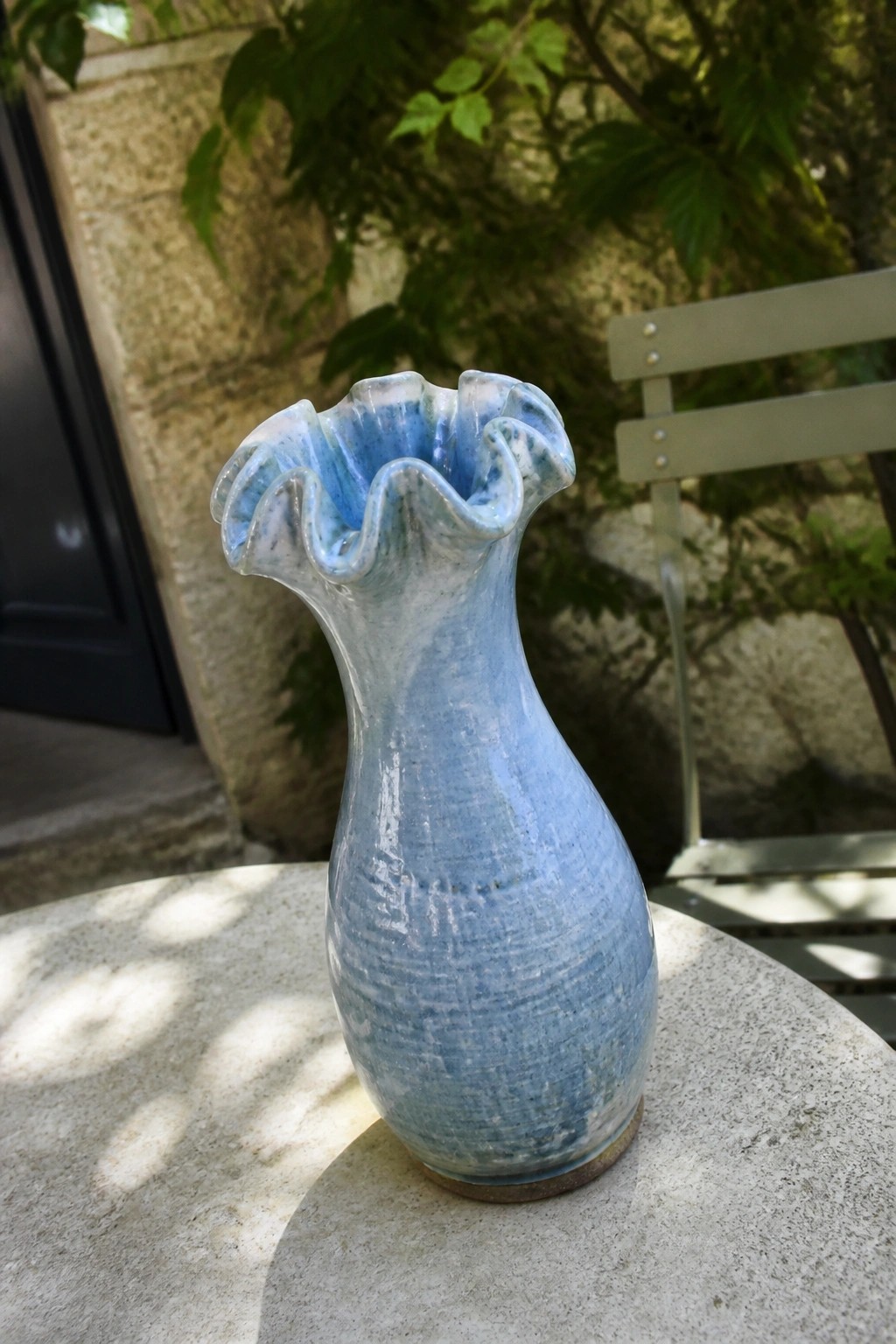
A ruffle vase built with a wide, flowing rim creates an organic edge that softens the overall form and gives the piece a natural lift at the top. The blue glaze layers unevenly across the surface, with lighter areas catching light along the folds and deeper tones settling into the textured body. This approach fits the ruffle vase category well because the sculpted rim becomes the main focal point while the tapered body keeps the shape balanced and easy to place.
What makes this idea useful is how the ruffled edge can be repeated on vases of different heights or paired with a matte finish for a calmer look. The shape does a lot of the work here by turning a basic vessel into something that stands out on a shelf or table without extra decoration. You could adapt the same rim style to a narrower neck or try it on a low, wide planter for a different scale. For a gift, something like this works because the color and edge give it presence even in a simple setting.
Ruffled Collar Cat Vase
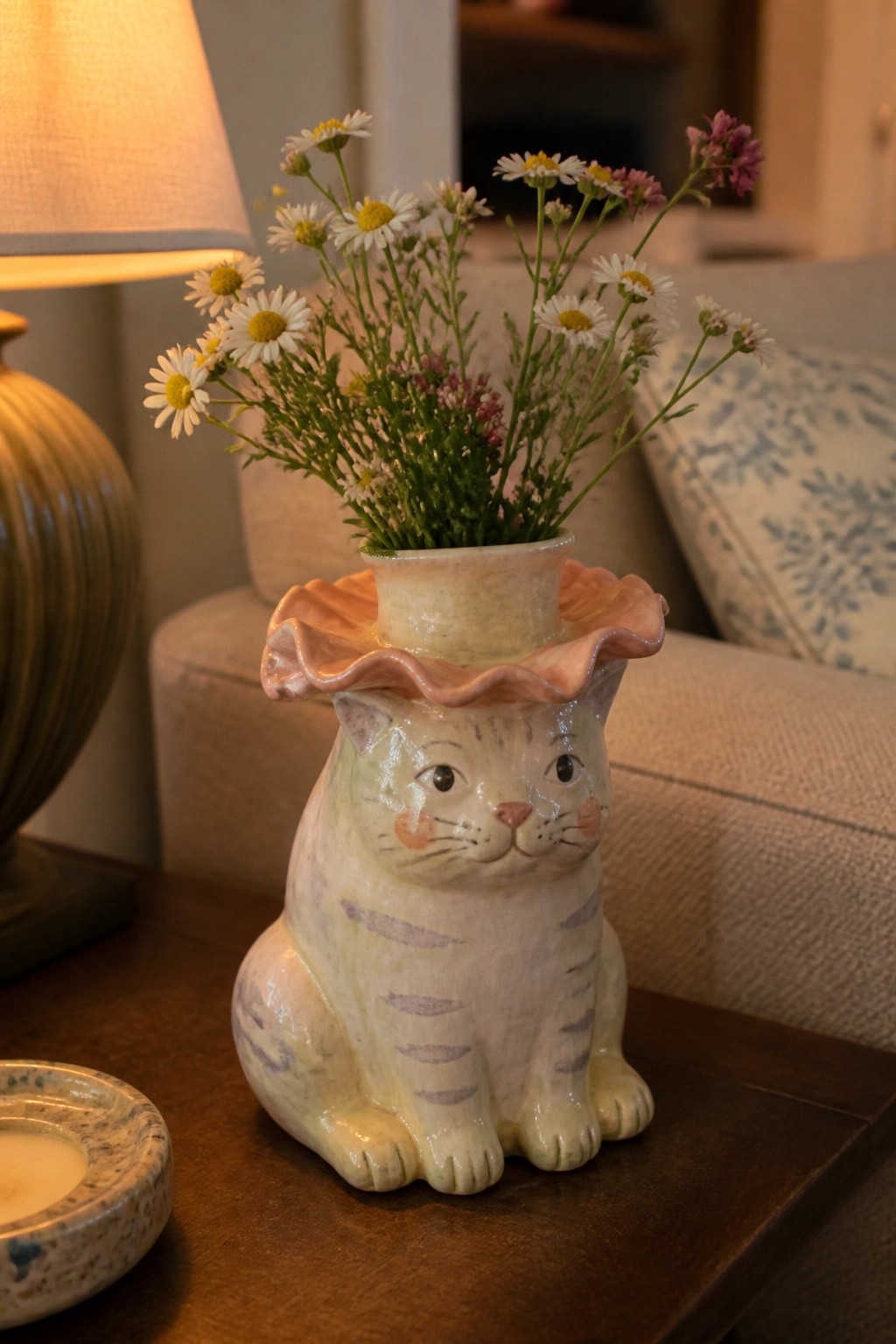
A seated cat figurine serves as the base for this vase, with the opening rising from the shoulders and finished with a wide, wavy ruffle that forms a soft collar. The ruffle edge is pinched and folded to create an irregular, organic rim that frames whatever is placed inside. Handbuilt from clay and finished with simple painted stripes and face details, the piece turns a standard figurine into a functional holder without adding extra parts.
What makes this idea useful is the way the ruffle does double duty as both decoration and practical rim, keeping stems from slipping while adding visual interest. The small overall size works well on a side table or windowsill for single stems or small bunches. You could adapt the same ruffle treatment to other animal forms or drop the cat entirely and apply the collar to a plain cylinder shape. For gifts, the painted markings can be changed to match a pet or left plain for a quicker build.
Terracotta Vases with Pressed Leaf Ruffles
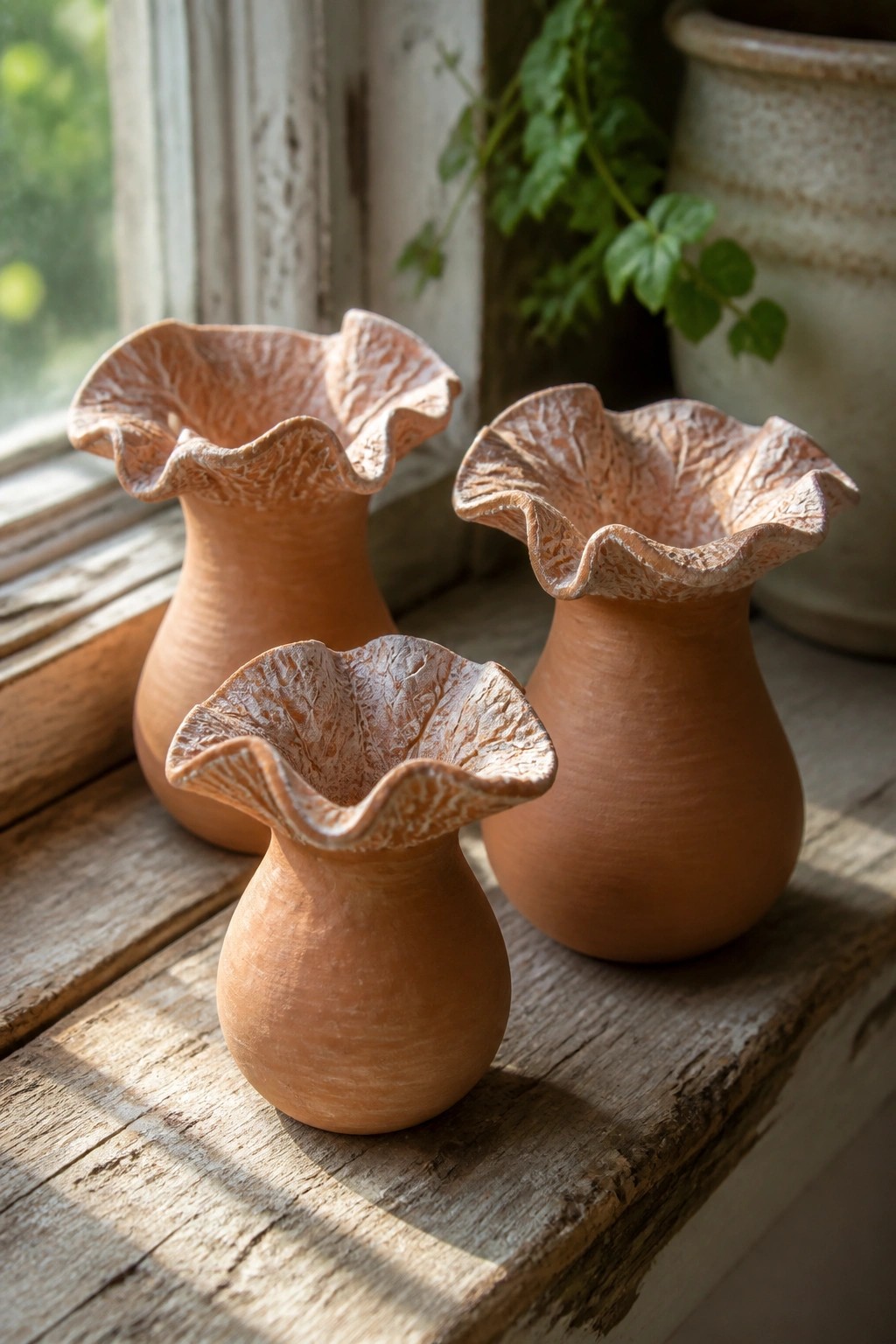
These are small handmade clay vases with rounded bodies that narrow into wide, irregular ruffled openings. The rims carry a pressed leaf texture that creates flowing organic edges while the rest of the form stays smooth and simple. The matte terracotta finish keeps the focus on the sculpted rim detail and gives the vases an earthy, natural look.
The small scale makes these easy to place on a windowsill or narrow shelf without crowding the space. You can adapt the same rim technique to different heights or swap the leaf imprint for other natural textures like ferns or fabric patterns. This style works well for holding dried stems or a single stem from the garden, and the basic shape translates easily to matching bowls or small planters.
Organic Ruffle Vase with Wide Folded Rim
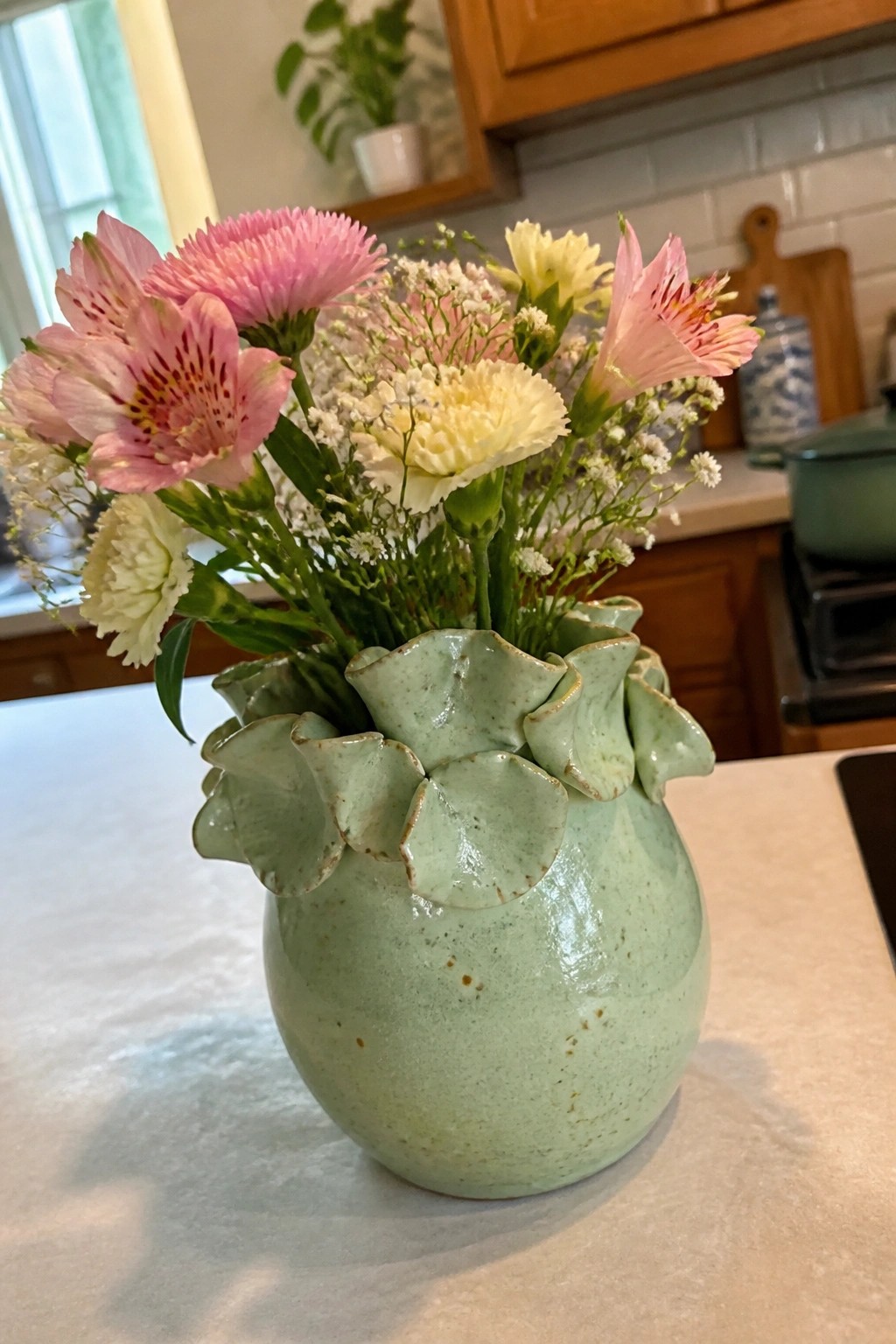
A ruffle vase formed by pinching and folding the clay outward at the rim produces an uneven, layered edge that stands out against a simple rounded body. The soft green glaze with fine brown speckles covers the entire piece and gives the surface a lightly textured appearance without competing with the rim detail. This keeps the design focused on the handmade edge while still functioning as a standard flower holder.
What makes this idea useful is how the wide ruffles create visual interest on their own so the rest of the form can stay plain. The shape works especially well on a countertop or table where flowers sit at eye level and the rim becomes part of the arrangement. You could repeat the same folded rim on a taller cylinder or shorten it into a low bowl for different displays. The speckled glaze also pairs easily with other kitchen pottery without needing exact color matching.
Tall Vase with Wide Organic Ruffle Rim
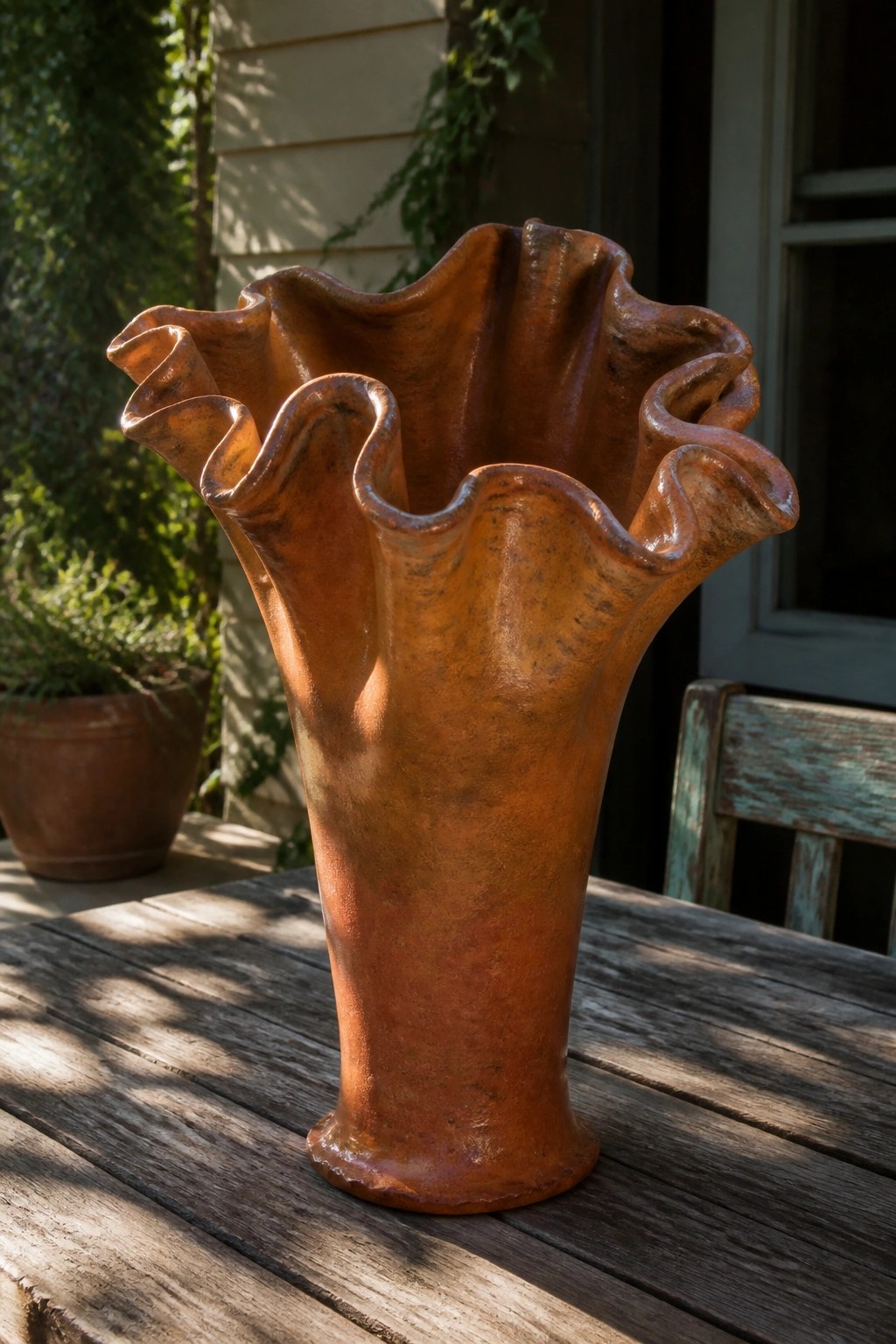
This ceramic vase features a tall tapered body that opens into a broad, undulating rim shaped into soft folds and waves. The warm terracotta glaze emphasizes the uneven handmade surface and lets the ruffle become the main focal point. The design fits the category of a statement vase where the rim shape carries the visual interest instead of added patterns or multiple colors.
The shape works especially well for holding a few long branches or dried stems on a console or dining table. You could scale the same ruffle down for a shorter version used as a pencil holder or small plant pot. The uneven edge stands out on its own, so the idea adapts easily if you change the glaze color or tighten some of the folds.
Small Ruffle Vase with Organic Rim Waves
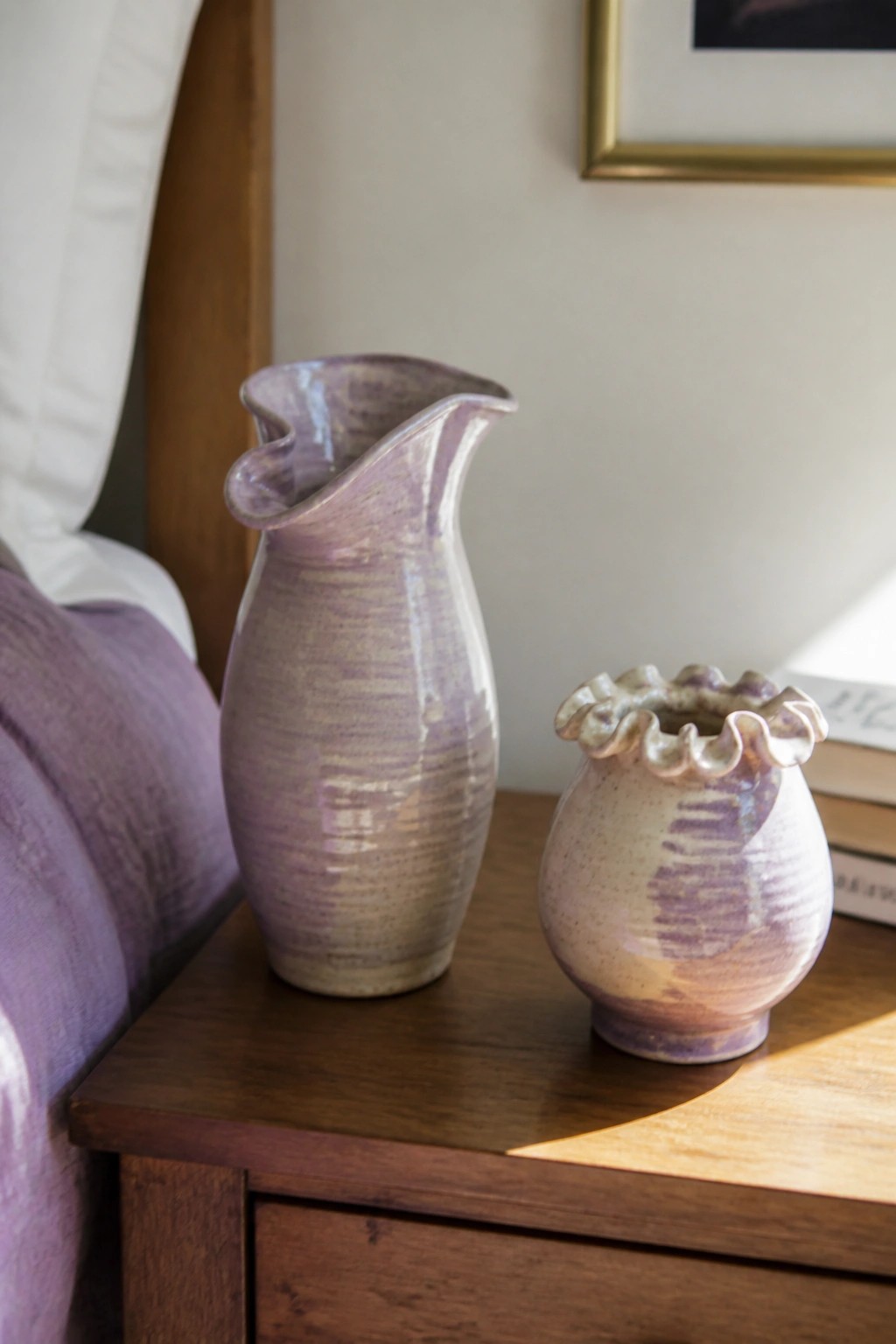
A compact ceramic vase with a rounded body and a wide hand-formed ruffle rim gives the piece its main visual interest. The rim is shaped into loose, irregular folds that create a flowing edge around the opening. The streaky purple and beige glaze settles into the ridges and valleys, making the sculpted detail stand out clearly.
What makes this idea useful is the small scale, which lets it sit on a bedside table or shelf without taking much space. The ruffle technique can be repeated on different base shapes or paired with solid glazes for contrast. This form works well as a bud vase or small holder and translates easily to other colors or slightly taller proportions.
Stacked Ruffle Vase with Cascading Organic Layers
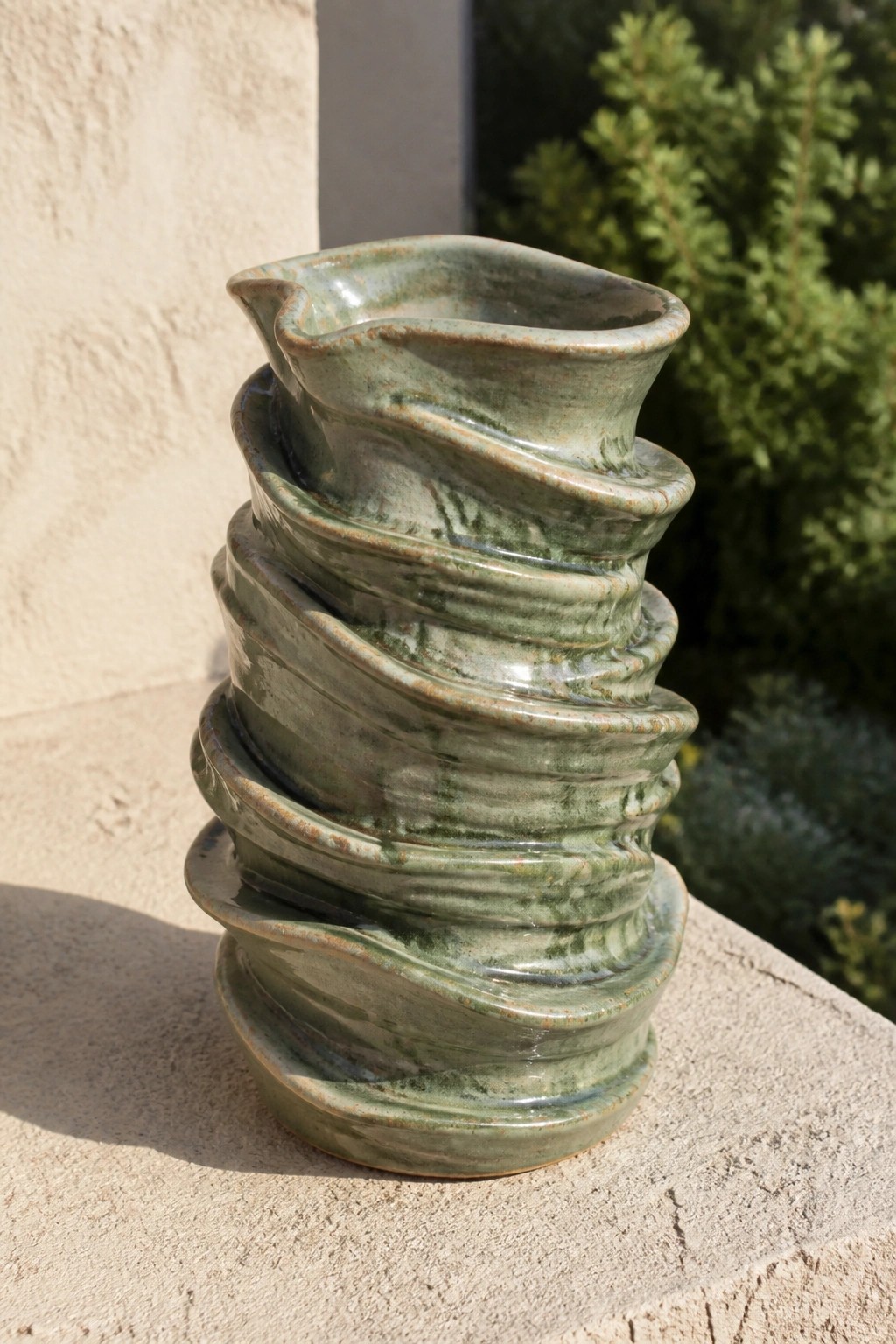
This vase idea uses multiple ruffled sections stacked vertically to form one tall vessel. Each layer has irregular flowing edges that overlap and shift, creating a continuous organic silhouette. The green glaze pools in the crevices and thins along the rims, which helps define the handmade texture without extra decoration. The overall shape stays narrow at the top and widens slightly toward the base, keeping the focus on the edge movement.
What makes this idea useful is the way the stacked construction lets you control height and rhythm without carving or sculpting a single solid form. You can adapt it by using fewer layers for a shorter piece or by changing the glaze to a matte white or speckled brown for different rooms. The shape works well on a mantel or entry table where the profile can be seen from the side. For Pinterest, the strong vertical line and repeated edge pattern photograph clearly and read as intentional rather than random.
Mini Ruffle Vase with Wavy Rim
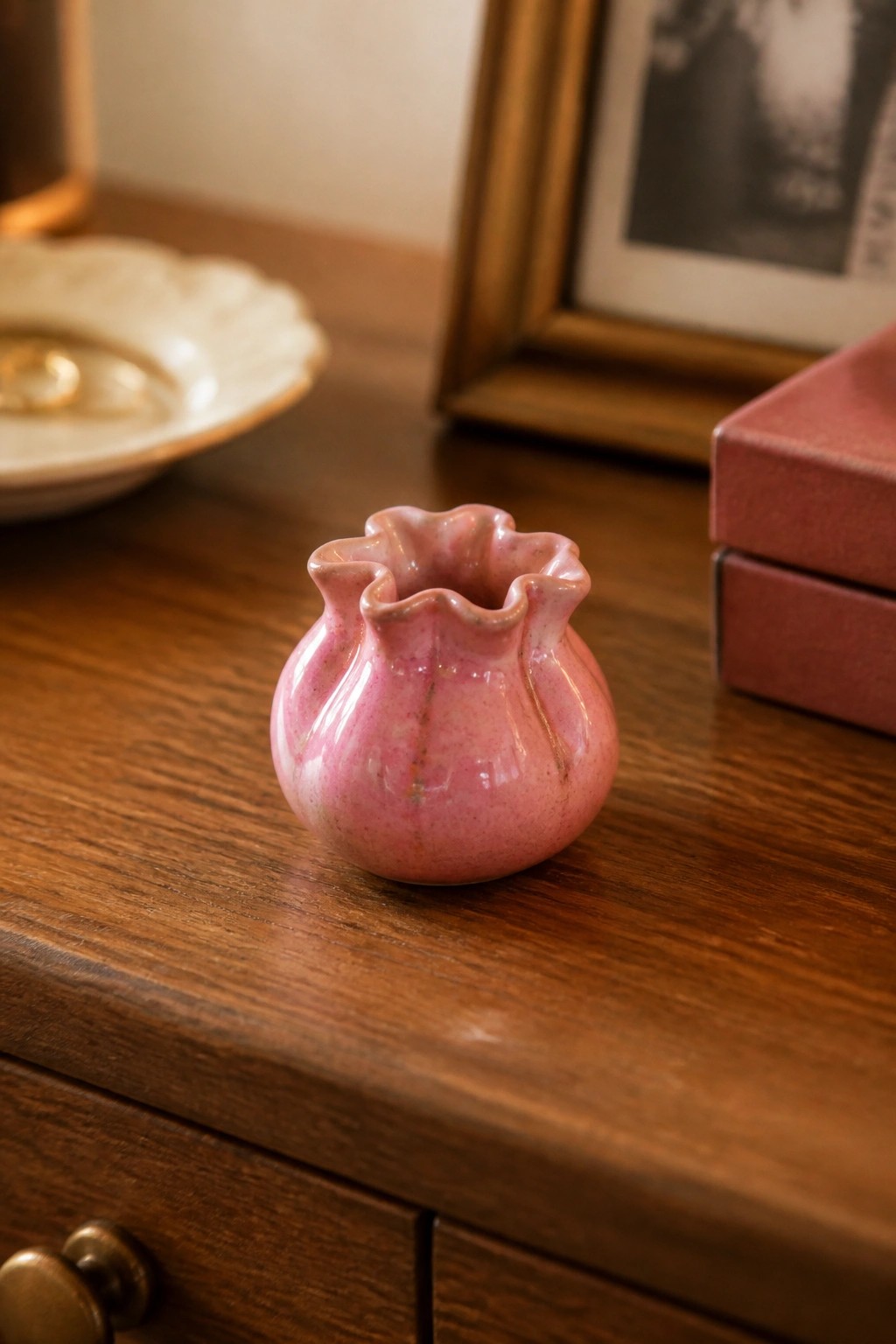
A small handmade ceramic vase shaped with an uneven ruffled rim gives the piece an organic outline that draws attention to the top edge. The glossy pink glaze with light speckling emphasizes the folds and curves created by pinching and shaping the clay while it is soft. This style works as a simple decor vase where the sculpted rim itself becomes the main feature instead of surface patterns or added handles.
What makes this idea useful is the compact size that suits a desk, shelf, or small table without taking up much space. You can repeat the same ruffle technique on different glaze colors or adjust the rim width to change the overall look. The shape also adapts easily to a tiny planter or a shallow holder if you widen the base slightly during forming.
Ruffled Ceramic Vase with Speckled Yellow Glaze
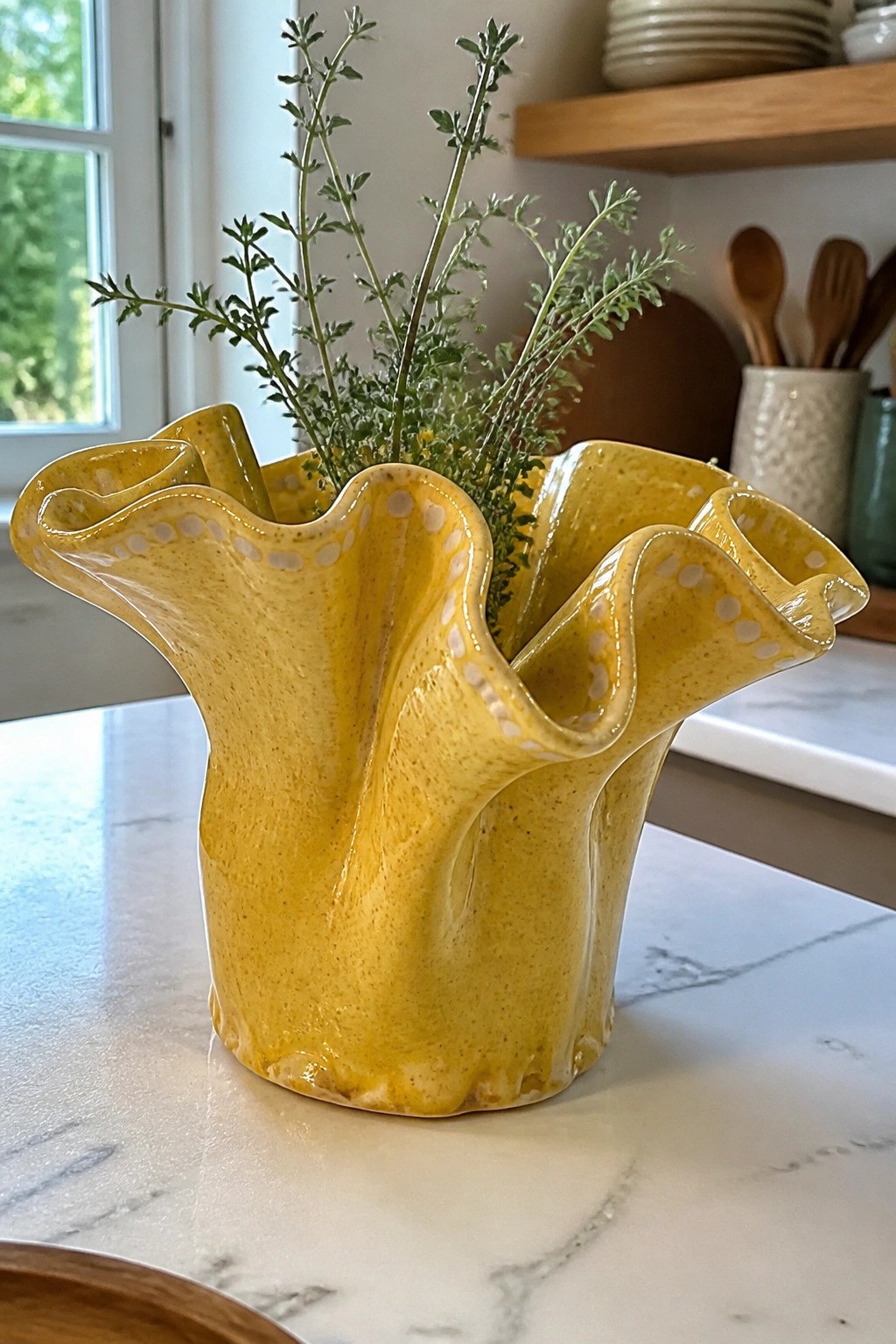
A ceramic ruffle vase takes shape when the rim is pinched and folded into wide, uneven waves that rise and dip around the opening. The yellow speckled glaze covers the entire form while white dots are added along the outer edges of each fold to emphasize the sculpted movement. This design fits the organic edge category by keeping the top loose and asymmetrical rather than trimming it into a clean circle.
What makes this idea useful is how the deep ruffles create natural pockets that can grip stems or small herb bunches without extra mechanics. You could scale the same rim treatment down for a smaller bud vase or stretch it wider for a low centerpiece bowl. The speckled glaze and dot detail also translate easily to other colors if you want to match existing kitchenware or change the mood for different seasons.
Frequently Asked Questions
What materials work best for creating ruffle vases with flowing organic edges?
Clay or air dry modeling compounds are ideal because they allow easy manipulation of soft edges before firing or drying. Start with a basic cylinder shape and use your fingers or a rib tool to pinch and fold the rim outward in irregular waves. For glass versions, consider slumped bottle techniques where heat creates natural droops. Always test small batches first to see how the material holds its shape.
How can I style these vases in different rooms without them looking out of place?
Place them on mantels or side tables in living areas paired with neutral tones to let the edges stand out. In bathrooms, use smaller versions to hold cotton balls or dried stems for a spa like feel. For dining tables, group three vases of varying heights with simple greenery to create movement. The key is balancing the organic rims with clean surroundings so the flowing details become the focal point.
Are these ruffle vases safe to use with fresh flowers and water?
Yes, but seal the interior with a waterproof glaze or liner if the material is porous like unglazed ceramic. This prevents leaks and extends the life of the piece. For ideas involving delicate edges, choose stable bases to avoid tipping when filled. Empty and dry them after use to maintain the integrity of the organic folds over time.
What common challenges arise when trying to replicate the 24 ideas at home?
Achieving consistent yet irregular edges can be tricky because overworking the material leads to collapse. Work in stages and let sections firm up before adjusting others. Color bleeding or uneven firing often occurs with bold glazes, so apply them in thin layers. Start with one or two simpler designs from the list to build confidence before attempting more complex flowing patterns.
How do I care for and clean ruffle vases to preserve their unique edges?
Dust regularly with a soft cloth to avoid buildup in the folds. For deeper cleaning, use mild soap and water with a soft brush, steering clear of abrasive scrubbers that could chip the rims. Store them away from direct sunlight if they are painted to prevent fading. Handle carefully by the body rather than the edges during moving to keep the organic shapes intact.

Pottery Path is my cozy corner of the internet where I share clay ideas, pottery inspiration, and simple projects you can recreate at home. I love exploring everything from air dry clay to handbuilt pottery to cute minis that brighten your day. My goal is to make clay crafting feel easy, fun, and welcoming for anyone who wants to try it.
You will find beginner friendly tutorials, creative pottery painting ideas, and lots of warm inspiration for slow and happy crafting. If you enjoy hands on creativity, this space will feel like home.