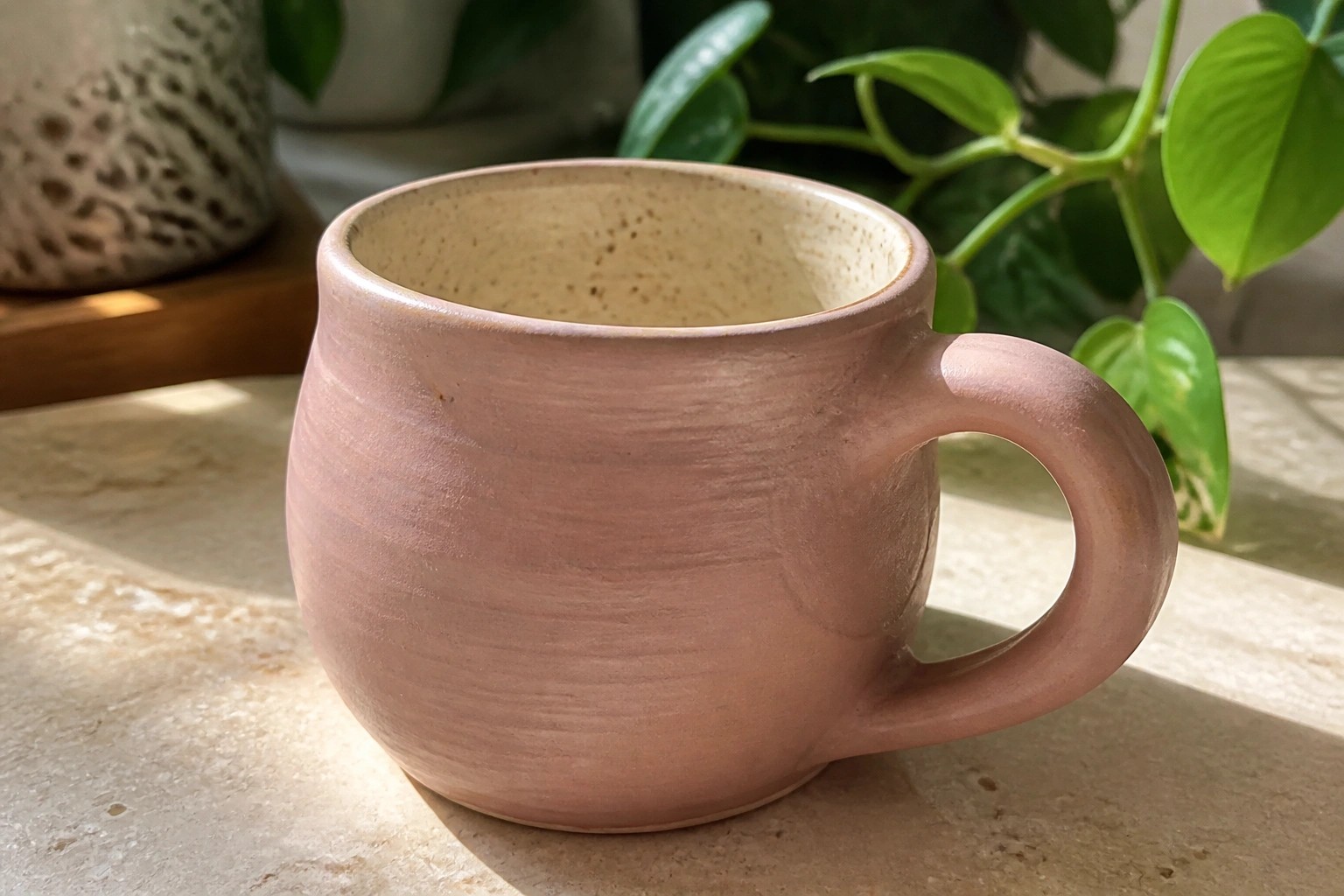
I’ve been making pottery on and off for a while now and I usually keep a few pieces around my own house.
They add a bit of texture to shelves and tables without needing much else.
Over time I collected some ideas that worked out well in real spaces.
I narrowed it down to 22 options that feel straightforward and easy to try.
Most of them use basic shapes and colors that fit with what I already have.
Blush Glazed Ceramic Mug
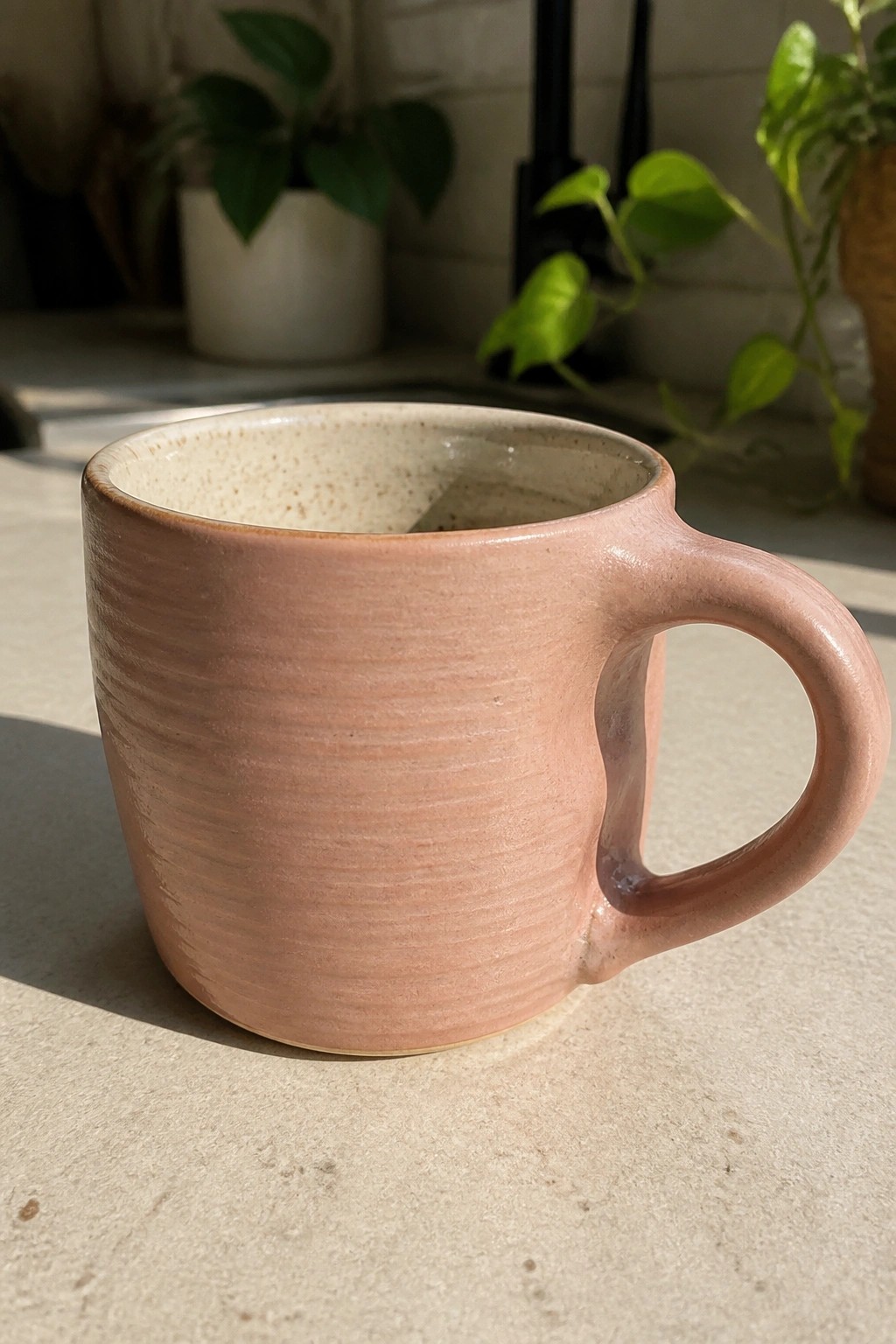
A wheel-thrown ceramic mug with a matte pink exterior glaze and speckled cream interior creates a simple functional piece for daily use. The horizontal throwing ridges add subtle texture while the rounded handle stays easy to grip. This project falls into the everyday mug category and keeps the form basic so the glaze color can do the visual work.
What makes this idea useful is how the soft color works in most kitchens without clashing with other dishes. You can adapt the same shape by changing the glaze to a different matte tone or trimming the foot a bit wider for stability. In a kitchen this size holds a standard cup of coffee or tea and stacks reasonably well. The form also translates easily to a small soup bowl or a planter by leaving the handle off.
Organic Glaze Ceramic Planter
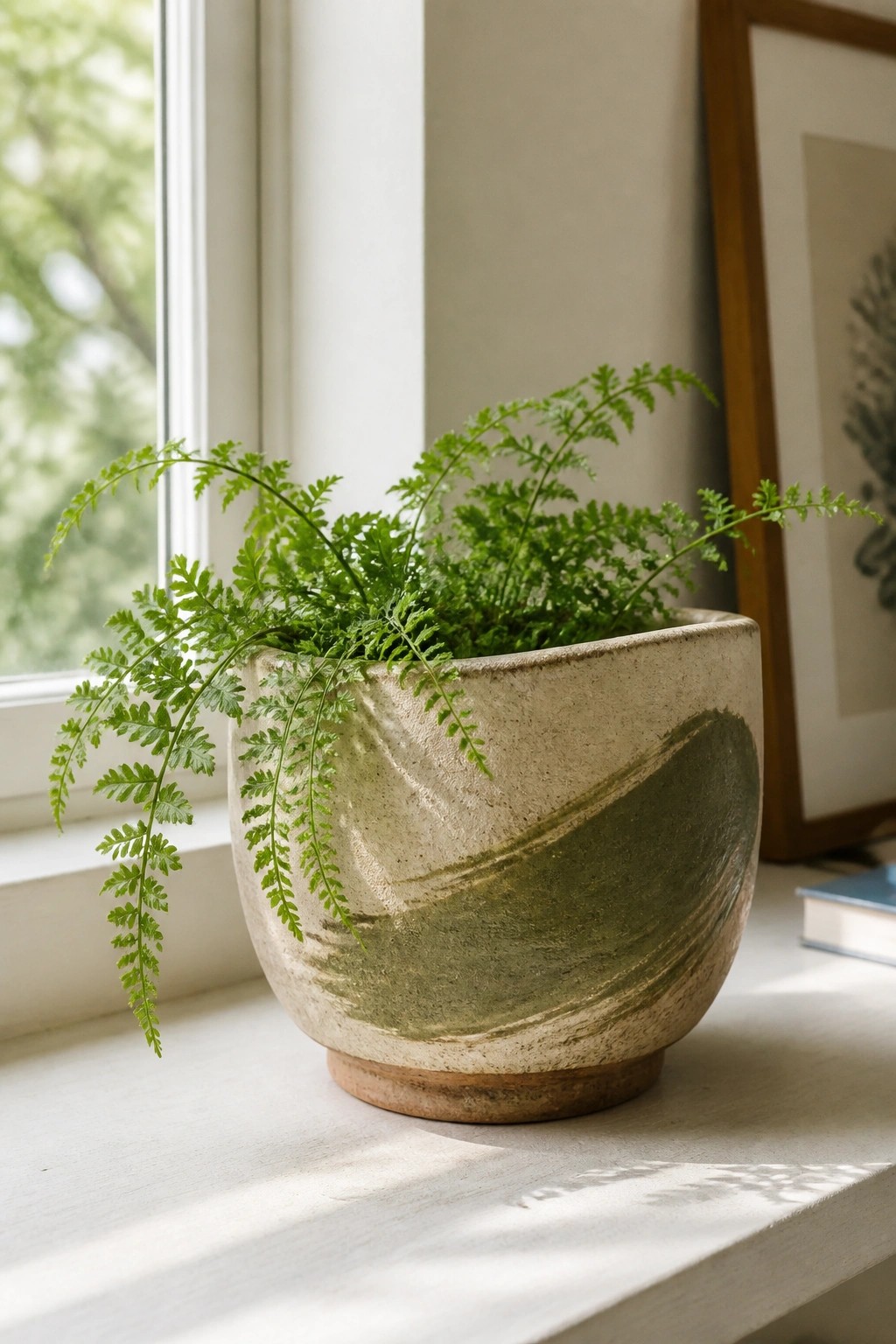
A wide, rounded ceramic planter gives ferns and similar plants room to spread while keeping the pot itself low and stable on a surface. The light clay body receives a flowing green glaze applied in broad strokes, leaving parts of the natural surface exposed for contrast. This combination creates a simple, functional piece that suits everyday plant display without extra decoration.
What makes this idea useful is the way the shape supports trailing or bushy plants on windowsills or shelves where light is good. You could adapt the same glaze strokes on a smaller version for a desk or try the color on a taller cylinder for a different plant type. The muted palette lets the greenery stand out, and the form is easy to adjust if you want a deeper or narrower profile for your own space.
Sculptural Vase with Vertical Folds and Wavy Rim
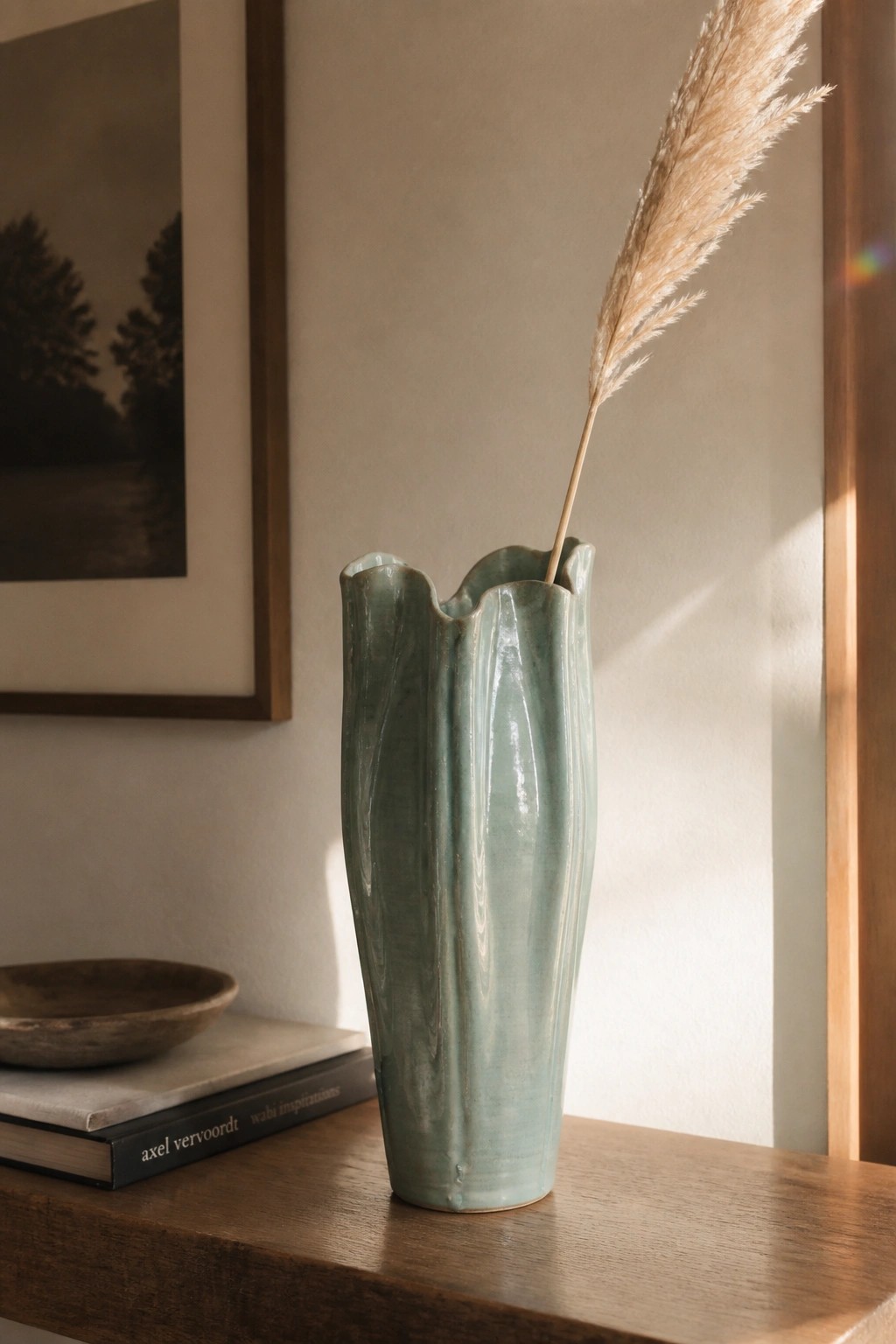
A tall ceramic vase built with vertical ridges and an uneven scalloped rim gives you a simple way to add height and texture to a surface. The soft green glaze sits unevenly over the folds so the clay shows through in places and creates subtle variation in tone. This approach fits the sculptural vase category and works because the ridges catch light and make the form feel more dimensional than a smooth cylinder.
The shape does a lot of the work here since the folds let the piece stand out even when it holds just one stem. You could scale the same ridge pattern down for bud vases or repeat it on a wider bowl form for a matching set. In a living room or on a console this kind of vase handles dried grasses or single branches without needing extra filler and the muted glaze color stays easy to work with across different rooms.
Citrus Painted Ceramic Bowl

A hand-painted citrus bowl uses overlapping slices of oranges and lemons in warm orange and yellow tones across a speckled off-white surface. The design works because the fruit motifs sit flat against the clay without raised details, letting the color contrast do the visual work. This fits the category of kitchenware where simple painted patterns turn an everyday bowl into a more distinctive piece.
What makes this idea useful is how the same citrus slices can be scaled down for smaller bowls, plates, or even mugs without changing the color palette. In a kitchen this shape holds fruit or sides while the painted details keep it from looking plain next to wooden counters. You could rework the motif by spacing the slices farther apart on a larger platter or limiting them to just two colors for a faster version. The clear fruit pattern also saves well on Pinterest because it reads quickly in thumbnails and pairs with other natural kitchen textures.
Marbled Oval Catch-All Tray

A shallow oval tray formed from clay and finished with a pink-and-white marbled glaze makes a simple catch-all dish for keys, rings, and small everyday items. The oval shape keeps contents contained while staying compact enough for a dresser or entry table. The marbled effect comes from mixing colored clays or slips so the pattern stays visible after firing rather than sitting on top like paint. This type of project falls into the category of small functional trays that handle loose objects without needing extra hardware or compartments.
What makes this idea useful is the low-profile oval form that slides easily into tight spots like a nightstand or desk corner. You can rework the same shape into a longer rectangle for a bathroom counter or shrink it slightly for a ring-only dish. Changing the marbled colors to match existing room tones keeps the piece from feeling out of place while still showing the handmade surface. The tray also works well as a quick gift because the basic form is straightforward to repeat and the pattern can be adjusted with each batch of clay.
Crescent Moon Tea Light Holder

A crescent moon tea light holder is a small ceramic piece sculpted into a curved C-shape that holds a standard tea light inside the lower curve. The deep blue glaze with fine gold specks creates contrast against the flame while the rounded base keeps the form stable on a tabletop. This type of project falls into the candle piece category and serves mainly as a compact decor object rather than a large functional item.
What makes this idea useful is the way the open crescent shape directs light outward without enclosing the flame completely. You could rework the same silhouette in a matte white or earthy tone to suit different color schemes or make a slightly wider version to hold two tea lights. The small scale makes it simple to fit on a nightstand, shelf, or desk where bigger candle holders would crowd the space. For a gift, this form is quick to produce in multiples and easy to vary with different glaze combinations.
Leaf-Shaped Ceramic Ring Dish
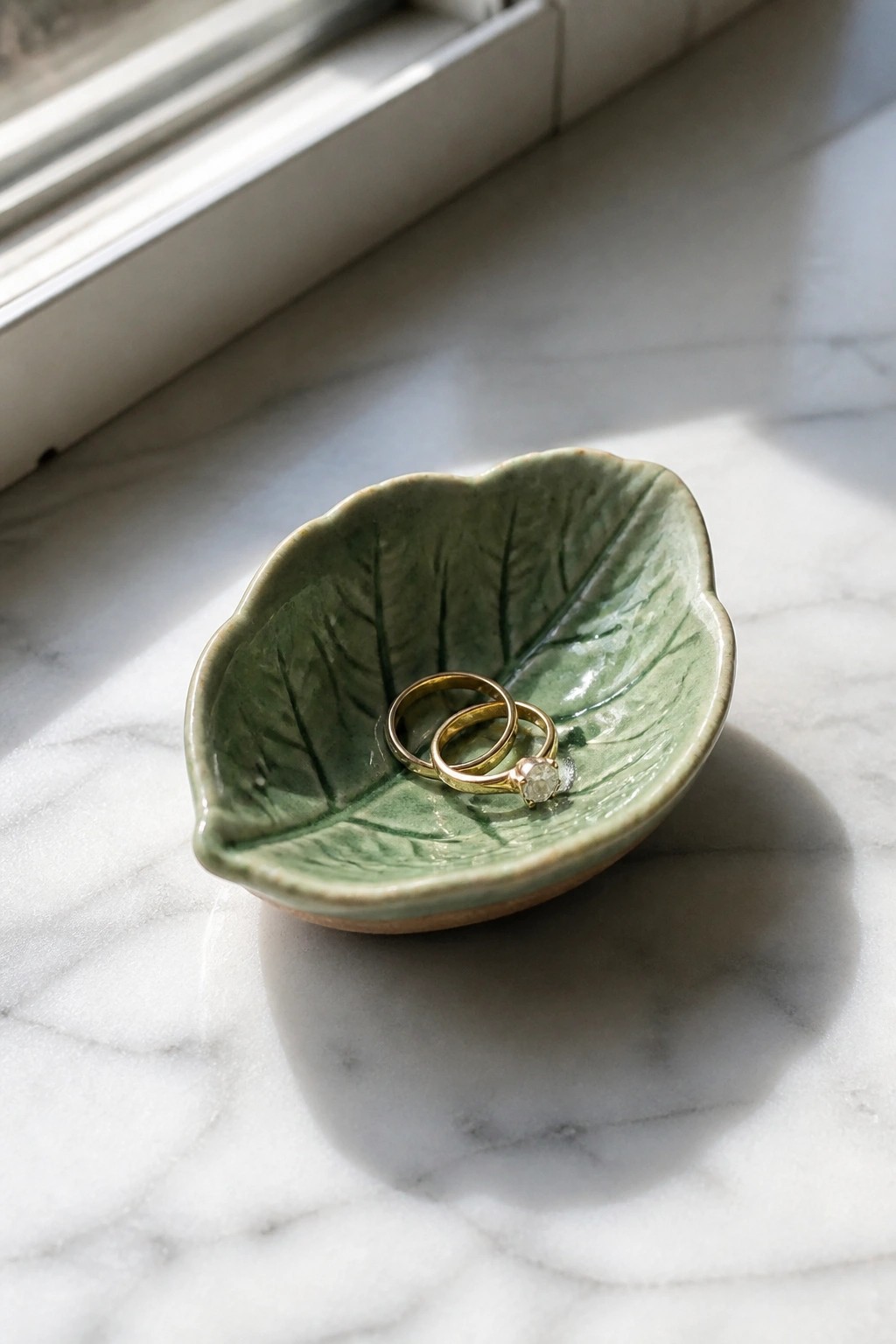
A leaf-shaped ring dish makes a compact ceramics project that turns a basic slab or molded form into a small tray with built-in detail. The veins pressed or carved into the surface and the green glaze highlight the leaf structure without needing extra colorwork. This type of piece belongs in the ring dish or trinket holder category and stays small enough to sit on a bedside table or dresser.
What makes this idea useful is how the leaf outline already gives the dish its shape and function, so you can focus on the rim and foot instead of building walls. You could simplify the veins for a faster version or scale the same form up slightly for earrings or keys. For a gift, something like this works because it needs only a small amount of clay and still looks finished once glazed. The same leaf press could be adapted into a soap dish or small spoon rest by changing the depth and adding a drainage hole.
Pressed Fern Wall Tile
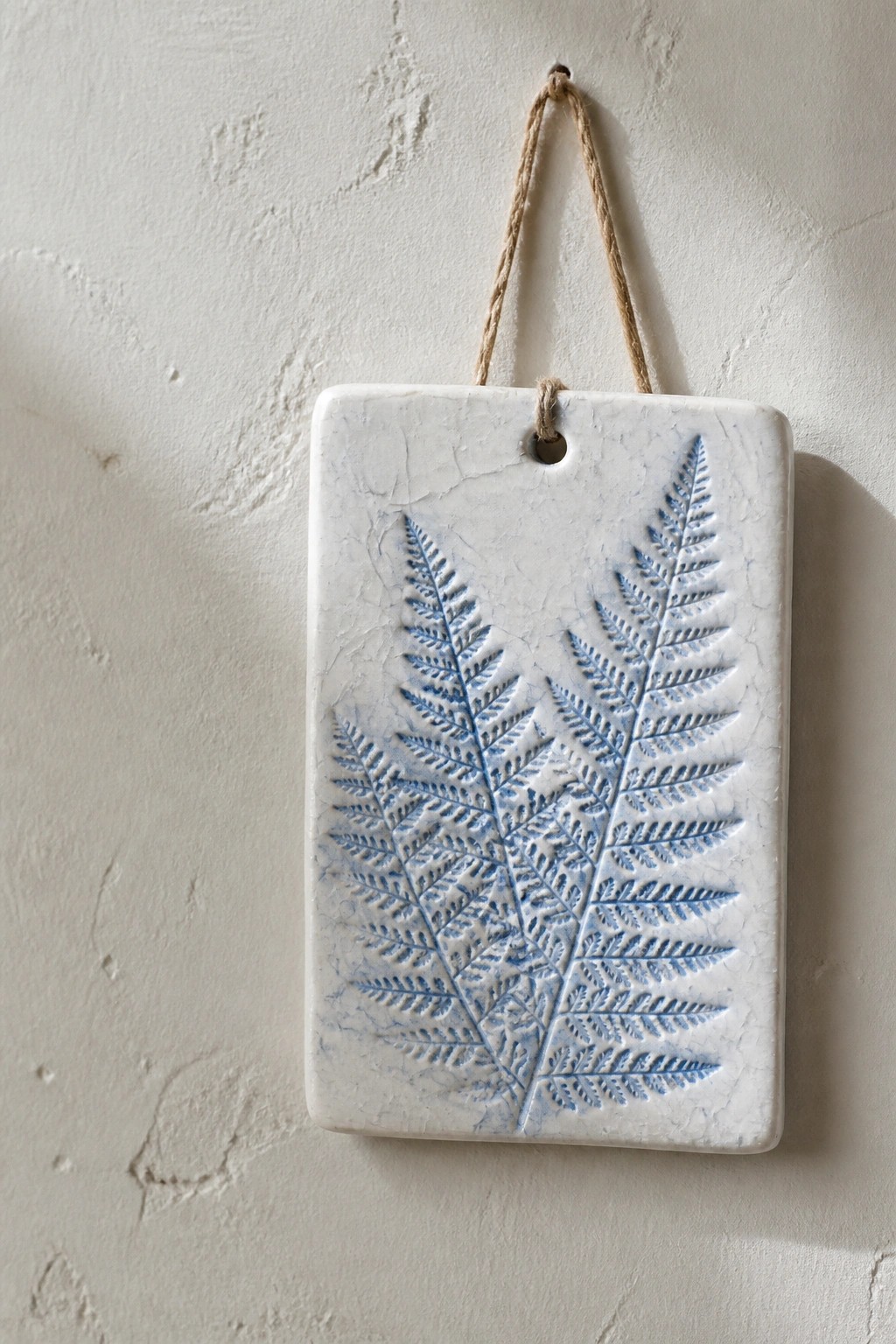
A flat rectangular clay slab becomes a hanging wall tile when you press real fern fronds into the surface before firing. The impressions are then colored with a blue wash that sits in the recessed areas while the rest of the tile gets a white crackle glaze. A single hole near the top edge lets you thread twine or wire for easy hanging, turning the tile into a lightweight decor object that works on any wall.
What makes this idea useful is how little space and material it needs compared with a full vessel. You can repeat the same leaf pressing on smaller squares to make a set of tiles or switch to other flat foliage for a different look. The finished piece hangs nicely above a desk, in a bathroom, or along a narrow hallway where a three-dimensional plant detail adds interest without taking up shelf room. Scaling the slab down also lets you turn the same technique into fridge magnets or drawer pulls.
Polka Dot Ceramic Spoon Rest
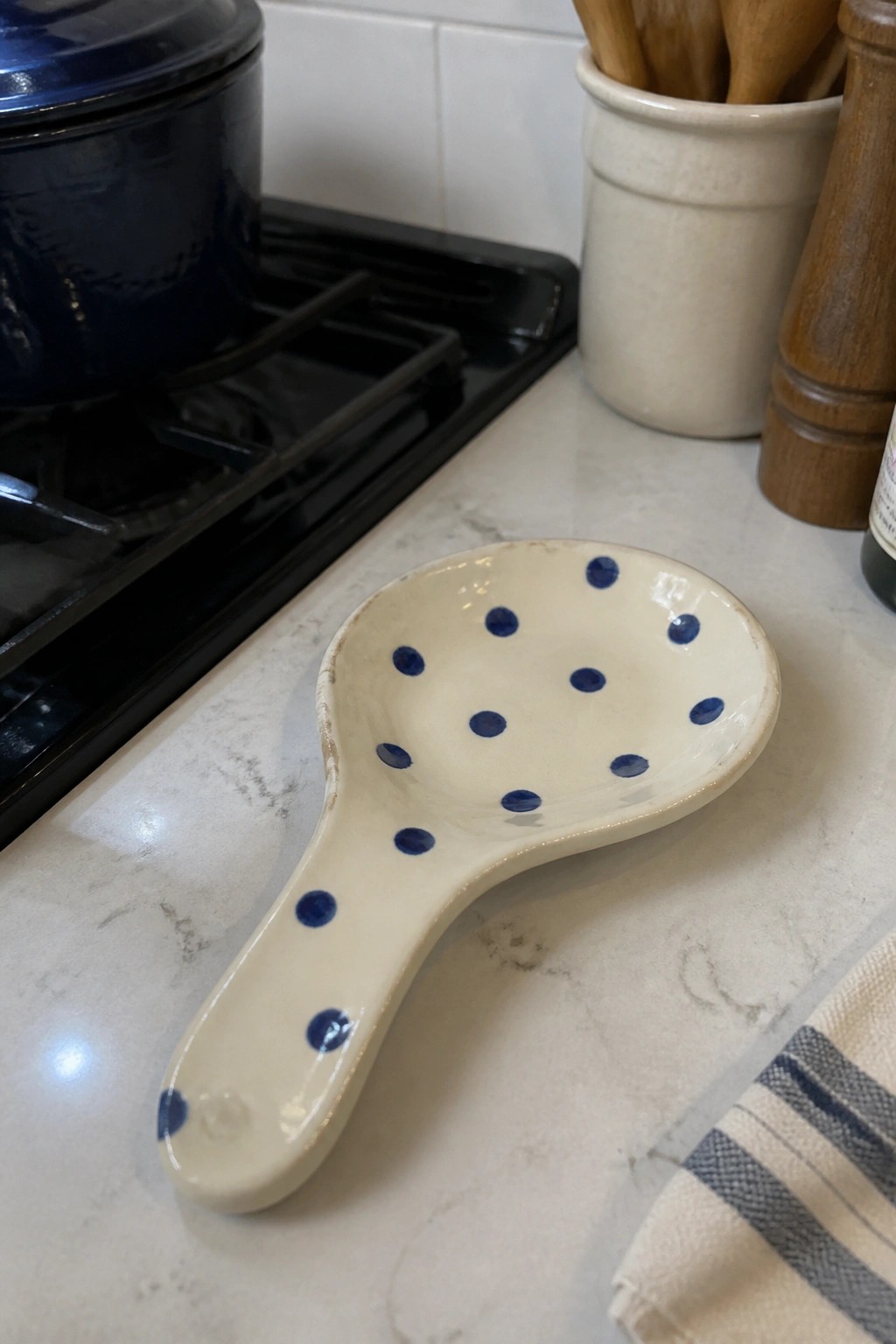
A spoon rest made from glazed ceramic gives you a stable spot to set cooking spoons without leaving marks on the counter. The shallow oval bowl and extended handle create a simple form that stays balanced on a flat surface. Blue dots spaced across the cream glaze add a repeating pattern that keeps the piece from looking plain while staying easy to clean.
What makes this idea useful is the handle lets you slide it right next to the burner or hang it from a small hook. You could swap the dots for stripes or try the same shape in a smaller size for holding tea bags. In a kitchen this kind of piece handles daily use without taking up much space and the pattern works with most dish sets.
Speckled Ceramic Toothbrush Holder

A cylindrical toothbrush holder made from pottery works well as a bathroom item when it includes multiple holes in the top for holding brushes upright. The speckled glaze in soft blue-green tones over a ridged surface creates subtle variation that reads as handmade without needing extra decoration. An unglazed brown base gives the piece stability and a clean finish where it meets the counter.
What makes this idea useful is how the same shape can be adjusted for fewer holes or turned into a small soap dish set by adding a matching tray. The muted glaze color stays practical in a bathroom because it hides water spots and pairs with wood or metal fixtures. For a gift, something like this can be reworked with a matte black glaze or resized for a single user.
Flower Shaped Ceramic Ring Dish
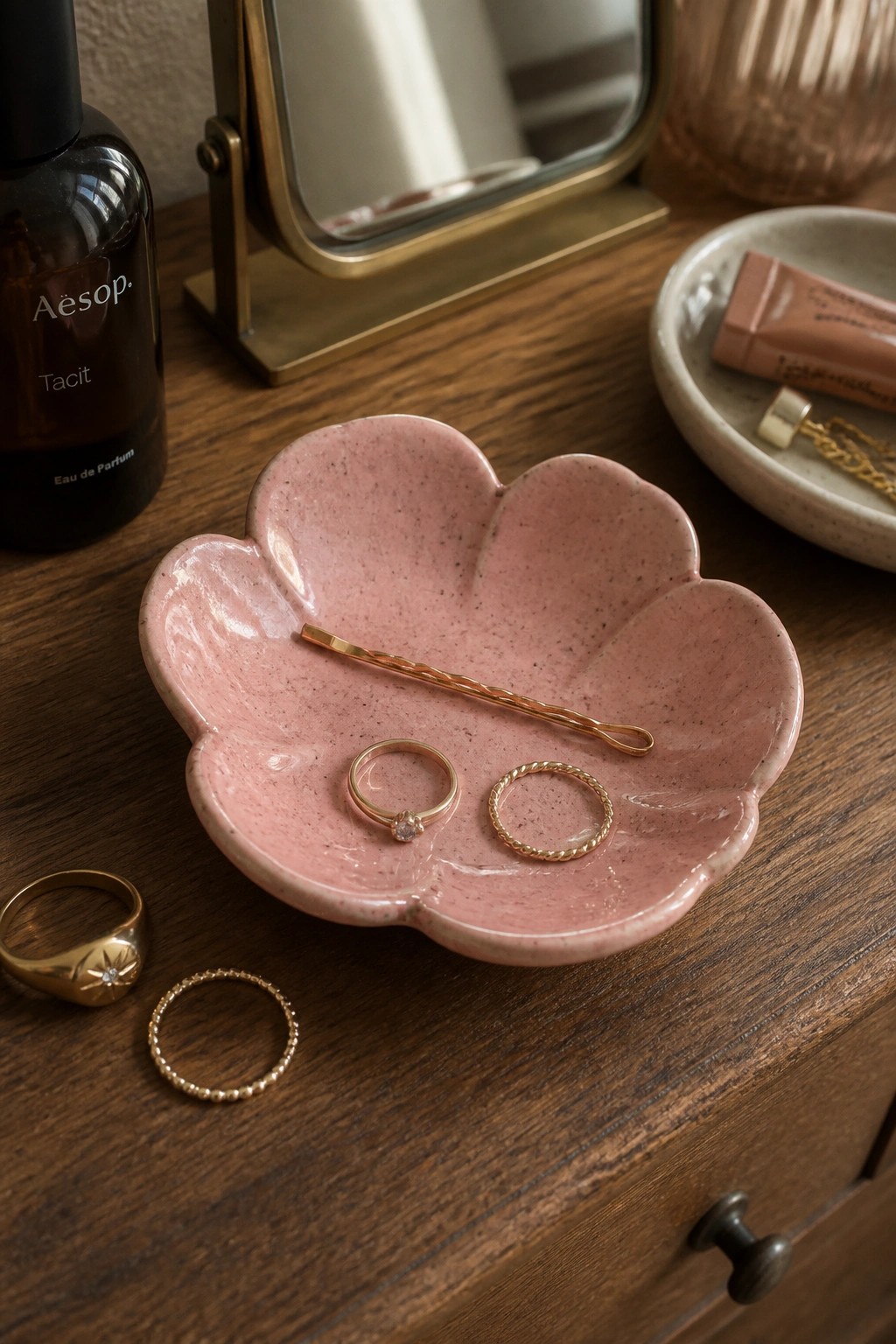
A small ceramic ring dish shaped like a five-petal flower works well for holding rings, hairpins, and other tiny items on a vanity or dresser. The scalloped edges create a clear boundary that keeps pieces from sliding off, and the glossy pink glaze with fine dark speckles gives the surface visual interest without added decoration. This type of project falls into the ring dish or small tray category, where the form itself provides both function and a finished look.
What makes this idea useful is how the petal outline can be pinched or cut from a simple slab to change the number of lobes or overall size. The same shape works as a tiny catch-all in a bathroom for earrings or as a small soap rest next to the sink. You can swap the pink for any solid or speckled glaze color to match different rooms, or leave the rim unglazed for a more matte contrast.
Double Salt Cellar with Built-In Spoon Rest

A double salt cellar made in ceramics creates two connected bowls that hold different salts or seasonings in one piece. The design includes a small spoon that rests in the center dip between the bowls, and the two sections use contrasting glazes, one lighter and smoother while the other shows a speckled surface. This keeps the setup compact and ready for use on a countertop without needing separate dishes or loose utensils. It works as a straightforward kitchen item that combines storage and serving.
What makes this idea useful is the spoon rest built into the shape, which keeps the utensil off the counter and within reach. You can adapt the same connected form for holding spices, small condiments, or even dipping sauces. In a kitchen, this kind of piece stays practical on a prep surface or dining table because it takes up little space. The small scale also makes it easy to simplify into a single bowl version or adjust the bowl sizes for different uses.
Ceramic Yarn Bowl with Spiral Notch
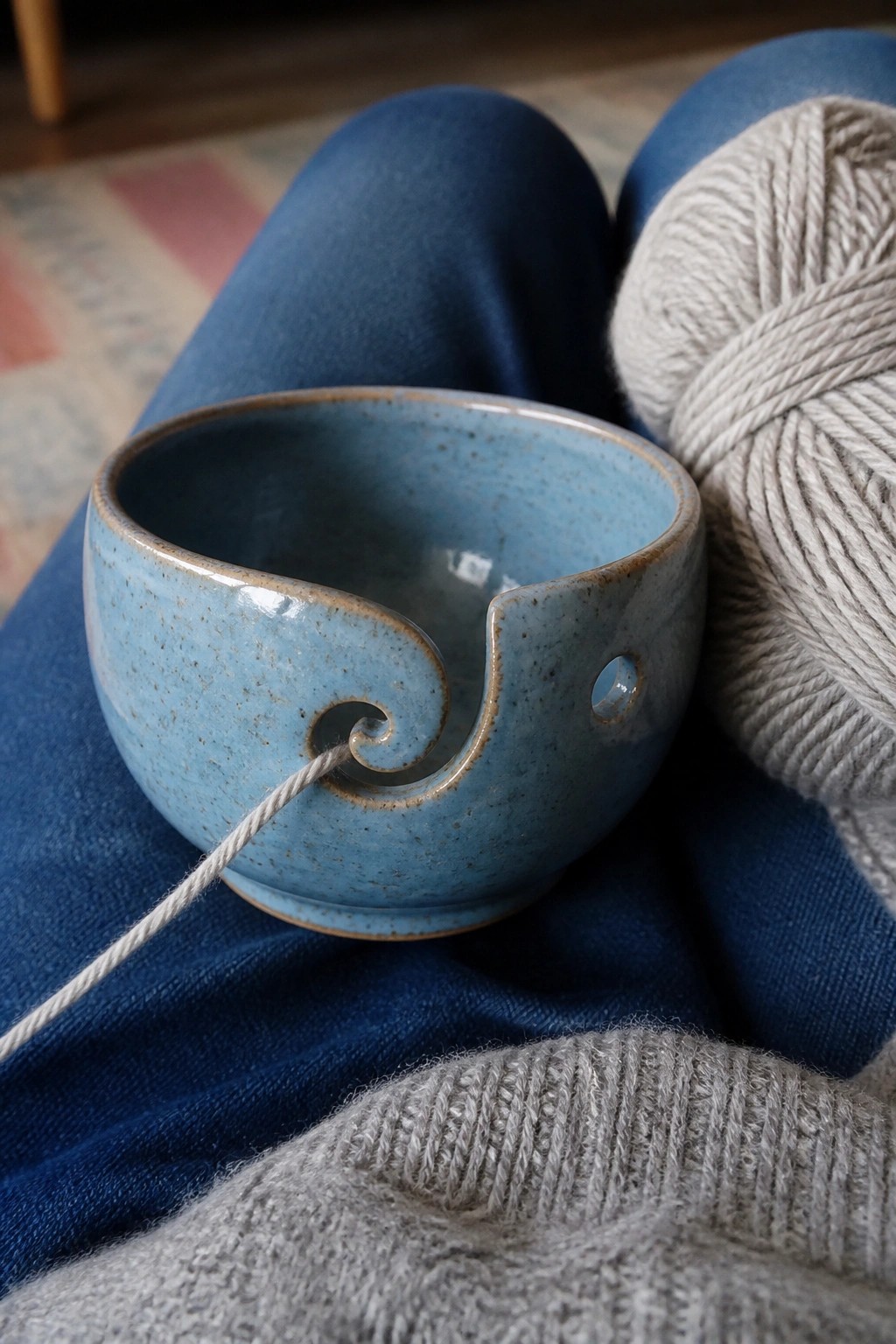
A yarn bowl is a ceramic holder made to keep a ball of yarn contained while you knit or crochet. The spiral notch cut into the rim lets the working strand feed out cleanly, and the small side hole can catch the loose end when you pause. This version uses a speckled blue glaze over a rounded form that sits stably on a lap or table without tipping.
The shape does a lot of the work here by stopping the yarn from rolling off surfaces. You can adapt the same notch design on a slightly taller bowl for larger skeins or simplify it to a basic U-cut for quicker projects. For a gift, something like this suits anyone who works with yarn regularly and needs a compact tool that travels between rooms. The small scale also makes it simple to produce in batches if you sell at craft fairs.
Ridged Ceramic Soap Dish

A square ceramic soap dish with evenly spaced ridges across the base keeps a bar of soap from sitting in water. The light green glaze covers the entire surface and leaves a slight variation in tone that highlights the raised lines. This bathroom item stays small enough to fit on most counters while the ridges add a clear functional detail without extra parts. The handmade form shows in the soft edges and the way the glaze pools slightly in the grooves.
What makes this idea useful is how the ridges solve a simple daily problem without adding bulk. You can adapt the same shape for a sponge rest in the kitchen or a small tray for keys by changing the ridge spacing or skipping them entirely. The compact size works well in a set if you want to make matching pieces in different glazes for multiple rooms. The clean pattern also photographs clearly, which helps when sharing the project online.
Ceramic Cat Figurine with Heart Accent
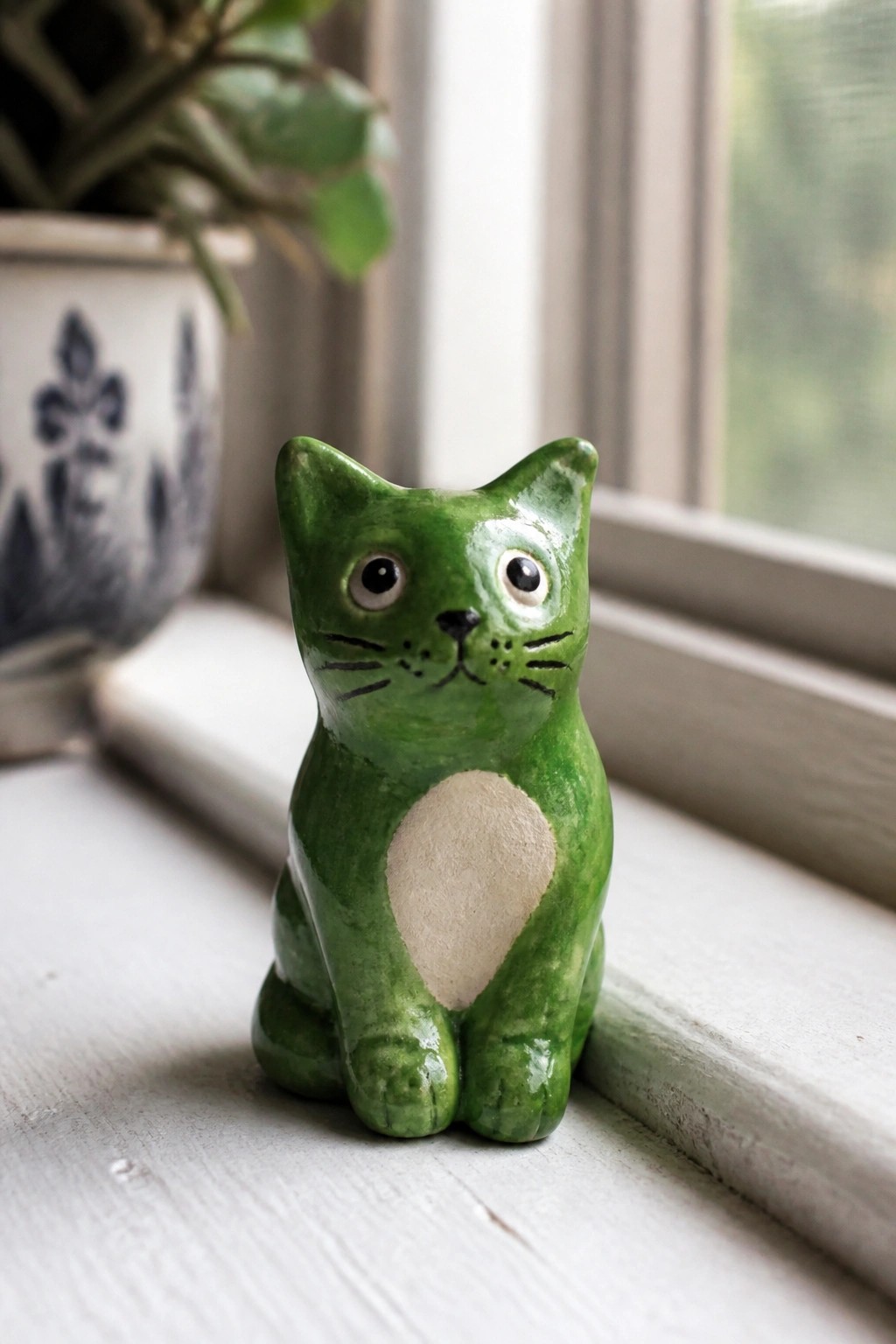
A small ceramic cat figurine makes a simple shelf or windowsill accent. The glossy green glaze covers the seated form while a white heart-shaped area on the chest adds contrast through a different surface finish. Painted black lines for the eyes, nose, and whiskers keep the face readable at a small scale. This type of decor object stays compact enough to group with plants or other small pieces without crowding a surface.
What makes this idea useful is the straightforward seated shape that works on narrow ledges or mantels. You could swap the green glaze for another color or replace the heart with a different motif to match your space. In a living room or bedroom, the small size lets you add a handmade element without committing to a larger piece. For gifts, the basic form is easy to repeat and personalize with new painted details on each one.
Speckled Ceramic Jars with Simple Stamps

Small lidded jars like these work as compact storage pieces for spices, salt, or loose tea. The rounded bodies sit low and stable, while the speckled glazes in muted green, cream, and lavender give each jar its own quiet color without competing. Basic carved or stamped marks, such as a circle, dash, or X, add just enough detail to tell the jars apart at a glance.
The shape does a lot of the work here because the compact size and fitted lids make them easy to move around a counter or shelf without taking up much space. You could repeat the same form in different sizes to hold coffee beans or sugar, or change the stamps to letters or numbers if you want a quick way to label contents. In a kitchen these jars stay useful while still looking intentional next to plants or wooden boards.
Leaf-Impressed Utensil Holder

A cylindrical ceramic holder like this serves as a kitchen utensil organizer. The green speckled glaze covers the surface while carved leaf motifs add texture and visual detail along the sides. The rimmed top edge helps contain tools without adding extra bulk. This keeps the piece practical for holding spoons, spatulas, and other wooden kitchen items.
What makes this idea useful is how the tall narrow shape fits neatly on a counter while holding multiple tools upright. You could scale the same cylinder down for a smaller brush holder or change the leaf pattern to simple lines for a quicker version. In a kitchen this kind of holder keeps everyday items accessible and grouped together. The form also works for desk pencils or craft supplies if you adjust the height.
Rust Brushstroke Oval Tray
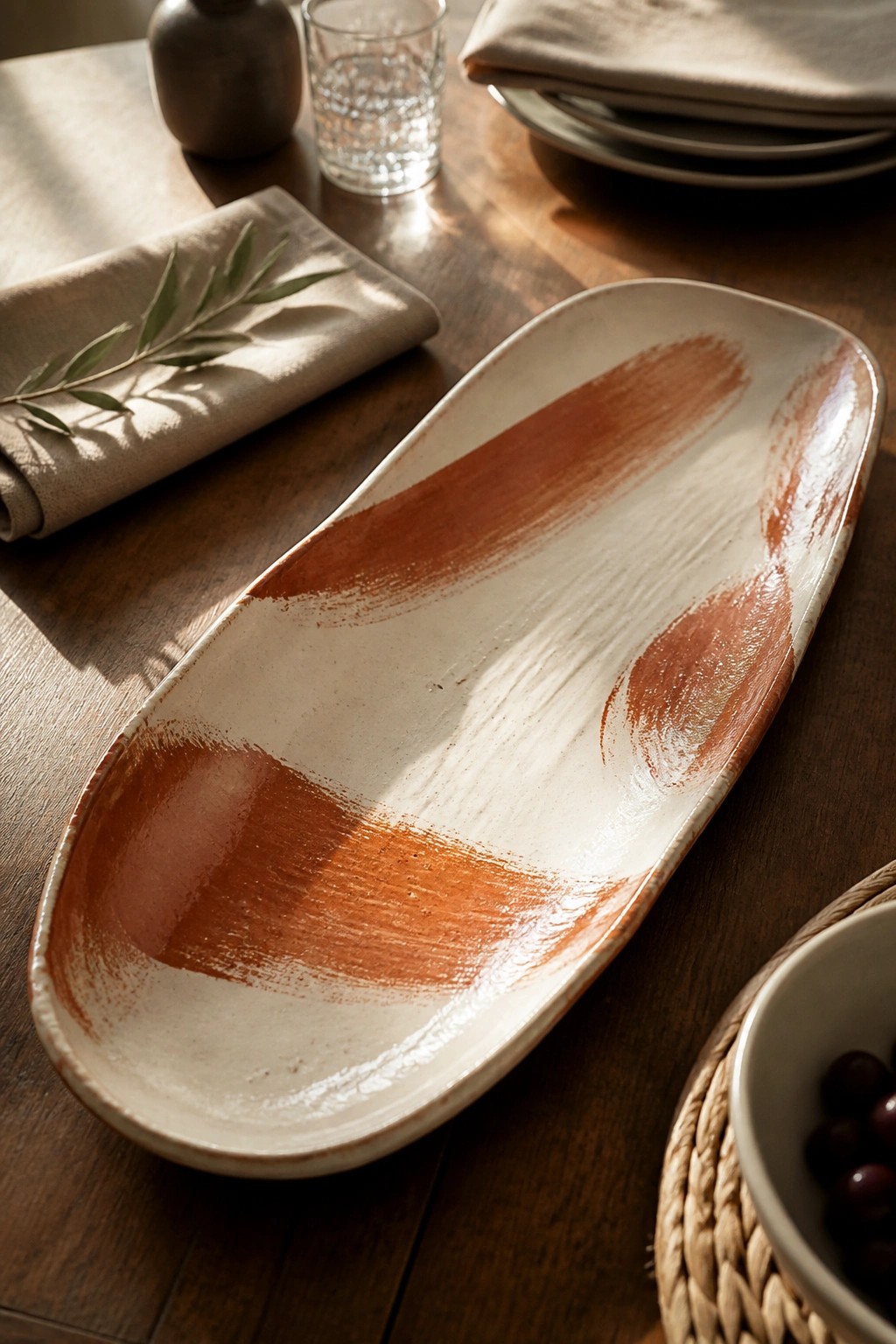
A long oval ceramic tray gets its look from wide, uneven strokes of rust-colored underglaze brushed across a white base before firing. The strokes vary in thickness and opacity, leaving some areas thin while others sit heavier for a loose, painted effect. This style works as a serving piece or decorative tray that fits the painted ceramics category.
What makes this idea useful is how the elongated shape holds food or small items without needing extra details. You could repeat the same stroke pattern on round plates or shorten the form into a smaller catch-all dish. The contrast between the white ground and the earthy color makes it stand out in a neutral kitchen or on a dining table.
Incense Holder Tray
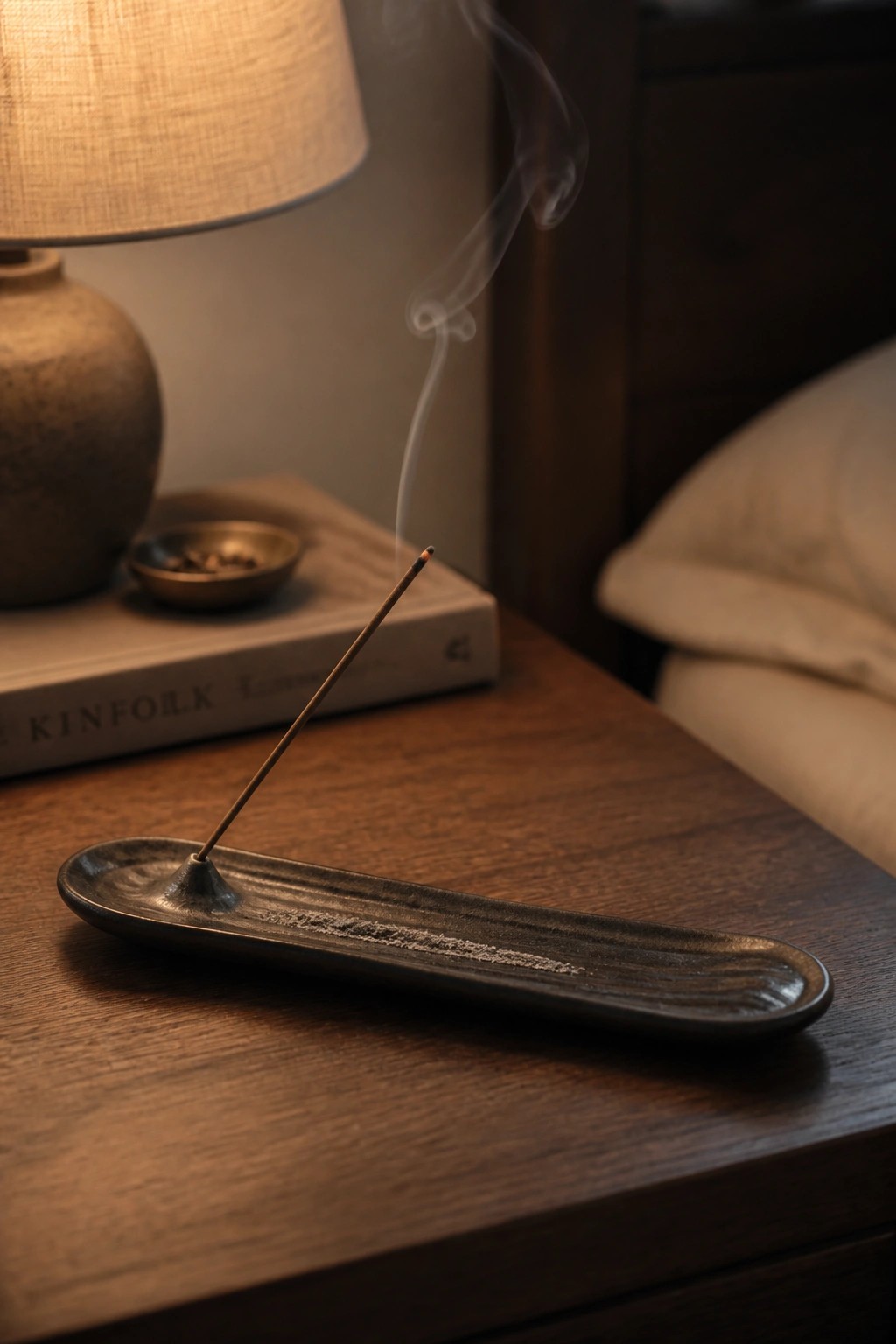
A long, narrow ceramic tray with a raised central cone serves as an incense holder that keeps the stick upright while catching falling ash along its length. The simple elongated shape and dark textured glaze create a low-profile piece that sits flat on surfaces without drawing attention away from the incense. This fits into the holder category of pottery projects and works well when made from a slab or extruded form for even thickness.
What makes this idea useful is how the narrow proportions let it tuck into tight spots like a bedside table or desk corner. You could shorten the tray for a travel-sized version or add shallow grooves to direct ash more neatly. For a gift, something like this pairs easily with a bundle of incense and requires only basic hand-building skills to start. The same shape adapts quickly into a small catch-all for matches or paper clips if you skip the cone.
Stamped Texture Ring Dishes
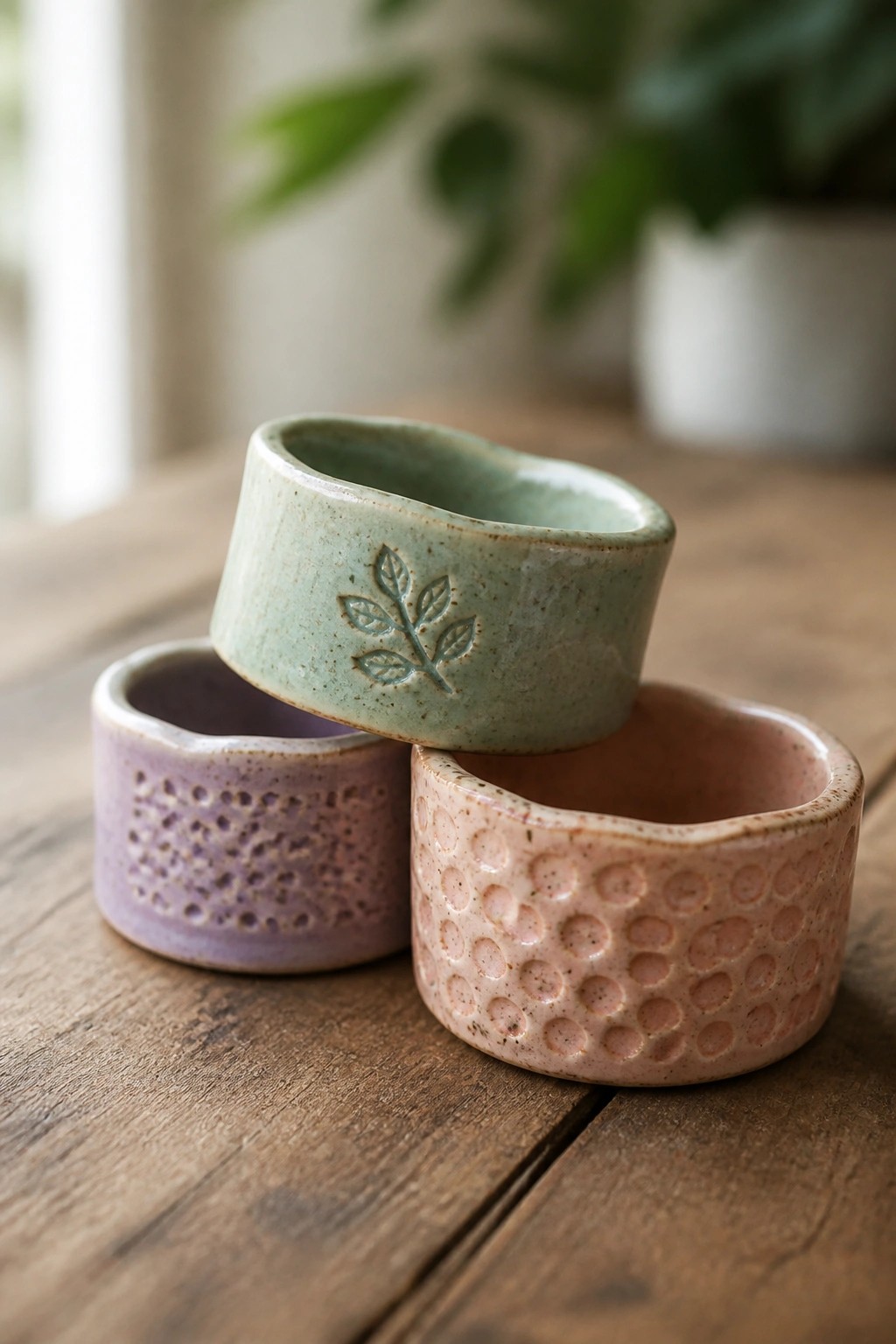
These small ceramic dishes make practical ring holders or jewelry catchalls with their shallow, wide shape. The maker pressed different patterns directly into the clay, such as a leafy branch on the green piece and repeating dots or circles on the others, then finished them with soft, speckled glazes. The muted pastel tones and simple forms keep the focus on the surface details rather than bright color.
What makes this idea useful is how easily the stamping technique works on any small slab or pinched form you already have. You could swap the leaf for other everyday stamps like keys or fabric textures to match a specific room. The compact size means they fit on a dresser, desk, or sink edge without crowding the space. For a gift, something like this takes very little clay but still feels finished.
Ceramic Gravy Boat for Kitchen Serving

A small ceramic gravy boat gives you a dedicated piece for pouring sauces and gravies at the table. The shape includes a wide spout that controls flow and a looped handle that stays comfortable when the vessel is full. Its speckled off-white glaze with a darker rim keeps the look simple and blends with most kitchen dishes without competing for attention.
What makes this idea useful is how the same basic form works for other liquids like salad dressings or melted butter. You can adjust the size for larger batches or smaller individual portions depending on what you serve most often. In a kitchen this piece stays within reach on the counter and replaces plastic or glass options that often feel less intentional. For a gift the gravy boat pairs easily with a wooden board or fresh herbs without needing extra decoration.
Scalloped Ceramic Pendant Lamp Shade

A ceramic pendant lamp shade in a wide dome shape with an irregular scalloped rim turns basic clay into a functional lighting piece. The matte textured exterior keeps the focus on the form while the warm interior glow highlights the wavy edge detail. This project fits into the decor lighting category and works by letting the rim shape and surface texture carry the visual interest.
What makes this idea useful is how the scalloped edge can be adjusted to different depths or repeated on a smaller scale for wall sconces. The dome form adapts easily to a plain rim if you want a cleaner look or can be made taller for higher ceilings. In a dining area or over a table it provides soft downward light without needing extra glaze patterns. You could also skip the electrical parts and use the same shape as a large decorative bowl.
Frequently Asked Questions
What types of pottery work best in small spaces like apartments? Focus on compact pieces such as small vases, bowls, or wall mounted planters that add texture without taking up floor space. Place them on shelves, windowsills, or tables in groups of three to create visual interest while keeping the area open and uncluttered.
How can I make sure pottery matches my current color scheme? Start by selecting pieces in neutral tones like soft beige, white, or terracotta if your decor leans calm and simple. For bolder schemes, choose pottery with subtle accents that echo your existing pillows, rugs, or artwork. Test by holding samples near your furniture before purchasing.
Where can I find affordable versions of aesthetic pottery ideas? Check local thrift stores, online marketplaces, or craft fairs for budget options. Many artists sell handmade items at reasonable prices, and you can also explore DIY kits that let you shape and glaze your own pieces at home for a fraction of retail cost.
What is the best way to clean and maintain pottery decor? Dust regularly with a soft cloth and avoid harsh chemicals that could damage glazes. For deeper cleaning, use mild soap and water on non porous pieces, then dry thoroughly. Keep pottery away from direct heat sources or extreme temperature changes to prevent cracks over time.
Can beginners try making some of these pottery projects themselves? Yes, start with air dry clay for simple shapes like trays or candle holders that require no kiln. Follow online tutorials for basic techniques and practice on small items first. Once comfortable, advance to wheel throwing classes at community centers for more advanced aesthetic designs.

Pottery Path is my cozy corner of the internet where I share clay ideas, pottery inspiration, and simple projects you can recreate at home. I love exploring everything from air dry clay to handbuilt pottery to cute minis that brighten your day. My goal is to make clay crafting feel easy, fun, and welcoming for anyone who wants to try it.
You will find beginner friendly tutorials, creative pottery painting ideas, and lots of warm inspiration for slow and happy crafting. If you enjoy hands on creativity, this space will feel like home.