
I’ve spent some time experimenting with different pottery styles at home.
A lot of the elegant looks come from keeping things simple with shapes and colors.
I’ve found that matte finishes and classic forms tend to hold up well over time.
Here are some designs I’ve come across that feel both modern and lasting.
They are ideas I think could work for anyone looking to add a bit of that polished touch to their space.
Tall Fluted Vase with Scalloped Rim

A tall, narrow ceramic vase with vertical ridges down the body gives a structured surface that catches light without extra decoration. The scalloped rim softens the top edge while a thin gold band sits just below the neck to add a single point of contrast. This style works well as a standalone piece for dried stems or branches because the form itself carries the visual interest.
The shape does a lot of the work here since the ridges create movement and help the vase fit both modern and traditional rooms. You could scale the same fluted texture down to a shorter bud vase or repeat it across a matching pair for a mantel or shelf grouping. In a kitchen or entryway this kind of neutral vase stays useful because the off-white surface blends with most color schemes and needs no additional styling.
Mug with a Single Horizontal Band

A handmade mug built around a simple two-part glaze treatment. The main body uses a matte gray finish with visible texture, while a narrow light band runs around the middle to create separation. The interior and rim show a contrasting blue-gray glaze with soft vertical movement. This keeps the overall shape classic but adds a clean visual break that works well for daily use.
What makes this idea useful is how the band lets you play with contrast without adding patterns or extra details. You can adapt the same line to different widths or colors when making a set of mugs or bowls. The standard size and handle make it practical for coffee or tea, and the restrained look helps it fit into a neutral kitchen without standing out too much. For a variation, try the band on a taller tumbler or a small creamer to build a coordinated group.
Wheel-Thrown Shallow Bowl With Visible Ridges

A wheel-thrown shallow bowl gains its clean look from the concentric ridges left on the interior during throwing. The matte speckled glaze in soft beige tones sits thin enough to let those lines show through while still giving the surface a slight sheen. This approach keeps the piece simple and works as a serving bowl, salad dish, or low catch-all for keys or jewelry.
What makes this idea useful is the wide, low profile that fits easily on a dining table or kitchen counter without taking up much vertical space. You can adapt the same form by throwing the walls a bit taller to turn it into a deeper mixing bowl or by using a darker glaze for more contrast. The neutral color also makes it simple to style with different linens or dinnerware. A piece like this stands out on Pinterest when shown in everyday settings rather than staged alone.
Pressed Leaf Motif on a Rounded Ceramic Bowl

A low, rounded ceramic bowl with leaf shapes pressed directly into the clay gives the surface a clear botanical pattern. The light green glaze sits in the recessed areas and catches on the raised edges, making the leaves stand out without extra color. This style works as either a small planter or a decorative catchall where the texture does the main visual work.
What makes this idea useful is how simple it is to repeat the pressing technique on other forms. The same leaf stamps could go on a taller cylinder vase or a set of small trays for a coordinated group. The muted glaze color stays neutral enough to fit with different plant types or room colors, and the scale stays easy to handle for most workspaces.
Rectangular Tray With Incised Waves
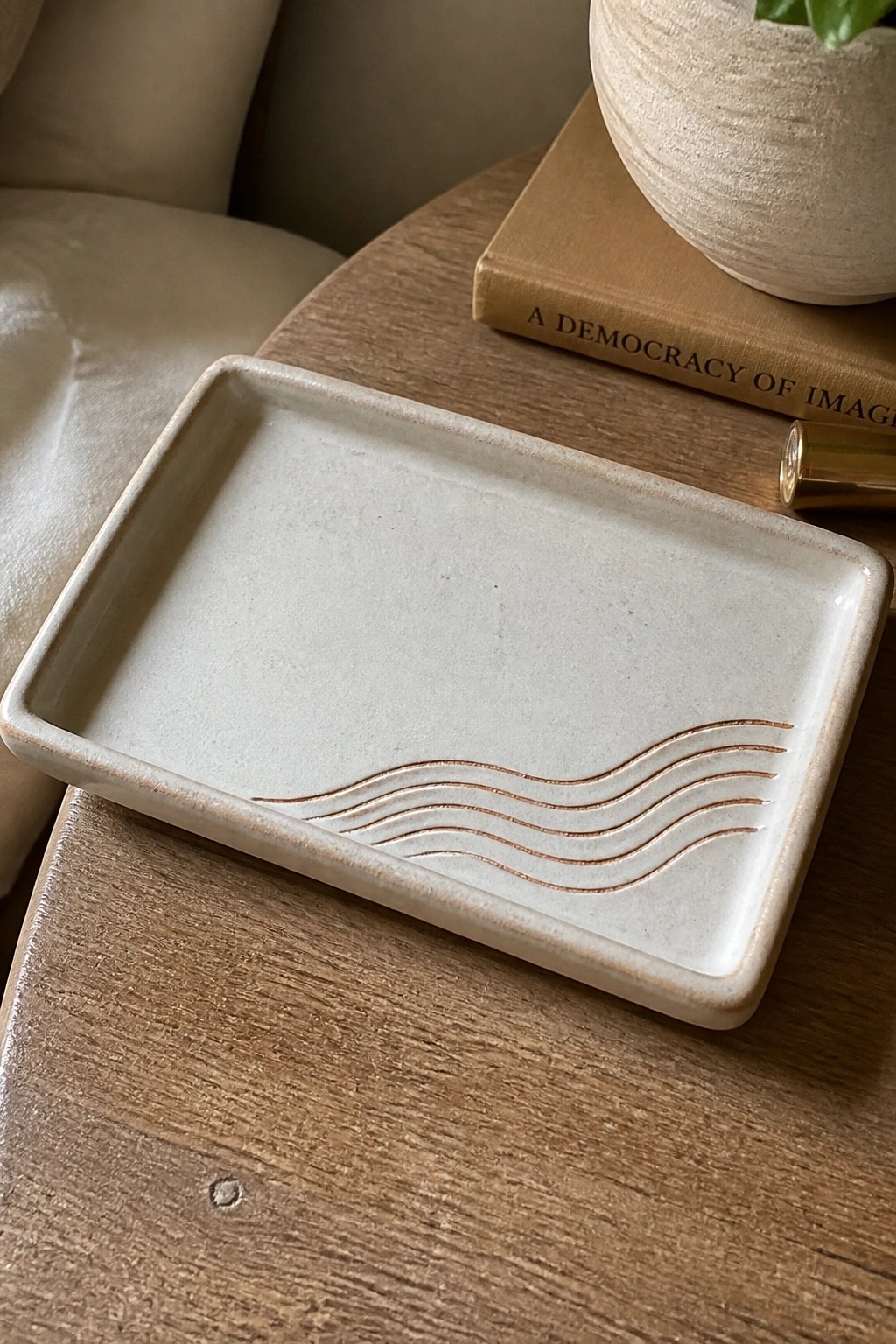
A rectangular ceramic tray uses three parallel wavy lines carved into the surface and accented with a copper-toned slip or underglaze. The lines run across one side of the base, leaving the rest plain so the pattern stays minimal. The tray itself has low sides and a matte cream glaze that lets the warmer detail stand out without competing.
What makes this idea useful is how easily the wave motif can be scaled or simplified for different tray sizes. The same carving approach works on a soap dish, small plant saucer, or desktop catch-all. A piece like this fits well in a bathroom or entryway where you need a flat surface that still looks intentional. You could swap the copper for a matte black line or leave the waves unglazed for a two-tone raw clay effect.
Black Bowl with Gold Brushstroke Accent

A shallow ceramic bowl in matte black glaze features a single wide gold brushstroke that curves along the interior wall. The hand-applied gold creates a crescent shape that stands out against the dark surface while leaving most of the bowl plain. This combination keeps the form simple and lets the contrast do the visual work.
What makes this idea useful is how easily the gold stroke can be added to bowls or plates you already make. The shape works well as a fruit bowl, salad server, or desk catchall because the accent stays out of the way during use. You could try the same stroke on a deeper bowl or shorten it to a smaller mark on the rim for a subtler version.
Organic Ceramic Tea Light Holder
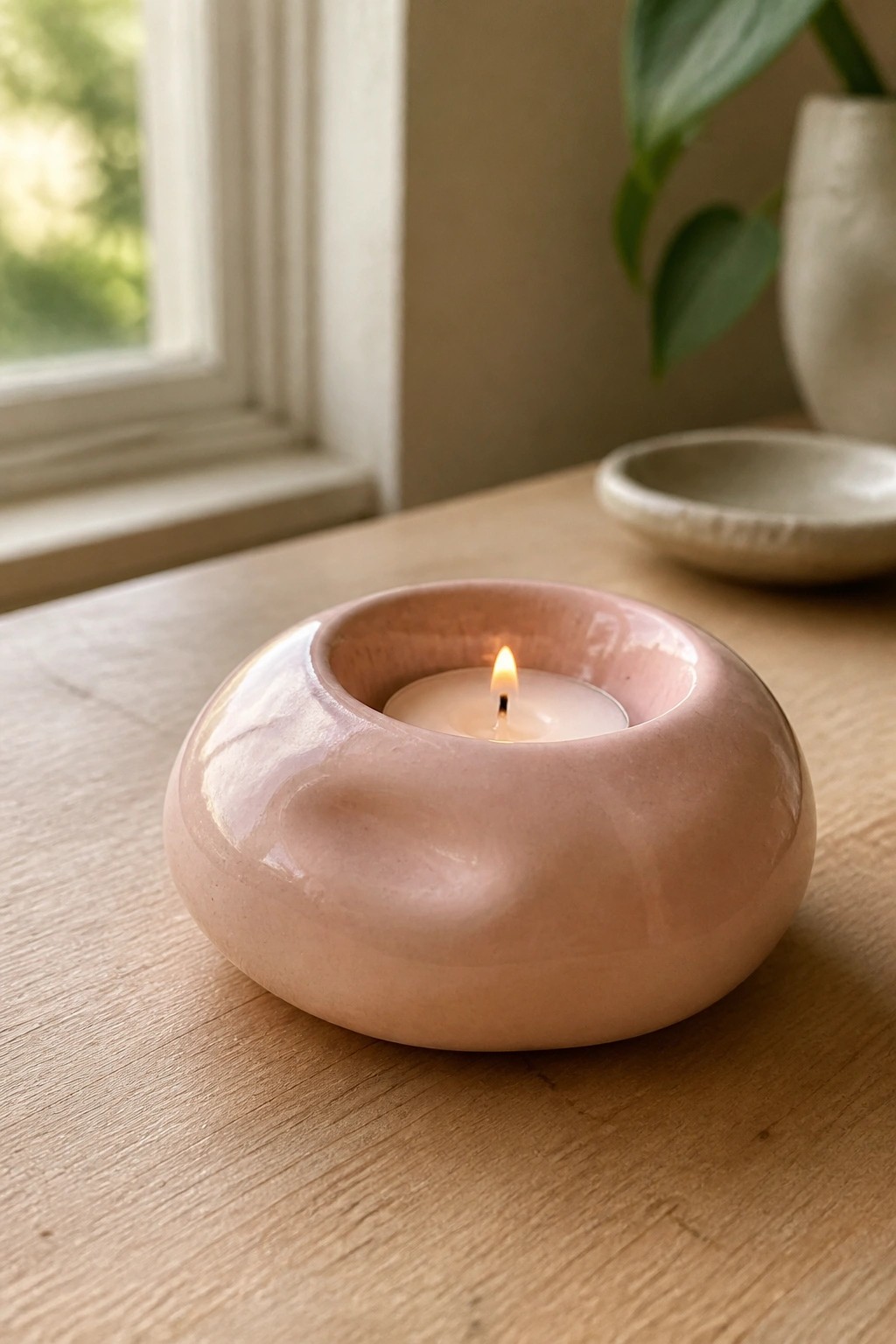
A small ceramic tea light holder formed as a low, rounded bowl creates a contained spot for a single flame. The handmade shape has soft, irregular curves rather than a perfect circle, and a glossy glaze in a muted pink tone covers the surface. The central well is sized to fit a standard tea light while the outer form stays compact and stable on a flat surface.
What makes this idea useful is how the small scale lets it work as an accent on a desk, shelf, or dining table without crowding other items. You could rework the same rounded profile in a matte white or deep gray glaze to match different rooms. For a gift, something like this needs only basic hand-building and pairs easily with a pack of tea lights. The organic edge also translates well to a slightly larger version used as a small catch-all dish.
Minimalist Line Ceramic Spoon Rest

A long oval ceramic dish makes an effective spoon rest for kitchen use. The shallow elongated shape holds spoons or small utensils without taking much counter space, while the white glaze and thin black curved lines create a simple graphic pattern that stays visible even when the piece is in use. This approach belongs to the kitchen item category, where a basic form gets interest from minimal painted details rather than complex sculpting.
What makes this idea useful is how the narrow shape works on a crowded stovetop without crowding other tools. You could scale the same oval and line pattern down for a ring dish or stretch it into a small butter tray by widening the base slightly. The lines themselves are straightforward to paint with underglaze, so you can swap in different colors or spacing to match your existing dishes.
Organic Rim Ceramic Catch-All Dish

A small ceramic dish with an irregular rim and a soft blue-green glaze that fades to a lighter center makes a simple catch-all for rings or small items. The speckled surface and uneven edge give it a handmade look that feels intentional rather than polished. This type of project fits into the category of small functional dishes that sit on surfaces without needing extra decoration or handles.
The compact size works especially well on a nightstand or bathroom counter where you need quick access to jewelry or small objects. You can adapt the same form into a soap dish by making the center slightly deeper or turn it into a desk tray for paper clips by widening the rim. Try testing different glaze thicknesses on the same shape to see how the color shifts, which helps create a small matching set without much extra effort.
Ceramic Sitting Cat Figurine

A ceramic cat figurine works as a compact decor object that captures an animal shape through simple sculpting. The rounded body, upright ears, and seated posture create a stable form that rests easily on shelves or mantels. Light painted lines for the eyes, whiskers, and ear tips add definition while keeping the surface mostly plain. This type of small figurine fits the category of standalone animal decor that can stand alone or sit with other neutral pieces.
The shape does a lot of the work here because the seated pose stays balanced without extra support. You can adapt the same idea by adjusting the ear angle or trying a different animal like a dog or rabbit to build a small collection. A piece like this works especially well as a gift since it takes up little space and pairs with many room styles. For a mantel or side table, the light glaze lets it blend with existing items while still reading as handmade pottery.
Ribbed Ceramic Toothbrush Holder

A handmade ceramic toothbrush holder with a cylindrical shape and three separate holes keeps brushes upright and organized on a bathroom counter. The vertical ridges add subtle texture to the surface while the soft green glaze gives the piece a muted, cohesive finish that blends with most tile and fixture colors. This type of holder works as a straightforward bathroom item rather than a decorative accent.
What makes this idea useful is the narrow footprint that fits easily on a windowsill or small ledge without crowding other items. The same ribbed cylinder could be reworked into a desk pencil cup or a small makeup brush holder by adjusting the hole sizes. A neutral glaze like this one pairs with different color schemes, so the holder stays practical even after a bathroom update.
Speckled Ceramic Sponge Holder with Notched Edge

A rectangular ceramic sponge caddy with a curved front notch holds a dish sponge upright on the counter. The holder uses a speckled cream glaze that gives it texture without being busy, and the low walls keep the sponge contained while letting air reach it. This approach turns a plain kitchen tool into a simple stoneware piece that matches other sink-side items.
What makes this idea useful is how the notch improves daily access without adding extra parts. You could scale the same shape down for a soap bar or widen it for two sponges side by side. In a kitchen, the speckled surface hides water marks better than a solid glaze, and the compact size makes it easy to reproduce in small batches for gifts or your own sink area.
Leaf-Shaped Ceramic Ring Dish
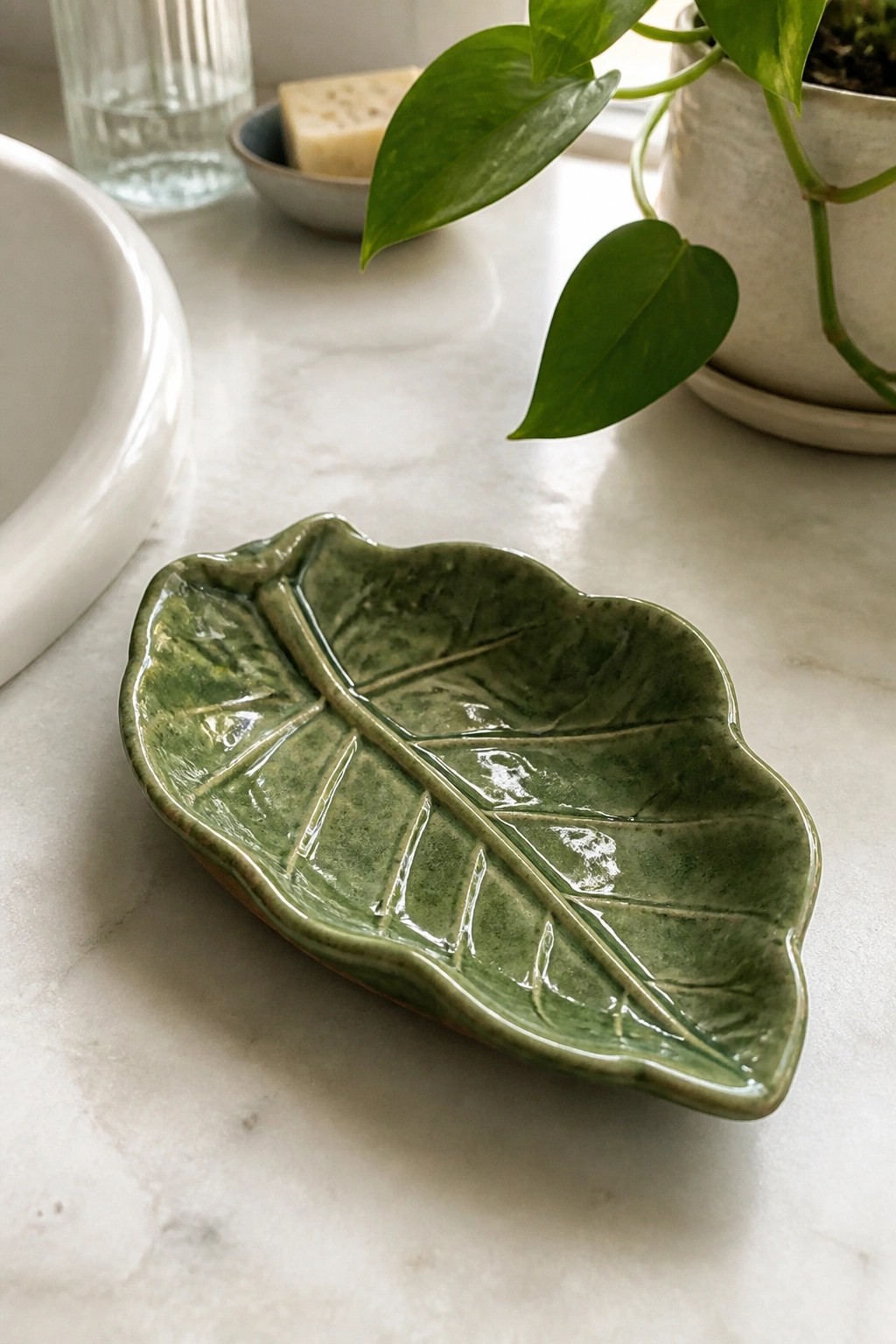
A leaf-shaped ceramic dish uses a realistic leaf outline with raised veins to form a shallow tray that holds small items. The green glaze covers the entire surface and settles into the sculpted lines to emphasize the texture. This project falls into the ring dish or small holder category and works as a functional piece for jewelry or bathroom items.
What makes this idea useful is the way the natural leaf shape creates built-in edges that keep contents from sliding off. You could adapt the same form by using a different leaf type or switching the glaze to a matte finish for a softer look. The small scale makes it simple to fit on a vanity or nightstand and easy to repeat as a set of matching dishes. For a gift this shape stands out because it serves a clear purpose without needing extra decoration.
Divided Ceramic Salt Cellar
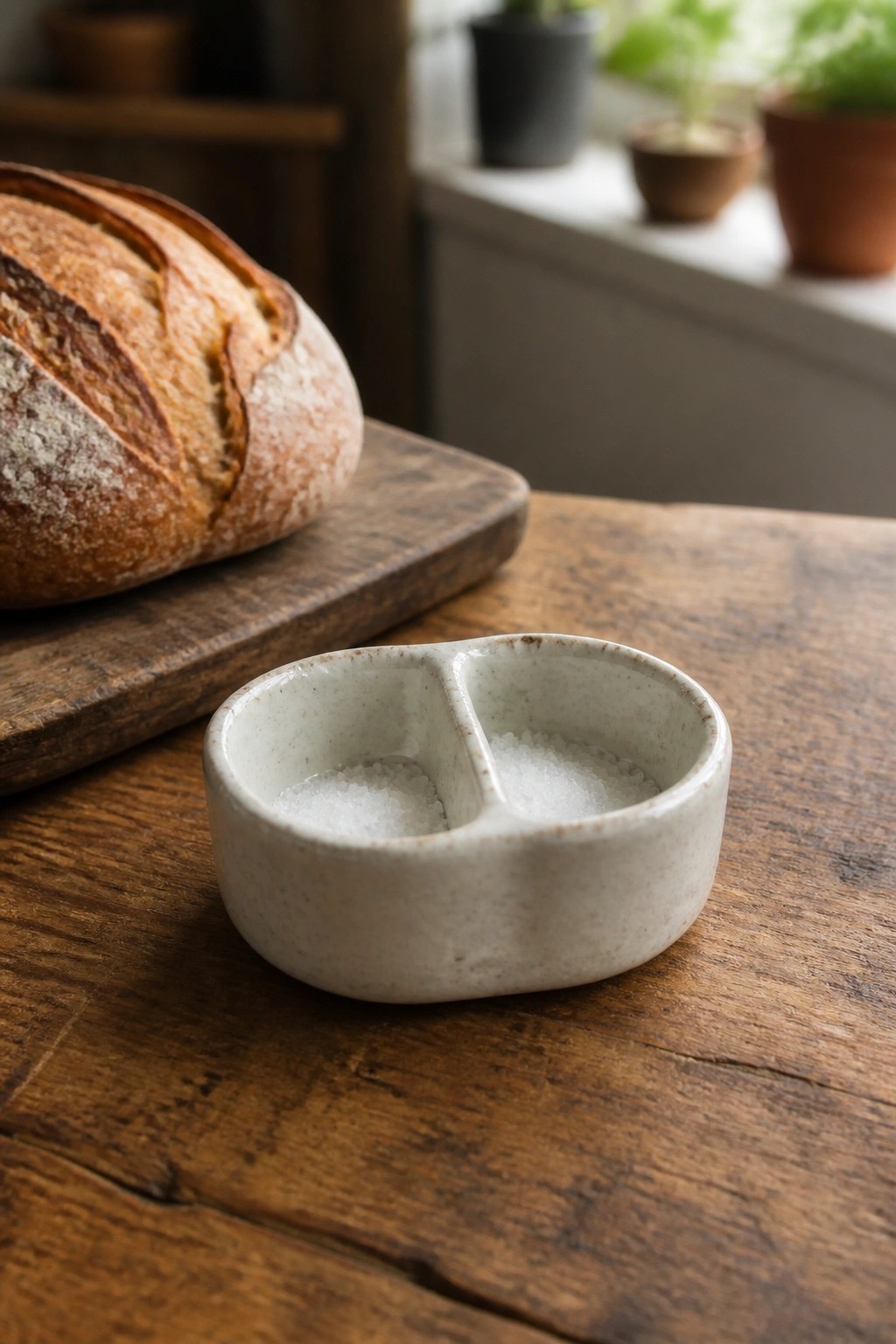
A small oval ceramic dish split down the middle into two equal compartments makes a practical holder for salt and pepper or any two dry seasonings. The low walls and rounded interior keep the contents easy to pinch while the speckled matte surface resists showing wear in daily kitchen use. This shape belongs to the category of simple tableware that stays useful without taking up much space.
What makes this idea useful is how the built-in divider removes the need for two separate bowls on the table. The same form works for holding herbs and red pepper flakes or even small snacks like nuts and seeds. You could scale it up slightly for a shared dip setup or drop the divider entirely to turn it into a basic pinch bowl for single seasonings.
Timeless Blue Ceramic Teapot
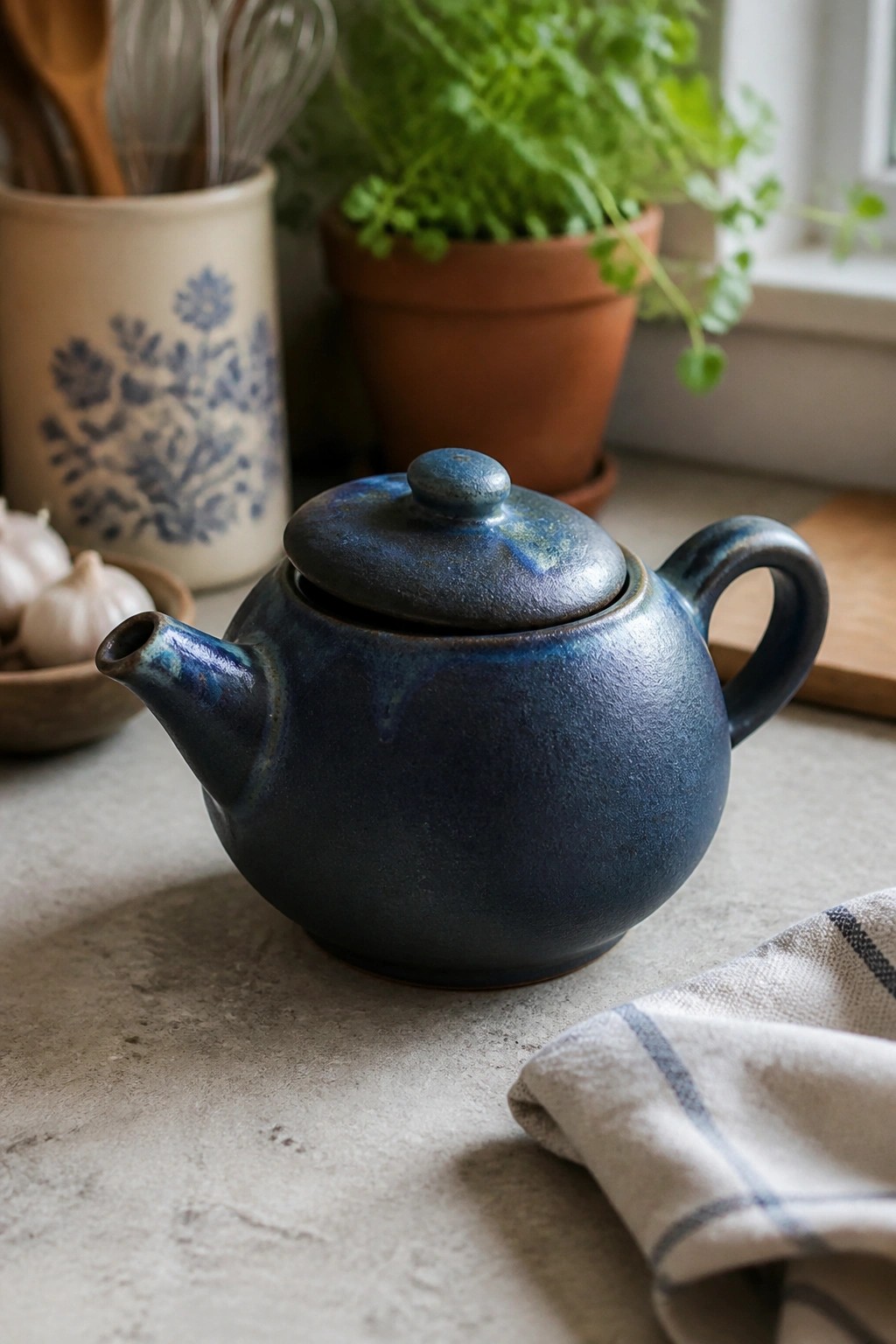
A handmade ceramic teapot with a rounded body, short spout, and integrated handle offers a classic kitchen form finished in a deep blue glaze that varies slightly in tone across the surface. The snug lid and simple knob keep the design clean while the matte texture gives it a solid, grounded feel. This approach fits the kitchen item category and works as both a functional pour vessel and a quiet countertop accent.
The rounded form keeps the piece balanced for pouring and easy to grip by the handle. A glaze in this depth of blue pairs well with neutral linens or wood surfaces without competing for attention. You could scale the same shape down for a smaller creamer or adapt the glaze to a matte gray or warm brown for a different kitchen palette. In a gift setting this style stands out because it looks finished and intentional without extra surface detail.
Vertical Stripe Pitcher in Neutral Tones

A ceramic pitcher with a rounded body and comfortable handle works well for serving water or as a small vase. The design pairs a matte off-white surface with one vertical band of warm terracotta color applied down the front. The stripe breaks up the plain form while keeping the overall look simple and balanced. This approach fits the category of a kitchen serving piece that doubles as table decor.
What makes this idea useful is how the single stripe can be widened, narrowed, or changed to another color to suit different table linens or dinnerware. A piece like this works especially well as a water jug at meals or as a holder for a few stems on a sideboard. The same stripe treatment could be repeated on matching mugs or bowls to build a small set without much extra effort. In a kitchen, this kind of piece adds a clean accent that still feels practical for regular use.
Ceramic Yarn Bowl with Spiral Side Cutout

A yarn bowl is a practical ceramics project that holds a ball of yarn while feeding the strand through a side opening to prevent tangling. This version uses a large circular cutout shaped into a continuous swirl that doubles as both the yarn guide and the main visual feature. The glossy brown glaze covers the rounded form and emphasizes the smooth edges of the opening. The design fits into the category of functional craft holders rather than decorative display pieces.
What makes this idea useful is how the cutout shape keeps yarn moving smoothly without needing extra hardware. You can adapt the swirl by changing its size or spacing to suit different yarn weights or try the same form in a matte glaze for less shine. This kind of bowl works especially well on a knitting table or as a gift for someone who crochets often. The concept could be reworked into a smaller version for embroidery floss or turned into a cord holder for desk use.
Organic Clay Slab with Gold Inlaid Patterns

A flat slab of clay cut into an uneven organic shape serves as the base for this wall hanging. Carved lines on the surface are filled with gold to form abstract divisions, a crescent shape, and a series of stacked arcs at the bottom. The matte gray finish keeps the focus on the metallic details while the single hole at the top allows it to hang easily on a wall. This turns a basic clay piece into a simple decorative object that relies on contrast and minimal carving rather than complex forms.
What makes this idea useful is the way the inlaid gold stands out against the plain clay without needing multiple glazes. You can adapt the same slab method to make smaller versions for shelves or larger ones for bigger wall spaces. The irregular outline avoids a stiff look and works well in living rooms or entryways where neutral tones already dominate. The design also translates easily to other objects like trays or tiles if you keep the same carving and gold-fill technique.
Ridged Rectangular Soap Tray
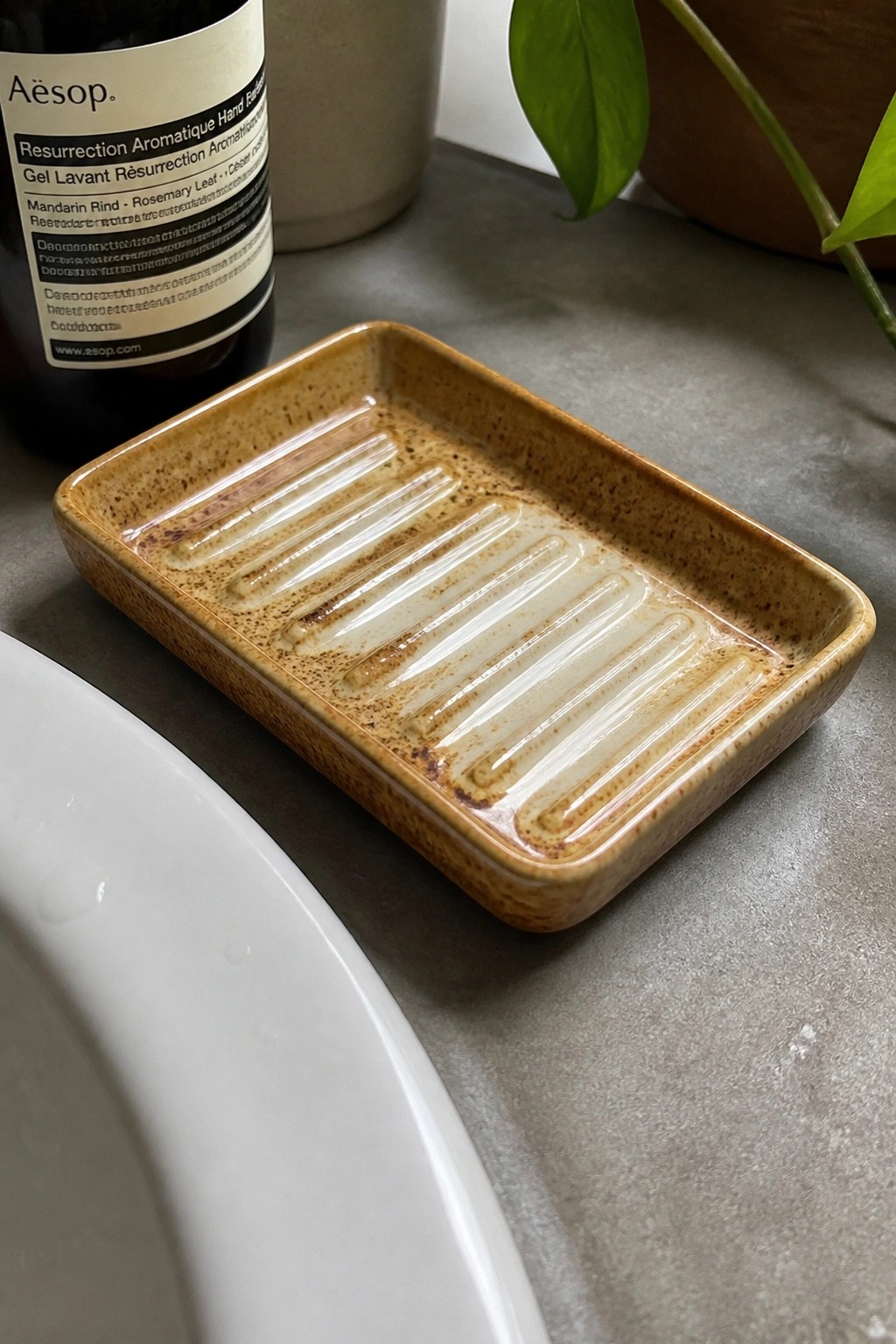
A rectangular ceramic tray with evenly spaced ridges molded into the base makes an effective soap dish for bathroom counters. The grooves lift the bar slightly so water drains instead of pooling, which helps the soap last longer. The speckled earthy glaze adds subtle texture without competing with other fixtures, and the simple shape keeps the piece looking clean and balanced. This design falls into the bathroom item category and works at a scale that fits neatly beside sinks or on shower ledges.
What makes this idea useful is how the ridges solve a practical problem while also creating the main visual interest. You could adapt the same tray form and groove pattern into a small jewelry holder or a catch-all for keys and coins by widening the overall shape. The neutral speckled finish pairs easily with both matte and glossy sinks, so the piece stays useful even if you change your bathroom colors later. For a gift, this shape is straightforward to scale down or glaze in a single solid color to match different preferences.
Minimal Ceramic Incense Tray

A handmade clay incense tray works as a narrow, elongated base with a small raised cone at one end to hold a stick upright. The dark matte glaze covers the entire piece and gives it a simple, solid look that stays clean during use. The long shape contains falling ash while the cone keeps the stick steady without extra parts. This type of holder fits the category of functional desk or bedside decor rather than a decorative sculpture.
What makes this idea useful is how the length manages ash without needing a separate dish. You can shorten the tray for a more compact version or widen the base slightly if you want room for a small dish of sand. The dark surface hides residue well, so it stays practical on a nightstand or shelf. For another take on the same idea, try the same cone holder on a round plate instead of a rectangle.
Lidded Ceramic Dish for Countertop Storage
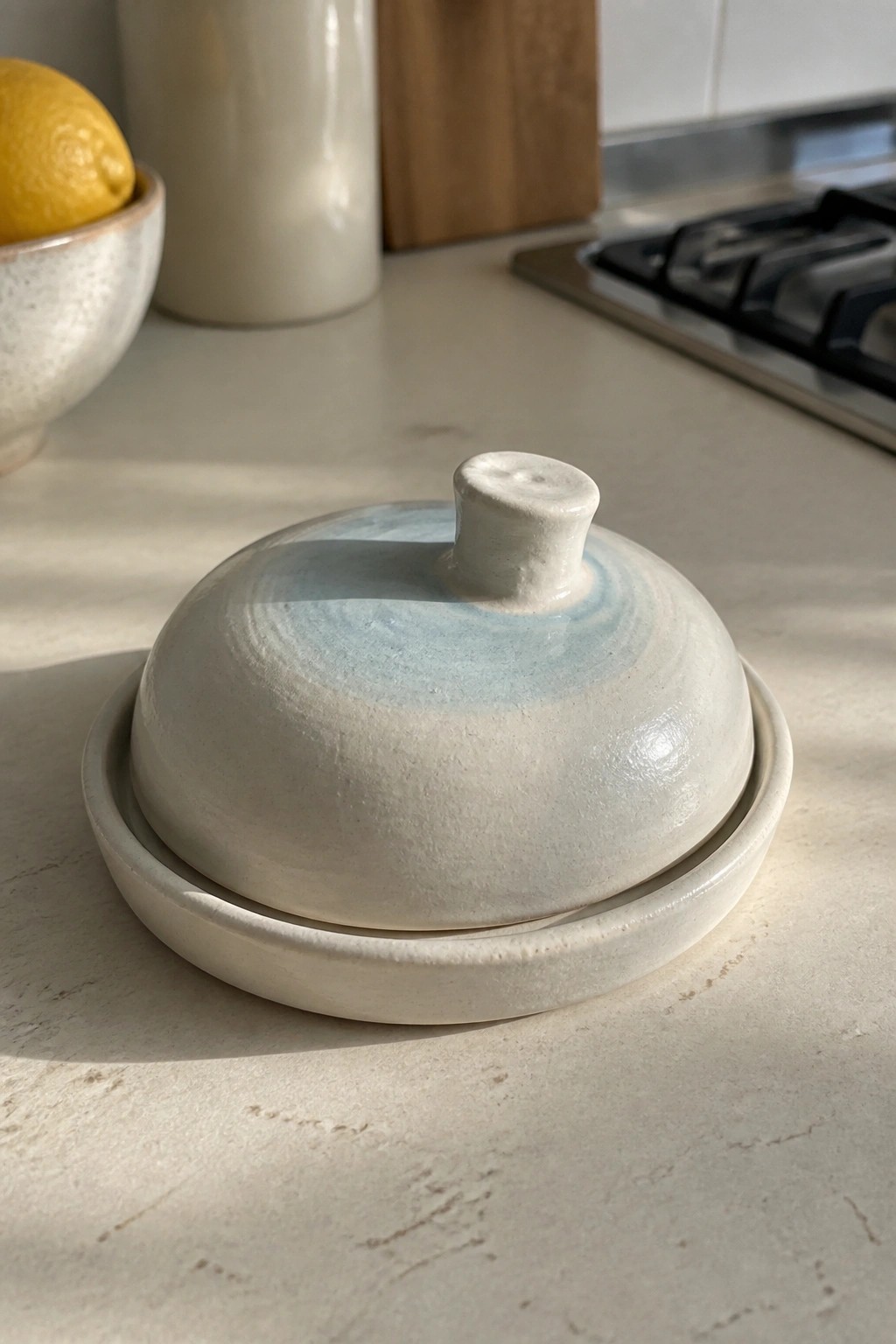
A lidded ceramic dish like this serves as a compact butter keeper or small covered server. The domed lid rests on a shallow base plate, and the simple knob on top makes lifting easy. White glaze covers most of the piece while soft blue streaks on the lid add a quiet contrast without extra decoration. This approach keeps the focus on clean form and basic kitchen function.
What makes this idea useful is how the low profile fits neatly beside a stove or sink without crowding the counter. You could scale the same lid and base shape up slightly for a cheese dome or down for a salt cellar. The blue accent stays subtle enough to work with both modern and traditional kitchens. For a first project, the rounded form is forgiving to throw and the two-glaze treatment requires little extra skill.
Nested Bowls with Mixed Earth Glazes
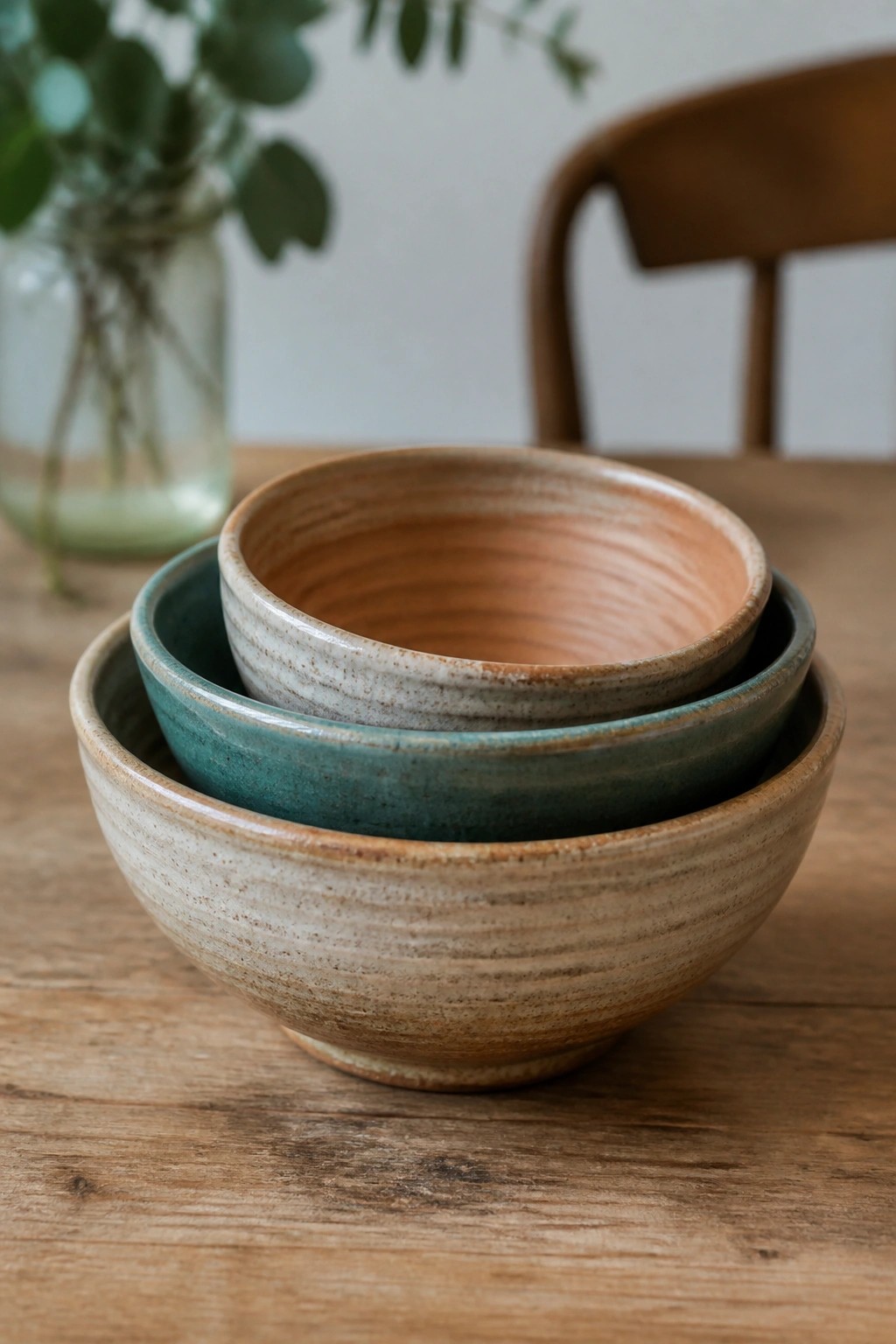
A set of three wheel-thrown ceramic bowls in graduated sizes creates a simple nesting collection for kitchen use. The largest bowl has a matte beige glaze with visible horizontal ridges, the middle one uses a teal-green glaze, and the smallest sits on top with a lighter speckled finish that shows some of the clay body. The design works because the bowls share similar proportions and a consistent throwing texture while the different glazes give each piece its own identity without needing extra decoration.
What makes this idea useful is the way the graduated sizes let you store them compactly when not in use. You could adapt the same nesting approach by making just two bowls or by swapping the teal for another neutral to create a more uniform set. In a kitchen these bowls work well for prep, serving sides, or even as casual salad bowls. The visible throwing lines also translate easily to other forms like small plates or a single larger mixing bowl if you want to expand the idea.
Speckled Bud Vases with Varied Shapes

Small ceramic vases like these rely on a consistent speckled glaze to tie together a few different forms in one set. The narrow necks and rounded bodies keep the focus on single stems or small clusters of flowers rather than competing details. The matte surface with dark flecks gives each piece enough texture to feel finished while staying neutral enough to work with many colors of blooms. This style belongs in the bud vase category, where scale and glaze do most of the design work.
What makes this idea useful is how the shared glaze lets you experiment with a few shapes without the set looking random. They fit easily on a narrow windowsill, bathroom counter, or small dining table where larger pieces would crowd the space. You could simplify the idea to two matching shapes or scale one up slightly for a single larger stem. The same glaze and size range would also work for tiny pitchers or even small lidded jars if you want to shift the project toward storage.
Scalloped Pedestal Bowl

A footed ceramic bowl with a scalloped rim gives you a simple way to add subtle shape without extra decoration. The wavy edge breaks up the round form just enough to catch the eye, while the short pedestal base lifts the whole piece off the surface. A matte speckled glaze in a neutral tone keeps the focus on the silhouette rather than color or pattern. This style works as either a serving piece or a standalone decor bowl.
The raised base and scalloped rim together make the shape easy to adapt to other sizes. You could shrink the same profile into a small dessert dish or stretch it into a larger fruit bowl by keeping the foot and edge consistent. The neutral glaze also leaves room to experiment with a single accent color on the rim or foot if you want variation. A piece like this stands out in a feed because the details read clearly even in a quick photo.
Teardrop Wall Planter for Trailing Plants

A wall-mounted ceramic planter in a teardrop shape gives you a simple way to display trailing plants without using floor or shelf space. The design features a hole at the top for hanging and a rounded opening that holds soil and roots in place. Its light glaze and smooth surface keep the look clean so the plant remains the main focus. This type of piece works as both a planter and a wall accent.
What makes this idea useful is how the hanging form fits narrow walls or corners where a standard pot would not. You could adapt the shape to a taller version for vines or shorten it for succulents. The plain glaze color makes it easy to match different rooms, and the same basic form could be reworked into a kitchen herb holder or a bathroom display for air plants. A piece like this stands out on Pinterest because it combines a practical plant holder with a clean pottery shape.
Frequently Asked Questions
What materials make pottery look high-end and timeless? Choose stoneware, porcelain, or terracotta with matte or subtle glossy finishes. These materials hold up well over years and pair easily with neutral tones or simple textures from the design ideas. Avoid cheap plastics or overly bright glazes that date quickly.
How can I style these pottery pieces in a small apartment without clutter? Select two or three medium-sized items with clean lines, such as tall slim vases or low bowls, and group them on a single surface like a console or shelf. Use the timeless shapes from the list to create height variation while keeping the overall palette calm and cohesive.
Are there budget-friendly ways to get the elegant look described in the ideas? Start with affordable unglazed or white ceramic bases and add subtle details yourself, like hand-painted lines or a light wash of neutral color. Many of the high-end effects come from shape and finish rather than price, so focus on classic forms that mimic the timeless examples.
What maintenance keeps elegant pottery looking its best long term? Dust pieces weekly with a soft cloth and wipe spills immediately. For glazed items, occasional gentle washing with mild soap works well. Store delicate pieces away from direct sunlight to prevent fading, and handle them by the base to avoid chips on rims or handles.
How do I mix pottery from different eras while keeping a cohesive style? Limit the color family to two or three neutrals and repeat similar textures, such as matte surfaces or subtle ridges. Combine one older-inspired piece with two modern ones from the design ideas to balance the look without visual conflict.

Pottery Path is my cozy corner of the internet where I share clay ideas, pottery inspiration, and simple projects you can recreate at home. I love exploring everything from air dry clay to handbuilt pottery to cute minis that brighten your day. My goal is to make clay crafting feel easy, fun, and welcoming for anyone who wants to try it.
You will find beginner friendly tutorials, creative pottery painting ideas, and lots of warm inspiration for slow and happy crafting. If you enjoy hands on creativity, this space will feel like home.