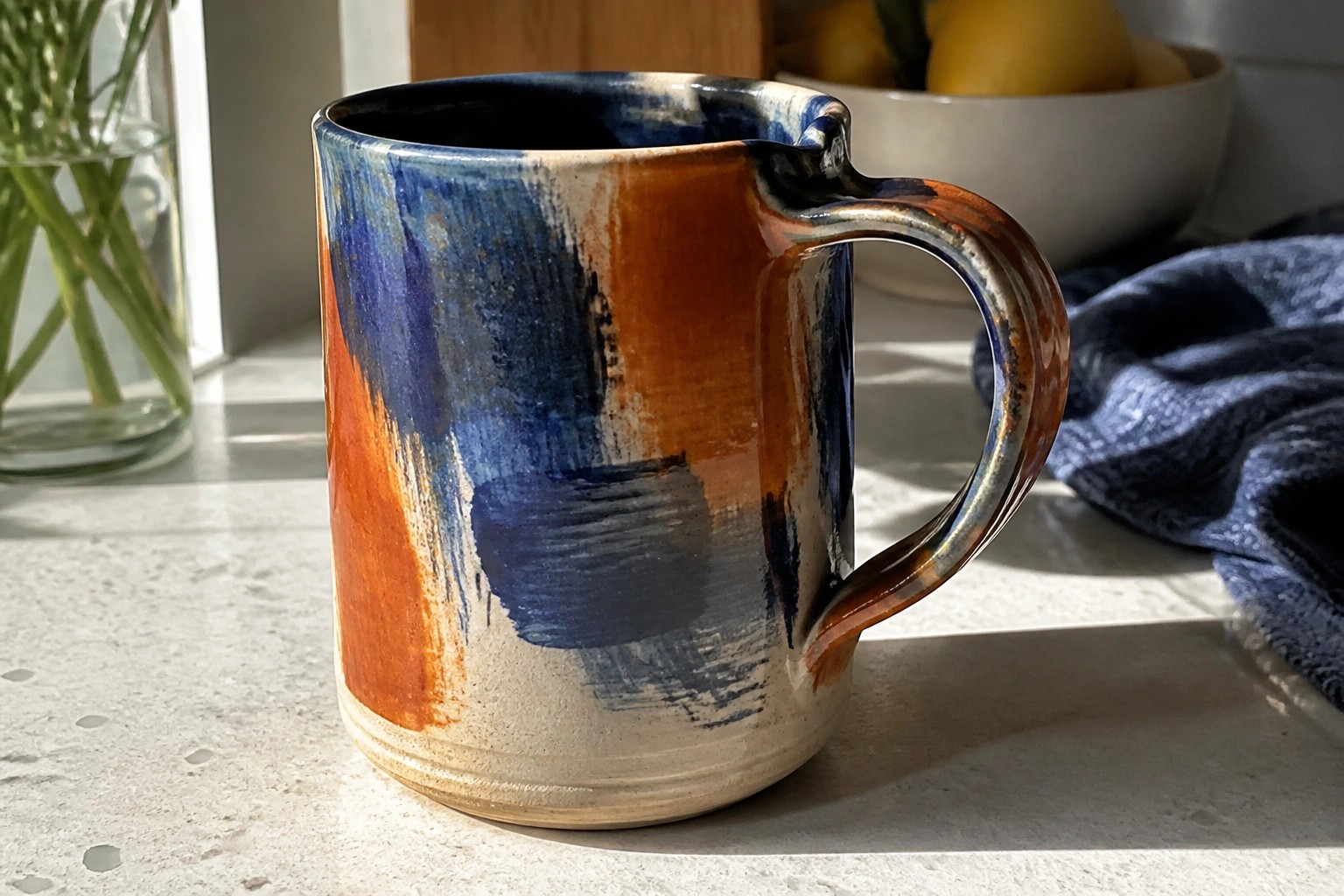
I have been working with pottery on and off for a while and I like to keep an eye out for designs that stand out.
These ideas are ones that feel artistic without requiring too much skill or equipment.
Some of them are things I have tried myself and others are variations I saw from other makers.
I thought they might give you some fresh inspiration if you are looking to try something new with your own pieces.
Nothing too complicated just ways to add a bit of personality to basic forms.
Abstract Glaze Ceramic Mug
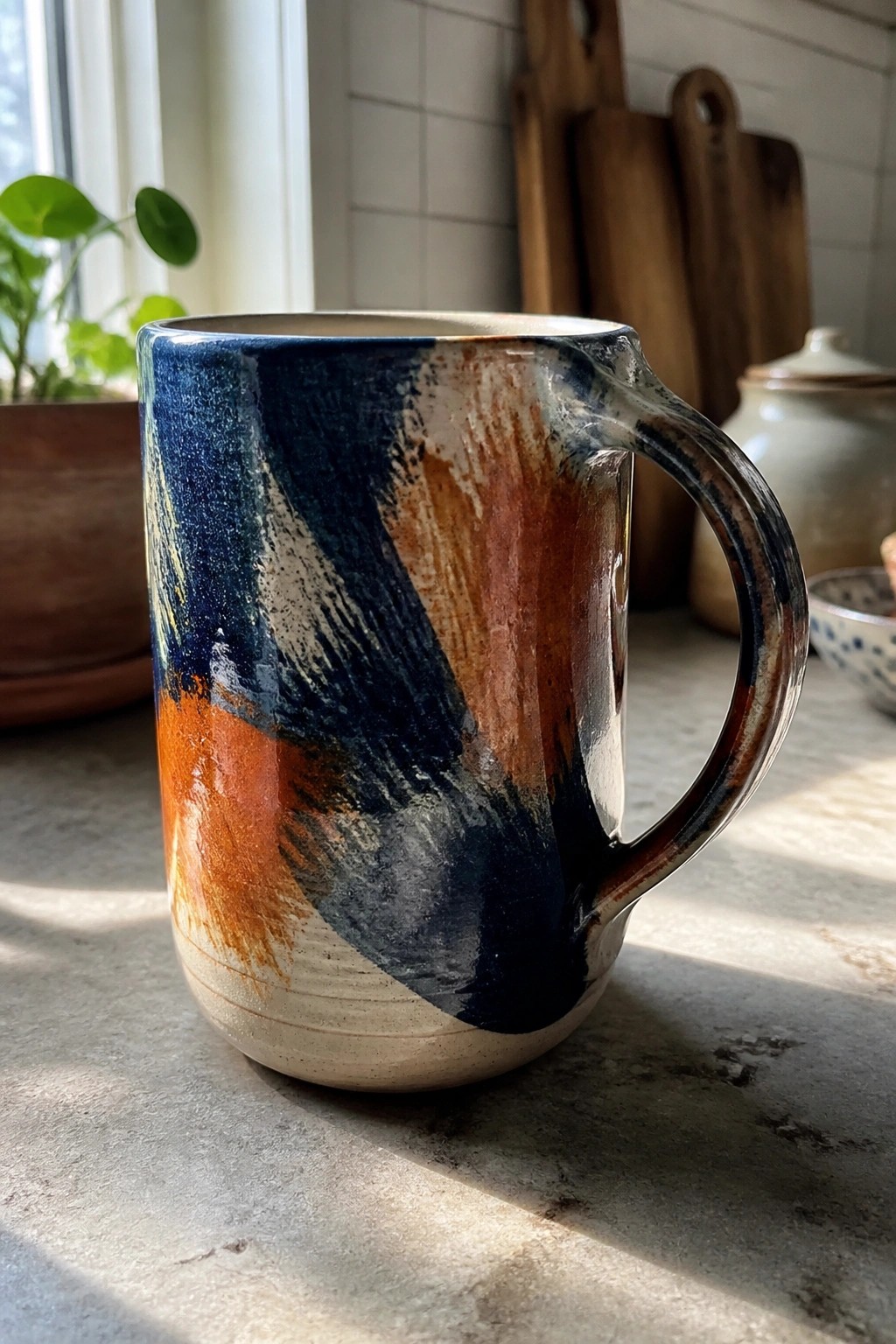
A ceramic mug finished with an abstract glaze pattern gives you a functional kitchen piece that still feels artistic. The design relies on broad, overlapping strokes of deep blue and warm orange across a light clay body, letting the colors blend and break where they meet. This kind of application works because the rounded surface shows the movement of the glaze without needing precise lines or extra decoration. It fits cleanly into the handmade mug category and stays practical for daily coffee or tea use.
What makes this idea useful is how simple it is to adapt the same color pairing to other forms like a small pitcher or a set of matching bowls. The loose brushwork hides minor inconsistencies, so you can try it even if your glazing is still developing. In a kitchen this kind of mug holds its own next to plain dishes without looking out of place. You could also scale the same glaze approach down to espresso cups if you want a matching set.
Small Ceramic Bowl with Wavy Rim and Reactive Glaze
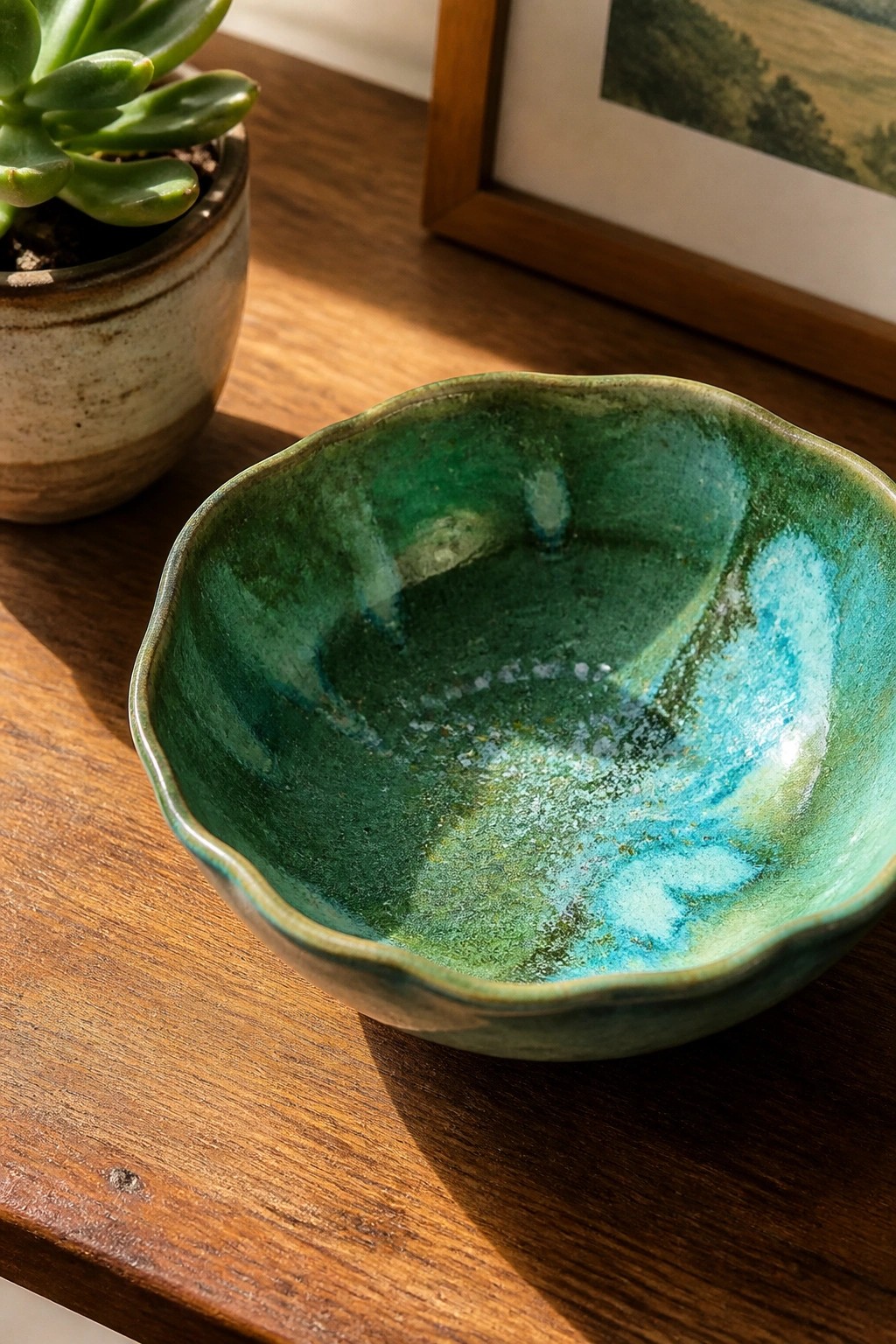
A small ceramic bowl with an uneven, scalloped rim offers an easy way to play with glaze flow on a compact form. The green and blue glaze layers shift across the surface and pool in places to form natural color breaks and light speckling. This style works as a catch-all dish rather than a full-size serving piece, so the focus stays on the surface rather than function.
The compact size lets you test new glaze combinations without using much clay or kiln space. You could repeat the wavy rim on a set of small dishes or scale the same shape into a larger tray for jewelry or desk items. A similar glaze approach on a planter would give the color movement a different use while keeping the same visual effect.
Relief Botanical Plate
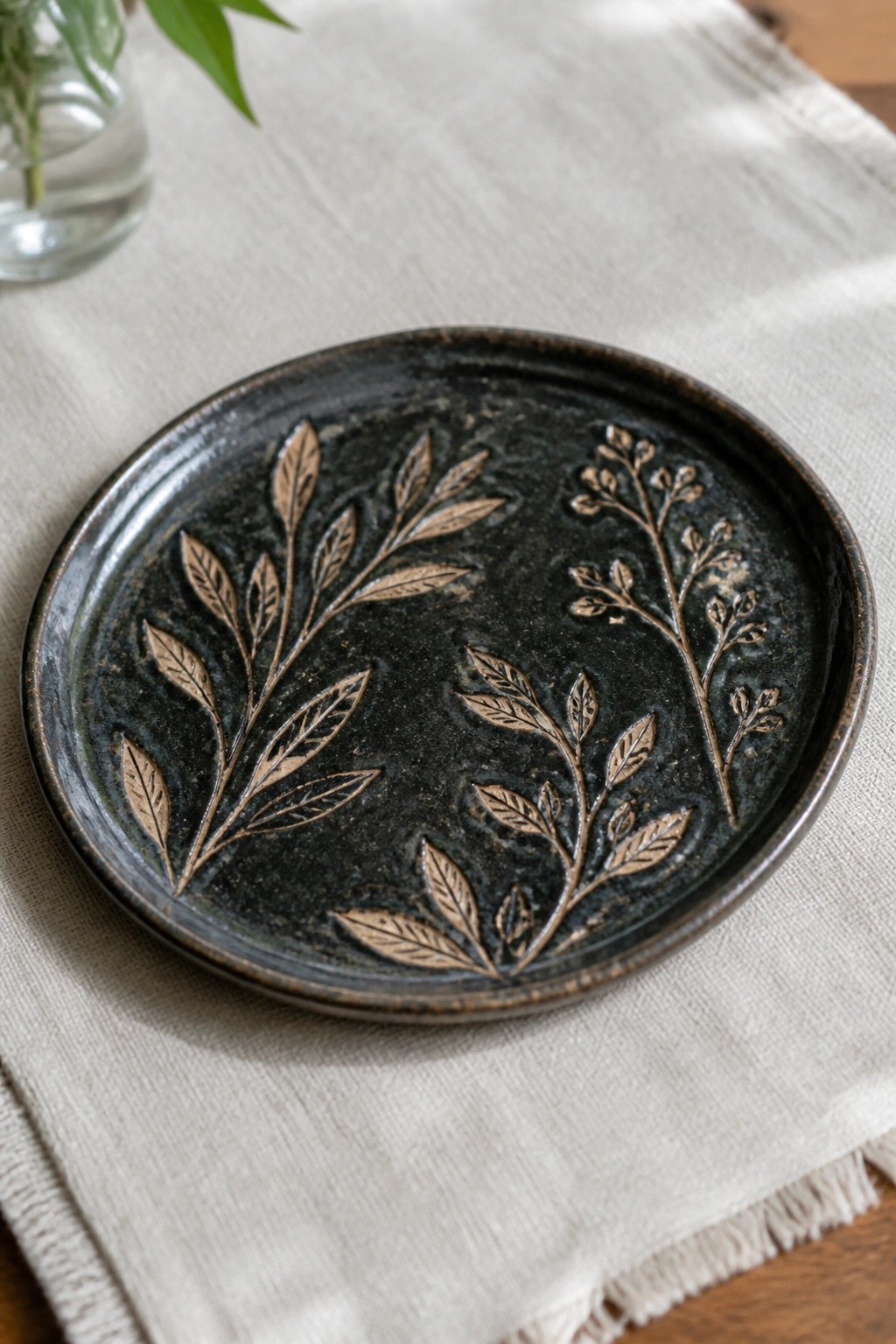
A round ceramic plate finished in a dark glaze carries raised leaf and branch forms that spread across the surface in an irregular but balanced layout. The lighter tone of the relief stands out cleanly against the deep background, so the shapes read clearly without added paint or color. This idea suits a decorative tray or shallow platter where the sculpted detail becomes the main feature.
The flat surface lets several plant motifs fit without crowding, so the same approach can be scaled down for smaller plates or coasters by using just one or two branches. In a kitchen or on a table the dark glaze keeps the design visible even when the piece holds food or objects. You can rework the motif onto a lidded jar or a simple bowl by keeping the relief elements but reducing their size.
Speckled Terrazzo Tray for Small Surfaces
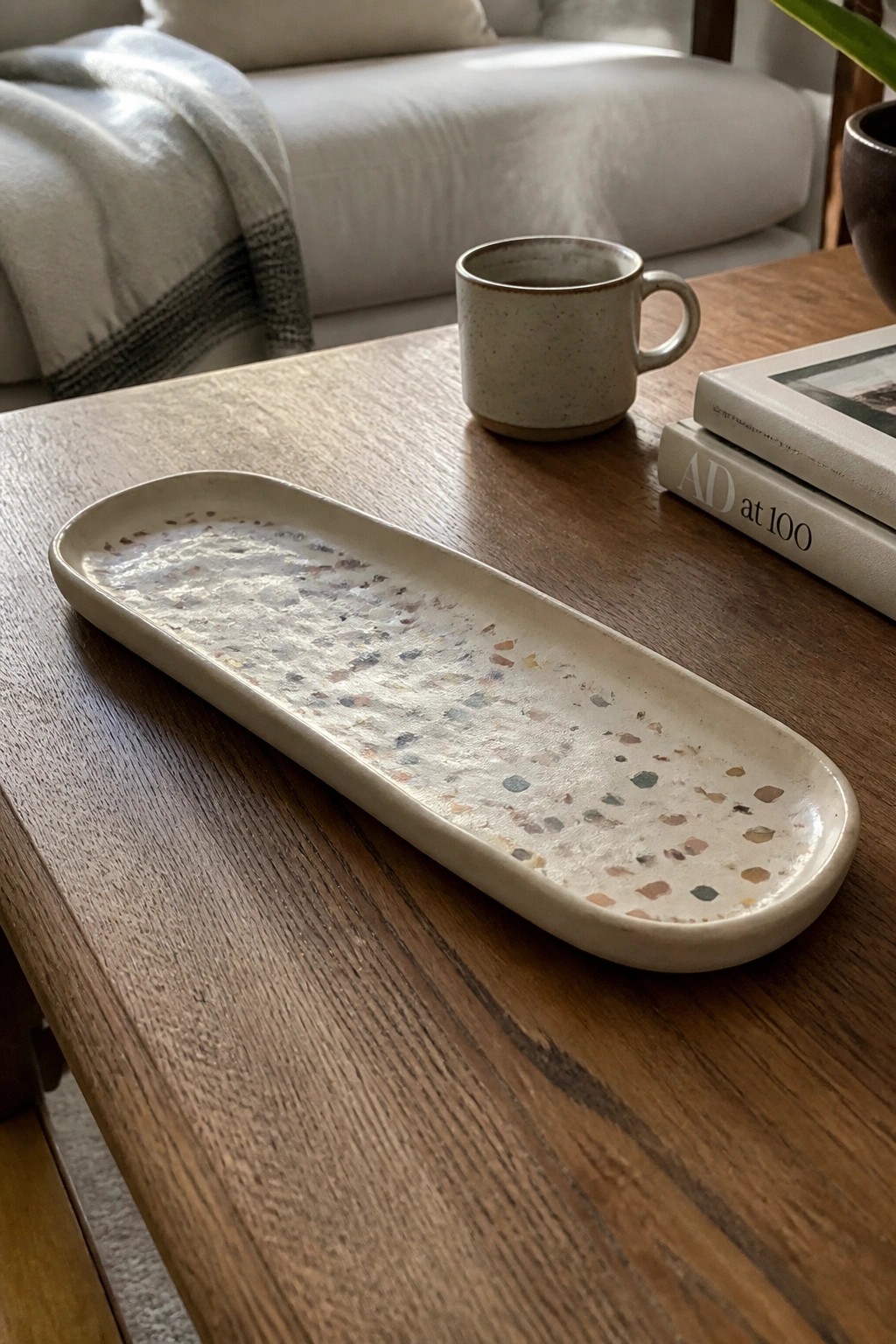
A long oval ceramic tray made with a light clay body and scattered multicolored specks gives a terrazzo look without extra painting. The narrow shape keeps it practical for holding keys, mail, or small tools while the speckled surface adds visual interest through contrast rather than pattern. This approach works by embedding small colored clay pieces into the main body before the final firing so the colors stay fixed in the glaze. The result is a simple tray that fits both desk and tabletop use.
The elongated form lets the piece sit on slim shelves or between other objects without crowding the space. You can change the speckle colors to match different rooms or shrink the same idea into a shorter version for bathroom counters. For a first try, test the color mix on a flat tile before committing to the full tray shape. The surface treatment also translates easily to coasters or shallow dishes if you want smaller practice pieces.
Fox-Shaped Clay Planter
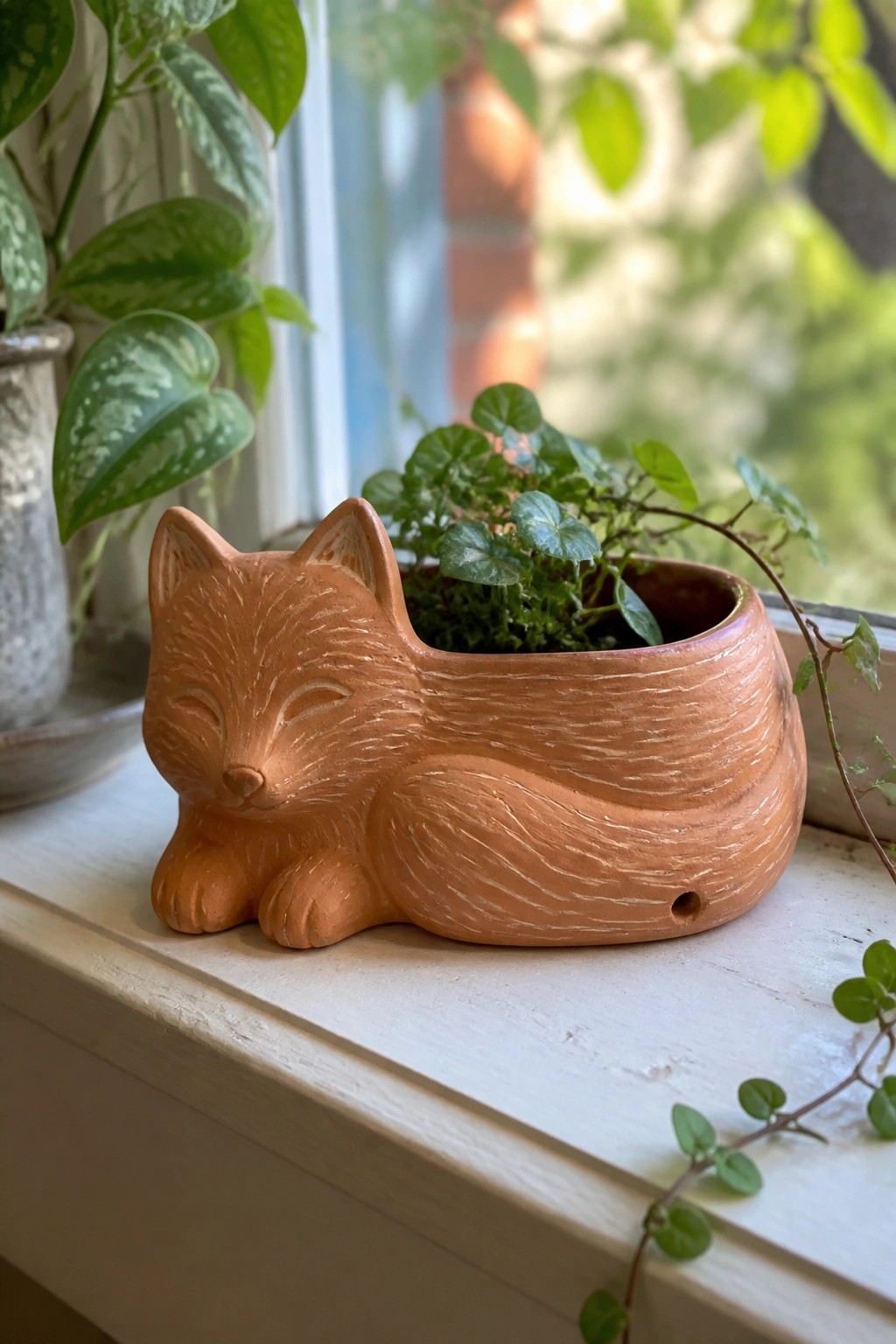
A clay planter formed as a resting fox creates a functional holder for small plants by placing the opening along the animal’s back. The design uses carved lines to suggest fur texture across the body and a simple face with closed eyes and upright ears. The terracotta color keeps the focus on the plant while the overall form stays compact enough for a windowsill or shelf. This turns a standard planter into a sculptural object that still holds soil and roots without extra pieces.
What makes this idea useful is how the low, horizontal shape stays stable on narrow surfaces where round pots might tip. You could rework the same base into a cat or dog by adjusting the ears and snout while keeping the plant opening in the same spot. The carved surface texture gives visual interest even before the plant grows in. For a gift, something like this works well because it combines a useful pot with a recognizable animal form that photographs clearly.
Speckled Ceramic Bird Figurine
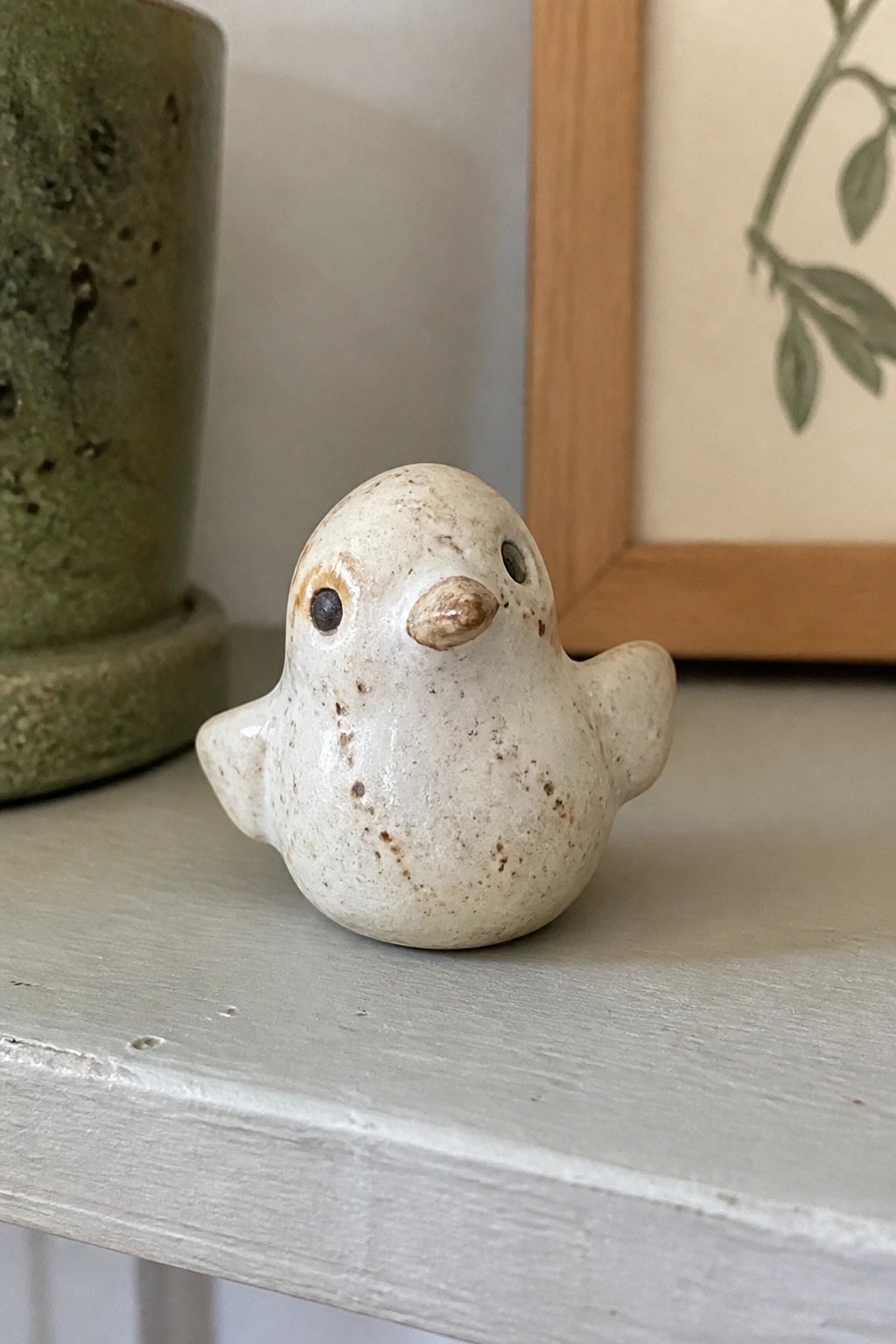
A small ceramic bird figurine makes a straightforward decor object that relies on a rounded body shape and basic pinched details for the wings and head. The off-white speckled glaze gives the surface subtle variation while the simple eyes and beak keep the form minimal. This approach fits the category of small sculptural decor that can sit on a shelf or desk without needing a functional purpose.
The small scale makes this easy to adapt into other animal shapes or to repeat in different glaze colors for a set. A piece like this works especially well as a quick project for gifts since it uses little clay and needs only basic hand-building. You could also scale the same idea up slightly for a paperweight or turn the form into a ring holder by flattening the base.
Ceramic Candle Holder with a Loop Handle
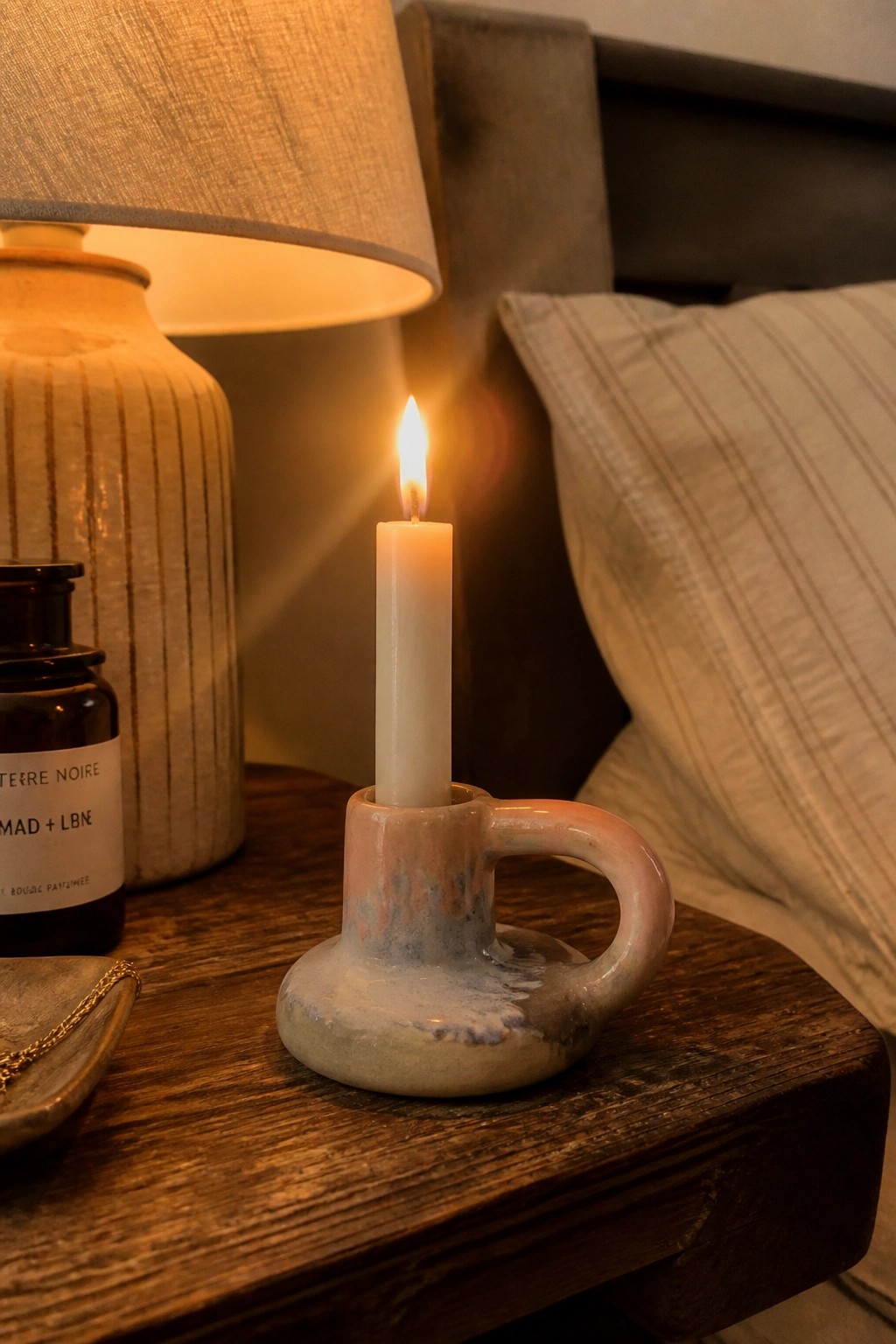
A small ceramic candle holder built with a rounded base and an attached loop handle keeps a standard pillar candle upright while making the piece easy to carry. The holder uses a simple cylinder form for the candle socket and a low, wide foot that adds stability on flat surfaces. A drippy, speckled glaze in soft pink, blue, and gray tones covers the exterior and shows the handmade clay texture underneath. This project belongs in the candle piece category and adds a functional handle without complicating the overall shape.
What makes this idea useful is the handle, which lets you move the lit candle without touching hot wax or the flame. The compact size fits on a bedside table, mantel, or windowsill where space is limited. You could rework the same form into a taller version for taper candles or skip the speckled glaze for a single matte color if you want a more minimal result. For a gift, this scale works well because it uses little clay yet still reads as a finished, usable object.
Ceramic Shell Spoon Rest with Wave Details
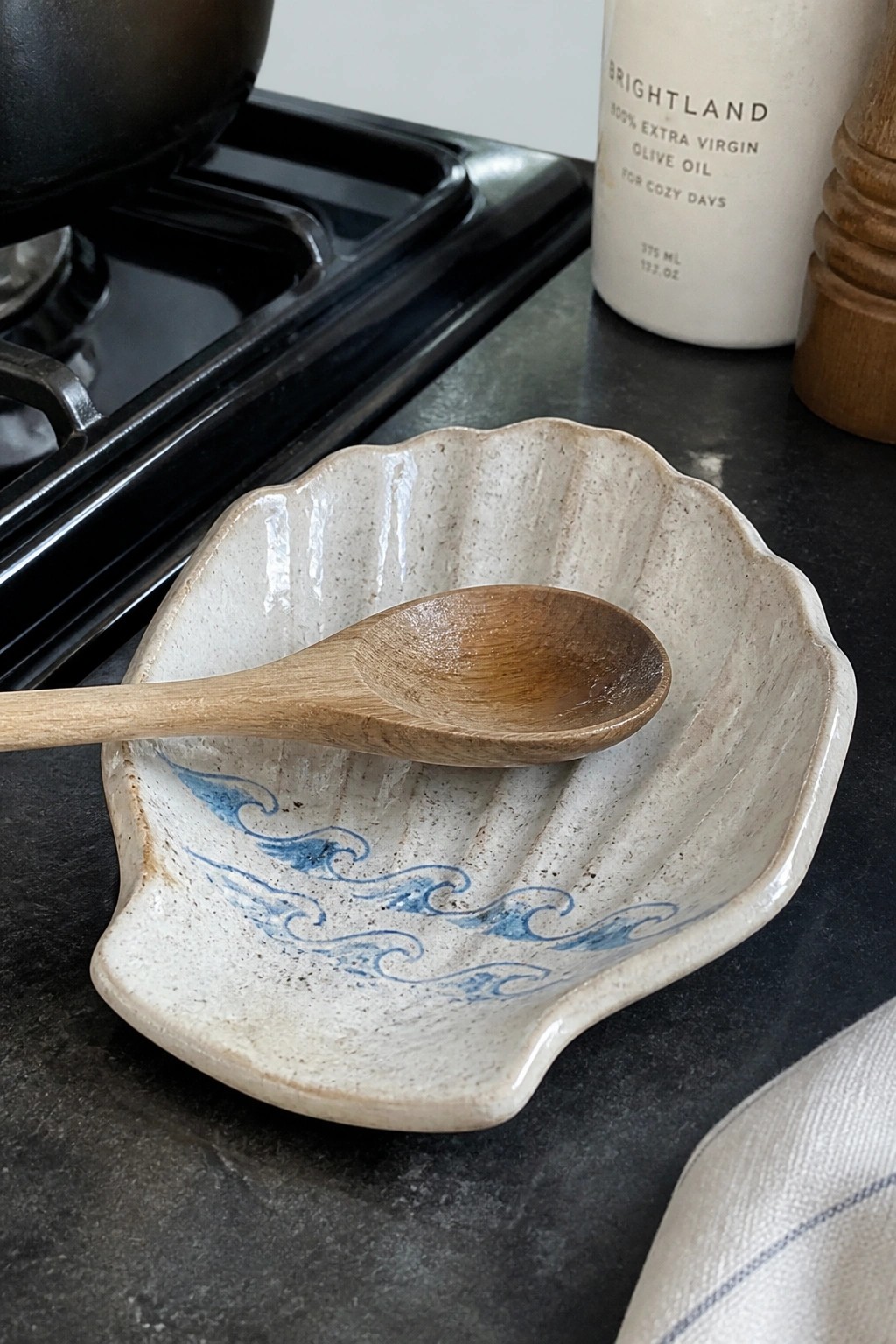
A shell-shaped ceramic dish works well as a spoon rest for the stove or counter. The form uses a scalloped edge and a speckled glaze, with simple blue wave lines painted across the surface to match the shell shape. This keeps the piece functional for holding utensils while adding a clear motif that reads as intentional rather than plain. It falls into the category of small kitchen ceramics meant for daily use.
What makes this idea useful is how the curved shell edge contains drips without needing extra height. You could adapt the same shape and wave painting for a soap dish or a small tray for rings by changing the size slightly. The painted detail helps it stand out from basic spoon rests when shared online, and the form works in either a full set or as a single piece.
Flower Shaped Ceramic Ring Dish
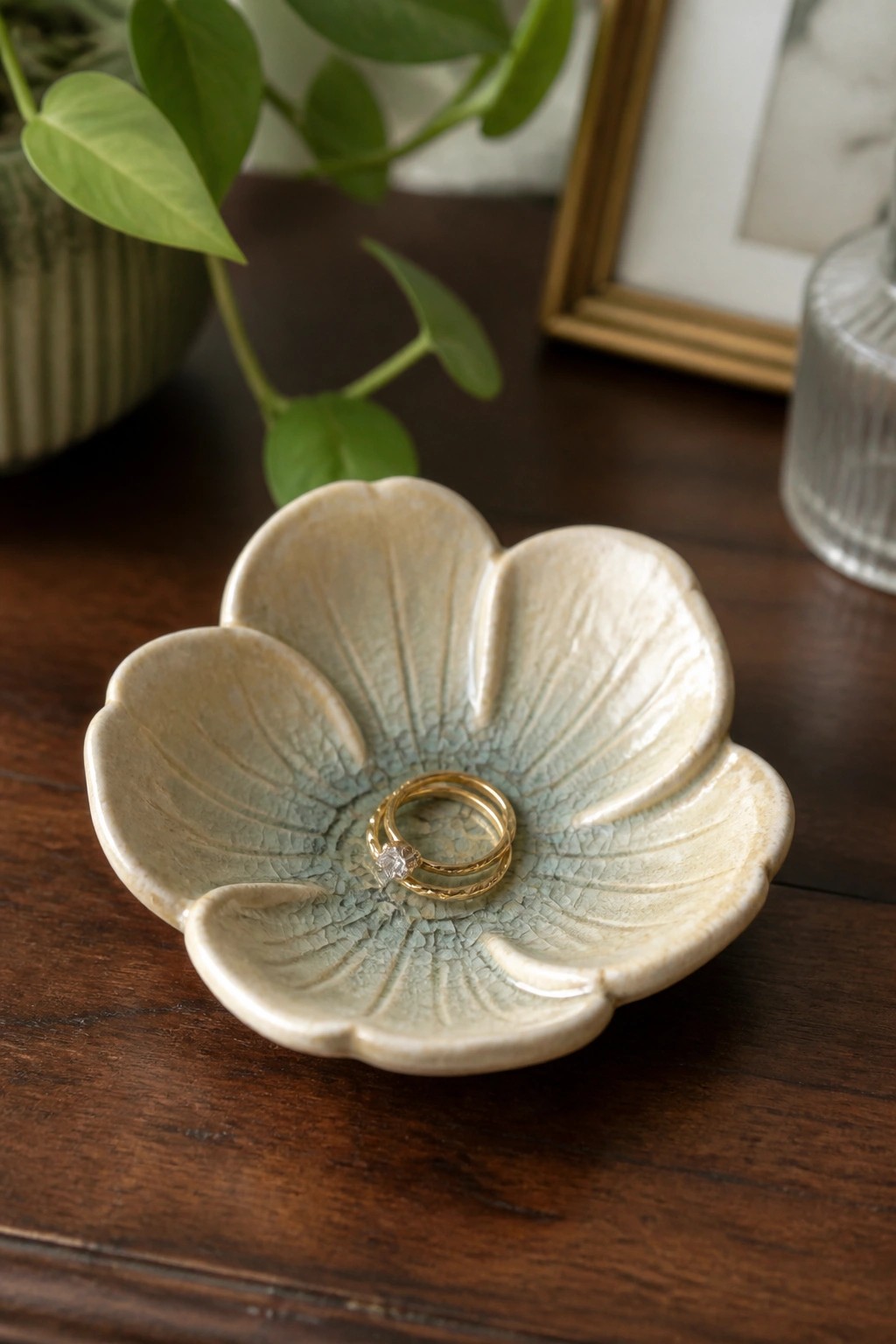
A small ceramic ring dish shaped like an open flower works well as a dedicated spot for rings and small jewelry. The overlapping petals form a shallow bowl that naturally contains items in the center while the edges stay low enough for easy access. A light crackled glaze in soft beige and muted green tones adds surface interest without competing with the overall form. This project falls into the ring dish category of simple, functional ceramics.
What makes this idea useful is how the compact size lets it sit on a nightstand or vanity without taking up much space. You can change the number of petals or swap the glaze colors to fit different color schemes, or scale the same shape down for earrings instead. For a gift, something like this combines storage with a finished look that feels more thoughtful than a plain tray. The flower outline also helps the piece photograph clearly for project shares.
Tall Dark Vase with Wheel-Thrown Texture
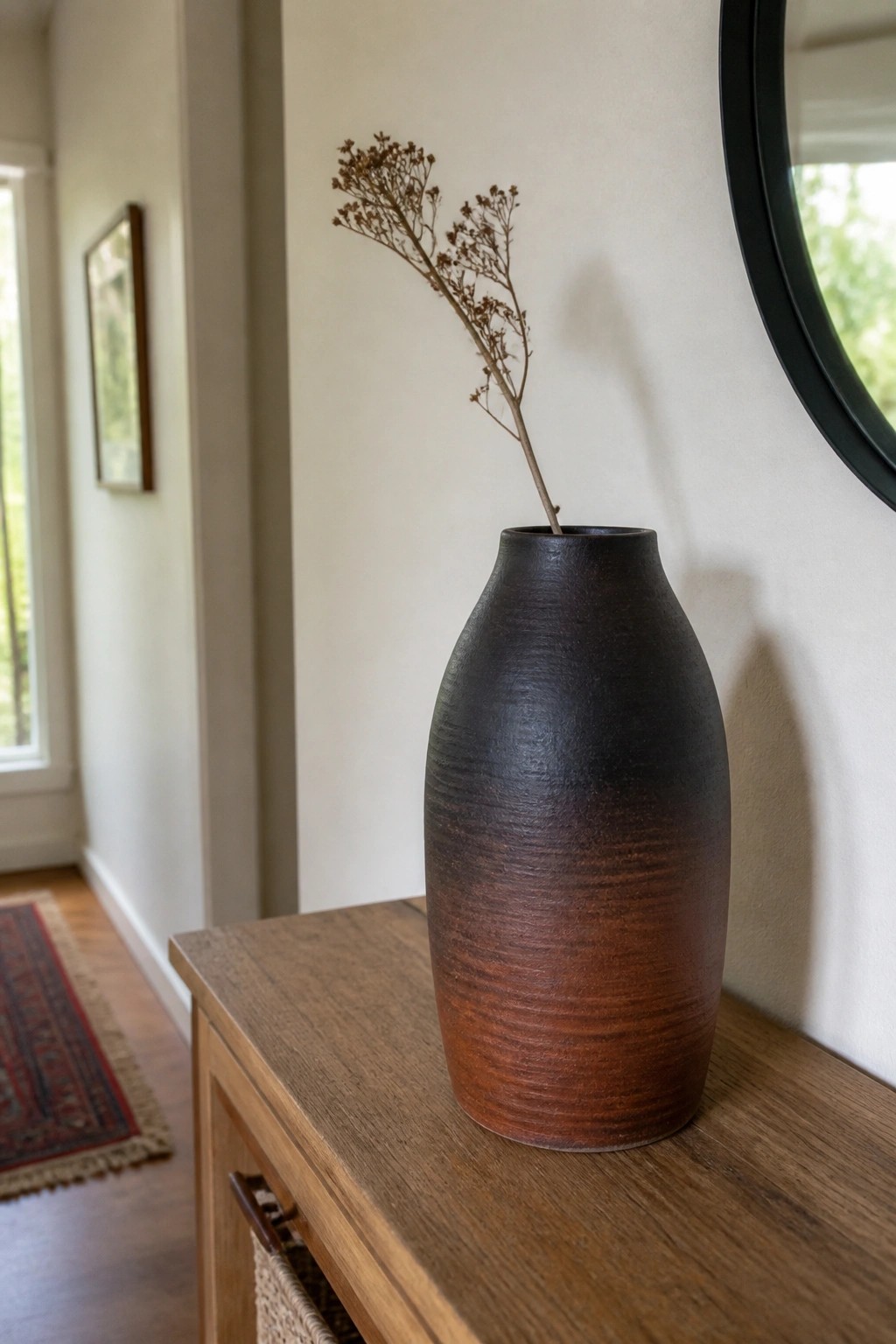
A tall ceramic vase with a narrow neck and a rounded body offers a straightforward shape that works for single stems or small dried arrangements. The surface carries fine horizontal ridges left from the wheel, finished in a dark brown to near-black gradient that highlights the form without extra decoration. This type of piece falls into the category of decor vases meant for quiet display rather than bold color or pattern.
The shape does a lot of the work here because the proportions keep it balanced on a shelf or console while leaving room for the stem to stand out. You could rework the same idea at a smaller scale for a desk or bathroom, or switch the dark finish for a lighter clay body if you want it to blend with brighter rooms. For a gift, pair the vase with a few dried stems so the recipient can set it out immediately.
Moon Phase Cutout Ceramic Holder
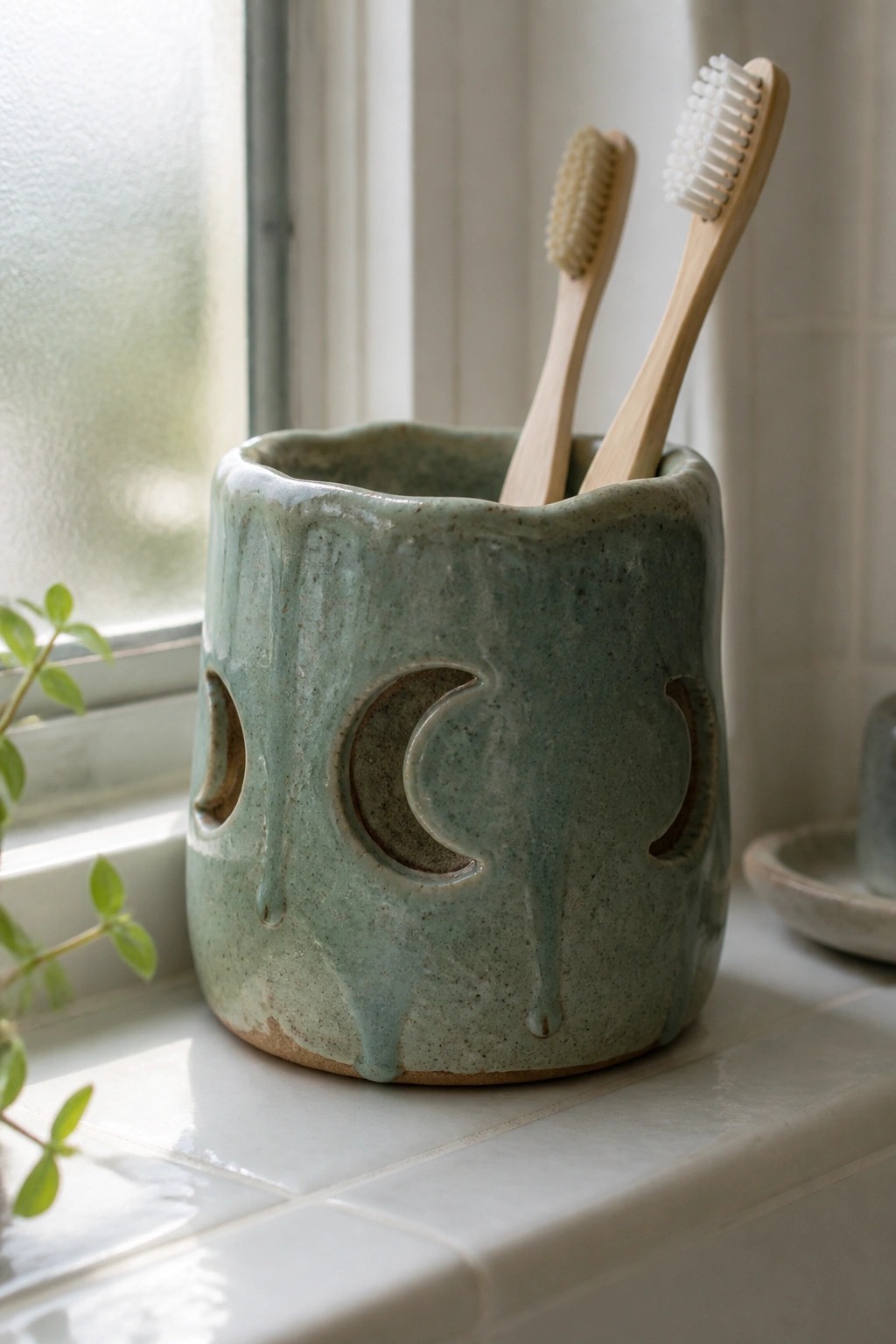
A handmade ceramic cup becomes a functional toothbrush holder when moon phase shapes are cut out of the walls before firing. The light green glaze pools and drips over the textured surface, highlighting the negative space of the crescents and full circles. This approach keeps the form simple while the cutouts add pattern without extra surface decoration.
What makes this idea useful is that the openings allow air to circulate around stored items and reduce moisture buildup. The same cylinder shape works for a desk pencil cup or small kitchen utensil holder if you swap the moon cutouts for stars or plain circles. Because the piece stays compact, it fits on narrow bathroom ledges or windowsills where larger containers would crowd the space.
Two-Well Ceramic Salt Cellar
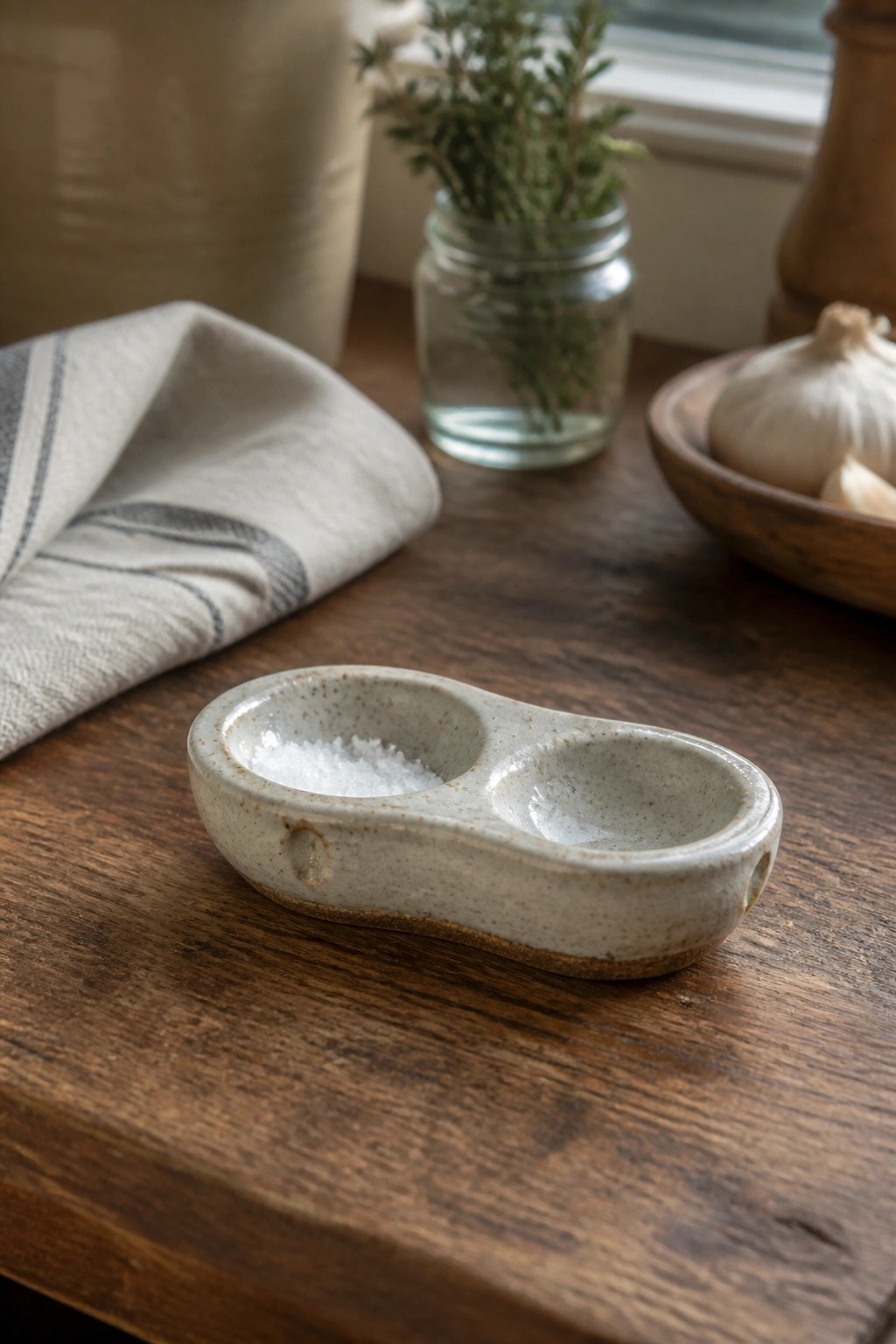
A small handmade ceramic dish with two connected wells works well as a salt cellar and seasoning holder. The oval shape keeps the compartments close together while the speckled glaze gives the surface a subtle texture that hides fingerprints and daily wear. This style fits into the kitchen item category and stays compact enough to sit on a countertop or table without taking up much space.
What makes this idea useful is the divided layout that keeps two different seasonings separate without needing extra dishes. The same basic form can be scaled up slightly for olive oil and balsamic or kept small for finishing salts on a dinner table. In a kitchen this kind of piece stays practical because it is easy to refill and clean, and the simple shape translates well to other glazes or even a matte finish if you want less shine.
Abstract Face Wall Plaque
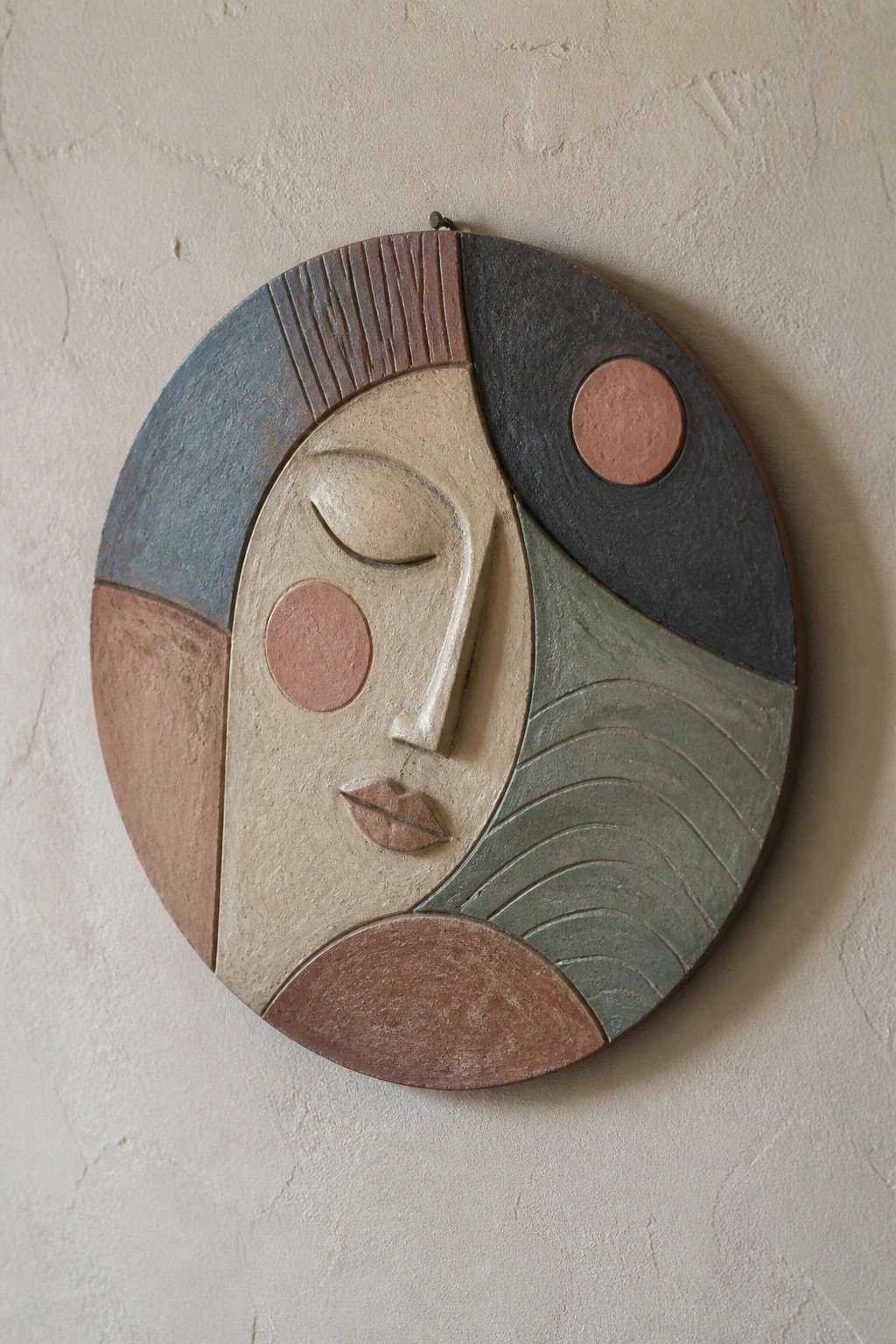
A round ceramic plaque makes a strong wall decor option when built around a relief-sculpted face. The design splits the circle into flat color fields while the central profile stands out through raised nose, lips, and brow. Simple incised lines mark the hair and lower curve, and two plain circles provide balance without extra detail. The result stays readable from a distance and works as a single large piece rather than a set.
What makes this idea useful is the way the round format hangs cleanly on its own. You can change the color blocks to suit a room or drop the extra circles if you want fewer elements to form. The same layout scales down to a smaller tile for a group of three or four on a larger wall. For a gift, the plaque needs only a hanging wire on the back and no further finishing.
Yarn Bowl with Spiral Side Cutout
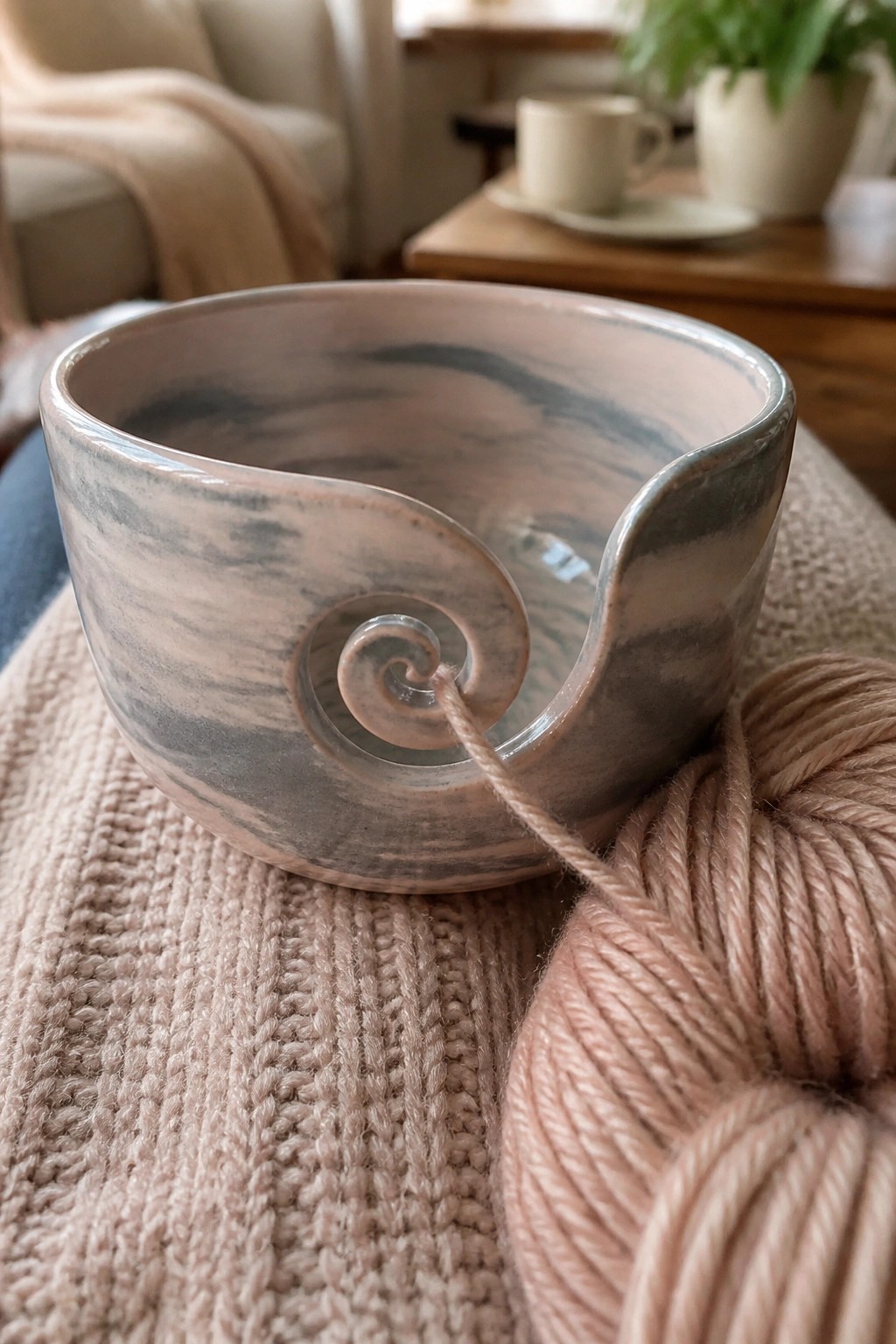
A yarn bowl is a ceramic container made to hold a ball of yarn so it stays put while you knit or crochet. This example uses a spiral cutout on the rim that the yarn threads through, which prevents the strand from slipping out or getting caught. The marbled pink and gray glaze covers the entire form and adds subtle variation without competing with the cutout shape. The wide, low profile gives the yarn room to turn freely inside.
What makes this idea useful is that the spiral cutout solves a real problem during actual use instead of just looking decorative. You could repeat the same cutout on a taller cylinder for larger skeins or scale it down for a smaller dish that holds embroidery floss. In a craft space the bowl keeps yarn contained on a table or lap without extra hardware. The marbled surface treatment also works on other simple forms like a lidded jar or a shallow tray if you want to carry the look across a set.
Painted Landscape on a Ceramic Mug and Saucer

A ceramic mug and matching saucer set carries a hand-painted mountain scene using soft greens and blues. The main image sits inside the mug while a smaller section of the same landscape appears on the saucer. This keeps the decoration contained to the functional surfaces without covering the entire piece.
The shape does a lot of the work here because the painting stays mostly hidden until the mug is lifted. You can adapt the same approach to a small bowl or plate by painting just the lower portion of the scene along the inside curve. In a kitchen this kind of piece works as everyday drinkware while still offering a visual detail that stands out in photos. For a gift the format stays simple enough to paint yet feels more personal than a plain mug.
Leaf-Shaped Ceramic Ring Dish
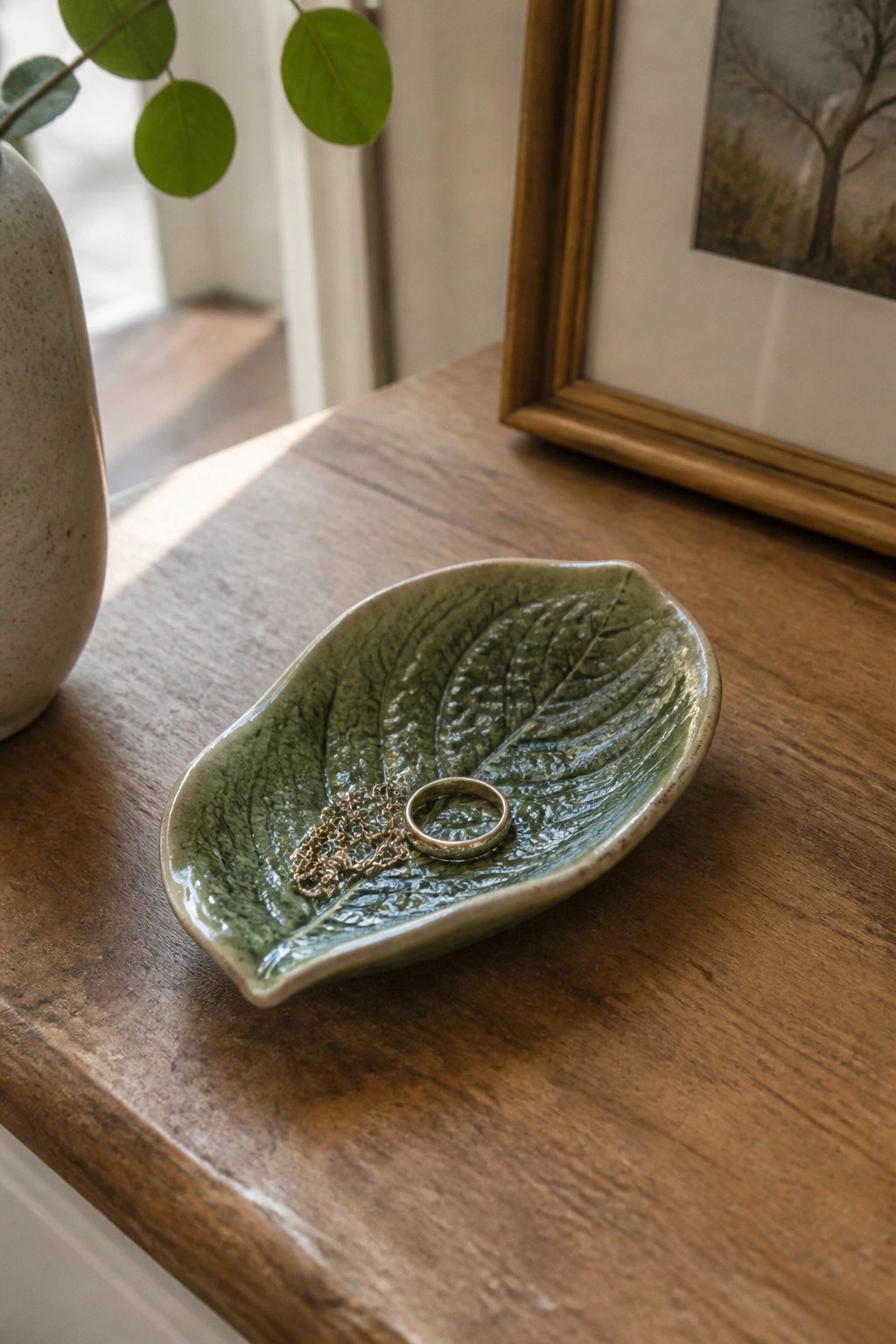
A leaf-shaped ceramic dish makes a compact ring holder or small jewelry tray. The form is pressed or sculpted to show leaf veins, then covered in a glossy green glaze that pools in the details and gives the surface a wet, natural look. This keeps the piece low and stable so rings or chains stay in place without sliding off. It belongs to the category of small functional trays meant for daily use rather than display only.
The small scale makes this easy to adapt for a nightstand, entry table, or bathroom counter. You could switch the glaze to a matte earth tone or shorten the leaf shape to fit a narrower ledge. For a gift, something like this takes little clay and still feels finished once glazed. The same idea could be reworked into a shallow soap rest by widening the center slightly.
Ridged Ceramic Soap Tray for Daily Bathroom Use
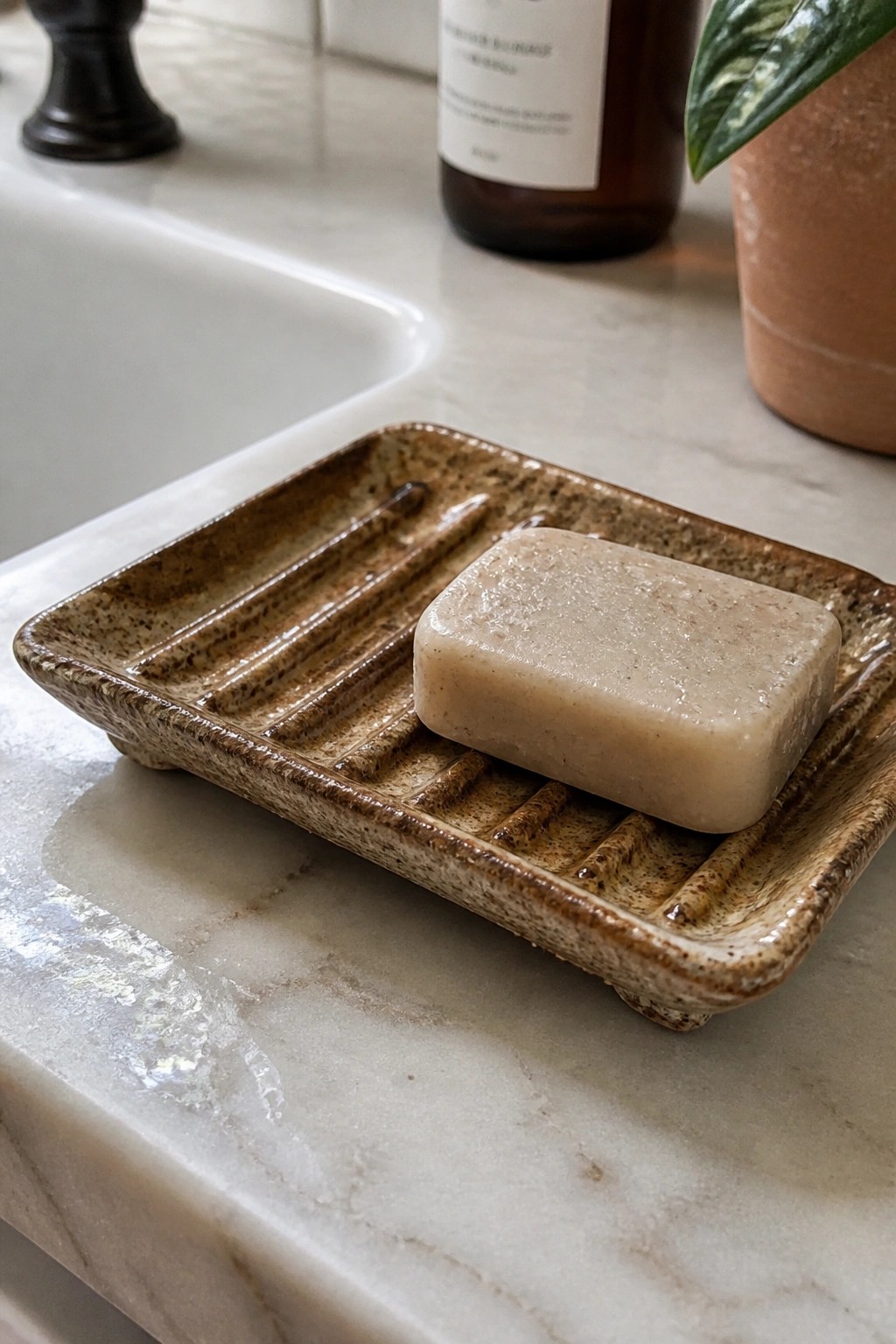
A rectangular ceramic soap dish with evenly spaced ridges across the base elevates the bar so water drains through the grooves instead of pooling underneath. The piece uses a speckled brown glaze that adds subtle texture while keeping the surface easy to wipe clean. This bathroom item works well because the ridges handle both drainage and grip in one simple form without needing separate inserts or feet.
What makes this idea useful is how the same ridged layout can be lengthened into a double soap holder or shortened into a small travel version. You could swap the brown glaze for a lighter tone to match different tile colors or add a shallow lip around the edge if you want to catch more drips. The compact size also makes it a straightforward project for testing new glaze combinations on a functional shape that gets used every day.
Interlocking Loop Ceramic Sculpture
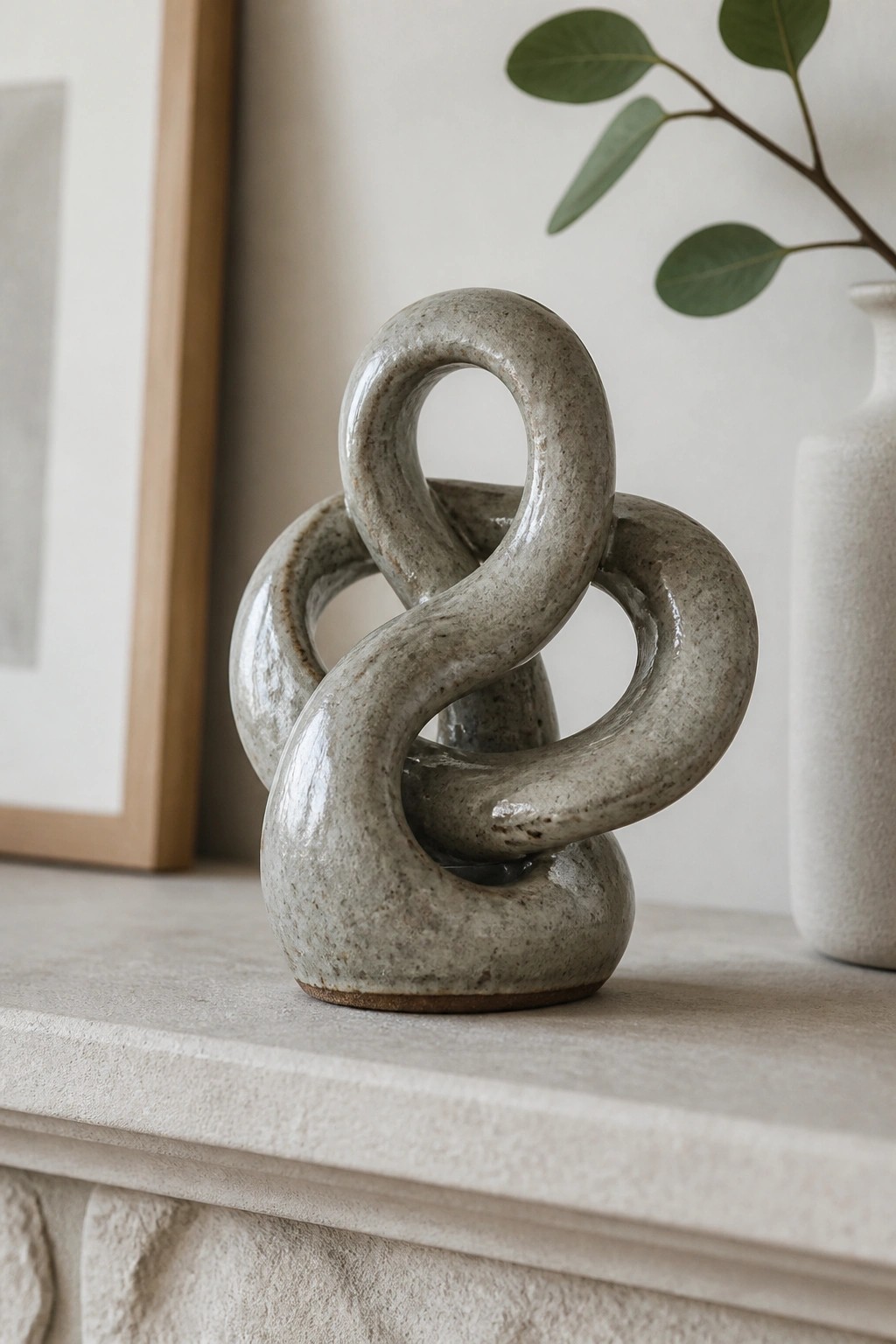
A ceramic sculpture made from thick tubular forms that twist and cross through each other creates an abstract knot shape. The design relies on smooth, continuous curves and overlapping sections rather than surface patterns or added details. A speckled matte glaze covers the entire piece, giving it a subtle texture that emphasizes the handmade form. This fits the category of abstract decor objects meant for display rather than function.
What makes this idea useful is how the looped structure can be scaled up or down depending on shelf space. You could rework the same twisting layout with different glaze colors or simplify it to fewer loops for a quicker build. A piece like this works especially well as a mantel or console accent where the shape stands out on its own. It would also translate easily to a smaller version for a desk or side table.
Marbled Glaze Pitcher with Branch Handle
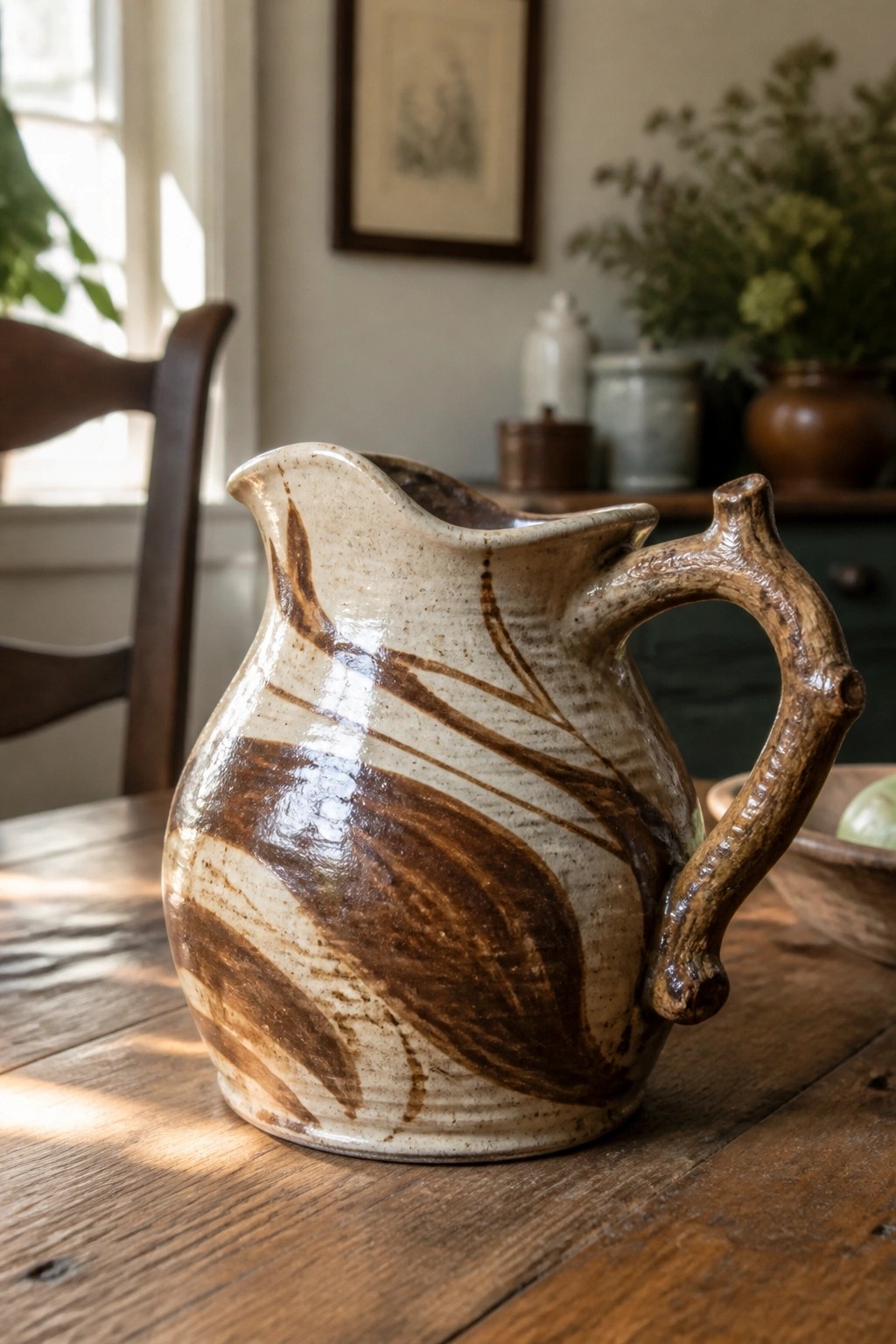
A thrown ceramic pitcher gains interest when covered in a flowing marbled glaze that mixes brown and off-white tones across the surface. The handle shaped like a rough branch creates a clear contrast with the rounded body and gives the form a distinct profile. This kind of project sits in the kitchenware category and works as both a functional serving piece and a display object.
What makes this idea useful is that the marbled pattern can be recreated on pitchers of different sizes without needing complex tools. The branch handle can be simplified or repeated on mugs and small jugs to build a matching set. In a kitchen this shape holds up well on open shelves or a dining table where the glaze pattern draws attention on its own.
Frequently Asked Questions
What materials do I need to start creating artistic pottery designs like those in the article?
You will need basic clay such as stoneware or porcelain for most designs, a pottery wheel or hand building tools if you prefer sculpting by hand, and a kiln for firing. Gather glazing supplies including brushes, underglazes, and clear coats to add color and shine. Start with simple tools like ribs, sponges, and carving needles to shape unique textures and forms. Practice on small test pieces to see how your clay responds before committing to larger artistic projects.
How can beginners adapt the creative pottery ideas if they lack advanced equipment?
Focus on hand building techniques such as pinching, coiling, or slab construction to replicate many of the listed designs without a wheel. Use everyday items like cookie cutters or textured fabrics to imprint patterns that feel artistic. Begin with air dry clay for practice and move to kiln fired pieces once comfortable. Watch free online tutorials for specific steps on adding elements like handles or decorative cutouts to keep the work feeling original and personal.
What glazing and finishing tips help make pottery designs appear more artistic?
Apply multiple thin layers of glaze in contrasting colors to create depth and movement on your pieces. Experiment with techniques like sgraffito where you carve through a top layer to reveal the clay beneath for intricate patterns. Fire at the recommended temperature for your clay type to achieve vibrant results and consider adding metallic lusters for a final artistic touch. Always test glazes on sample tiles first to avoid unexpected color changes during firing.
How do I avoid common mistakes when trying these pottery design ideas at home?
Work with clay that has the right moisture level to prevent cracking during drying and always allow pieces to dry slowly under plastic wrap. Avoid overcomplicating designs at first by starting with one or two elements from the list and building up gradually. Keep your workspace clean to prevent dust from affecting surfaces and label all tools and materials clearly. Join local pottery groups for feedback on your progress to refine techniques over time.
Where can I find more inspiration to expand on the 19 pottery ideas mentioned?
Visit art museums or online galleries featuring contemporary ceramic artists to spark new variations. Sketch daily observations from nature or architecture and translate those into clay forms. Experiment by combining two ideas from the article such as adding organic shapes to geometric bases. Document your experiments in a notebook with photos to track what works and revisit successful pieces for further development.

Pottery Path is my cozy corner of the internet where I share clay ideas, pottery inspiration, and simple projects you can recreate at home. I love exploring everything from air dry clay to handbuilt pottery to cute minis that brighten your day. My goal is to make clay crafting feel easy, fun, and welcoming for anyone who wants to try it.
You will find beginner friendly tutorials, creative pottery painting ideas, and lots of warm inspiration for slow and happy crafting. If you enjoy hands on creativity, this space will feel like home.