You can indeed root a pine tree branch, but it requires specific techniques and care. Using the right conditions and methods will increase your success rate significantly, allowing you to propagate new pine trees from cuttings.
Essential Tools for Rooting Pine Cuttings
Before starting the rooting process, gather the necessary supplies to ensure success. You’ll need sharp pruning shears, a rooting hormone, a pot with drainage holes, and a well-draining soil mix. These items are crucial for creating an optimal environment for your cuttings.
| Item | Purpose |
|---|---|
| Pruning Shears | To make clean cuts |
| Rooting Hormone | To stimulate root growth |
| Pot | To hold the cuttings |
| Well-Draining Soil | To prevent rot |
Recommended Products
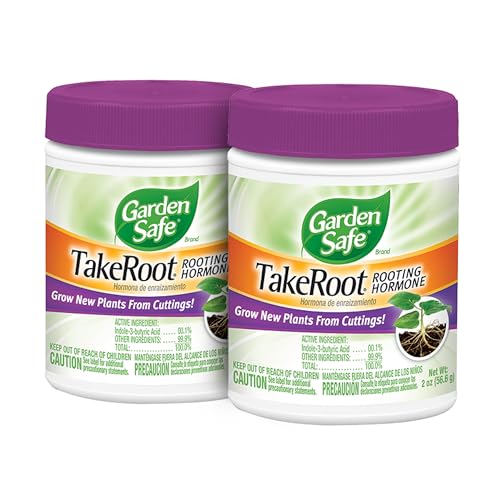
PROMOTES ROOTING: Rooting hormone grows new plants from cuttings

THE ULTIMATE ROOTING BOOSTER: Specially formulated with all-natural rooting hormone and vitamins, our propagation drops dramatically speed up root development and strengthen plants at every stage, from delicate cuttings to mature houseplants.
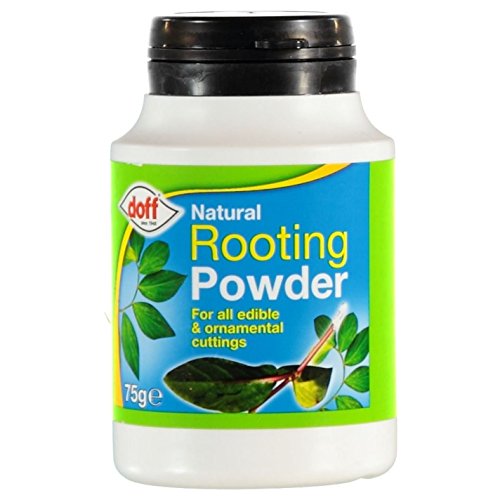
Encourages rooting in all cuttings
Pine Cutting Preparation Techniques
Cutting preparation is a critical step in the rooting process. Choose healthy, semi-hardwood branches that are 4 to 6 inches long. Make a clean cut just below a node, as this is where roots are more likely to form. Remove any needles from the lower half to minimize moisture loss.
-
Select a healthy branch.
-
Cut 4 to 6 inches below a node.
-
Remove lower needles.
-
Dip the cut end in rooting hormone.
Optimal Conditions for Successful Rooting
The environment plays a significant role in the rooting process. Use a pot filled with a well-draining soil mix. Water the soil thoroughly before planting the cuttings. Cover the pot with a plastic bag or a clear plastic dome to maintain humidity levels. Ensure the cuttings receive indirect sunlight to avoid scorching.
-
Fill the pot with soil.
-
Water the soil until moist.
-
Insert the cuttings into the soil.
-
Cover with plastic for humidity.
Recommended Products

【Clear Nursery Pots with Humidity Dome】Our 6 inch transparent plant nursery pots come with humidity dome featuring adjustable ventilation holes, ensuring optimal airflow and moisture control for healthy plant growth.
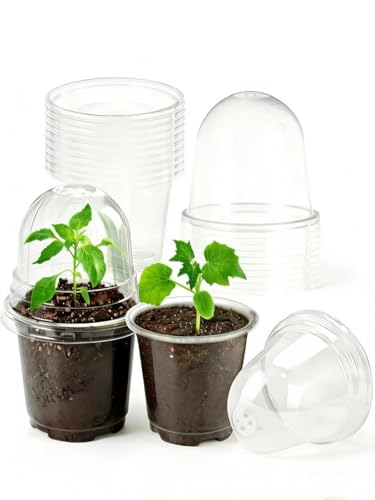
【Package】You will receive 10 pcs clear plant nursery pots, 10 pcs humidity domes.
Package includes: You will receive 50 transparent plant humidity covers, sufficient quantity and suitable size to meet your daily use and replacement needs
Rooting Cuttings: Monitoring and Care Tips
Regular monitoring is essential for successful rooting. Check the soil moisture regularly and ensure it remains damp but not soggy. Remove the plastic cover for a few hours each day to allow for air circulation. After a few weeks, gently tug on the cuttings to check for resistance, indicating root development.
-
Check soil moisture daily.
-
Remove cover for air circulation.
-
Tug on cuttings for resistance.
Rooting Pine Cutting Challenges and Solutions
Even with the best efforts, you may encounter issues while rooting pine cuttings. Common problems include mold growth, which can occur from excessive moisture, and lack of root development. If mold appears, remove the cover and allow the cuttings to dry out slightly. If roots do not develop, consider using fresh cuttings.
| Issue | Solution |
|---|---|
| Mold Growth | Reduce moisture and improve air circulation |
| No Root Development | Try new cuttings or adjust conditions |
Recommended Products

3-in-1 IBA+NAA+Mycorrhizae-You’ve Never Seen This Combo: Most rooting products rely on just one ingredient. We combine all three in our root hormone for cuttings for broader plant compatibility. IBA excels on woody, hard-stemmed deciduous plants. NAA drives taproot development. R. irregularis mycorrhizae suit 95% of home garden plants—vegetables, flowers, fruit trees, herbs, woody ornamentals—adapting to variable soil conditions. Three protections, one formula—survival starts at planting.


【Optimal Aeration and Drainage】The unique properties of perlite and vermicutite ensure that roots receive ample oxygen while excess water drains away, preventing root rot and promoting healthy root development
Transplanting Pine Cuttings for Growth
Once roots have developed, it’s time to transplant your cuttings into larger pots or directly into the ground. Choose a location with partial sunlight and well-draining soil. Water the new plants thoroughly after transplanting to help them settle into their new environment.
-
Prepare a larger pot or garden bed.
-
Carefully remove the rooted cutting.
-
Place it in the new location.
-
Water thoroughly to settle the soil.
Long-Term Care Strategies for Pine Trees
After transplanting, long-term care is crucial for the health of your new pine trees. Regular watering is essential, especially during dry periods. Fertilize with a balanced fertilizer in the spring to promote growth. Monitor for pests and diseases, addressing any issues promptly to ensure the trees thrive.
-
Water regularly, especially in dry spells.
-
Fertilize in spring for growth.
-
Monitor for pests and diseases.
Avoid overwatering to prevent root rot.
By following these steps and guidelines, you can successfully root a pine tree branch and cultivate new trees. This process requires patience and attention to detail, but the reward of growing your own pine trees is worth the effort.

My interest in trees started when I first saw the giant sequoias in Yosemite.I was a teenager then, and I remember thinking, “I need to learn more about this.”That moment stuck with me.A few years later, I went on to study forestry at Michigan Tech.
Since graduating, I’ve worked in a mix of hands-on tree care and community education.I’ve spent over ten years helping people understand how to plant, maintain, and protect the trees in their neighborhoods.I don’t see trees as just part of the landscape.They are living things that make a real difference in our daily lives.