Ever wondered how much water flows from your garden hose? You’re not alone. Many homeowners face the challenge of watering their gardens efficiently while keeping an eye on water usage. Whether you’re nurturing delicate plants or washing your car, knowing the exact amount of water your hose delivers can make a big difference.
Key Takeaways
- Understanding garden hose specifications, such as diameter and length, is crucial for determining water flow and pressure, affecting watering efficiency.
- Larger hose diameters allow for higher flow rates, with a 5/8-inch hose delivering about 8-12 gallons per minute at 60 psi, while a 1-inch hose can deliver 20-30 gallons per minute.
- Hose length impacts water pressure; longer hoses often reduce flow rate, making it essential to choose the appropriate length for your watering needs.
- Calculating water usage over time involves knowing your hose’s flow rate and can be done by multiplying flow rate by the watering duration for precise application.
- Implementing water conservation practices, such as using soaker hoses and monitoring usage, contributes to sustainable gardening and prevents water waste.
- Consider alternative watering methods like drip irrigation and rainwater collection to enhance efficiency and support healthier plant growth.
Understanding Garden Hose Specifications
Understanding the specifications of your garden hose is essential for knowing how much water it delivers. Key factors include hose diameter and length, which both directly affect water flow.
Recommended Products

AWARD-WINNING: HGTV, USA Today and Best Reviews voted Best Overall Garden Hose

Wide Applications: The water hose can be cut to whatever length you need—long enough to reach the roof, front yard or backyard, or short enough to serve as a lead-in hose. The standard 3/4 in GHT connectors fit compatible outdoor faucets and watering accessories. Please note that the fittings must be installed before the first use.

Kink-Resistant Garden Hose: Tired of tangled hoses? Crafted from hybrid rubber with a 360-degree swivel fitting, this water hose 100ft helps resist kinks. Our flexible garden hose helps maintain steady water flow across the lawn, making yard work easier
Hose Diameter
Hose diameter impacts water pressure and flow rate. Standard diameters range from 1/2 inch to 1 inch. A larger diameter allows more water to flow through, making it ideal for larger gardens or heavy-duty tasks. For example, a 5/8-inch hose typically delivers about 17 gallons per minute at standard water pressure. In contrast, a 1/2-inch hose may deliver around 9 gallons per minute. Choosing the right diameter helps ensure efficient watering or washing.
Hose Length
Hose length affects the volume of water reaching your plants. Standard lengths vary from 25 feet to 100 feet or more. Longer hoses can lead to reduced water pressure and flow rate. For instance, a 100-foot, 5/8-inch hose could lose around 10-20% of its flow compared to a 50-foot hose. To minimize pressure loss, minimize excess length when possible and use hoses that match your watering needs. Consider your garden layout to determine the optimal hose length.
Calculating Water Flow Rate
Understanding how to calculate water flow rate from your garden hose helps you manage water usage efficiently. Factors such as hose diameter, length, and water pressure significantly influence this rate.
Recommended Products
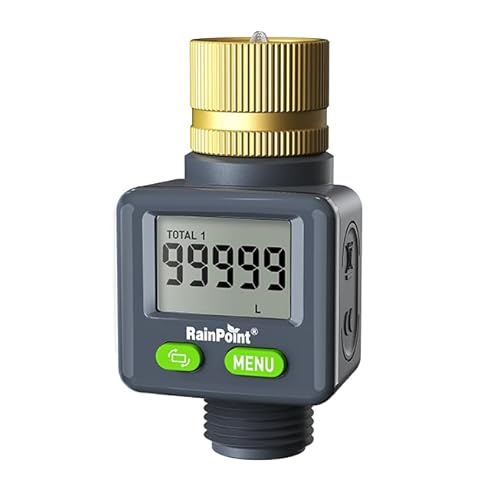
4 Measurement Modes: Short press the menu button to switch between measurement modes from FLOW RATE (AUTO) / LAST / TOTAL 1 / TOTAL 2. Flow Rate Mode: Real-time water flow rate. Last Mode: Last-time water usage. Total 1 & Total 2 Mode: The total water consumption for different time periods can be calculated as needed. You can measure the total water consumption for a single transaction or multiple transactions.

Durable Metal Body – This water flow meter is constructed with a solid aluminum alloy housing that is much stronger than plastic, offering excellent impact resistance and helping prevent cracking during use or installation.

Heavy-Duty Metal Body – This water flow meter features a solid aluminum alloy housing for better impact resistance than plastic, helping prevent cracking during use or installation.
Factors Affecting Flow Rate
- Hose Diameter: Larger diameters allow more water to flow. Common diameters include 1/2 inch, 5/8 inch, and 1 inch. A 1-inch hose, for example, can deliver up to 40% more water than a 5/8 inch hose.
- Hose Length: Longer hoses often reduce water pressure. For example, a 100-foot hose may have lower flow than a 25-foot hose. If you need to use a longer hose, consider upgrading the diameter to compensate for pressure loss.
- Water Pressure: Higher water pressure boosts flow rates. Residential water pressure typically ranges from 40 to 60 psi (pounds per square inch). A pressure of 60 psi can help achieve better flow for applications requiring more water.
Typical Flow Rates for Different Hoses
Here’s a quick reference table showing water flow rates based on hose diameter and pressure:
| Hose Diameter | Estimated Flow Rate (gallons per minute) at 40 psi | Estimated Flow Rate (gallons per minute) at 60 psi |
|---|---|---|
| 1/2 inch | 3-5 | 5-8 |
| 5/8 inch | 5-8 | 8-12 |
| 3/4 inch | 9-13 | 13-18 |
| 1 inch | 15-20 | 20-30 |
Knowing these flow rates helps you plan watering schedules effectively. For instance, if you’re watering a garden and require 20 gallons, using a 5/8 inch hose at 60 psi takes about 1.5-2.5 minutes, while a 1-inch hose at the same pressure takes about 1-1.5 minutes. Adjusting your hose selection based on these factors leads to more efficient watering practices.
Estimating Gallons of Water Usage
Estimating gallons of water from a garden hose helps you manage your watering efficiently. Understanding your hose’s flow rate enables precise watering for plants and yard maintenance.
Recommended Products

[Prevents Over-watering] Geevon water flow meter garden hose designed with brass inlet and metal thread are heavy duty and enhance durability. No hassle from frequently...
Calculating Water Use Over Time
Calculating water use over time involves knowing the flow rate of your specific hose. To find water usage, follow these steps:
- Identify Hose Specifications: Find the diameter, length, and water pressure of your hose.
- Check Flow Rate: Refer to a flow rate chart. For example:
- A 1/2 inch hose at 60 psi delivers about 5-10 gallons per minute (GPM).
- A 5/8 inch hose at the same pressure delivers about 8-13 GPM.
- A 1-inch hose at 60 psi delivers about 10-17 GPM.
- Calculate Usage: Multiply your hose’s flow rate by the number of minutes you water. For instance, watering for 15 minutes using a 5/8 inch hose at 10 GPM results in:
- 10 GPM × 15 minutes = 150 gallons.
Practical Applications for Garden Watering
Practical applications of water estimation enhance your gardening efforts. Implement these tips:
- Create a Watering Schedule: Determine how much water your plants require. Regularly check moisture levels to adjust watering frequency.
- Use Smart Sprinklers: Consider installing smart timers or drip irrigation systems. These systems control water flow automatically based on your garden’s needs.
- Monitor Watering: Adjust your watering duration based on rainfall. Use a rain gauge to track precipitation and modify your watering accordingly.
These practices ensure efficient water usage and promote healthier plants. By calculating and applying your hose’s flow rate, you make the most out of your garden watering efforts.
Environmental Considerations
Understanding the environmental impact of using garden hoses is essential for sustainable gardening practices. You can reduce water waste and promote plant health by considering water conservation strategies and exploring alternative watering methods.
Water Conservation Tips
- Monitor Water Usage: Keep track of how much water you use during each watering session. Use a timer or a measuring bucket to estimate gallons delivered.
- Water Early or Late: Water during cooler parts of the day, like early morning or late evening. This timing reduces evaporation and allows more water to reach the roots where it’s needed.
- Use Soaker Hoses: Opt for soaker hoses that deliver water directly to the soil. They minimize evaporation and ensure moisture reaches the root zone effectively.
- Collect Rainwater: Set up rain barrels to collect rainwater. This natural resource can supplement your watering needs and reduce reliance on tap water.
- Adjust Your Watering Schedule: Pay attention to weather patterns. After rainfall, reduce watering frequency to prevent over-saturation and conserve water.
- Drip Irrigation Systems: Install drip irrigation systems that release water slowly and directly to the soil. They offer efficient water usage and promote deeper root development.
- Bubblers: Use bubblers for targeted watering in garden beds. Bubblers distribute water at a slower rate, allowing it to soak in effectively.
- Sprinkler Systems: Consider using smart sprinkler systems that adjust based on rain forecasts or soil moisture levels, optimizing your watering needs.
- Self-Watering Containers: Utilize self-watering pots that provide consistent moisture for plants. They reduce the need for frequent watering and help manage water usage.
- Watering Cans: Use watering cans for smaller garden areas. They allow for precise application of water and prevent overwatering.
By implementing these tips and exploring alternatives, you can make your watering practices more efficient, conserve water, and cultivate a healthier garden environment.
Conclusion
Understanding how many gallons of water your garden hose delivers can make a big difference in your gardening routine. By choosing the right hose diameter and length you can optimize your watering practices and ensure your plants get the care they need.
With a little effort in calculating flow rates and adjusting your watering schedule based on weather conditions you can conserve water while promoting a healthier garden. Remember to consider sustainable practices like using soaker hoses or rainwater collection to further enhance your watering efficiency.
Every drop counts and with these tips you’ll be well on your way to a thriving garden while being mindful of your water usage. Happy gardening!
Frequently Asked Questions
What is the importance of garden hose specifications?
Understanding garden hose specifications is crucial for efficient watering. Hose diameter affects water pressure and flow rate, while length can reduce pressure, impacting how much water reaches your plants. Choosing the right diameter and length based on your gardening needs ensures effective watering and better plant care.
How can I calculate the water flow rate of my garden hose?
To calculate water flow rate, consider the hose diameter, length, and water pressure. Use flow rate charts that show estimated rates for different diameters at various pressures, which can help you determine how much water your hose delivers over time.
What are the standard diameters of garden hoses?
Standard garden hose diameters range from 1/2 inch to 1 inch. The diameter you choose will influence the water flow and pressure, so select the width that best suits your gardening tasks for optimal performance.
How does hose length affect water delivery?
Longer hoses can lead to reduced water pressure and flow rate, which may hinder effective watering. It’s essential to consider hose length to ensure adequate water reaches your plants, especially for larger gardens or distant watering locations.
What are some tips for efficient water usage in gardening?
To use water efficiently, create a watering schedule, use smart sprinklers, monitor rainfall, and opt for methods like drip irrigation or soaker hoses. Additionally, watering during cooler parts of the day can minimize evaporation, promoting sustainable gardening practices.

My interest in trees started when I first saw the giant sequoias in Yosemite.I was a teenager then, and I remember thinking, “I need to learn more about this.”That moment stuck with me.A few years later, I went on to study forestry at Michigan Tech.
Since graduating, I’ve worked in a mix of hands-on tree care and community education.I’ve spent over ten years helping people understand how to plant, maintain, and protect the trees in their neighborhoods.I don’t see trees as just part of the landscape.They are living things that make a real difference in our daily lives.