Have you ever thought about growing your own potatoes but felt overwhelmed by where to start? You’re not alone. Many people want to enjoy fresh, homegrown potatoes but aren’t sure how to make it happen, especially in a raised garden bed.
Key Takeaways
- Choose the Right Varieties: Selecting appropriate potato varieties, such as Yukon Gold or Red Pontiac, enhances your chances for a successful harvest in raised garden beds.
- Prepare Your Raised Bed: Ensure the raised bed is at least 12 inches deep, with a well-draining soil mix rich in organic matter for optimal growth.
- Planting Techniques: Cut seed potatoes into pieces with eyes, space them adequately in furrows, and water thoroughly to promote strong development.
- Care for Potato Plants: Consistent watering and timely fertilization are crucial; provide 1-2 inches of water per week and use a balanced fertilizer for optimal yield.
- Monitor for Pests and Diseases: Regularly inspect your potato plants for common pests like Colorado potato beetles and practice crop rotation to reduce infestations.
- Know When to Harvest: Recognize signs of readiness, such as flowering and yellowing foliage, and follow best practices for harvesting to maximize your potato yield.
Choosing the Right Potato Varieties
Selecting the right potato varieties enhances your chances of a successful harvest in a raised garden. Consider the climate and available space when making your choices.
Popular Potato Varieties for Raised Gardens
- Yukon Gold: This variety has smooth, yellow skin and creamy flesh. It’s early maturing and suitable for most climates.
- Red Pontiac: Known for its red skin and white flesh, this variety produces hearty yields. It’s resistant to disease and thrives well in raised beds.
- ** russet Burbank**: This starchy variety works well for baking and frying. It’s better suited for areas with cooler temperatures.
- ** fingerling Potatoes**: Varieties like ‘Russian Banana’ and ‘Purple Peruvian’ offer unique flavors and a fun growing experience. They tend to be compact, making them a good choice for raised beds.
- Kennebec: A versatile variety that produces high yields. It’s great for boiling, baking, and frying.
- Disease Resistance: Choose certified seed potatoes to minimize disease risk.
- Climate Adaptability: Select varieties suited to your climate for better growth. Some handle heat better, while others prefer cooler temperatures.
- Space Requirements: Consider the space available in your raised garden. Smaller varieties thrive in tight spots, while larger ones need more room to spread.
- Harvest Time: Early, mid, and late-season varieties exist. Plan based on your desired harvest timeline.
- Purpose: Decide what you want to do with the potatoes, whether for baking, frying, or mashing. Different varieties excel in different culinary uses.
Preparing the Raised Garden Bed
Preparing your raised garden bed ensures optimal conditions for growing potatoes. Focus on the size, depth, and soil composition to create a productive environment.
Recommended Products

ALL-NATURAL MIX: Burpee Organic Premium Potting Mix is formulated with plant food & coconut coir to promote seed & root growth and healthy flower, vegetable & herb plants. OMRI Listed for organic use.

FOR USE: Ideal for raised garden beds and outdoor containers.

Ready-to-Use Formula: No mixing or extra steps required. Simply pour and plant - perfect for gardeners of all experience levels.
Ideal Size and Depth for Raised Beds
Choose a raised bed that’s at least 4 feet wide for easy access. Length can vary based on your space, but aim for 6 to 8 feet. Depth is crucial for potatoes; a minimum of 12 inches allows for healthy root expansion. Deeper beds, up to 18 inches, provide more room for growth, enabling larger tubers.
Soil Composition and Amendments
Use well-draining soil rich in organic matter. A mix of 60% topsoil, 30% compost, and 10% peat moss or coconut coir works well. This combination ensures moisture retention while preventing waterlogging. Amend soil with aged manure or balanced fertilizer to enhance nutrient content. Test the pH; potatoes thrive in slightly acidic soil (pH 5.5 to 6.5). Adjust with lime or sulfur, if necessary, to achieve the ideal balance.
Planting Potatoes in a Raised Garden
Planting potatoes in a raised garden bed can yield great results with the right approach. Follow the steps outlined below to ensure your potato plants thrive.
Recommended Products

🍅【PREMIUM MATERIAL】Fabric raised garden bed is made of premium quality thickened non-woven fabric, designed with reinforced stitching, which is reusable and durable for long time use. With the plant grow bags, your plants will grow well in your balconies, backyards, terrance or patios.

4 Packs 10 Gallon Potato Grow Bags: Each grow bag measures 13.8x13.8x17.8inches, providing ample growing space for potatoes, tomatoes, peppers, carrots, onions, garlic, and more.
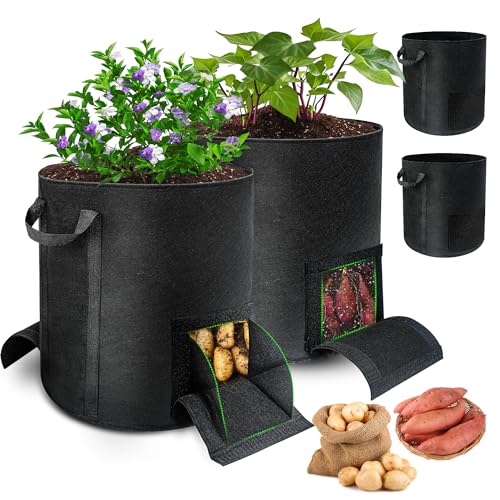
【Upgraded Dual-Window Design】The Downward-opening window keeps soil neatly contained while you pick ripe potatoes, and the clear observation window lets you check soil moisture and monitor ripeness at a glance.No digging, no mess - just easy, clean harvesting from your grow bags that keeps plants safe and healthy!
Optimal Planting Time
Plant potatoes in early spring, roughly 2 to 4 weeks before the last frost date in your area. Look for soil temperatures between 45°F and 60°F for best growth. If you live in a warmer climate, you may consider a second planting in mid-summer for a fall harvest. Monitor weather forecasts to avoid chilly nights that can damage emerging shoots.
Planting Techniques and Spacing
Use the following techniques for successful potato planting:
- Prepare Seed Potatoes: Cut seed potatoes into pieces, ensuring each piece contains at least one eye. Allow the cut pieces to dry for 1-2 days to form a protective callous.
- Create Furrows: Dig furrows in your raised bed about 4 inches deep. Space furrows 12 to 18 inches apart.
- Plant Seed Potatoes: Place seed potato pieces in the furrows, eyes facing up. Space them 12 inches apart to allow for proper growth.
- Cover with Soil: Gently cover the seed potatoes with soil, then water thoroughly. Ensure the soil remains moist but not soggy.
- Hill Up Soil: Once plants are about 6 inches tall, hill up soil around the base of each plant, creating a mound. This encourages tuber growth and protects the developing potatoes from sunlight.
Remember, providing adequate space ensures each potato develops properly. Following these guidelines will help you achieve a bountiful harvest from your raised garden.
Caring for Potato Plants
Caring for potato plants involves specific practices that enhance growth and productivity. Attention to watering and fertilization promotes healthy development and abundant harvests.
Watering Requirements
Water potato plants consistently to keep the soil evenly moist. During the growing season, aim for about 1 to 2 inches of water per week. Water deeply when the top inch of soil feels dry. Early in the season, avoid overwatering, as this can lead to rot. As plants begin to flower, increase water to support tuber formation. Always water at the base of the plants to minimize leaf wetness, reducing the risk of diseases.
Fertilization Tips
Fertilizing potato plants boosts their growth and yields. Start with a balanced fertilizer at planting time, applying a granular fertilizer with an N-P-K ratio of 10-10-10 or similar. Side-dress with additional fertilizer when plants reach 6 inches tall. Apply 1 tablespoon of fertilizer per plant, ensuring it’s well-mixed with soil to avoid burning the roots. If soil tests indicate low phosphorus, consider using a fertilizer higher in phosphorus to encourage tuber development. Aim to stop fertilizing about two weeks before harvest to improve potato flavor.
Identifying Pests and Diseases
Recognizing pests and diseases early can save your potato crop. You’ll find various pests and diseases that can affect your plants, so being vigilant is essential.
Common Potato Pests
- Colorado Potato Beetle
Colorado potato beetles are small, round, and striped insects. They feed on potato leaves, leading to defoliation. - Aphids
Aphids are tiny, green or black insects that cluster on new growth. They suck sap from the plants and can transmit diseases. - Potato Tuber Moth
Potato tuber moths lay eggs on the foliage. Their larvae burrow into the tubers, causing significant damage. - Wireworms
Wireworms are the larvae of click beetles. They feed on potato seeds and tubers, leading to poor growth or rot.
- Crop Rotation
Rotate your potato plants each growing season. This disrupts pest life cycles and reduces infestations. - Regular Inspections
Check your plants weekly for signs of pests or diseases. Early identification allows for quicker action. - Organic Insecticides
Use organic insecticides, like neem oil or insecticidal soap, to treat infestations. Apply these products in the evening to avoid harming beneficial insects. - Companion Planting
Planting marigolds or basil near your potatoes can deter pests. These companion plants attract beneficial insects. - Soil Health
Maintain healthy soil with organic matter. Healthy plants are more resistant to pests and diseases.
Using these strategies allows you to effectively manage pests and diseases in your raised garden while ensuring a productive potato harvest.
Harvesting Potatoes
Harvesting potatoes requires attention to timing and techniques to ensure the best yield. Knowing when and how to harvest guarantees you maximize your harvest from your raised garden bed.
Signs of Readiness
Look for specific signs indicating that your potatoes are ready for harvest. Recognize these visual cues:
- Flowering: When potato plants flower, tubers begin to form underground.
- Foliage Condition: When the foliage starts to yellow and die back, it signals the potatoes are maturing.
- Size: When you gently dig around the plants, check for tubers that are about the size of a golf ball for new potatoes, or larger for mature ones.
Waiting until the foliage is fully dead often yields the best-quality potatoes, although you can harvest earlier for smaller varieties.
Best Practices for Harvesting
Follow these steps for a successful harvest:
- Prepare Your Tools: Gather a spading fork or shovel, gloves, and a bucket or basket for collecting potatoes.
- Water Before Harvesting: Water the garden bed a day prior to harvesting. This makes soil easier to work with and reduces damage to tubers.
- Gently Loosen Soil: Insert the spading fork or shovel about 12 inches from the plant base. Gently lift the soil, being cautious not to pierce the potatoes.
- Hand Harvest: Use your hands to pick up the potatoes. Look for any tubers that may be hidden in the soil.
- Check for Damage: Inspect each potato for signs of cuts or bruises. Discard any damaged ones to prevent spoilage during storage.
- Air Dry: Place harvested potatoes in a cool, dry area for a few hours to allow the skin to toughen. This helps with storage longevity.
Conclusion
Growing potatoes in a raised garden can be a rewarding experience. With the right variety and proper care you can enjoy a bountiful harvest. Remember to prepare your soil well and keep an eye on your plants as they grow.
Don’t forget to monitor for pests and diseases to protect your crop. When the time comes to harvest be gentle and take care to check for any damage. With a little patience and attention you’ll be able to savor the fruits of your labor. Happy gardening and enjoy those delicious homegrown potatoes!
Frequently Asked Questions
What are the best potato varieties for a raised garden bed?
Popular potato varieties for raised garden beds include Yukon Gold, Red Pontiac, Russet Burbank, fingerling potatoes, and Kennebec. These options are chosen based on their unique characteristics, climate adaptability, and culinary uses, enhancing the chances of a successful harvest.
How should I prepare my raised garden bed for growing potatoes?
Prepare your raised bed by ensuring it is at least 4 feet wide and 6 to 8 feet long, with a minimum depth of 12 inches. Use a soil mix of 60% topsoil, 30% compost, and 10% peat moss or coconut coir, and amend with aged manure or balanced fertilizer to create optimal growing conditions.
When is the best time to plant potatoes?
The best time to plant potatoes is in early spring, about 2 to 4 weeks before the last frost. Soil temperatures should be between 45°F and 60°F to encourage healthy growth and development.
How do I care for my potato plants after planting?
Care for potato plants by providing consistent watering (1 to 2 inches per week) and fertilizing at planting and again when plants reach 6 inches tall. Avoid overwatering to prevent early-season rot and increase watering as plants flower to support tuber formation.
What pests should I watch for when growing potatoes?
Common pests include Colorado potato beetles, aphids, potato tuber moths, and wireworms. Regular inspections, crop rotation, and organic insecticides like neem oil can help manage these pests effectively and protect your potato crop.
When should I harvest my potatoes?
Harvest potatoes when the plants show signs of flowering, the foliage begins to yellow, and tubers reach your desired size. Prepare tools, water the bed before harvesting, and carefully hand-harvest to avoid damage.
How can I improve the flavor of my potatoes before harvest?
To enhance potato flavor, stop fertilizing about two weeks before harvest. This practice helps ensure the potatoes develop a richer taste as they approach maturity.

My interest in trees started when I first saw the giant sequoias in Yosemite.I was a teenager then, and I remember thinking, “I need to learn more about this.”That moment stuck with me.A few years later, I went on to study forestry at Michigan Tech.
Since graduating, I’ve worked in a mix of hands-on tree care and community education.I’ve spent over ten years helping people understand how to plant, maintain, and protect the trees in their neighborhoods.I don’t see trees as just part of the landscape.They are living things that make a real difference in our daily lives.